 en
en  Español


What is Stretch Wrap?
Content
- 1 What Is Stretch Wrap? The Direct Answer
- 1.1 The Material Science Behind Stretch Wrap
- 1.2 Types of Stretch Wrap
- 1.3 Key Performance Specifications of Stretch Wrap
- 1.4 What Stretch Wrap Is Used For
- 1.5 Stretch Wrap vs. Shrink Wrap: Understanding the Difference
- 1.6 How Stretch Wrap Is Applied: Hand vs. Machine Methods
- 1.7 Industries and Applications That Rely on Stretch Wrap
- 1.8 Sustainability Considerations for Stretch Wrap
- 1.9 How to Choose the Right Stretch Wrap for Your Application
- 2 What Are the Uses of Stretch Wrap? The Core Answer
- 2.1 Pallet Load Unitization: The Primary and Most Common Use
- 2.2 Protection from Contamination, Moisture, and Environmental Damage
- 2.3 Tamper Evidence and Load Security During Transit
- 2.4 Bundling Individual Products Without Full Pallet Wrapping
- 2.5 Agriculture: Silage Baling and Crop Protection
- 2.6 Construction and Building Materials Applications
- 2.7 Industrial Manufacturing Uses
- 2.8 Retail, E-Commerce, and Last-Mile Distribution Uses
- 2.9 Summary of Stretch Wrap Uses by Industry and Application
- 2.10 Choosing the Right Stretch Wrap for Each Use
- 3 How long can Stretch Wrap be used?
- 3.1 Shelf Life of Unused Stretch Wrap Rolls
- 3.2 How Long Applied Stretch Wrap Holds a Load
- 3.3 Stretch Wrap Longevity by Application Type
- 3.4 Key Factors That Shorten Stretch Wrap Service Life
- 3.5 Signs That Stretch Wrap Has Exceeded Its Useful Life
- 3.6 How Stretch Wrap Type Affects Longevity
- 3.7 Best Practices to Maximize Stretch Wrap Service Life
- 3.8 Rewrapping Guidelines: When to Replace Applied Stretch Wrap
- 4 Direct Answer: Is Stretch Wrap Waterproof?
- 4.1 Understanding the Difference Between Water-Resistant and Waterproof
- 4.2 How Stretch Wrap Provides Moisture Protection
- 4.3 Technical Specifications and Performance Data
- 4.4 Limitations and Vulnerabilities
- 4.5 Best Practices for Maximizing Water Resistance
- 4.6 When to Use Enhanced or Alternative Solutions
- 4.7 Industry Applications and Real-World Performance
- 4.8 Conclusion
- 5 Direct Answer: The Core Difference between Stretch Wrap and plastic wrap
What Is Stretch Wrap? The Direct Answer
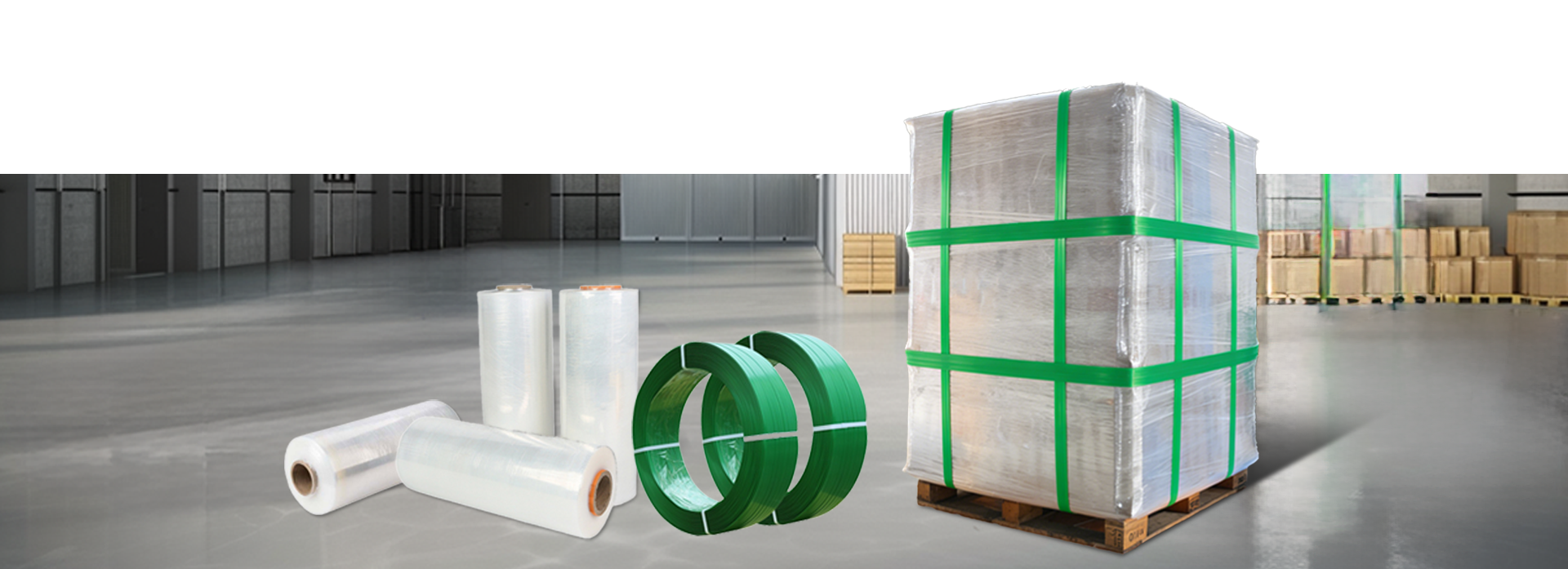
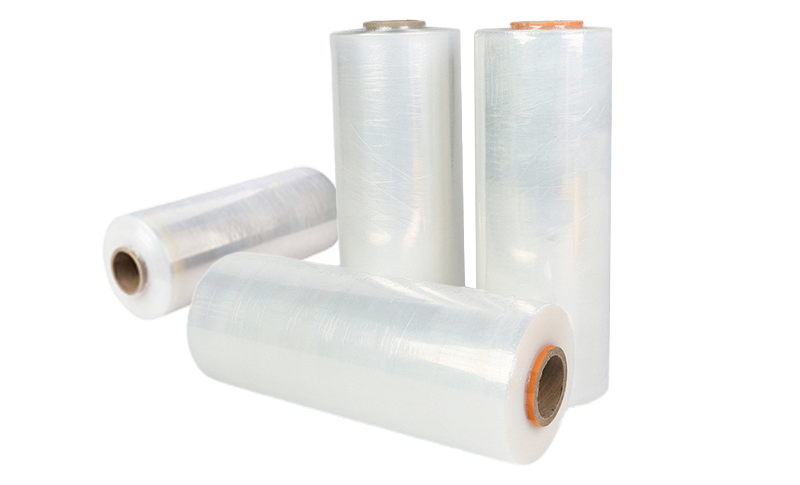
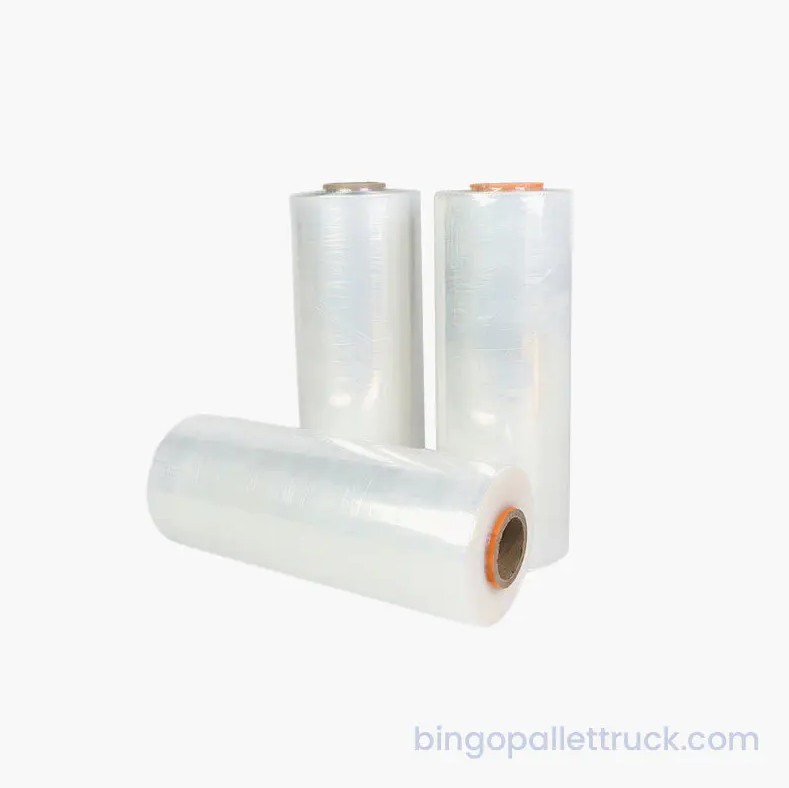
Stretch wrap — also called stretch film or pallet wrap — is a highly elastic plastic film made primarily from linear low-density polyethylene (LLDPE) that is wrapped tightly around products, pallets, or bundled goods to secure, protect, and unitize them for storage or shipping. The film stretches under tension to typically 100% to 300% of its original length, then contracts back when released, generating a continuous compressive force that holds wrapped items firmly in place without adhesives or fasteners.
Unlike shrink wrap, which requires heat to conform to a product, stretch wrap is applied at ambient temperature using hand-held dispensers or automated wrapping machines. It is one of the most widely used secondary packaging materials in logistics, warehousing, and manufacturing globally — estimated to account for several million tonnes of film consumption each year.
The Material Science Behind Stretch Wrap
The performance of stretch wrap — its ability to stretch dramatically without tearing and then recover — is rooted in the molecular structure of the polymer from which it is made.
Linear Low-Density Polyethylene (LLDPE)
Standard stretch wrap is manufactured from LLDPE, a polymer with a relatively linear backbone and short side branches that prevent the molecular chains from packing too tightly together. This structure gives LLDPE a high degree of molecular flexibility — the chains can slide and re-orient relative to one another without breaking — which is what enables the film to stretch to multiples of its original length without tearing. The short branches also contribute to the film's self-cling property: when two layers of LLDPE press together under tension, van der Waals intermolecular forces cause them to adhere to each other without any adhesive coating.
The elastic memory of LLDPE — its tendency to recover toward its original length after stretching — is what creates the sustained clamping force on a wrapped load. A stretch wrap film stretched to 200% of its original length and applied to a pallet will exert continuous inward pressure for days or weeks as the elastic memory tries to contract the film, keeping the load tight throughout transport and storage.
Metallocene and Advanced Polymer Formulations
Premium stretch wrap formulations use metallocene catalysis during polymerization to produce a more uniform, narrow molecular weight distribution polymer. Metallocene LLDPE films offer higher puncture resistance, greater elongation capacity, and better clarity than standard Ziegler-Natta catalyst LLDPE films of the same thickness. They can be made thinner — sometimes below 12 microns — while maintaining equivalent holding force, which reduces material consumption and weight.
Multi-layer co-extrusion technology further enhances performance by combining different polymer formulations in separate layers — for example, a high-cling inner layer for load adhesion, a high-stretch middle layer for tension performance, and a tougher outer layer for puncture and tear resistance. Most commercial-grade stretch films are produced as 3-layer or 5-layer co-extruded films rather than single-layer structures.
Types of Stretch Wrap
Stretch wrap is available in a range of formats designed for different application methods, load types, and performance requirements. Selecting the correct type is as important as selecting the correct thickness and stretch ratio.
Hand Stretch Film
Hand stretch film is wound on cardboard cores sized for handheld dispensers, typically 400 mm to 500 mm wide and 17 to 25 microns thick. It is designed for manual application at relatively low pre-stretch — the operator stretches the film by pulling against the resistance of the roll as they walk around the load. Hand film is economical for low-volume operations wrapping fewer than 15 to 20 pallets per day. Beyond this volume, the labor cost and physical effort of hand wrapping typically justifies investment in machine film and semi-automatic wrapping equipment.
Machine Stretch Film
Machine stretch film is applied by turntable, rotary arm, or orbital stretch wrapping machines that feed film through a pre-stretch delivery system before applying it to the load. These systems can pre-stretch film to 150% to 300% of its original length — far beyond what manual application achieves — dramatically reducing film consumption per pallet while maintaining or improving load containment force. Machine film is thinner than hand film (typically 12 to 20 microns) because the pre-stretch mechanism handles elongation mechanically rather than relying on the operator's pulling force. Machine wrapping is the standard choice for operations wrapping 20 or more pallets per day.
Pre-Stretched Film
Pre-stretched film is manufactured already elongated to near its maximum stretch capacity — typically to 80% or more of its ultimate elongation — before being wound onto the core. Because the elastic energy has been largely released during manufacturing, the film applies with minimal tension, requiring little physical effort from the operator and reducing fatigue in high-volume hand-wrapping operations. However, pre-stretched film provides lower load containment force than standard film applied under tension, making it more suitable for light to medium loads that are already stable rather than heavy or irregular loads requiring maximum securing force.
Specialty and Colored Stretch Films
Beyond standard clear film, specialty stretch wrap types serve specific applications:
- UV-inhibited film: Contains UV stabilizers that protect wrapped goods from photodegradation during outdoor storage. Essential for goods stored in open yards or transported on flatbed vehicles.
- Vented (perforated) film: Pre-perforated with small holes that allow air circulation, used for produce, perishable goods, and other items requiring ventilation during storage or transit.
- Colored stretch film: Available in various colors for load identification, security (opaque black or white hides contents), or inventory management. Black and opaque white films also provide UV protection.
- Anti-static film: Formulated to dissipate electrostatic charge, protecting sensitive electronic components during wrapping, storage, and shipment.
- Bundling film: Narrow-width film (typically 75 mm to 150 mm wide) used to bundle individual products together — for example, grouping multiple bottles, tubes, or small boxes — without wrapping an entire pallet.
Key Performance Specifications of Stretch Wrap
Understanding stretch wrap specifications allows buyers to compare products accurately and select the most cost-effective film for a given application, rather than defaulting to thickness as the sole quality indicator.
| Specification | Typical Range | What It Affects |
|---|---|---|
| Gauge (thickness) | 10 – 35 microns | Puncture resistance, tear strength, film weight per roll |
| Ultimate elongation (%) | 200% – 400% | Maximum stretch before film breaks; wrapping flexibility |
| Recommended pre-stretch (%) | 100% – 300% | Film consumption per pallet; containment force achieved |
| Puncture resistance | 200 – 600+ g/25 mm | Performance on sharp-edged or irregular loads |
| Tensile strength (MD) | 30 – 60 MPa | Resistance to splitting under tension during application |
| Cling force | Light to aggressive | How well film layers adhere to each other on the load |
| Roll width | 75 mm – 500 mm | Application method and product size suitability |
| Film length per roll | 100 m – 1,500 m | Roll changes per shift; operational efficiency |
A common misconception is that a thicker gauge always means a better or stronger film. In practice, a 17-micron metallocene film applied at 200% pre-stretch can outperform a 25-micron standard film applied at 100% stretch in both load containment force and film consumption efficiency. Evaluating cost per pallet wrapped — not cost per roll — is the correct economic comparison when assessing stretch film options.
What Stretch Wrap Is Used For
Stretch wrap serves several distinct functions simultaneously, which is why it has become the dominant unitizing and protective packaging material across virtually all industry sectors that handle palletized goods.
Load Unitization and Stability
The primary purpose of stretch wrap is to bind multiple items together into a single stable unit that can be handled, stacked, and transported as one piece. Without stretch wrap, a pallet of mixed cartons would shift, topple, or scatter during forklift handling, transit vibration, and load/unload operations. The continuous compressive force of correctly applied stretch film holds the load together with forces measured in hundreds of Newtons around the pallet perimeter, preventing movement between layers and maintaining the rectangular profile necessary for efficient stacking.
Protection from Environmental Contamination
Stretch wrap provides a barrier against dust, moisture, dirt, and light contamination during storage and transit. A fully enclosed wrapped pallet protects the outer layer of cartons from warehouse dust accumulation, condensation during temperature fluctuations, and incidental contact with other goods. For products sensitive to moisture — food packaging, paper goods, electronics — this barrier function is as important as the load-securing function. UV-stabilized film extends this protection to goods stored outdoors for periods of days or weeks.
Tamper Evidence and Security
Stretch wrap provides visible tamper evidence — any attempt to access a wrapped pallet leaves obvious signs of film damage or disturbance. Opaque or colored stretch film additionally conceals the contents from view, reducing the attractiveness of pallets as targets for opportunistic theft in transit or storage. Some security-focused operations apply a secondary layer of tape or banding over the stretch film to further deter and evidence tampering.
Bundling Small or Irregular Items
Beyond pallet wrapping, narrow bundling film consolidates small items — bottles, pipes, tubes, lumber, hardware — into manageable grouped units for handling and sale. A bundle of 24 water bottles wrapped with stretch film is a single handleable unit; unwrapped, it requires a tray or case. This bundling application reduces secondary packaging material while maintaining the ability to separate individual items at point of use.
Stretch Wrap vs. Shrink Wrap: Understanding the Difference
Stretch wrap and shrink wrap are frequently confused because both are plastic films used for packaging, but they work through completely different mechanisms and serve different purposes.
| Feature | Stretch Wrap | Shrink Wrap |
|---|---|---|
| Primary material | LLDPE | PVC, POF, PE |
| Application method | Stretched and wrapped at ambient temperature | Loosely draped, then heat-shrunk to conform |
| Heat required | No | Yes (heat gun or tunnel) |
| Primary use | Pallet unitization, load securing | Product packaging, retail presentation |
| Reusability | Single use (typically) | Single use |
| Containment force | High (elastic memory) | Moderate (post-shrink) |
| Conformity to irregular shapes | Good (wrapping technique) | Excellent (heat conforms tightly) |
| Typical film thickness | 10 – 35 microns | 12 – 100 microns (product type) |
How Stretch Wrap Is Applied: Hand vs. Machine Methods
Correct application technique determines whether stretch wrap achieves its intended load containment function. Poorly applied film — too loose, unevenly tensioned, or with insufficient overlap — provides far less security than correctly applied film of the same specification.
Manual Hand Wrapping Technique
For hand wrapping, the operator attaches the film to the pallet base (typically by threading it through the bottom pallet boards), then walks around the pallet applying tension and overlap. Best practice for hand wrapping includes:
- Anchor the film at the pallet base with at least 2 to 3 full wraps at the base before wrapping upward to prevent load shifting from the bottom.
- Maintain 50% overlap between successive film wraps to ensure full coverage and double-layer protection at every point.
- Apply 2 to 3 wrap layers at the top of the load and return to the base with the same overlap to complete the wrap and lock the top layer.
- Apply consistent tension throughout — film that is loose in sections provides no containment force in those areas, creating points where the load can shift.
Automated Stretch Wrapping Machines
Stretch wrapping machines apply film with consistent, programmable tension and overlap that manual wrapping cannot reliably replicate. The three main machine types are:
- Turntable wrappers: The pallet rotates on a powered turntable while the film carriage moves vertically. The most common and economical machine type for medium-volume operations.
- Rotary arm wrappers: The film carriage rotates around a stationary pallet. Better suited for very heavy loads that cannot safely be placed on a rotating turntable, or for loads that might be destabilized by rotational inertia.
- Orbital ring wrappers: A horizontal or vertical ring carries the film around the load, typically used for non-pallet applications such as lumber, pipes, doors, and profile materials.
Machine wrappers with powered pre-stretch systems stretch film by 150% to 300% before it contacts the load, reducing film consumption by 50% or more compared to hand application at equivalent containment force. A pallet that uses 300 to 400 grams of hand film may require only 100 to 150 grams of machine film pre-stretched at 250% to achieve the same or better load securing performance.
Industries and Applications That Rely on Stretch Wrap
Stretch wrap is used across virtually every sector that ships or stores goods on pallets, but certain industries have particularly high consumption and specific application requirements.
- Food and beverage: One of the largest consumers of stretch wrap globally. Used to unitize cases of canned goods, beverages, dry food, and produce for distribution. Vented film is essential for fresh produce to allow respiration gases to escape.
- Manufacturing and industrial: Wrapping components, sub-assemblies, and finished goods for interplant transfer and outbound shipping. Heavy-gauge or reinforced films are specified for loads with sharp edges or high weight.
- Retail and e-commerce fulfillment: Wrapping mixed-SKU pallets assembled for retail store delivery. Film selection must accommodate frequent change of load composition and often irregular stacking patterns.
- Pharmaceutical and healthcare: Strict hygiene and integrity requirements necessitate high-clarity film for load inspection, anti-static film for certain products, and tamper-evident wrapping for regulatory compliance.
- Construction and building materials: Bundling and protecting lumber, bricks, tiles, insulation, and hardware components for site delivery. Heavy-duty UV-resistant film is required for loads stored outdoors prior to use.
- Agriculture: Wrapping bales of silage, hay, or straw with specialized agricultural stretch film to exclude oxygen and preserve fermentation. This is a distinct application using dedicated thick-gauge UV-stabilized film.
Sustainability Considerations for Stretch Wrap
Stretch wrap is a single-use plastic material, and its environmental footprint is a subject of increasing attention across the logistics and packaging industries. Several approaches are reducing its environmental impact without compromising load security.
Gauge Reduction Through Higher Pre-Stretch
The most effective way to reduce stretch wrap consumption is to maximize pre-stretch percentage. A machine applying film at 300% pre-stretch uses approximately one-third of the film weight per pallet compared to the same film applied at zero pre-stretch. Upgrading wrapping equipment to support higher pre-stretch ratios and switching from thick hand film to thinner machine film often reduces total plastic consumption by 40 to 60% without reducing load containment performance.
Recycled Content and Recyclability
LLDPE stretch film is technically recyclable through plastic film recycling streams (typically categorized as LDPE, recycling code #4) where collection infrastructure exists. Many distribution centers and large retail operations collect used stretch film for baling and recycling. Films manufactured with recycled content — typically 25% to 50% post-consumer or post-industrial recycled LLDPE — are increasingly available and perform comparably to virgin film in most standard applications.
Reusable Alternatives for Closed-Loop Operations
In closed-loop distribution systems — where pallets travel between fixed facilities and return to the origin — reusable pallet strapping, mesh bags, or rigid stretch hood systems can reduce or eliminate single-use stretch film consumption. These alternatives require higher upfront investment but reduce ongoing film costs and waste generation in appropriate operational contexts.
How to Choose the Right Stretch Wrap for Your Application
Selecting the correct stretch wrap involves matching film properties to load characteristics and application method. The following framework covers the key decision points.
- Application method first: Determine whether the operation is manual or machine-assisted before selecting a film type. Hand film and machine film have different thickness ranges, core sizes, and stretch characteristics — they are not interchangeable.
- Load weight and stability: Heavier, less stable loads require higher containment force, achieved through higher pre-stretch percentage and additional wrap layers — not necessarily thicker film. For very heavy loads (above 800 kg), a heavier-gauge machine film of 20 to 25 microns applied at 200%+ pre-stretch provides the necessary securing force.
- Load surface characteristics: Sharp-edged loads — metal parts, pallets of cans, machinery components — require high puncture resistance film. Metallocene or nano-composite films offer superior puncture resistance at thinner gauges compared to standard LLDPE.
- Storage and transit environment: Outdoor storage or open-vehicle transit requires UV-stabilized film. Cold storage environments benefit from film formulated for low-temperature flexibility. Humid environments or moisture-sensitive goods may warrant a tighter, fully enclosed wrap pattern.
- Volume and economics: Calculate cost per pallet wrapped rather than cost per roll. A more expensive metallocene film applied at higher pre-stretch will frequently be more economical per pallet than cheaper standard film used at lower stretch, while also providing better performance.
What Are the Uses of Stretch Wrap? The Core Answer
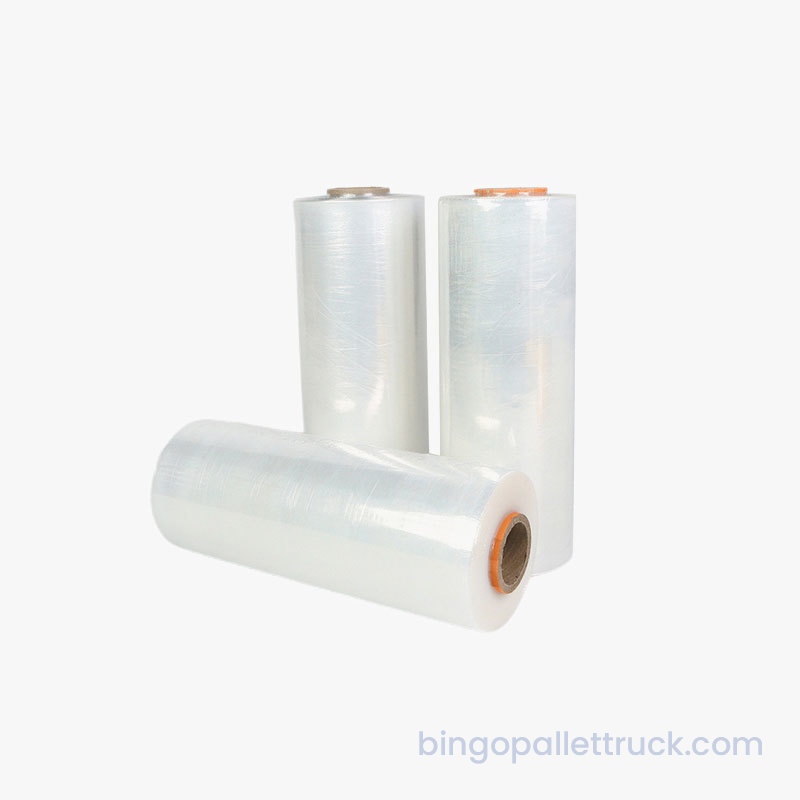
Stretch wrap is used to secure, protect, bundle, and unitize goods for storage, transport, and distribution. Its elastic properties allow it to hold items firmly together without adhesives, fasteners, or heat — making it one of the most versatile and widely used secondary packaging materials across logistics, manufacturing, agriculture, retail, and construction. The five core uses are: pallet load unitization and stabilization, protection from contamination and environmental damage, tamper evidence and load security, bundling of individual products or components, and specialized industrial applications such as silage baling and pipe protection.
Each of these uses leverages the same fundamental property: stretch wrap extends dramatically under tension, then exerts a continuous compressive force as its elastic memory tries to recover — holding whatever it wraps firmly in place for days, weeks, or months. The sections below examine every major application in detail.
Pallet Load Unitization: The Primary and Most Common Use
The dominant application of stretch wrap worldwide is wrapping palletized goods to create a single, stable unit load that can be handled by forklifts, stored in racking, and transported on vehicles without individual items shifting, falling, or separating.
How Stretch Wrap Stabilizes a Pallet Load
A typical pallet of mixed cartons stacked to 1.2 meters contains dozens of individual boxes whose combined weight and stacking arrangement create multiple potential failure points — top-heavy loads that can topple during forklift handling, lighter boxes that shift during transit vibration, or irregular stacks that lose their rectangular profile. Stretch wrap applied at correct tension — typically 150% to 300% pre-stretch for machine-applied film — exerts inward compressive forces around the load perimeter that prevent horizontal movement between layers and maintain the load's rectangular footprint necessary for safe stacking and efficient storage.
The containment force generated by a properly wrapped pallet can exceed 300 Newtons per layer of film, and with multiple wrap passes at the base and top of the load, the cumulative securing force is substantial. This is why a well-wrapped pallet can survive the handling impacts and vibration of long-distance freight transport without a single carton shifting position.
Full Pallet Wrapping vs. Partial Wrapping
Full pallet wrapping encloses the entire load from base to top, providing both securing force and environmental protection. Partial wrapping — sometimes called banding or strapping with stretch film — applies film only at specific zones such as the middle of the load or at the base where the pallet interfaces with the floor, providing targeted reinforcement at high-stress points without full enclosure. Partial wrapping is used when the load itself is already enclosed (such as a bagged bulk product) but needs lateral securing, or when cost reduction is a priority for stable loads.
Mixed and Irregular Loads
One of stretch wrap's most valuable properties for pallet unitization is its ability to conform around irregular shapes. Unlike strapping or banding, which can only secure loads at the points where the strap contacts, stretch film wraps continuously around the entire perimeter, accommodating products of different heights, widths, and weights in the same pallet layer. This makes it the only practical securing method for mixed-SKU pallets common in retail and e-commerce distribution — where a single pallet might carry items of dozens of different sizes assembled for a single customer order.
Protection from Contamination, Moisture, and Environmental Damage
Beyond securing the load, stretch wrap forms a physical barrier between the wrapped goods and the surrounding environment — protecting against contamination, moisture ingress, dust accumulation, and in some formulations, ultraviolet light degradation.
Dust and Dirt Protection
Warehouse environments accumulate significant airborne dust, particularly in facilities handling dry goods, powders, or raw materials. Pallets in long-term storage can accumulate dust layers that contaminate packaging, require cleaning before retail presentation, or in food and pharmaceutical settings, may actually create compliance issues. A fully enclosed stretch-wrapped pallet prevents dust reaching the outer packaging of the goods — particularly important for extended storage periods exceeding 30 days where dust accumulation becomes significant.
Moisture and Condensation Barrier
When goods move between temperature zones — from a cold storage area to ambient temperature, from indoor storage to an outdoor loading dock — condensation forms on cold surfaces as warm, moist air contacts them. For paper-based packaging, cardboard cartons, and hygroscopic products, this condensation can weaken packaging integrity, cause label failure, and damage the product. Stretch wrap provides an external moisture barrier that intercepts condensation on the film surface rather than allowing it to reach the carton surfaces. LLDPE film has a water vapor transmission rate (WVTR) of approximately 5 to 10 g/m²/day at 38°C — low enough to protect goods from brief moisture exposure events typical of distribution environments.
UV Protection for Outdoor Storage
Standard clear LLDPE stretch film transmits UV radiation, providing no protection for goods stored outdoors or on flatbed vehicles. UV-stabilized stretch film — formulated with UV absorbers and HALS (Hindered Amine Light Stabilizers) — blocks a significant portion of UV radiation, protecting moisture-sensitive packaging, color-printed labels, and UV-degradable products from photodamage. Black or opaque stretch film provides the highest UV protection and is widely used for goods stored in open yards or transported on open vehicles for periods exceeding 24 to 48 hours.
Protection from Incidental Physical Contact
In active warehouse and distribution center environments, stored pallets are subject to incidental contact from passing forklifts, reach trucks, and other handling equipment. The cushioning effect of multiple stretch film layers absorbs minor impact energy and prevents surface scratching or marking of the outer carton or product packaging — important for goods with high retail presentation standards such as consumer electronics, appliances, and premium food packaging.
Tamper Evidence and Load Security During Transit
Stretch wrap provides a visible tamper-evidence function that is increasingly important in supply chain security for high-value goods, pharmaceuticals, electronics, and food products.
Visible Evidence of Tampering
Attempting to remove items from a stretch-wrapped pallet without completely removing or cutting the film leaves obvious, irreversible evidence of tampering — torn film, cut edges, or the distinctive pattern of stretched and distorted film layers where access has been forced. This visibility is a meaningful deterrent against opportunistic theft in transit, at consolidation hubs, and in multi-drop delivery situations where pallets are handled by multiple parties before reaching the consignee.
Opaque Film for Concealing Contents
Opaque white, black, or colored stretch films prevent visual identification of pallet contents without removing the wrap. This is used for high-value goods — electronics, spirits, tobacco, pharmaceuticals — where visible identification of the load's contents would increase theft risk in transit. Black stretch film is also commonly used for loads containing confidential documentation or proprietary product lines where contents disclosure during distribution represents a commercial risk.
Security Taping Over Stretch Film
In high-security applications, adhesive security tape — sometimes with void or tamper-evident printing — is applied over the stretch film at the top and sides of the pallet. This combination of stretch film and security tape creates a layered tamper-evidence system where removal of either element is immediately visible. Any attempt to access the pallet by cutting through the tape leaves a permanent residue mark on the tape and the film that cannot be concealed with re-taping.
Bundling Individual Products Without Full Pallet Wrapping
Stretch wrap is not exclusively a pallet-level packaging material. Narrow-width bundling film — typically 75 mm to 150 mm wide — is used to consolidate individual items into retail-ready groups, manage components in manufacturing, and create handleable bundles from otherwise unmanageable individual pieces.
Multi-Pack Bundling for Retail
Stretch bundling film groups individual consumer products into retail multi-packs — four bottles of water, six cans of beverage, two rolls of paper towel — without requiring a cardboard tray or secondary case. The film holds the group together during handling and retail display while remaining easy for the consumer to remove or tear apart at the point of use. This application reduces secondary packaging material cost and weight while maintaining the product grouping needed for retail pricing and display. For a high-volume beverages packer, switching from shrink-wrapped trays to stretch-bundled multipacks can reduce secondary packaging material consumption by 40 to 60%.
Bundling Long or Difficult-to-Handle Items
Pipes, tubes, lumber, rebar, profiles, and other long materials are notoriously difficult to handle individually. Stretch film applied with a spiral wrap around the bundle at regular intervals — or using an orbital ring wrapper for automated bundling — creates a coherent unit that can be lifted, stored, and transported safely. A bundle of 20 to 50 steel pipes secured with stretch film at 500 mm intervals along their length is stable enough for forklift handling and crane lifting, where individual pipes would slide and separate under their own weight.
Component Kitting in Manufacturing
In assembly operations, stretch bundling film groups related components into kits — all the parts for one assembly job, or one vehicle seat, or one flat-pack furniture panel — keeping them together from the warehouse picking area to the assembly line. This reduces assembly errors (missing components), simplifies line replenishment logistics, and eliminates the need for bags or boxes at the kit level. Anti-static stretch film variants serve this function for electronic component kitting where electrostatic discharge protection is required.
Agriculture: Silage Baling and Crop Protection
Agricultural stretch film is a distinct and large-volume application that uses specialized thick-gauge LLDPE film — typically 25 to 30 microns rather than the 10 to 20 microns of logistics film — to seal and preserve hay, grass, corn, and other forage crops in anaerobic fermentation conditions.
Silage Bale Wrapping
Round bales of freshly cut grass or corn are wrapped with multiple layers — typically 4 to 6 layers of agricultural stretch film — immediately after baling to exclude oxygen and create anaerobic conditions within the bale. Without oxygen, the natural sugars in the crop ferment to produce lactic acid, which preserves the nutritional value of the forage for months or years. Any breach in the film allows air ingress, which causes aerobic spoilage — mold growth and nutrient loss — in the affected zone. The stretch and cling properties of the film ensure tight, void-free coverage of the bale surface even around the irregular curved profile of a round bale.
Field Storage and Outdoor Durability
Agricultural stretch film must maintain its integrity outdoors through multiple seasons — in direct sunlight, rain, frost, and temperature swings from -20°C to 50°C. UV stabilization is therefore critical: agricultural film is formulated with sufficient UV stabilizer package to maintain its oxygen barrier properties for a minimum of 12 to 18 months of outdoor field storage, far beyond the 2 to 4 months typically required for logistics applications. The thicker gauge also provides resistance to puncture from stubble, stones, and agricultural machinery contact that would destroy thinner logistics film immediately.
Construction and Building Materials Applications
The construction industry uses stretch wrap extensively for protecting building materials during transport, storage, and on-site handling — where exposure to weather, mechanical damage, and contamination is a constant challenge.
Protecting Surface-Finish Materials
High-value surface finish materials — ceramic tiles, flooring panels, architectural glass, pre-finished cladding boards — require protection from scratching, chipping, and marking during site delivery and storage before installation. Stretch film applied at low tension (to avoid pressure marks) over a protective slip layer or directly to smooth surfaces provides physical protection from contact damage and keeps moisture and cement dust away from finished surfaces that would be difficult or impossible to clean once contaminated.
Lumber and Timber Bundles
Sawn lumber, engineered wood products, and decking boards are bundled with stretch film for delivery to builders merchants and construction sites. The film keeps bundles intact during handling, protects end grain from moisture ingress that causes splitting and checking, and maintains accurate inventory by keeping labeled bundles together. Heavy-duty stretch film or multiple layers of standard film are used to handle the weight and volume of these bundles, which may weigh 500 to 2,000 kg per unit.
Pipe and Profile Protection
Plastic, steel, and copper pipes are wrapped with stretch film — either individually or in bundles — to protect their surface finish and internal cleanliness during transport and on-site storage. Spiral wrapping of individual pipes with narrow stretch film prevents scratching of coated surfaces, plugs open ends against debris entry, and provides a barrier against chemical contamination from other site materials. This is particularly important for potable water piping, where internal contamination before installation would require flushing and potentially disinfection before commissioning.
Industrial Manufacturing Uses
Within manufacturing facilities, stretch wrap serves operational purposes beyond the final product packaging stage — supporting interplant logistics, work-in-progress protection, and specialized process needs.
Work-in-Progress (WIP) Protection
Partially assembled components moving between manufacturing stages need protection from contamination, damage, and environmental exposure between process steps. Stretch wrap applied over machined surfaces, precision assemblies, or painted subcomponents prevents contamination from metalworking fluids, dust, and handling marks. This is common in automotive, aerospace, and electronics manufacturing, where surface contamination at an intermediate stage can cause defects that are not detected until final quality inspection — at which point the remediation cost is far higher than the cost of proper WIP protection.
Packing for Interplant Transfer
Components and sub-assemblies moving between facilities — whether on public roads or within a large factory campus — need to be secured for forklift and vehicle handling. Stretch wrapping provides the unitization and securing function equivalent to outbound shipping preparation, but on an internal operational timescale where speed and convenience are priorities. The ease and speed of stretch wrapping versus strapping or crating makes it the default choice for interplant transfer unitization in most manufacturing environments.
Anti-Static Film for Electronic Components
Electronic assemblies and components are sensitive to electrostatic discharge (ESD), which can cause immediate failure or latent damage that manifests as premature field failure in end products. Anti-static stretch film — compounded with permanent static-dissipative additives — provides the pallet unitization and protection functions of standard film while preventing the buildup of triboelectric charge that would occur with standard LLDPE film. This film is required in ESD-controlled environments (ESD Protected Areas — EPAs) and is used by electronics manufacturers to wrap pallets of PCBs, semiconductor devices, and electronic assemblies for storage and interplant transport.
Retail, E-Commerce, and Last-Mile Distribution Uses
The rapid growth of e-commerce and fast-moving consumer goods distribution has expanded the use of stretch wrap at every stage of the supply chain, including closer to the end consumer than traditional pallet wrapping applications.
Mixed-SKU Retail Pallet Preparation
Retail distribution centers assemble pallets for individual store delivery containing dozens of different product types, sizes, and weights — a product mix that creates inherently unstable stacking. Stretch wrap is the only practical securing method for these mixed-SKU pallets, as strapping would damage lighter cartons and rigid outer packaging would be impractical for mixed loads. Automated stretch wrapping with programmed wrap profiles — more wrap layers at the base and top of the load, additional "roping" passes that compress the load laterally — ensures that even poorly stackable retail loads arrive at stores intact and safe to unload.
Securing Loads on Open Delivery Vehicles
For delivery operations using flatbed trucks, vans with open backs, or rail freight platforms without enclosed containers, stretch wrap provides both load securing and weather protection simultaneously. Loads stretch-wrapped with UV-stabilized film can be transported exposed to weather for transit periods of 24 to 72 hours without significant moisture ingress, and the securing force prevents load shift during road transport without the need for ratchet straps or other mechanical restraints on every individual item.
Furniture and Appliance Protection
Large furniture items — sofas, mattresses, dining tables — and major appliances are wrapped with stretch film for last-mile delivery protection. The film protects upholstered and finished surfaces from scratching during loading, unloading, and in-home delivery navigation through doorways and stairwells. For this application, the film is typically applied generously as protective surface cover rather than as a load-securing wrap, and a foam layer or cardboard is often interleaved between the film and any polished or lacquered surface to prevent pressure marks.
Summary of Stretch Wrap Uses by Industry and Application
| Industry / Sector | Primary Use | Film Type Required | Key Performance Need |
|---|---|---|---|
| Food and beverage | Pallet unitization, produce ventilation | Standard or vented film | Hygiene compliance, air circulation for produce |
| Pharmaceutical | Tamper evidence, load security | High-clarity or colored film | Tamper visibility, regulatory compliance |
| Electronics manufacturing | Component protection, WIP securing | Anti-static film | ESD protection, surface marking prevention |
| Retail distribution | Mixed-SKU pallet wrapping | Machine film, 15–20 microns | High throughput speed, consistent containment force |
| Agriculture | Silage bale preservation | Agricultural film, 25–30 microns | UV resistance, oxygen barrier, outdoor durability |
| Construction | Surface protection, bundle securing | Heavy-duty or UV-stabilized film | Puncture resistance, outdoor durability |
| Automotive manufacturing | Component protection, interplant transfer | Standard or anti-static film | Surface mark prevention, secure unitization |
| Furniture / appliances | Last-mile delivery surface protection | Standard clear film (heavy gauge) | Scratch and marking prevention |
| Cold chain / frozen foods | Frozen pallet unitization, moisture barrier | Low-temperature rated film | Flexibility at -25°C, moisture vapor barrier |
| High-value goods / security | Theft deterrence, tamper evidence | Opaque colored or black film | Content concealment, tamper visibility |
Choosing the Right Stretch Wrap for Each Use
Different uses require different film specifications. Using a single standard film across all applications is a common cost-optimization mistake that often results in either over-specification (wasting material on applications that need less performance) or under-specification (film failures in demanding applications). The following matching guide covers the most common use-case decisions.
- Heavy pallets with sharp-edged goods (metal parts, machinery): Use puncture-resistant metallocene film at 20 to 25 microns, applied with multiple base wraps and full enclosure. Standard thin film tears on sharp protrusions, leaving the load unsecured and contaminated.
- High-volume automated warehouse operations: Machine film at 12 to 17 microns applied at 200 to 300% pre-stretch provides optimal economy — the high pre-stretch delivers strong containment at minimum film consumption and cost per pallet.
- Outdoor storage and open-vehicle transit: UV-stabilized or black opaque film for periods exceeding 24 hours. Standard clear film degrades and loses integrity within weeks of direct UV exposure.
- Fresh produce: Vented (perforated) stretch film to allow CO₂ and ethylene gas to escape, preventing premature ripening and spoilage during distribution.
- Cold storage and frozen goods: Film specifically rated for low-temperature flexibility, maintaining elongation and cling at temperatures down to -25°C. Standard film becomes stiff and brittle at freezer temperatures, losing its securing and barrier functions.
- Electronic components and assemblies: Anti-static (dissipative) stretch film in all ESD-controlled environments. This is a safety-critical specification — using standard film risks damaging sensitive electronic components through electrostatic discharge.
- Silage baling: Dedicated agricultural stretch film of 25 to 30 microns with high UV stability and oxygen barrier properties. Logistics film is far too thin and UV-unstable for outdoor agricultural use.
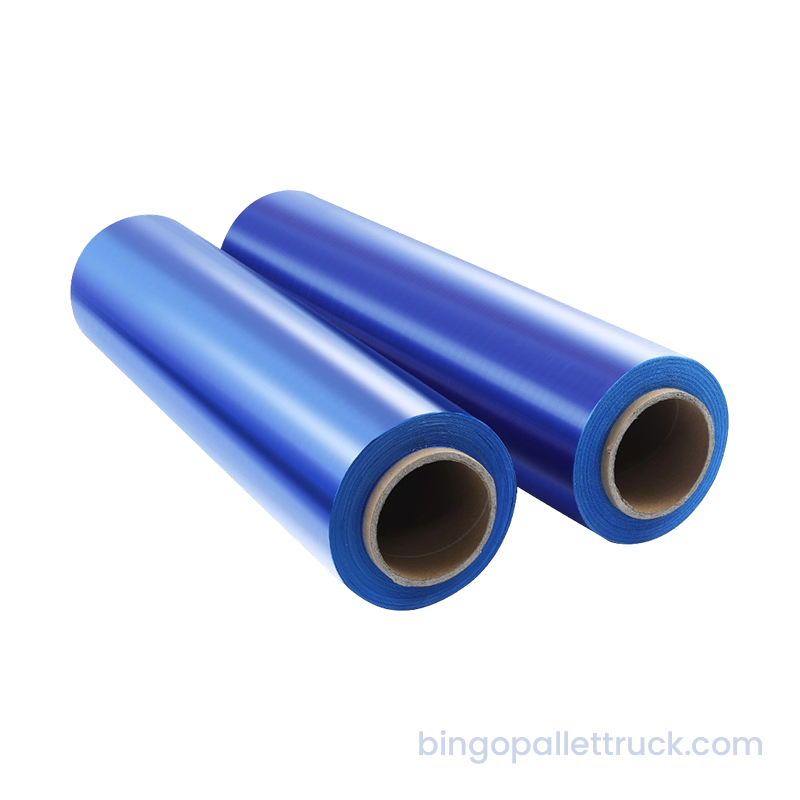
How long can Stretch Wrap be used?
Stretch wrap has a recommended shelf life of 12 to 24 months from the date of manufacture when stored correctly, and an effective in-use lifespan that depends on the environment it is applied in — ranging from a few days for temporary outdoor bundling in harsh UV conditions to several years for stable indoor warehouse storage. Once applied to a pallet or product, stretch wrap can maintain its holding force and protective properties for 6 to 18 months under normal indoor conditions, though outdoor and UV-exposed applications significantly shorten this window.
The answer differs depending on whether you are asking about the shelf life of unused stretch wrap rolls, the functional lifespan of stretch wrap already applied to a load, or how long stretch wrap can protect a product in specific environmental conditions. All three dimensions matter for procurement, warehousing, and logistics operations, and each is covered in detail below.
Shelf Life of Unused Stretch Wrap Rolls
Unused stretch wrap rolls do not last indefinitely in storage. The polyethylene or linear low-density polyethylene (LLDPE) film that makes up most commercial stretch wrap undergoes gradual chemical and physical changes during storage that reduce its stretch performance, tackiness, and holding strength even before it is ever applied to a load.
Standard Recommended Shelf Life
Most stretch wrap manufacturers specify a shelf life of 12 to 24 months from the date of manufacture for rolls stored under recommended conditions. Some premium grades with enhanced UV stabilizers or anti-oxidant additives carry extended shelf life claims of up to 36 months. After this period, the film may still be usable in appearance but will typically show reduced stretchability, lower cling between layers, and reduced puncture resistance — all of which compromise its ability to secure a load effectively.
How Storage Conditions Affect Shelf Life
The rate at which stretch wrap degrades in storage is strongly influenced by three environmental factors:
- Temperature: High storage temperatures accelerate oxidative degradation of the polyethylene polymer chains. Rolls stored above 40°C (104°F) — in non-climate-controlled warehouses in summer or near heat sources — can degrade in 6 to 9 months. Cool, stable storage at 15°C to 25°C (59°F to 77°F) maximizes shelf life toward the upper end of the manufacturer's specification.
- UV exposure: Direct sunlight or fluorescent light exposure causes photochemical degradation of the film surface, leading to surface chalking, brittleness, and loss of cling. Rolls should always be stored away from windows, skylights, and direct artificial light sources.
- Compression and deformation: Rolls stored on their flat ends under heavy stacking loads can develop permanent core deformation that causes uneven unwinding tension and film tearing during application. Store rolls upright on their cores or horizontally on rack systems that distribute weight evenly, and avoid stacking more than 4 to 5 rows high.
| Storage Condition | Temperature Range | UV Exposure | Expected Shelf Life |
|---|---|---|---|
| Ideal (climate-controlled warehouse) | 15–25°C (59–77°F) | None | 18–24 months |
| Acceptable (standard warehouse) | 10–35°C (50–95°F) | Minimal (indoor lighting) | 12–18 months |
| Poor (hot or variable temperature) | Up to 45°C (113°F) in summer | Some indirect daylight | 6–12 months |
| Unsuitable (outdoor or UV-exposed) | Variable, including freezing | Direct sunlight | 3–6 months |
How Long Applied Stretch Wrap Holds a Load
Once stretch wrap has been applied to a pallet or product, the question shifts from storage shelf life to functional retention — how long the film maintains the tension, cling, and structural integrity needed to keep the load secure and protected. This depends heavily on the application environment rather than the film's age.
Indoor Warehouse Storage: 6 to 24 Months
Stretch-wrapped pallets stored in a standard indoor warehouse — protected from direct sunlight, maintained at moderate temperatures, and not subject to mechanical abrasion — typically retain adequate holding force for 12 to 24 months under normal conditions. The primary degradation mechanism in this environment is stress relaxation — the gradual release of the elastic tension locked into the film during application — which reduces the holding force over time without any visible change in the film's appearance. After 12 to 18 months, the load may appear tightly wrapped but the actual containment force can be significantly reduced, making the pallet more vulnerable to shifting during handling.
Outdoor or UV-Exposed Storage: 60 to 90 Days Maximum
Standard stretch wrap without UV stabilizer additives degrades rapidly when exposed to direct sunlight. UV radiation breaks down the polyethylene polymer chains, causing the film to become brittle, crack, and lose its cling and tensile strength. In full outdoor sun exposure, standard stretch wrap can begin to show visible cracking and brittleness within 30 to 60 days, and may fail structurally — dropping load containment to near zero — within 90 days. For any load that will be stored outdoors or under open-sided covered storage with significant UV exposure, UV-stabilized stretch wrap is required, and even these grades typically carry a maximum outdoor service life recommendation of 6 to 12 months depending on the UV intensity at the installation location.
Cold Storage and Freezer Applications
Stretch wrap used in cold storage (0°C to 4°C / 32°F to 39°F) and freezer environments (-18°C to -30°C / 0°F to -22°F) must be a grade specifically formulated for low-temperature use. Standard stretch wrap formulations become stiff and brittle at low temperatures, losing their elastic cling properties and becoming prone to tearing during application and handling. Cold-temperature grades maintain flexibility down to -20°C (-4°F) and can hold loads effectively for 12 to 24 months in freezer storage — comparable to their indoor ambient-temperature performance — because the cold environment itself slows chemical degradation of the polymer.
High-Temperature Environments
Exposure to elevated temperatures — such as pallets stored near building roofs in summer, products left on loading docks in direct sun, or goods shipped through desert regions — accelerates stress relaxation and can cause the film to become tacky and adhesive rather than maintaining its tension. At temperatures above 50°C (122°F), standard stretch wrap can lose significant holding force within days. For high-temperature applications, thicker gauge films or banding straps used in combination with stretch wrap provide more reliable long-term load containment.
Stretch Wrap Longevity by Application Type
Different stretch wrap applications have very different longevity requirements. The following table provides a practical reference for expected service life across common application scenarios:
| Application Type | Environment | Recommended Film Type | Expected Service Life |
|---|---|---|---|
| Pallet unitizing for shipment | Transit (1–7 days) | Standard LLDPE | Days to weeks — transit only |
| Indoor warehouse storage | Climate-controlled, no UV | Standard or heavy-gauge LLDPE | 12–24 months |
| Outdoor short-term storage | Exposed to UV and weather | UV-stabilized stretch wrap | 3–6 months (UV-stabilized) |
| Outdoor long-term storage | Continuous UV and weather | UV-stabilized + additional covering | 6–12 months maximum |
| Cold storage (0°C to 4°C) | Refrigerated warehouse | Cold-temperature grade | 12–24 months |
| Freezer storage (-18°C or below) | Frozen food warehouse | Freezer-grade LLDPE | 12–24 months |
| Agricultural silage wrapping | Outdoor, UV-exposed | Agricultural UV-stabilized film | 12–18 months (designed lifespan) |
| Furniture and surface protection | Indoor, during transit/renovation | Standard or colored stretch wrap | Weeks to months as needed |
Key Factors That Shorten Stretch Wrap Service Life
Understanding what degrades stretch wrap fastest helps operations managers make better decisions about wrap type selection, application frequency, and load inspection intervals. The following are the most significant factors that shorten the functional life of applied stretch wrap.
Ultraviolet Radiation
UV radiation is the most aggressive degradation agent for polyethylene stretch wrap. Direct sunlight contains UV-A and UV-B wavelengths that break the carbon-carbon and carbon-hydrogen bonds in the polyethylene chains, causing molecular weight reduction, surface embrittlement, and eventually physical failure of the film. Just 30 days of continuous direct sunlight exposure can reduce the tensile strength of standard stretch wrap by 50% or more. UV-stabilized grades incorporate UV absorbers and HALS (hindered amine light stabilizers) that slow this process but do not eliminate it indefinitely.
Mechanical Stress and Abrasion
Stretch wrap on pallets that are repeatedly moved by forklift, stacked, or handled in automated systems is subject to ongoing mechanical stress that progressively weakens the film. Sharp edges on products, wooden pallet splinters, and friction against racking systems all create micro-tears that propagate over time. In high-frequency handling environments, stretch-wrapped loads should be inspected after every 10 to 20 handling cycles and rewrapped when damage is visible.
Chemical Exposure
Certain chemicals — including some solvents, oils, and cleaning agents — can attack and degrade polyethylene stretch wrap on contact. In warehouses where cleaning chemicals are applied to floors near stored pallets, or where products contain volatile organic compounds that off-gas through packaging, stretch wrap degradation can occur faster than expected. Chemical compatibility should be verified when stretch wrap is used in chemical storage or processing environments.
Insufficient Initial Application
Stretch wrap that is applied with insufficient overlap, inadequate pre-stretch, or too few layers will begin to loosen and lose containment force faster than correctly applied film. The initial elastic tension locked into the film during application is what holds the load — film applied at 150% to 300% pre-stretch delivers significantly better long-term containment than film applied with minimal stretching, because more of the film's elastic energy is transferred to load containment force rather than remaining as residual film extensibility.
Temperature Cycling
Repeated cycles of heating and cooling cause stretch wrap to expand and contract with thermal changes. Over many cycles, this thermal fatigue gradually relieves the elastic tension in the film and can cause localized delamination between film layers where the cling bond was the primary joining mechanism. Loads stored in environments with wide daily or seasonal temperature swings — covered but unheated outdoor storage, cross-dock facilities with frequent door opening — experience faster containment force relaxation than loads in stable temperature environments.
Signs That Stretch Wrap Has Exceeded Its Useful Life
Whether assessing unused rolls in storage or stretch wrap already applied to loads, the following visual and physical indicators signal that the material has degraded beyond its functional service life and should be replaced:
- Surface chalking or whitening: A chalky white film on the stretch wrap surface is a classic sign of UV photo-oxidation. The surface layer has become brittle and is beginning to powder — the film will tear easily and provides minimal containment force.
- Cracking or spider-web fractures: Small surface cracks that form a spider-web pattern are caused by stress cracking — either from UV degradation, chemical exposure, or extended stress relaxation beyond the film's elastic limits. Any cracking means the film has failed and must be replaced.
- Loss of cling between layers: Properly applied stretch wrap layers cling to each other through a combination of surface tackiness and elastic pressure. When layers can be easily peeled apart without resistance, the cling additive has degraded or the elastic tension has fully relaxed — the wrap is no longer functioning as a unified containment structure.
- Visible looseness or bagging: Applied stretch wrap that has visibly loosened — showing gaps, sag, or separation from the load surface — has lost its elastic tension and is providing minimal containment force. The load is no longer secured against lateral movement.
- Brittleness when handled (unused rolls): A roll of stretch wrap that tears immediately when a length is pulled off, rather than stretching, has lost its extensibility. Film that cannot be stretched cannot be applied correctly or provide the elastic containment force that is the fundamental mechanism of stretch wrapping.
- Discoloration (yellowing or browning): Progressive yellowing or browning of the film indicates thermal oxidation from excessive heat exposure. Discolored film has degraded mechanical properties and should not be relied upon for load containment.
How Stretch Wrap Type Affects Longevity
Not all stretch wrap is equal in terms of how long it will last in service. The type, grade, and gauge of stretch wrap selected have a direct effect on both the duration and the quality of load containment it provides.
Standard LLDPE Stretch Wrap
Linear low-density polyethylene (LLDPE) is the most widely used base material for stretch wrap. It provides good elongation (typically 200% to 300% at break), good puncture resistance, and reliable cling. Standard LLDPE stretch wrap without UV stabilizers is appropriate for indoor use and short-transit applications, where its service life of 12 to 24 months in warehouse storage is adequate for most supply chain requirements.
UV-Stabilized Stretch Wrap
UV-stabilized grades incorporate UV absorbers and HALS additives that significantly slow photochemical degradation. The service life of UV-stabilized stretch wrap in outdoor conditions varies by UV intensity and the specific stabilizer package, but quality grades can maintain their functional properties for 6 to 12 months of outdoor exposure — compared to 30 to 90 days for standard LLDPE in the same conditions. For any outdoor storage application, UV-stabilized stretch wrap is not an optional upgrade; it is a functional requirement.
Nano-Technology and Multi-Layer Stretch Wrap
Advanced multi-layer stretch wrap films incorporating nano-composite layers or hybrid polymer structures can achieve higher strength-to-gauge ratios, better stress relaxation resistance, and longer retention of containment force than single-layer LLDPE films. These premium grades maintain higher containment force over longer storage periods — important for heavy loads or long-duration storage — but at a higher per-roll cost that must be evaluated against the application's requirements.
Gauge (Thickness) and Its Effect on Longevity
Thicker gauge stretch wrap — measured in microns or mils — is more resistant to puncture, abrasion, and tear propagation than thinner grades, which directly affects how long the wrap remains intact under the mechanical stresses of storage and handling. Standard hand-wrap gauges range from 12 to 25 microns (0.47 to 1.0 mil), while machine-applied and heavy-duty grades reach 30 to 35 microns (1.2 to 1.4 mil). For loads with sharp edges, rough surfaces, or in high-abrasion environments, a heavier gauge film will maintain its integrity — and therefore its service life — significantly longer than the minimum standard gauge.
| Stretch Wrap Type | Typical Gauge | Best Environment | Shelf Life (Unused) | Service Life (Applied) |
|---|---|---|---|---|
| Standard LLDPE | 12–20 µm | Indoor, no UV exposure | 12–24 months | 12–24 months (indoor) |
| UV-stabilized | 15–25 µm | Outdoor or UV-exposed | 12–24 months | 6–12 months (outdoor) |
| Cold / freezer grade | 15–25 µm | Cold storage, freezer | 12–24 months | 12–24 months (frozen) |
| Heavy-duty / high-gauge | 25–35 µm | Sharp-edged or heavy loads | 12–24 months | 18–24+ months (indoor) |
| Agricultural silage film | 25–50 µm | Outdoor, UV and weather | 12–24 months | 12–18 months (outdoor) |
Best Practices to Maximize Stretch Wrap Service Life
Implementing the following best practices helps operations achieve the maximum service life from their stretch wrap investment — both in storage and once applied to loads.
For Unused Roll Storage
- Implement a first-in, first-out (FIFO) inventory system — use older rolls before newer stock to ensure no roll exceeds the manufacturer's recommended shelf life.
- Mark each roll or case with the manufacture date and a calculated "use by" date at the time of receipt. Do not rely on visual inspection alone to assess roll age.
- Store in a cool, dry warehouse section away from windows, skylights, and UV-emitting fluorescent lights.
- Keep rolls in their original packaging until use — the packaging provides additional UV and moisture protection.
- Avoid storing rolls near heat-generating equipment such as compressors, motors, or steam pipes.
For Applied Stretch Wrap
- Apply with adequate pre-stretch — machine wrapping at 200% to 300% pre-stretch delivers superior long-term containment force compared to hand wrapping at lower stretch percentages.
- Use a minimum of 3 to 4 layers of wrap on load corners and edges where puncture risk is highest.
- For outdoor storage exceeding 90 days, specify UV-stabilized stretch wrap and supplement with a UV-resistant shrink or tarpaulin cover for maximum protection.
- Inspect stretch-wrapped loads at regular intervals — at minimum quarterly for long-term stored goods — and rewrap immediately if degradation, looseness, or damage is observed.
- Do not rely on stretch wrap alone for loads stored outdoors longer than 12 months. Combine with banding straps or additional protective covering for loads requiring extended outdoor storage.
Rewrapping Guidelines: When to Replace Applied Stretch Wrap
Even when stretch wrap appears visually intact, containment force decreases over time due to stress relaxation. The following schedule provides practical guidance on when to consider rewrapping stored loads regardless of visual condition:
- After 12 months in indoor storage: Assess containment force by pressing firmly on the load sides. If the wrap moves noticeably or the load shifts with light pressure, rewrap before further storage or shipment.
- After 60 to 90 days in outdoor conditions (standard wrap): Visually inspect for UV degradation signs — chalking, cracking, or discoloration — and rewrap with UV-stabilized film regardless of whether the wrap appears intact, as tensile strength may have dropped significantly even without visible damage.
- After any significant temperature event: If stored goods have been exposed to temperatures above 45°C (113°F) — such as during a heatwave in a non-climate-controlled warehouse — inspect and test containment force before moving or shipping.
- Before any long-distance or international shipment: Loads that have been in storage for more than 6 months should be rewrapped with fresh film before commencing a multi-week transport journey, regardless of the storage environment.
- Immediately upon any visible damage: Any puncture, tear, or delamination — however small — compromises the integrity of the entire wrap. Rewrap immediately rather than applying tape patches, which do not restore containment force.
The cost of rewrapping a pallet — typically a few meters of film and 2 to 5 minutes of labor — is minimal compared to the cost of a load damaged in transit because it was secured by degraded stretch wrap. Treating stretch wrap as a consumable that requires active monitoring and proactive replacement, rather than a set-and-forget solution, is the foundation of effective load containment management across the full supply chain.
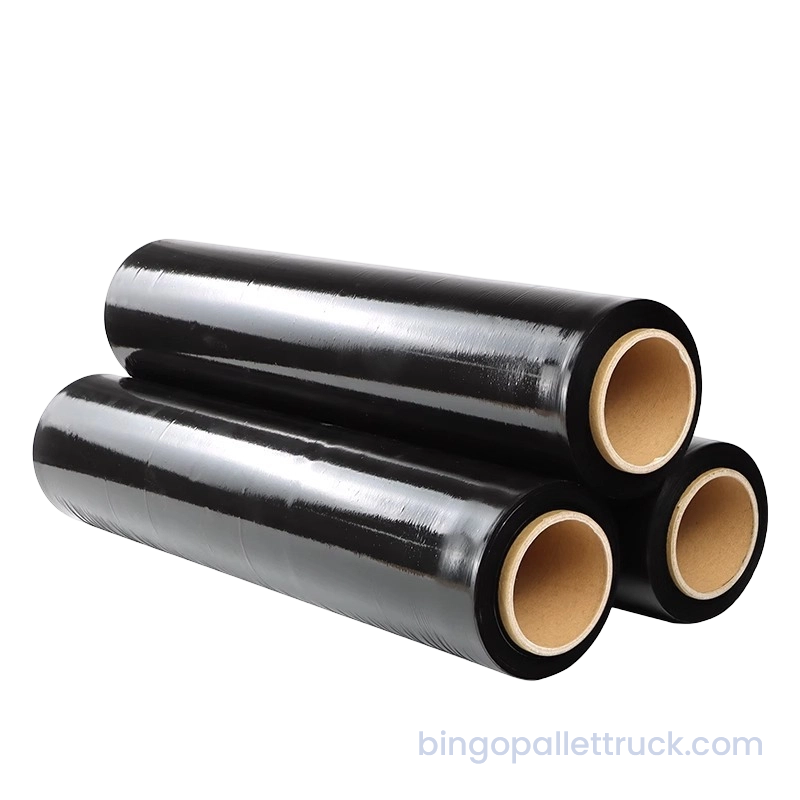
Direct Answer: Is Stretch Wrap Waterproof?
Yes, stretch wrap is water-resistant but not fully waterproof. Made primarily from linear low-density polyethylene (LLDPE), stretch wrap provides effective protection against light moisture, dust, and minor spills when applied correctly with multiple overlapping layers. However, it cannot withstand heavy rainfall, prolonged water exposure, or submersion, as water can penetrate through seams, gaps, and areas where the film is not tightly sealed.
Understanding the Difference Between Water-Resistant and Waterproof
Many suppliers market stretch wrap as "waterproof," but this claim requires careful interpretation. Water-resistant materials repel water to a degree but will eventually allow moisture through under sustained pressure or prolonged exposure. Waterproof materials create an absolute barrier that prevents any water penetration regardless of duration or intensity. Stretch wrap falls into the water-resistant category.
The distinction matters significantly for logistics planning. When properly applied, stretch wrap creates a barrier that repels light rain, humidity, and accidental splashes. The self-adhesive properties of LLDPE film cause layers to bond together, reducing gaps where water might enter. However, the film lacks vapor barrier properties, meaning moisture from humid environments can still reach products over time.
How Stretch Wrap Provides Moisture Protection
Stretch wrap protects goods through several mechanical and material properties:
- Physical Barrier: The plastic film creates a continuous layer that blocks direct water contact with wrapped items.
- Layer Overlap: When wrapped with 50% overlap between layers, multiple film barriers exist at any point, significantly reducing water penetration chances.
- Self-Adhesion: LLDPE stretch film naturally clings to itself without additional tape, creating tighter seals between layers.
- Elongation Properties: With elongation rates of 250% to 500%, the film stretches tightly around irregular shapes, minimizing gaps.
Standard stretch wrap thickness ranges from 12 to 35 microns (0.012–0.035 mm). Thicker films generally provide better moisture resistance. For example, 23-micron film offers superior protection compared to 12-micron film, though at higher material cost.
Technical Specifications and Performance Data
The following table outlines typical performance metrics for LLDPE stretch film across common thickness ranges:
| Thickness (microns) | Tensile Strength (MPa) | Elongation at Break (%) | Light Transmission (%) | Water Protection Level |
|---|---|---|---|---|
| 15–17 | ≥ 37 | 250 / 500 | ≥ 93 | Light moisture |
| 18–20 | ≥ 38 | 300 / 600 | ≥ 92 | Moderate moisture |
| 21–25 | ≥ 39 | 300 / 600 | ≥ 91 | Good moisture resistance |
| 26–30 | ≥ 40 | 400 / 650 | ≥ 90 | Enhanced moisture resistance |
| 31–35 | ≥ 41 | 450 / 700 | ≥ 89 | Heavy-duty protection |
As thickness increases from 15 to 35 microns, tensile strength improves by approximately 10.8%, while elongation capacity increases by up to 80% in the longitudinal direction. This enhanced stretchability allows thicker films to conform more tightly to load contours, reducing entry points for moisture.
Limitations and Vulnerabilities
Despite its protective capabilities, stretch wrap has specific limitations that users must understand:
Seam and Gap Penetration
Water can penetrate through seams between film layers, especially if the wrap application lacks proper tension or overlap. Areas where the film ends or overlaps insufficiently create direct pathways for water ingress. Proper application requires 50% overlap between layers to minimize these vulnerabilities.
No Vapor Barrier Properties
Standard stretch wrap does not prevent moisture vapor transmission. In high-humidity environments, water vapor can pass through the plastic film over time, potentially causing condensation inside wrapped pallets. This limitation makes stretch wrap unsuitable for long-term outdoor storage in humid climates without additional protective measures.
Puncture and Tear Risks
Sharp edges on palletized goods can puncture the film, creating openings for water entry. While LLDPE offers excellent puncture resistance compared to other plastics, it is not puncture-proof. A single tear can compromise the moisture protection of an entire wrapped section.
Temperature Constraints
Standard stretch wrap performs optimally within a temperature range of -15°C to 60°C (5°F to 140°F). Extreme cold can make the film brittle and prone to cracking, while excessive heat may cause adhesive failure or film deformation, both of which compromise water resistance.
Best Practices for Maximizing Water Resistance
To achieve optimal moisture protection with stretch wrap, follow these proven application techniques:
- Start at the base: Begin wrapping at the bottom of the pallet, ensuring the film extends at least 5 cm below the pallet deck to seal the base against moisture from the ground.
- Maintain consistent tension: Apply film with steady tension of 150–300% stretch to ensure tight conformity to load shapes without gaps.
- Use 50% overlap: Each revolution should overlap the previous layer by half the film width, creating multiple barrier layers at every point.
- Wrap to the top: Extend wrapping to cover the upper surface of the load completely, as top exposure is the primary entry point for rain.
- Apply top sheets: For outdoor storage or wet conditions, place a waterproof pallet cover or top sheet over the load before wrapping to provide an additional moisture barrier.
Machine wrapping generally provides superior water resistance compared to manual application due to consistent tension control and uniform overlap. Automated stretch wrap machines can maintain precise 250–300% pre-stretch levels, whereas manual wrapping typically achieves 100–200% stretch with variable tension.
When to Use Enhanced or Alternative Solutions
For applications requiring higher moisture protection than standard stretch wrap provides, consider these alternatives:
Specialized Stretch Films
Some manufacturers offer stretch films with enhanced moisture resistance through additives or multi-layer co-extrusion technology. These specialized films may incorporate vapor barrier layers while maintaining stretchability. UV-resistant variants are also available for extended outdoor exposure.
Shrink Wrap
Heat-shrink wrap creates a more watertight seal than stretch wrap because it conforms tightly to item contours when heated to 100–150°C, eliminating seams and gaps. This makes shrink wrap preferable for applications requiring absolute waterproofing, such as marine equipment storage or long-term outdoor protection.
Combined Protection Systems
The most effective approach for critical moisture protection combines stretch wrap with supplementary barriers. A typical system includes: a waterproof top sheet or pallet cover, stretch wrap application with maximum overlap, and edge protectors to prevent film puncture. This multi-layer strategy addresses the individual weaknesses of each component.
Industry Applications and Real-World Performance
Stretch wrap's water-resistant properties make it suitable for numerous industries, though each sector must evaluate protection levels against specific environmental risks:
- Construction Materials: Protects bricks, tiles, and metal components from rain during short-term outdoor staging. The film's waterproof barrier prevents rust initiation on steel items.
- Food and Beverage: Secures packaged food items on pallets, preventing contamination from dust and light moisture during warehouse storage and distribution.
- Electronics: Provides anti-static and moisture protection for sensitive components, though additional desiccants are recommended for ocean freight.
- Retail and E-commerce: Shields individual packages from damage and moisture during last-mile delivery, where brief rain exposure is common.
In logistics operations, stretch wrap reduces product damage rates by approximately 40–60% compared to unwrapped palletized loads, with moisture-related damage accounting for a significant portion of prevented losses.
Conclusion
Stretch wrap provides reliable water resistance for most industrial and commercial packaging applications, effectively protecting goods from dust, dirt, and light moisture exposure. Its LLDPE composition, self-adhesive properties, and high elongation characteristics create a functional barrier suitable for indoor storage and normal transit conditions.
However, users must recognize that stretch wrap is not fully waterproof. It cannot replace true waterproof packaging for heavy rain exposure, submersion risks, or high-humidity long-term storage. By understanding these limitations and implementing proper application techniques—such as maintaining 50% overlap, using adequate film thickness (20+ microns for outdoor exposure), and combining with top sheets when necessary—businesses can maximize the moisture protection benefits while avoiding costly assumptions about waterproof capabilities.
For critical moisture protection requirements, evaluate specialized stretch films, shrink wrap alternatives, or multi-layer protection systems that address the specific environmental challenges your products will face.
Direct Answer: The Core Difference between Stretch Wrap and plastic wrap
Stretch wrap and plastic wrap are both made from polyethylene, but they serve fundamentally different purposes. Stretch wrap is an industrial packaging material designed to secure and protect palletized loads during shipping and storage. Plastic wrap (also called cling film or Saran wrap) is a thin food-grade film used primarily for covering food items to preserve freshness. The key distinctions lie in thickness, tensile strength, adhesive properties, intended use, and regulatory compliance.
Material Composition and Thickness Comparison
Both products use polyethylene as their base material, but the grade and additives differ significantly. Stretch wrap typically uses linear low-density polyethylene (LLDPE) with specialized tackifiers that create self-adhesion without leaving residue. Plastic wrap commonly uses low-density polyethylene (LDPE) or polyvinylidene chloride (PVDC) with food-safe plasticizers.
| Property | Stretch Wrap | Plastic Wrap |
|---|---|---|
| Typical Thickness | 12–35 microns | 8–12 microns |
| Tensile Strength | 37–41 MPa | 15–25 MPa |
| Elongation at Break | 250–700% | 100–200% |
| Roll Width | 30–150 cm | 25–45 cm |
| Roll Length | 300–2,000 meters | 30–100 meters |
| Weight per Roll | 2–20 kg | 100–500 g |
Stretch wrap is approximately 2 to 4 times thicker than plastic wrap, with tensile strength roughly 1.5 to 2.7 times higher. This substantial difference in physical properties directly reflects their intended applications.
Intended Applications and Use Cases
The divergence in design becomes clear when examining typical use scenarios for each product.
Stretch Wrap Applications
- Pallet Unitization: Securing multiple boxes or items onto a single pallet for forklift handling and transport.
- Load Stabilization: Preventing shifting during transit, reducing damage rates by 40–60%.
- Dust and Moisture Protection: Creating a protective barrier for warehouse storage and short-term outdoor exposure.
- Inventory Bundling: Grouping similar items together for easier handling and counting.
Plastic Wrap Applications
- Food Preservation: Covering dishes, wrapping sandwiches, and preventing oxidation of cut produce.
- Microwave Cooking: Acting as a splatter guard during heating (only for microwave-safe grades).
- Refrigeration Storage: Extending shelf life by limiting air exposure and preventing odor transfer.
- Portion Control: Wrapping individual servings for meal prep and freezer organization.
Adhesive and Cling Mechanisms
Both products rely on cling properties, but the mechanisms and intensity differ substantially.
Stretch wrap uses a tackifier additive in the LLDPE resin that creates a light, non-transferable adhesion. This allows layers to stick to each other without leaving residue on the wrapped products. The cling strength is calibrated to hold heavy loads under tension—typically requiring 150–300% stretch during application to activate the self-adhesive properties fully.
Plastic wrap achieves cling through either electrostatic attraction (in PVC-free varieties) or the natural tackiness of the polymer blend. The adhesion is designed to be gentle enough for delicate food surfaces while creating an airtight seal. Unlike stretch wrap, plastic wrap cling is meant to adhere to smooth surfaces like glass, ceramic, and itself, not to hold weight under tension.
Regulatory Standards and Safety Compliance
This is one of the most critical differences, particularly for businesses and consumers concerned with safety.
Food-Grade Certification
Plastic wrap must comply with strict food-contact regulations. In the United States, it must meet FDA 21 CFR standards for indirect food additives. In the European Union, it must comply with EU Regulation 10/2011 on plastic materials intended to come into contact with food. These regulations limit the types of plasticizers, stabilizers, and other additives that can be used.
Stretch wrap is not food-grade certified unless specifically manufactured and labeled as such. Industrial stretch wrap may contain additives, UV stabilizers, and tackifiers that are not approved for direct or indirect food contact. Using standard stretch wrap to cover food items poses potential health risks from chemical migration.
Temperature Resistance
Microwave-safe plastic wrap is tested to withstand temperatures up to 110–120°C without degradation or chemical release. Standard stretch wrap begins to soften at approximately 60–80°C and is never rated for food heating applications. Using stretch wrap in a microwave or oven can result in melting, fume release, and potential fire hazards.
Can You Use Them Interchangeably?
The short answer is no, and here is why attempting substitution creates problems in both directions.
Using Plastic Wrap for Industrial Packaging
Plastic wrap lacks the tensile strength and elongation to secure palletized loads. A typical plastic wrap roll contains only 30–100 meters of film, meaning you would exhaust multiple rolls to wrap a single pallet. The film would tear under the tension required for load stabilization, and the narrow width (25–45 cm) makes efficient coverage impractical. The cost per pallet would increase by 500–1,000% compared to using proper stretch wrap.
Using Stretch Wrap for Food Storage
Standard stretch wrap is not food-safe. Industrial formulations may contain:
- UV stabilizers that are not approved for food contact.
- Tackifier resins with unknown migration potential.
- Higher levels of processing aids and antioxidants.
- No certification for microwave or freezer safety.
Additionally, stretch wrap is too thick and rigid for effective food sealing. It does not conform to bowl edges or create airtight seals around food surfaces the way plastic wrap does.
Environmental Impact and Recycling
Both products present recycling challenges, but their environmental profiles differ.
Stretch wrap is highly recyclable when clean and separated from other materials. Many warehouses collect used stretch wrap for recycling programs, achieving recovery rates of 50–70% in facilities with dedicated collection systems. The LLDPE material can be reprocessed into new film, plastic lumber, or composite materials.
Plastic wrap recycling is more problematic due to food contamination. Residual oils, sauces, and organic matter make mechanical recycling difficult. Many municipal recycling programs do not accept plastic wrap, and it frequently ends up in landfills. However, some specialized recycling facilities accept clean plastic wrap through store drop-off programs.
Both products contribute to plastic waste, but stretch wrap's industrial scale means a single warehouse might use 500–2,000 kg annually, while household plastic wrap consumption is typically under 5 kg per year.
How to Choose the Right Product
Selecting between stretch wrap and plastic wrap depends entirely on your specific requirements. Use this decision framework:
- Will the material contact food? If yes, use only food-grade plastic wrap with appropriate certifications. Never use industrial stretch wrap for food.
- What is the load weight? For items over 10 kg or palletized loads, stretch wrap is essential. Plastic wrap cannot provide structural support.
- Is the goal containment or coverage? Use stretch wrap for containment and stabilization. Use plastic wrap for surface coverage and air exclusion.
- What is the exposure environment? For outdoor storage, UV-resistant stretch wrap is required. For refrigerator or freezer use, only use plastic wrap rated for those temperatures.
- What is the budget scale? Industrial operations benefit from stretch wrap's lower per-meter cost. Household use favors plastic wrap's convenience and food safety.
Conclusion
Stretch wrap and plastic wrap are not interchangeable products despite their similar appearance and polyethylene base. Stretch wrap is an industrial tool engineered for load containment, with thicknesses up to 35 microns, tensile strengths exceeding 37 MPa, and elongation rates reaching 700%. It is designed for warehouses, shipping docks, and manufacturing floors—not kitchens.
Plastic wrap is a consumer-grade food preservation tool, typically 8–12 microns thick, with food-safe formulations and microwave ratings. It excels at creating airtight seals around food but fails completely at load stabilization.
Understanding these differences prevents costly mistakes, safety hazards, and operational inefficiencies. Choose stretch wrap for industrial packaging and logistics. Choose plastic wrap for food storage and kitchen use. Never substitute one for the other.



Copyright @ Yancheng Bingo Machinery Equipment Co., Ltd. All rights reserved Warehouse Logistics Equipment Manufacturer Pallet Truck Supplier
