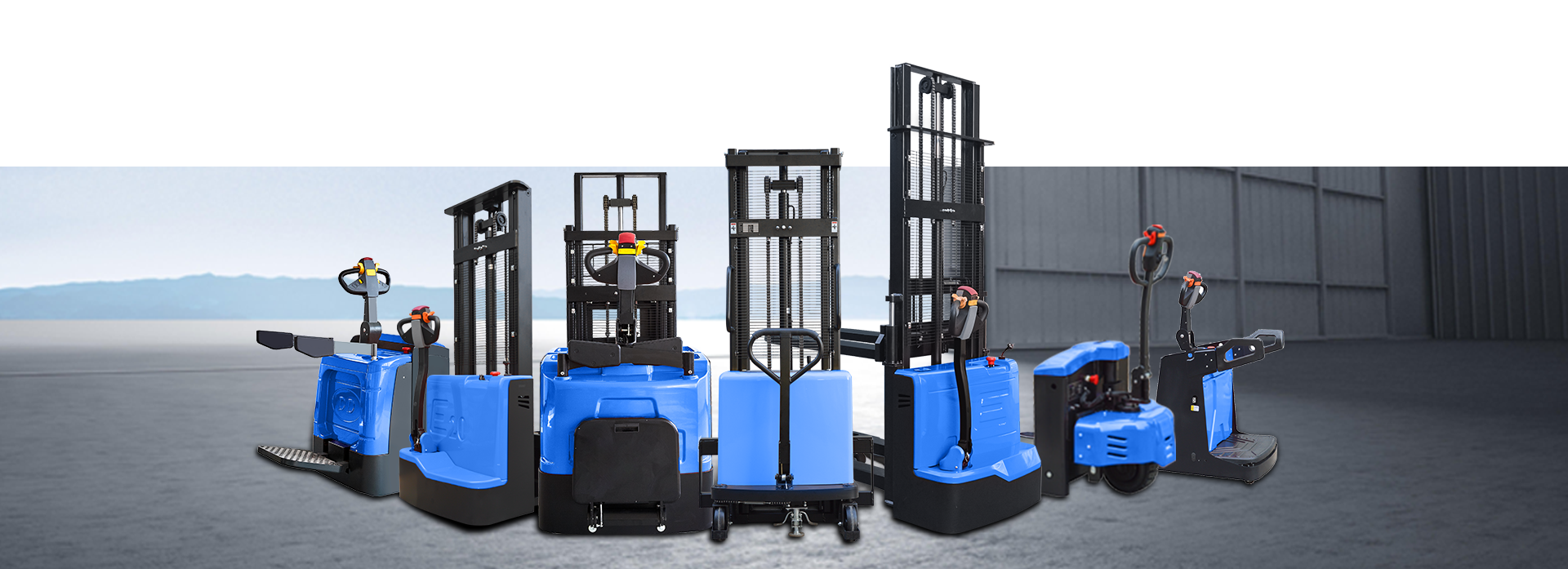
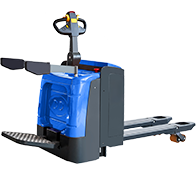
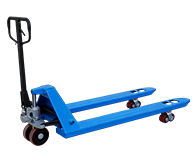
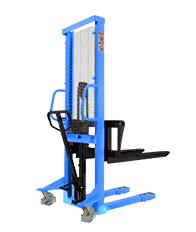
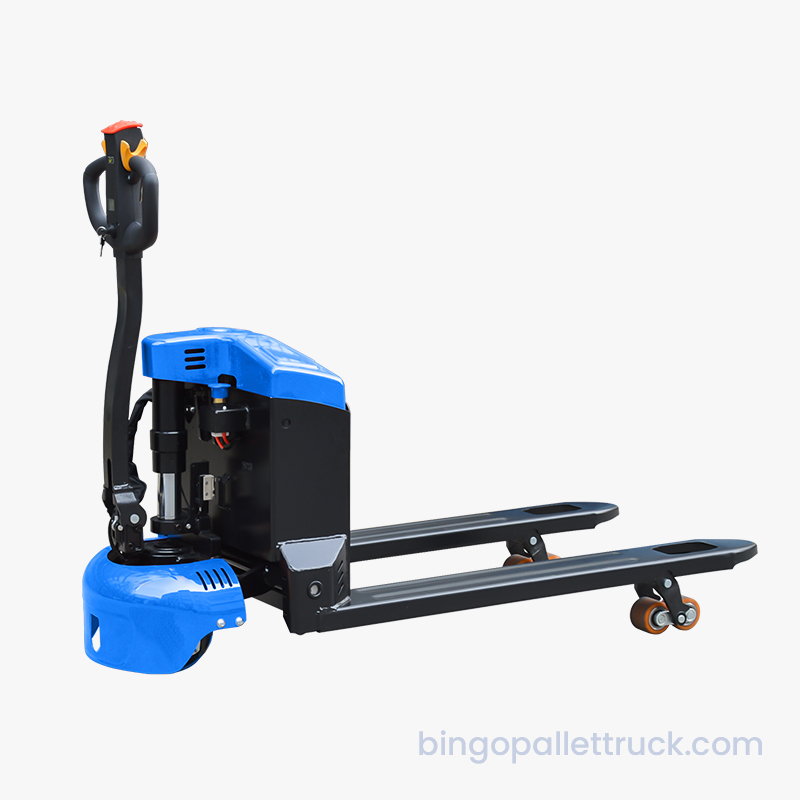
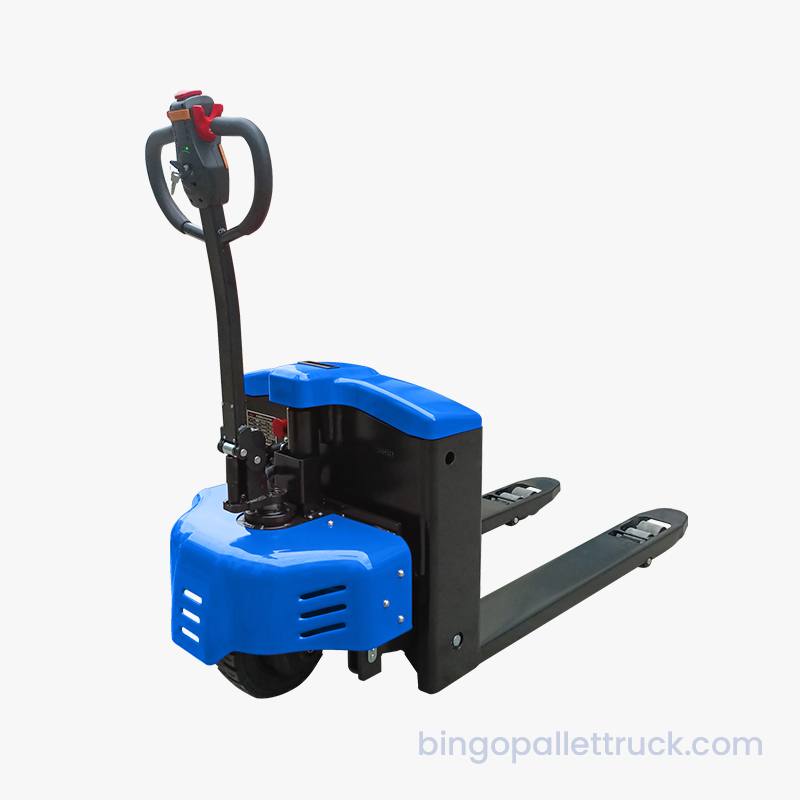
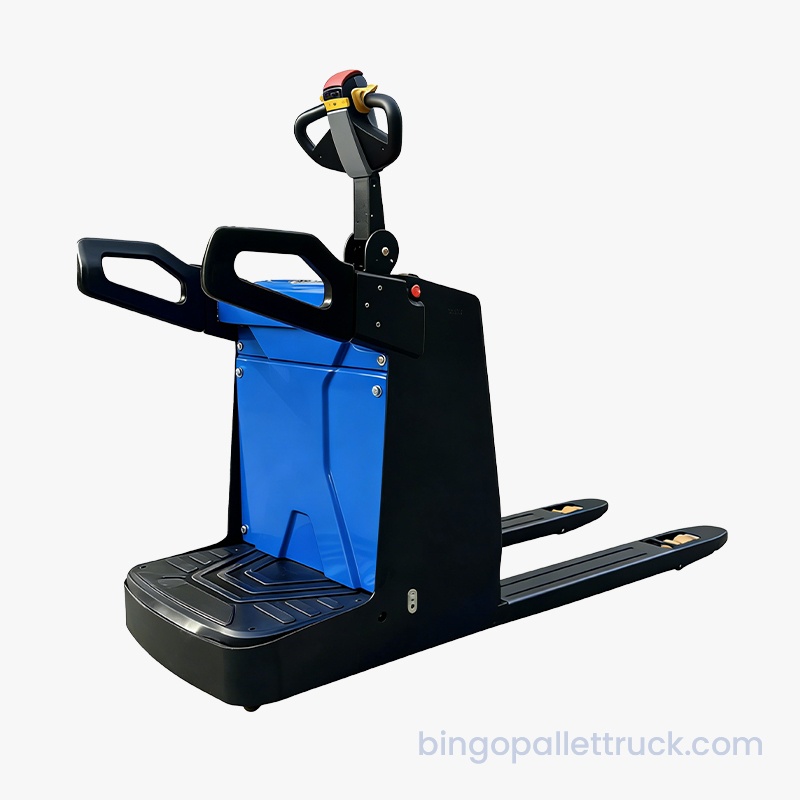
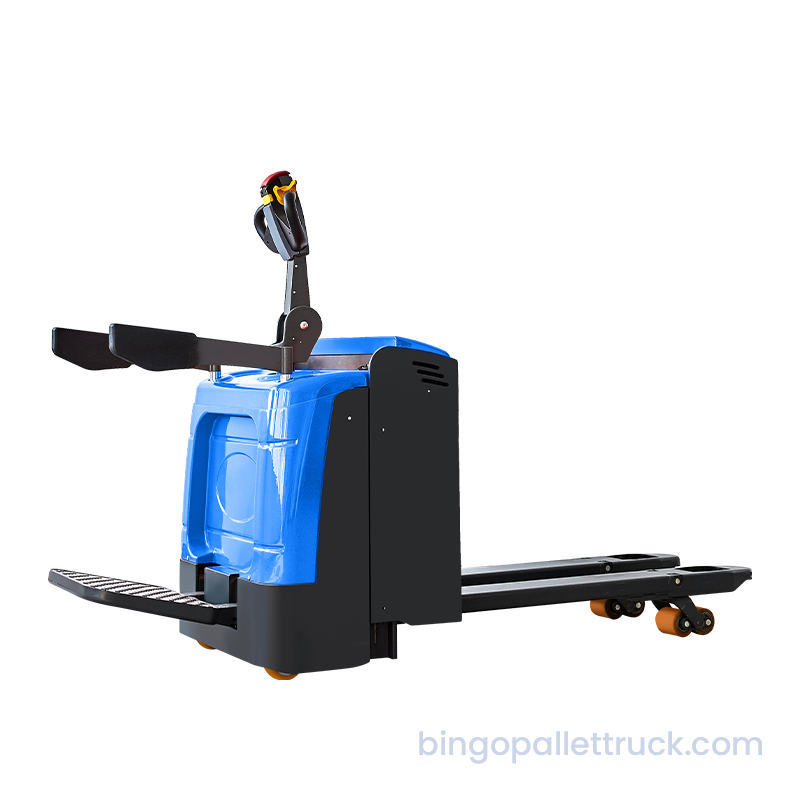
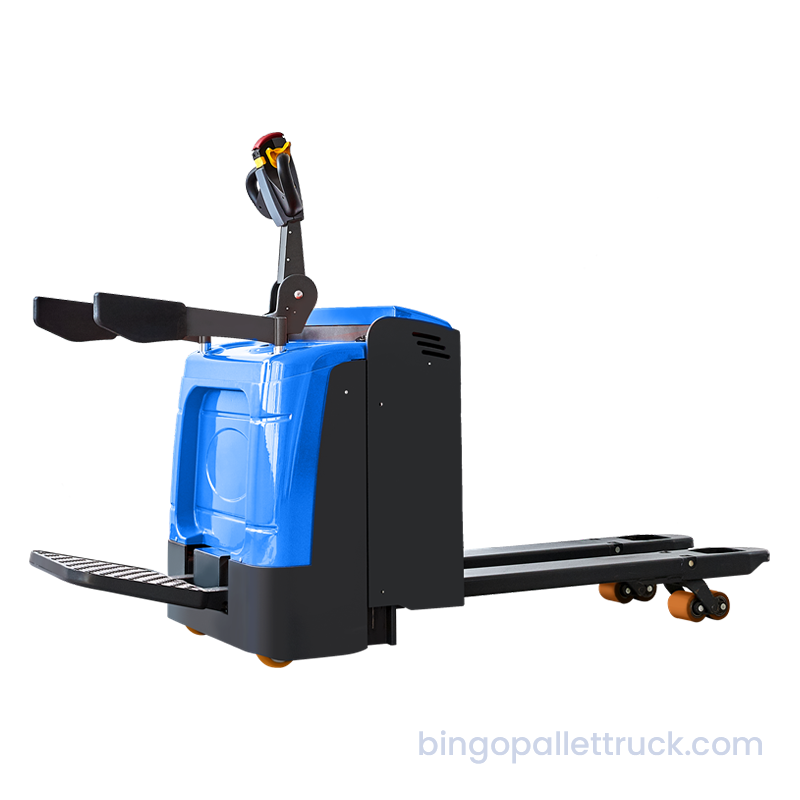
An electric pallet truck is a battery-powered material handling device designed to lift, move, and position palletized loads over short distances. Unlike traditional manual pallet jacks that rely entirely on human effort, the electric version uses an integrated electric drive unit and a hydraulic lifting system to perform most of the physical work automatically.
The working principle of an electric pallet truck can be broken down into three core systems:
- Traction system: A rechargeable traction battery powers an electric motor that drives the rear wheel, propelling the truck forward or backward at the operator's command via the control handle.
- Hydraulic lifting system: An electric hydraulic pump pressurizes fluid to raise the fork arms, lifting pallets off the ground to a travel height typically between 100–200 mm — just enough to clear the floor for movement.
- Steering and braking system: The operator steers through a pivoting tiller handle, while an automatic electromagnetic brake engages when the handle is released or the truck is idle, ensuring safe stops on flat or slightly inclined surfaces.
Most standard electric pallet trucks have a load capacity ranging from 1 to 2.5 tons, a travel speed of 4–6 km/h when loaded, and can operate continuously for 6–8 hours on a single battery charge under typical warehouse conditions.
Core Advantages of Using an Electric Pallet Truck
Switching from manual handling or diesel-powered forklifts to an electric pallet truck delivers measurable operational and financial benefits across a wide range of industries.
Energy-Saving and Zero Emissions
Electric pallet trucks run entirely on rechargeable batteries, producing zero exhaust emissions and near-silent operation. This makes them the equipment of choice for indoor environments such as cold storage facilities, food processing plants, and electronics workshops, where air quality and noise control are strictly regulated.
Compact Design for Narrow Spaces
With a low-profile body and a small turning radius — typically under 1,600 mm for standard models — electric pallet trucks can navigate aisles as narrow as 2 meters. This allows warehouses to maximize storage density without sacrificing operational access.
Ease of Operation
The intuitive tiller handle integrates all controls — forward/reverse drive, lift, and lower — into a single ergonomic unit. Most operators can become proficient within a few hours, significantly reducing training time and costs compared to full-size forklifts that often require licensed certification.
Lower Total Cost of Ownership
Electric pallet trucks have fewer moving parts than combustion-engine equipment. With no engine oil changes, exhaust system maintenance, or fuel costs, operators report maintenance expenses 30–50% lower than equivalent diesel or LPG-powered units over a five-year period.
Labor Cost Reduction
A single operator with an electric pallet truck can handle the workload that would otherwise require multiple manual handlers. In distribution centers with high pallet throughput, this translates directly into lower staffing requirements and reduced risk of workplace injuries caused by manual lifting.
Key Application Scenarios for Electric Pallet Trucks
The versatility of the electric pallet truck makes it suitable across a wide range of industries and operational environments. Below is a summary of the most common use cases:
Table 1: Common Application Scenarios and Typical Tasks for Electric Pallet Trucks
| Application Scenario |
Typical Tasks |
Key Benefit |
| Industrial Warehouses |
Shelf replenishment, inbound/outbound transfers |
High throughput, narrow aisle capability |
| Logistics Distribution Centers |
Order sorting, truck loading/unloading |
Fast cycle times, reduced labor |
| Factory Workshops |
Inter-line material transfer, WIP movement |
Smooth production flow, low noise |
| Supermarket & Retail Warehouses |
Stock replenishment, goods receiving |
Reduced staff fatigue, compact footprint |
| Cold Storage & Clean Rooms |
Hygiene-sensitive goods movement |
Zero emissions, easy-to-clean surfaces |
| Freight Stations & Small Stores |
Small-batch transfers, platform loading |
Affordable entry-level solution |
Electric Pallet Truck vs. Manual Pallet Jack: Which Should You Choose?
Many operations start with a manual pallet jack and later upgrade to an electric pallet truck. The right choice depends on your daily pallet volume, travel distance, and workforce considerations.
- Choose a manual pallet jack if your operation moves fewer than 20–30 pallets per day over very short distances (under 15 meters), budget is the primary constraint, and there is no need for continuous all-day use.
- Choose an electric pallet truck if operators are moving pallets repeatedly throughout an 8-hour shift, travel distances exceed 20–30 meters per move, load weights approach or exceed 1 ton, or reducing musculoskeletal injury risk is a priority for your workplace safety program.
In high-volume environments, the productivity gap is significant: an electric pallet truck can complete a typical 30-meter pallet transfer in under 2 minutes, while the same task manually takes 4–6 minutes and generates physical fatigue that compounds across a full workday.
Frequently Asked Questions About Electric Pallet Trucks
How long does the battery last on a single charge?
Under normal warehouse conditions with mixed driving and lifting cycles, a standard lead-acid battery pack supports 6–8 hours of continuous operation. Lithium-ion battery options, increasingly available on newer models, offer faster recharge times (2–3 hours vs. 8 hours for lead-acid) and a longer overall battery service life of 2,000+ charge cycles compared to approximately 1,000–1,200 for lead-acid.
Can an electric pallet truck be used on ramps or uneven surfaces?
Electric pallet trucks are designed primarily for flat, hard-surface floors such as concrete or smooth epoxy. Most models can handle gentle inclines up to 5–8%, but operating on steeper ramps or uneven ground significantly reduces stability and braking effectiveness. For inclined environments, purpose-built powered pallet trucks with enhanced braking systems should be specified.
Does operating an electric pallet truck require a license or certification?
In most countries, a formal forklift license is not required for walk-behind electric pallet trucks, as they are classified differently from sit-on forklifts. However, employers are responsible for ensuring operators receive adequate site-specific safety training before use, covering load limits, speed restrictions, and emergency procedures.
What routine maintenance does an electric pallet truck require?
Daily maintenance is minimal and typically includes checking the battery charge level, inspecting fork arms for visible damage, verifying that the braking system engages correctly, and cleaning the drive wheel area. Periodic maintenance — usually every 250–500 operating hours — covers hydraulic fluid level checks, battery terminal cleaning, and wheel replacement assessment. Compared to combustion-engine equipment, the absence of an engine eliminates the most labor-intensive maintenance tasks.
What is the typical service life of an electric pallet truck?
With proper maintenance and appropriate use within rated load capacity, a well-built electric pallet truck can remain in service for 7–10 years. The hydraulic system and structural frame are typically the longest-lasting components, while drive wheels and batteries are the most commonly replaced wear items over the equipment's lifetime.
Important Safety Guidelines for Electric Pallet Truck Operation
Safe operation of an electric pallet truck depends on both equipment design features and operator behavior. The following practices are essential for preventing accidents and extending equipment life:
- Respect the rated load capacity. Overloading not only risks structural failure but also reduces braking effectiveness and increases tip-over risk. Always check the load weight before lifting.
- Keep forks at travel height. Forks should be raised only 100–150 mm off the ground during travel to maintain a low center of gravity and avoid floor obstructions.
- Never exceed safe speed in pedestrian areas. Most warehouses set internal speed limits of 4–6 km/h in mixed pedestrian-vehicle zones. Reduce speed further at blind corners and doorways.
- Position loads correctly on the pallet. Unevenly distributed loads are one of the most common causes of pallet drops and tip-overs. Center the load and verify stability before moving.
- Conduct a pre-shift inspection. Check brakes, battery level, hydraulic function, and the condition of fork arms before each operating shift. Report defects immediately and remove the equipment from service until repaired.

 en
en  Español