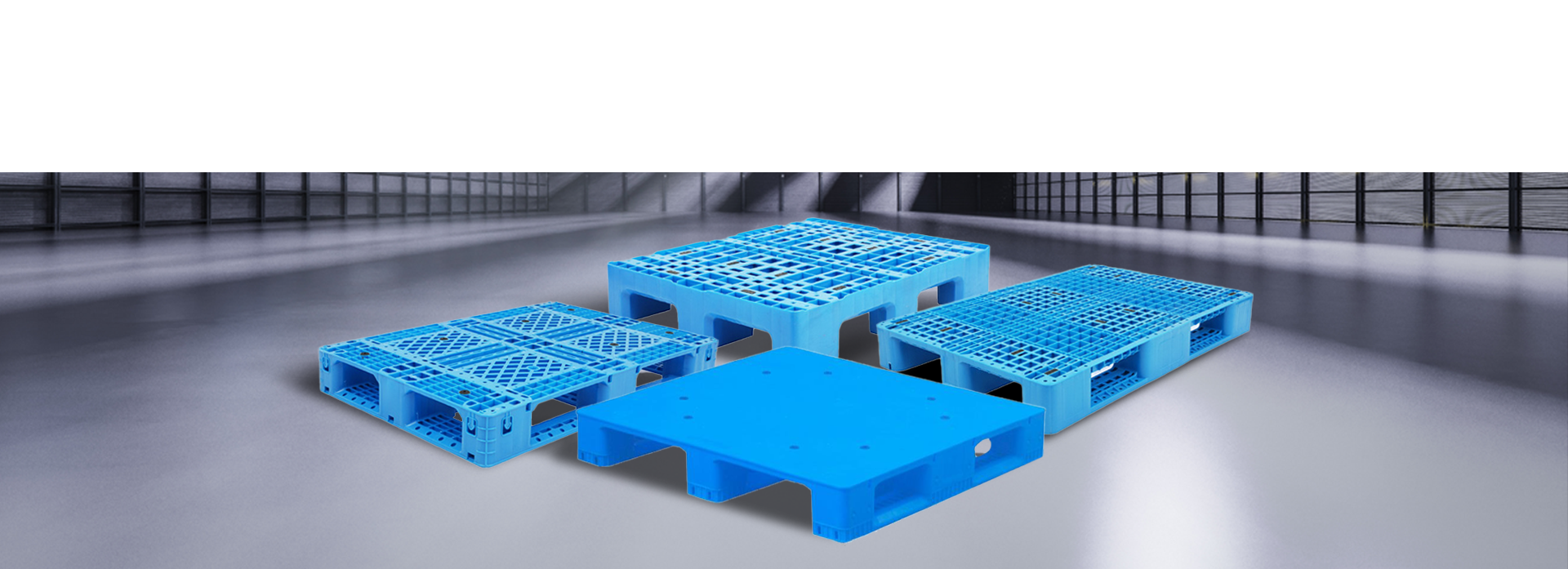
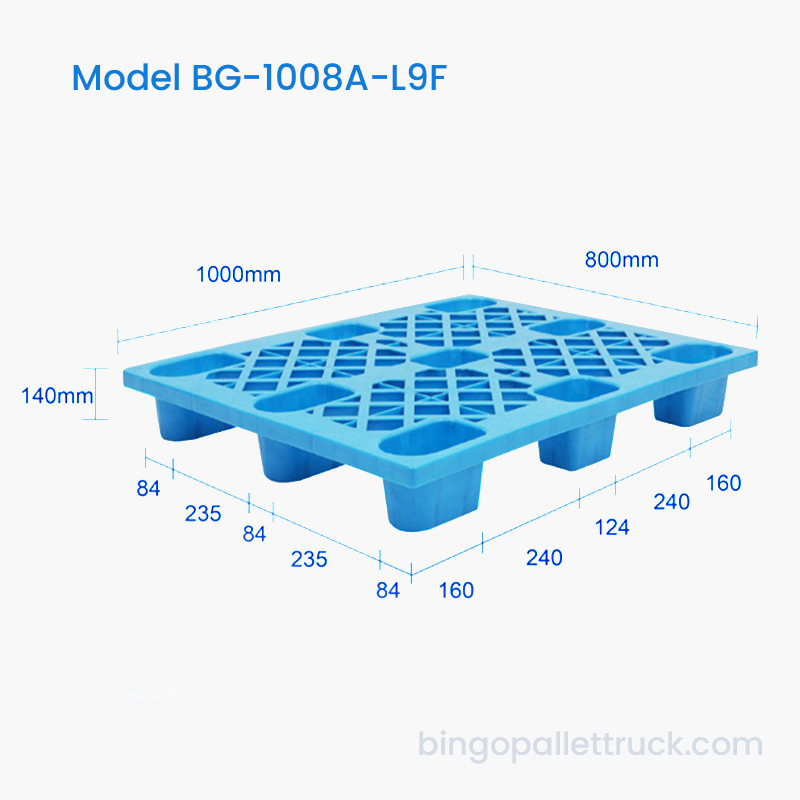
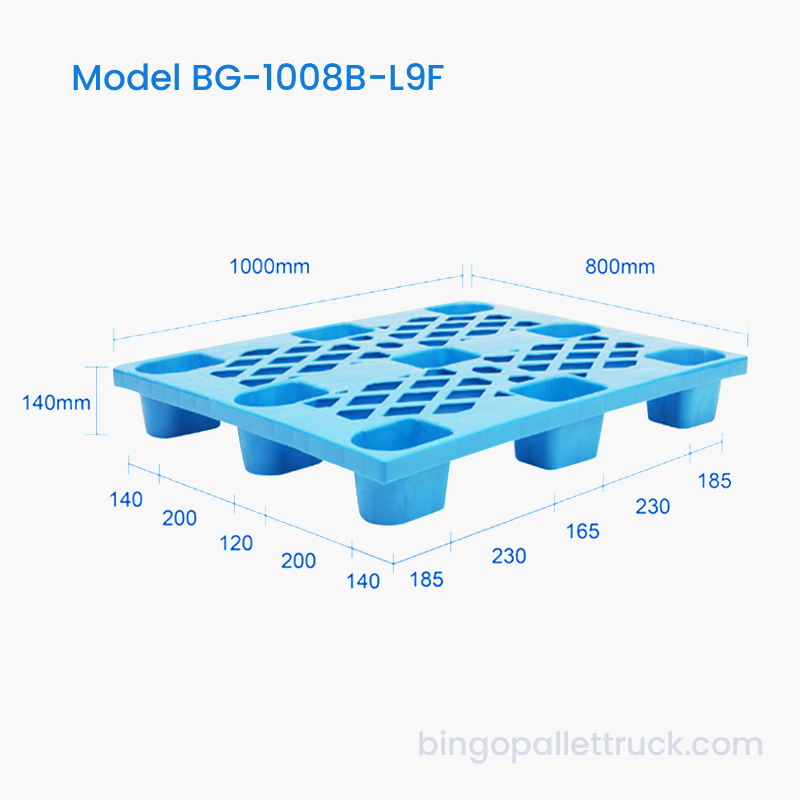
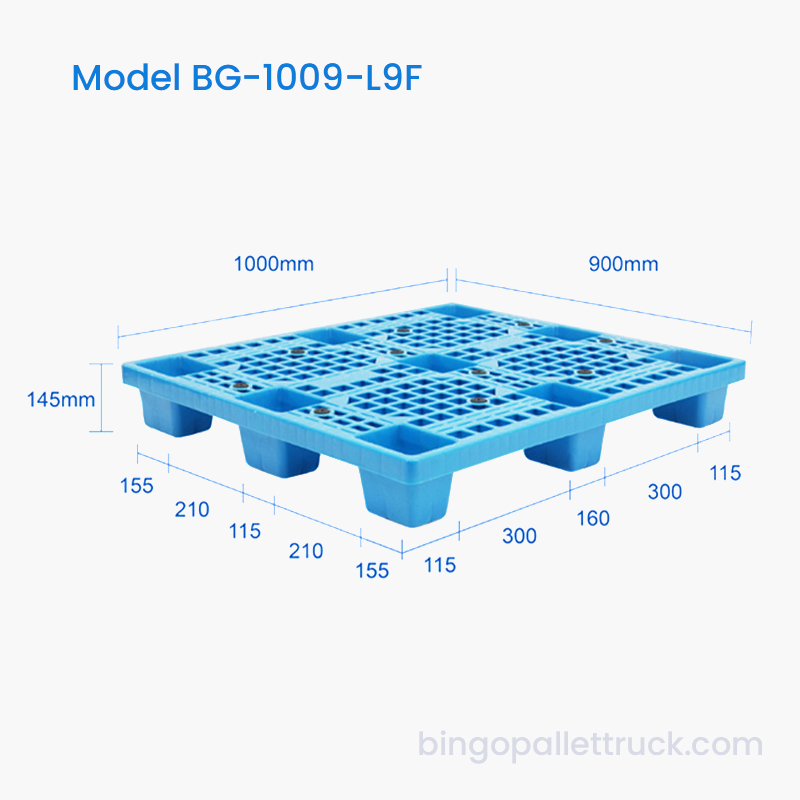
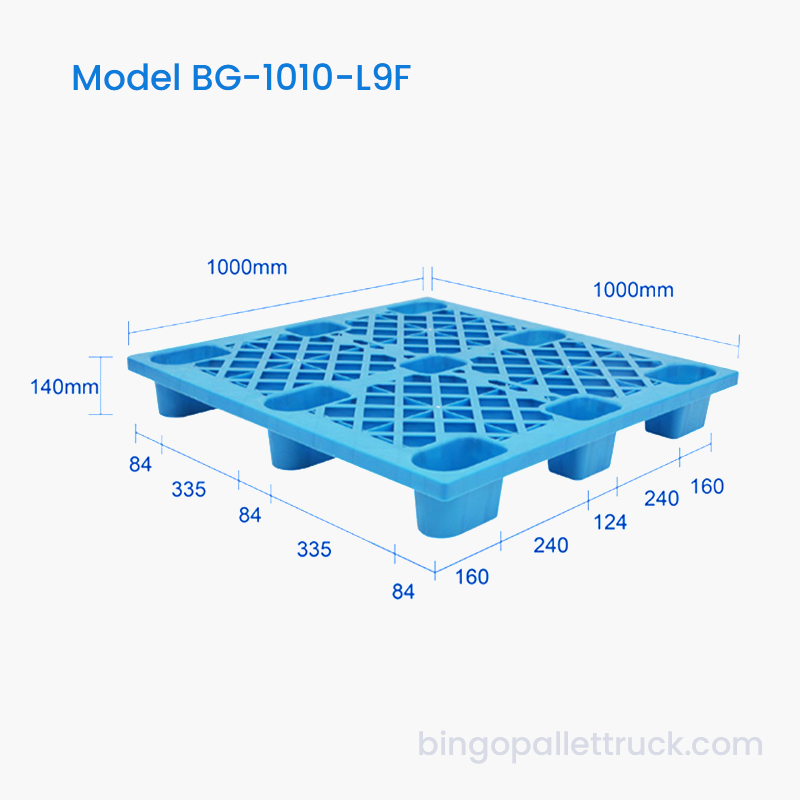
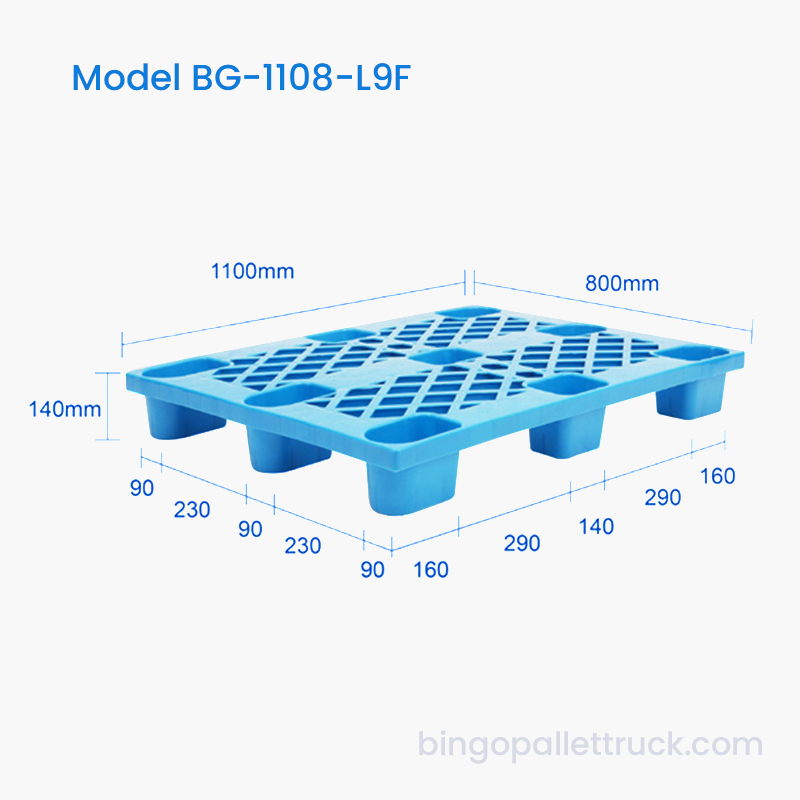
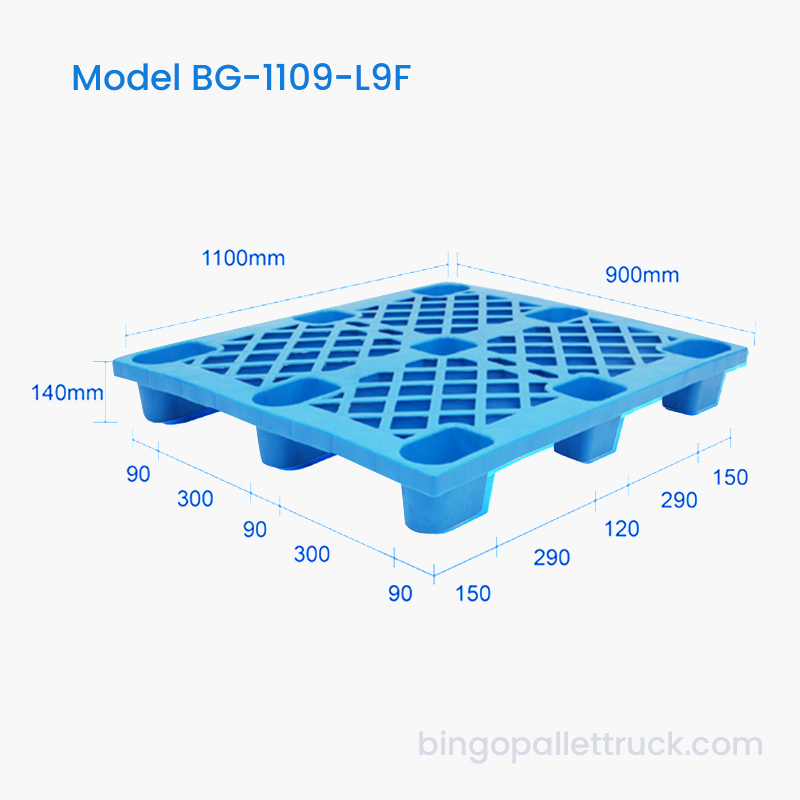
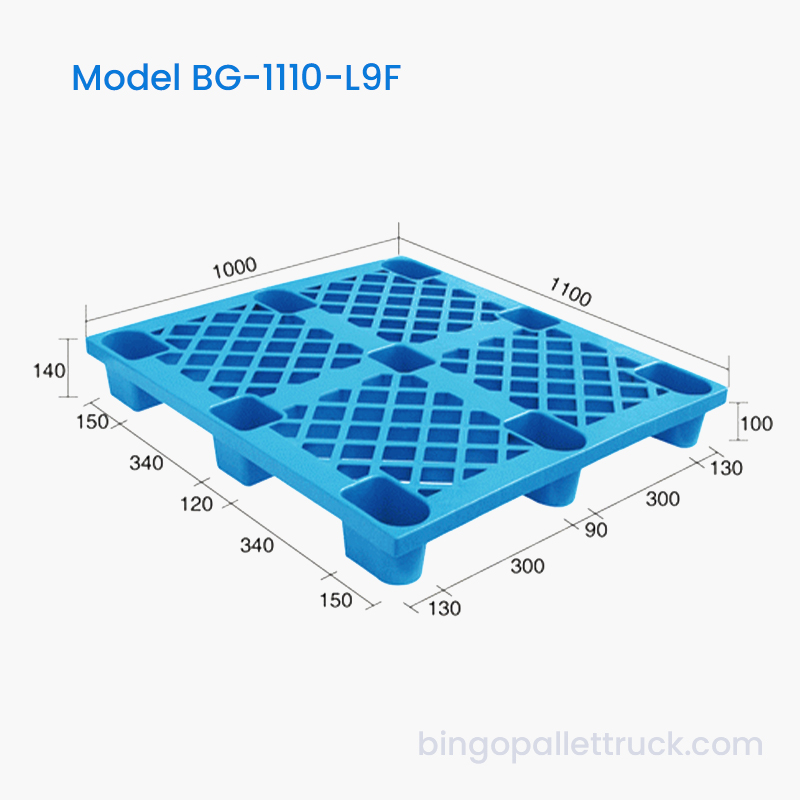
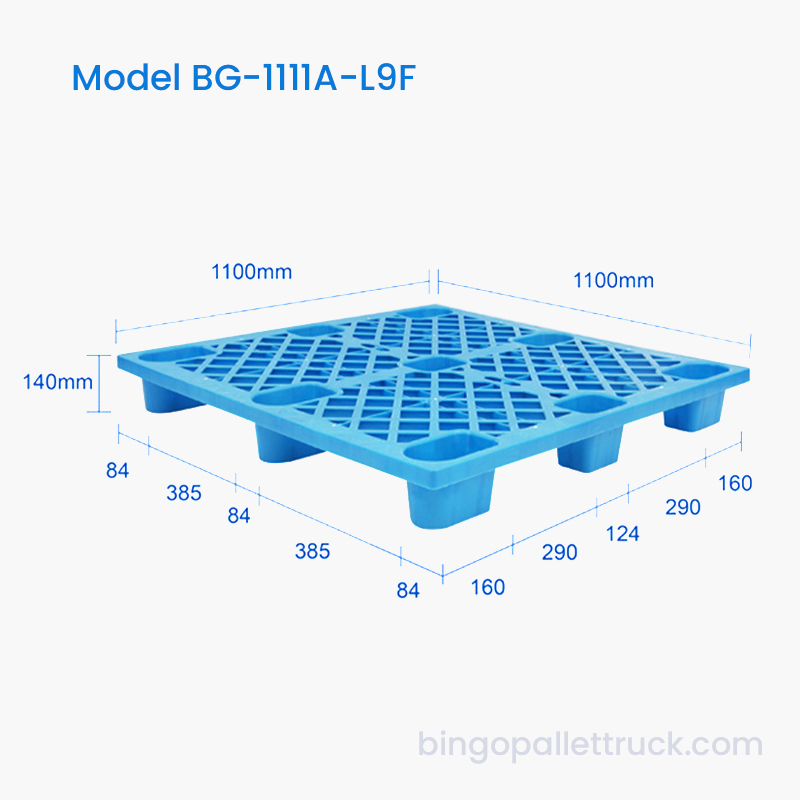
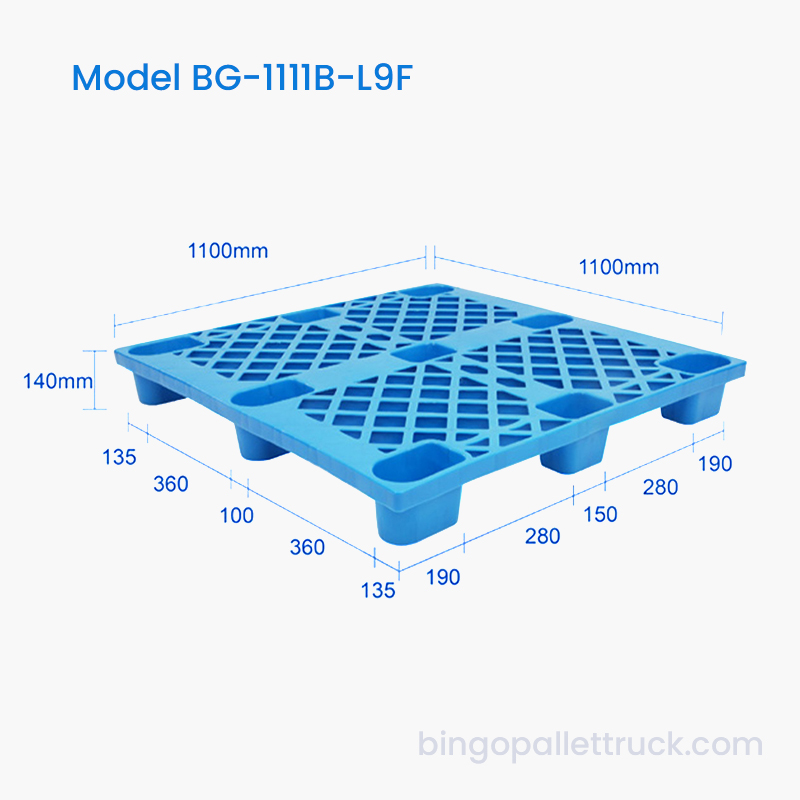
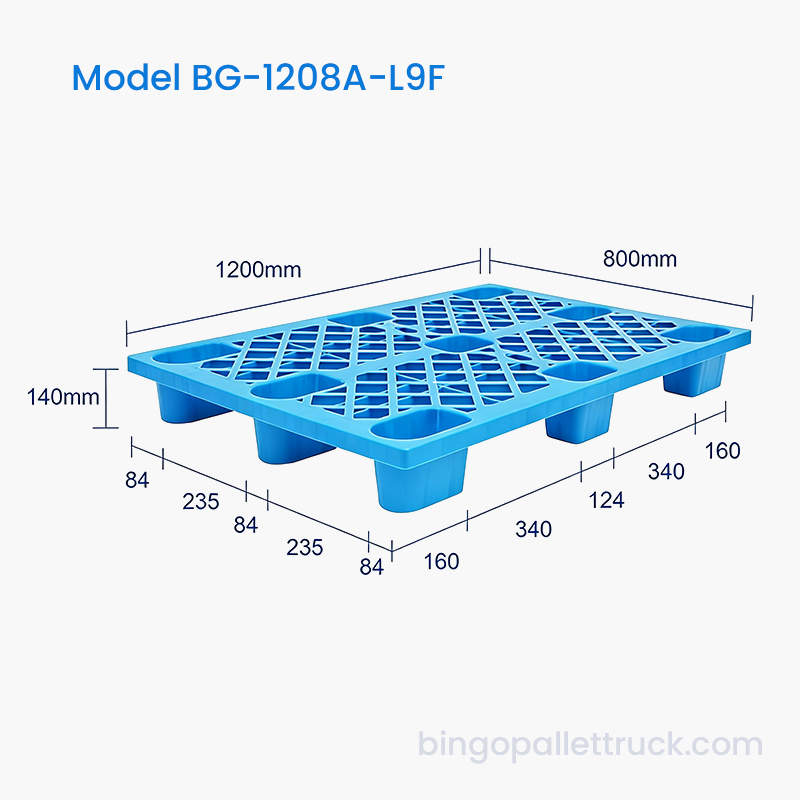
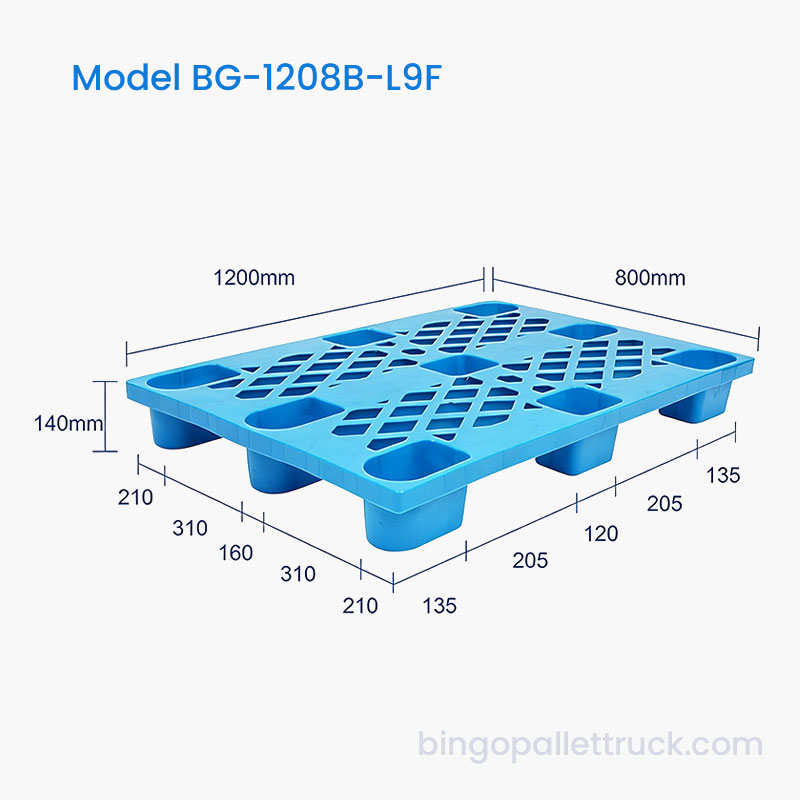
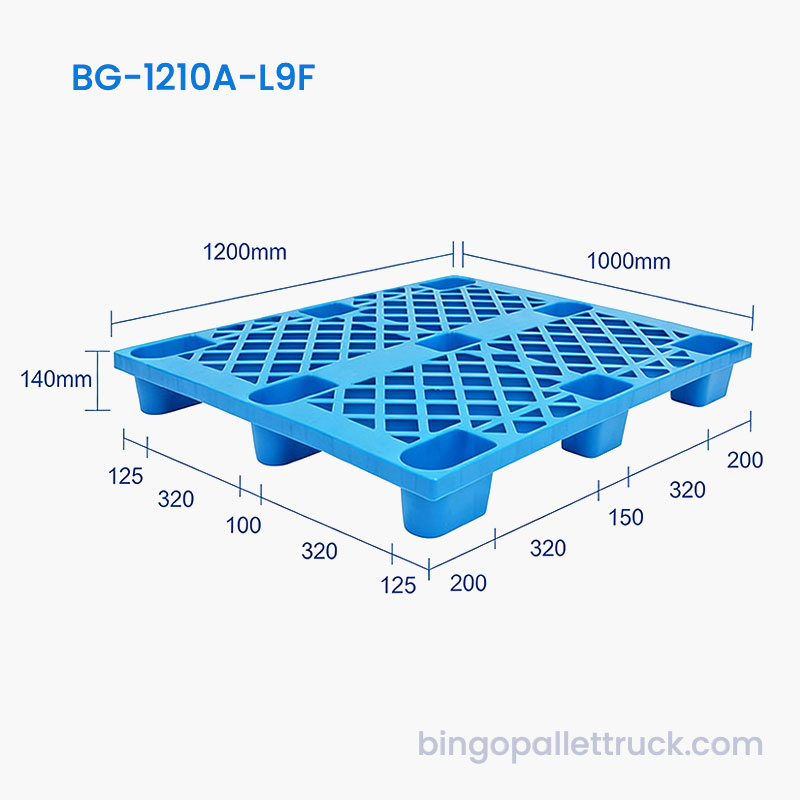
When selecting plastic pallets for a warehousing or logistics operation, functional features are as important as size and base type. The three core feature categories — Nestable, Rackable, and Stackable — define how a pallet behaves when empty, how it performs under load in a racking system, and how safely it can be stacked with goods in place. Choosing the wrong feature combination is one of the most common causes of wasted storage space, racking system incompatibility, and avoidable load collapse incidents. Understanding what each feature means in practice helps operators match the right pallet to every scenario in their supply chain.
Nestable Plastic Pallets: Solving the Empty Pallet Storage Problem
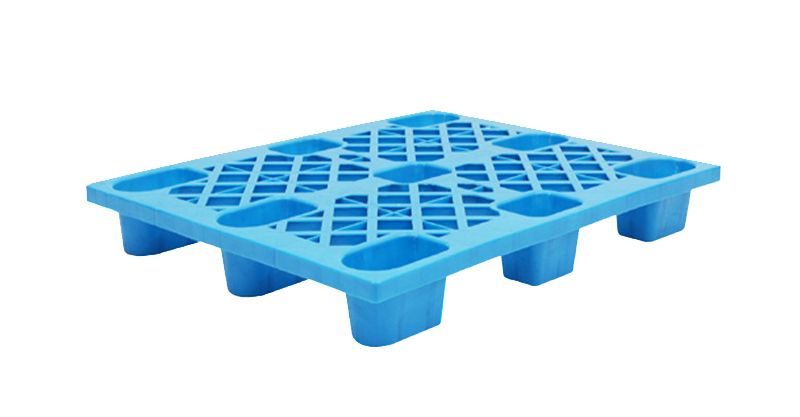
Nestable pallets are engineered so that when empty, one pallet can be inserted into the one below it — the legs or base structure of the upper pallet slot into the spaces between the legs of the lower pallet, reducing the combined stack height significantly. A standard non-nestable pallet stack of ten pallets might reach 1,400–1,500 mm in height; the same ten nestable pallets can occupy as little as 500–700 mm, depending on the degree of nesting designed into the product.
This feature delivers direct operational and financial benefits in any situation where large numbers of empty pallets must be stored or transported. In retail distribution, e-commerce returns flows, and one-way export logistics — where pallets travel outbound loaded but return empty — the space consumed by empty pallet storage is a real cost. Nestable pallets can reduce empty pallet storage footprint by 40–60%, freeing valuable warehouse floor space for productive use.
- Best for: One-way export shipments, retail back-of-house storage, e-commerce fulfillment centers with high empty pallet turnover, and any operation where return transport of empty pallets must be minimized.
- Key advantage: Dramatically reduces empty pallet storage space and return freight costs by allowing far more pallets per truck or storage bay.
- Important note: Nestable pallets are designed for floor-level storage and transport only when empty — they are not suitable for use in standard selective racking systems when loaded, as their base structure does not provide consistent beam contact points.
Rackable Plastic Pallets: Engineered for Safe Use in Racking Systems
Rackable pallets are specifically designed and tested to bear a load while supported only at two points — the racking beams — rather than across the entire base. When a pallet is placed in selective racking, only the front and rear beam rails support it; the centre of the pallet spans an unsupported gap that can range from 800 mm to over 1,000 mm depending on racking depth. A non-rackable pallet placed in this condition will deflect excessively, potentially cracking the deck or dropping the load.
Rackable plastic pallets achieve their performance through increased deck thickness, reinforced structural ribs, higher-grade HDPE material, or a combination of all three. They are tested and rated with a specific racking load capacity — distinct from their static floor load and dynamic travel load ratings — which reflects the load they can safely bear on two beams at a defined span. Typical rackable plastic pallet ratings range from 500 kg to 1,500 kg on rack, depending on construction grade and footprint.
- Best for: Selective pallet racking, drive-in and push-back racking, pallet live storage systems, and any warehouse where loaded pallets are placed on elevated beam rails.
- Key advantage: Certified load-bearing performance on rack beams, preventing deck failure and ensuring safe elevated storage of loaded pallets.
- Selection tip: Always match the pallet's rated racking load to your actual load weight with a safety margin of at least 20%. Confirm the beam span with your racking supplier before specifying a rackable pallet grade.
Stackable Plastic Pallets: Safe Multi-Tier Floor and Block Storage
Stackable pallets are designed to be safely stacked one on top of another with goods in place — the load of the upper pallet and its contents is transferred through the pallet structure down to the pallet below, rather than resting on the goods themselves. This requires the pallet to have defined load transfer points — typically the legs or perimeter frame — that align precisely when pallets are stacked, creating a stable column capable of bearing the cumulative weight of multiple tiers.
Stackable pallets are the standard choice for block stacking — a floor-level storage method that uses no racking infrastructure and relies entirely on the structural integrity of the pallet and load stack. A well-specified stackable pallet can support 2–4 loaded pallet tiers in block storage, depending on load weight and the pallet's rated stacking capacity. This makes block stacking a cost-effective storage strategy for facilities that cannot justify the capital investment of a full racking system, or for overflow storage areas.
- Best for: Block stacking in warehouses without racking, cold store bulk storage, seasonal overflow areas, and operations where goods are stored for short periods before onward shipment.
- Key advantage: Enables multi-tier floor storage without racking investment; the structural integrity of the pallet — not the product packaging — bears the stacking load.
- Important note: Stackable ratings assume consistent leg alignment between pallets. Mixed pallet types or misaligned stacks distribute load unevenly and significantly reduce safe stacking height.
Feature Comparison: Nestable vs Rackable vs Stackable
| Feature |
Nestable |
Rackable |
Stackable |
| Primary benefit |
Compact empty storage |
Safe elevated racking use |
Multi-tier floor stacking |
| Suitable for racking (loaded) |
No |
Yes |
No (floor only) |
| Reduces empty pallet volume |
Yes — 40–60% |
No |
Partially |
| Typical racking load |
Not rated |
500–1,500 kg |
Not rated |
| Typical loaded stack tiers |
1 (floor only) |
1 per rack level |
2–4 |
| Ideal operation type |
One-way export, retail, e-commerce |
Warehouses with racking systems |
Block storage, cold stores, overflow |
Comparison of Nestable, Rackable, and Stackable plastic pallet features across key operational criteria
Can a Pallet Be Both Rackable and Stackable?
Yes — and many standard warehouse pallets are designed to meet both specifications simultaneously. A pallet that is both rackable and stackable has been engineered and tested to safely bear its rated load when supported on rack beams and when loaded pallets are stacked on top of each other on the floor. This dual capability is common in general-purpose warehouse plastic pallets with nine-foot or perimeter-base designs, where the leg geometry provides defined contact points in both scenarios.
However, the racking load rating and the stacking load rating are separate figures and must both be checked. A pallet rated for 1,000 kg on rack may carry a different stacking rating — often lower — because the force transmission path through the pallet structure differs between the two loading conditions. Always request both ratings from your supplier and verify against your actual load requirements before deployment.
Matching Pallet Features to Industry Requirements
E-Commerce and Retail Distribution
High-volume fulfillment operations generate large quantities of empty pallets that must be stored or returned efficiently. Nestable pallets are the dominant choice for outbound shipments and retail replenishment flows, where the economics of return freight make compact empty pallet storage a measurable saving. A standard truck that carries 20 non-nestable empty pallets can typically carry 60–80 nestable pallets in the same load space — a threefold improvement in empty pallet transport efficiency.
Manufacturing and Industrial Supply Chains
Manufacturing facilities typically operate closed-loop pallet pools where pallets circulate continuously between production, finished goods warehousing, and dispatch. These operations benefit most from rackable and stackable pallets — products that can move seamlessly from floor storage to elevated racking without any change in pallet type. The durability of HDPE plastic in the face of industrial chemicals, oils, and repeated pressure-washing cycles gives plastic pallets a significant service-life advantage over wooden alternatives in these environments.
Cold Chain and Food Distribution
Cold storage environments combine the need for rackable performance — to maximise the use of expensive refrigerated cubic space — with strict hygiene requirements that make plastic pallets essential. Rackable plastic pallets with solid or vented decks are standard in cold chain warehouses. In produce distribution, nestable pallets are frequently used for outbound shipments to supermarket distribution centers where pallets are not returned to the grower.
As a Plastic Pallets Features Manufacturer, Bingo provides global customers with one-stop integrated solutions for material storage and handling. Bingo's plastic pallet range covers all three key feature categories — Nestable, Rackable, and Stackable — manufactured with strict quality inspection processes to ensure every product meets international standards. Committed to delivering cost-effective solutions for manufacturing, e-commerce logistics, warehousing and distribution, and supermarket retail, Bingo upholds the philosophy of "Quality First, Win-Win Cooperation" in every product it delivers worldwide.
Frequently Asked Questions About Plastic Pallet Features
What happens if I use a nestable pallet in a racking system?
Nestable pallets have a tapered or recessed base that allows them to fit into one another when empty — but this same geometry means their legs do not provide consistent, load-bearing contact with racking beam rails when loaded. Placing a loaded nestable pallet in racking risks uneven load transfer, excessive deck deflection, and potential structural failure of both the pallet and the rack. Nestable pallets must never be used in elevated racking systems under load. If racking use is required, a rackable pallet must be specified.
How many loaded pallets can be safely stacked on top of each other?
The safe number of loaded stack tiers depends on the pallet's rated stacking load capacity and the actual weight of each loaded pallet. As a practical guideline, most standard stackable plastic pallets with loads of 500–800 kg per tier are safely rated for 2–3 loaded tiers in block stacking. Lighter loads allow more tiers; heavier loads require fewer. Always consult the manufacturer's stacking load specification rather than estimating from visual inspection, and ensure pallet legs are precisely aligned vertically in each tier.
Are nestable pallets suitable for automated conveyor systems?
Nestable pallets can be used on conveyor systems, but their tapered base geometry requires careful verification against the conveyor design. The tapering that enables nesting can cause the pallet to ride differently on roller conveyors compared to a flat-bottomed rackable pallet, potentially creating instability at transfer points or inclines. For automated conveyor and AS/RS applications, rackable or stackable pallets with a consistent, flat or structured base profile are generally preferred as they deliver more predictable behaviour across all conveyor types and speeds.

 en
en  Español