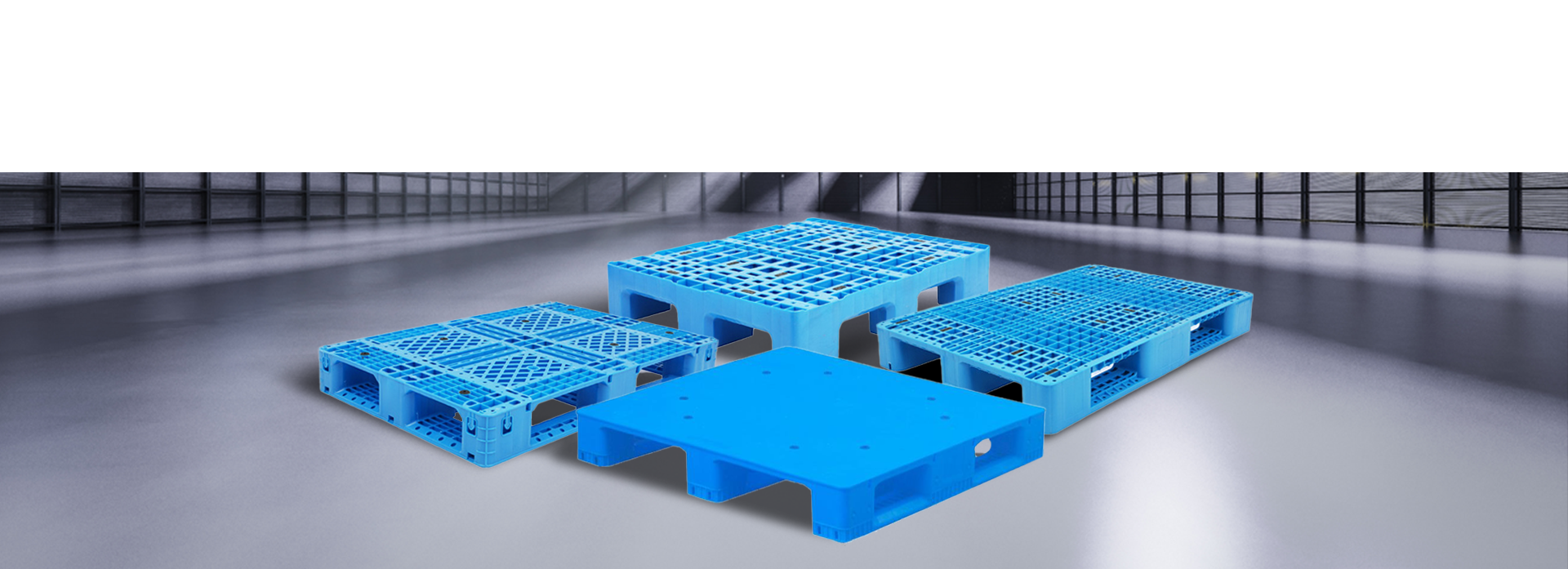
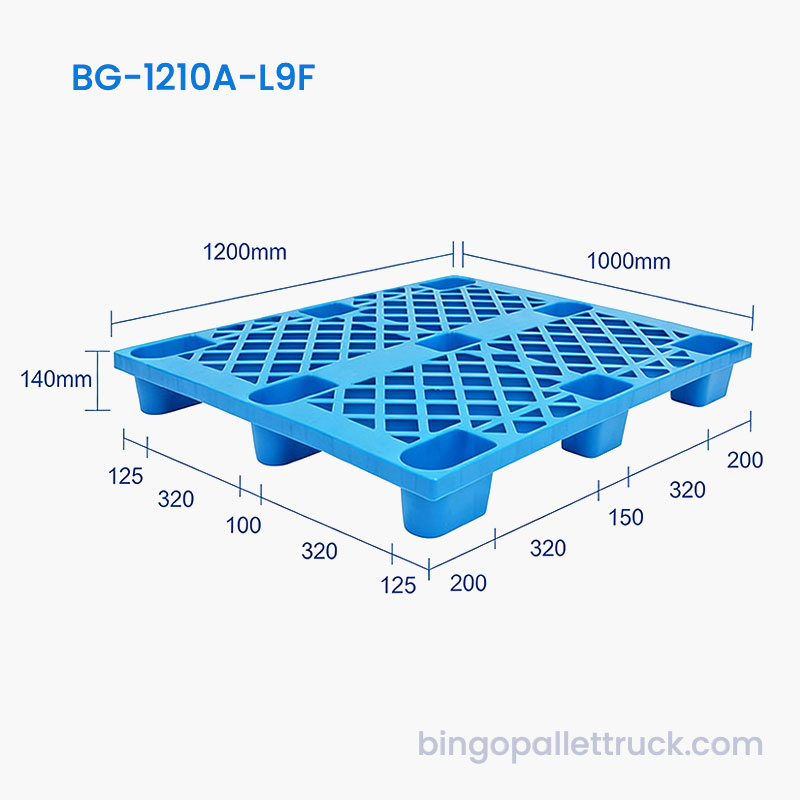
The base structure of a plastic pallet is one of the most decisive factors in how it performs across your entire supply chain. It governs fork entry direction, racking compatibility, load distribution, stackability, and suitability for automated handling systems. Choosing the wrong base type is one of the most common — and most avoidable — sources of operational inefficiency and equipment incompatibility in warehousing and logistics. Bingo's plastic pallet range covers four primary base types: Nine Feet, Three Runner, Six Runner, and Double Sided — each engineered for distinct handling environments and load requirements.
Nine Feet Plastic Pallets: The Universal Workhorse
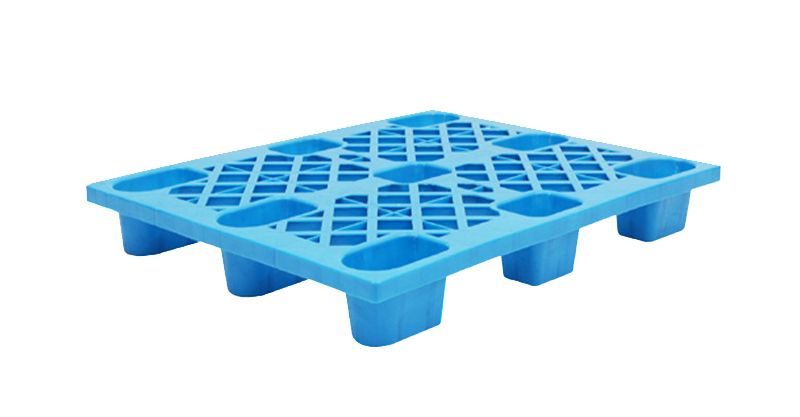
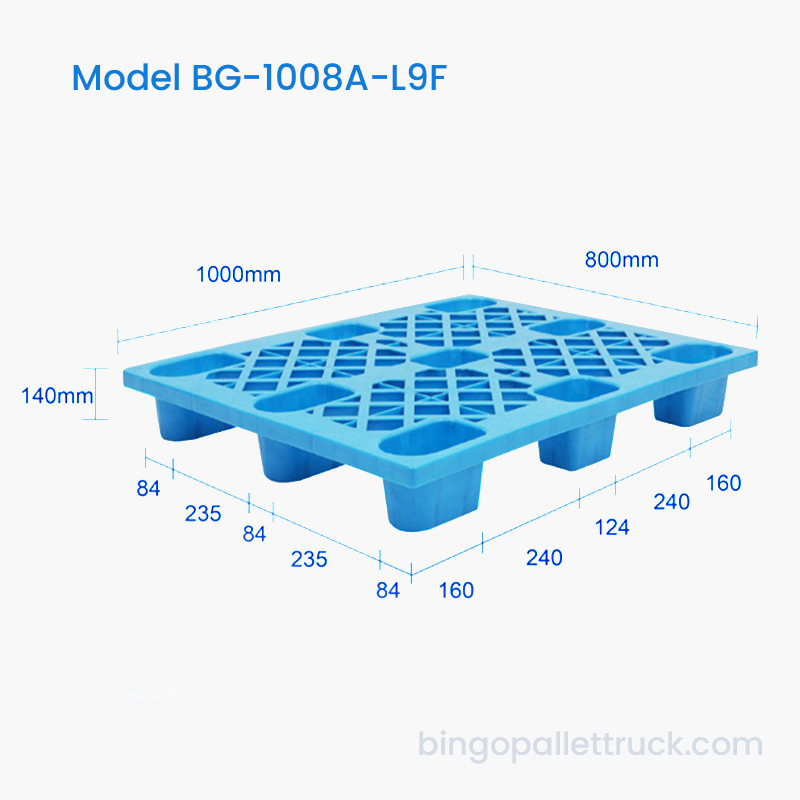
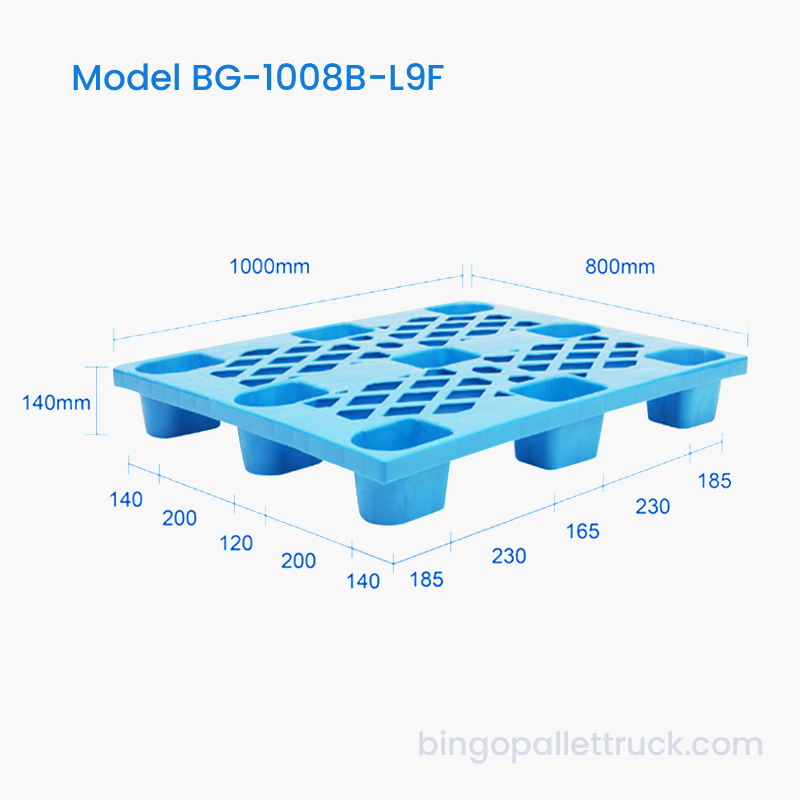
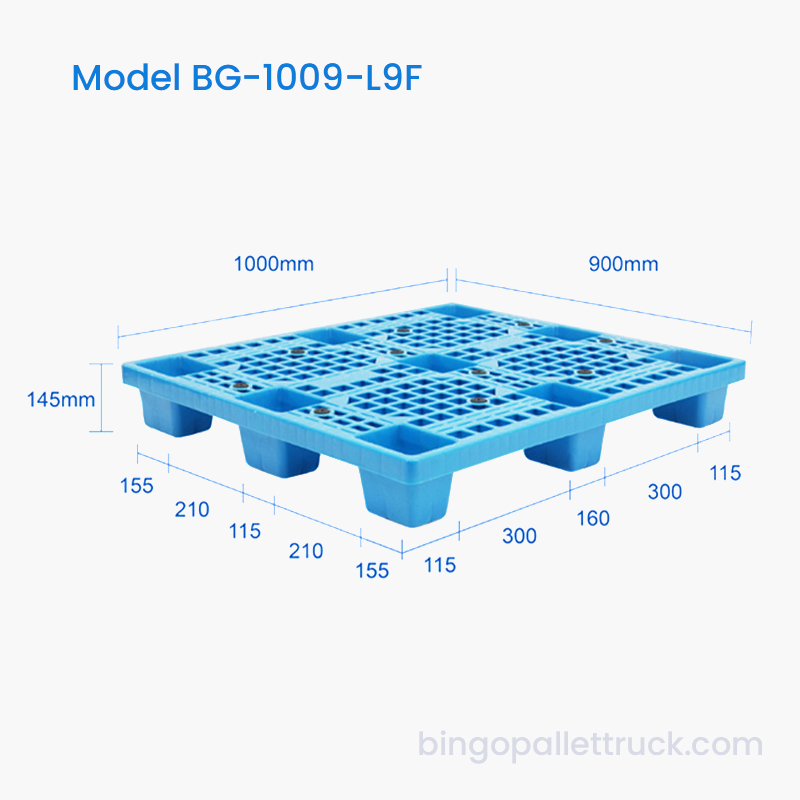
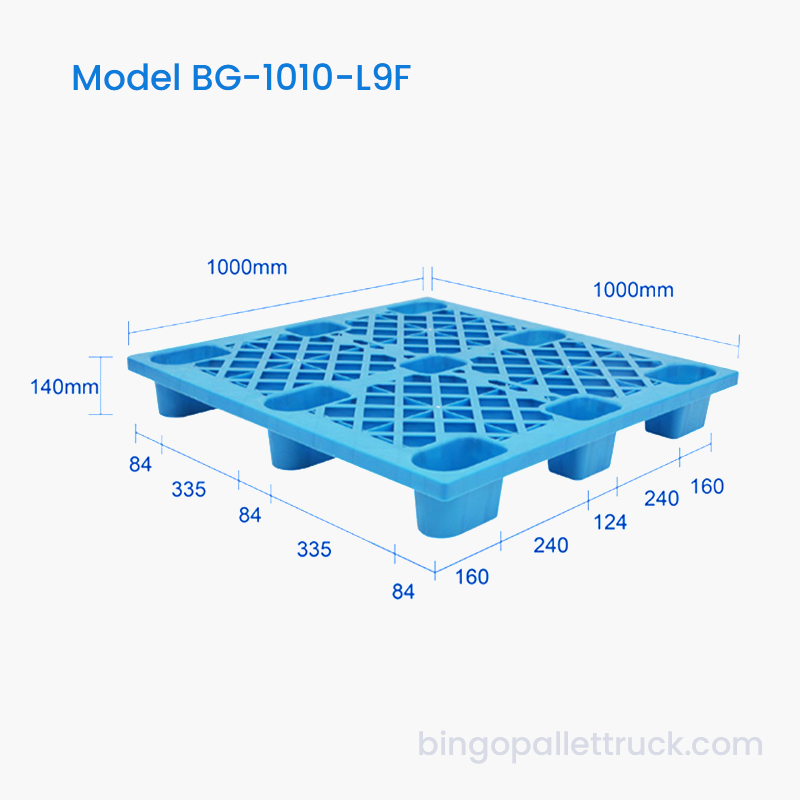
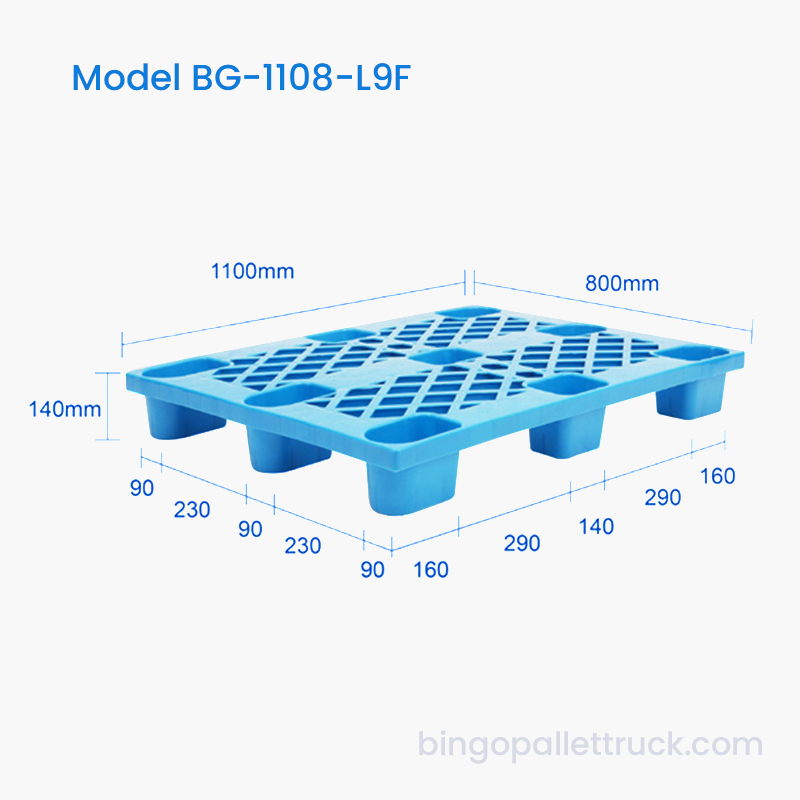
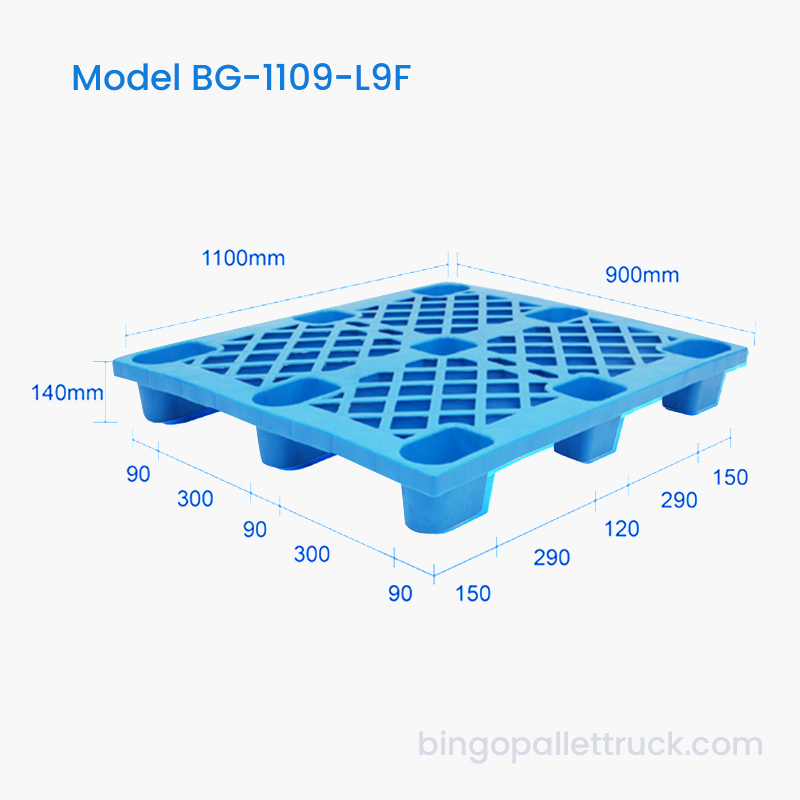
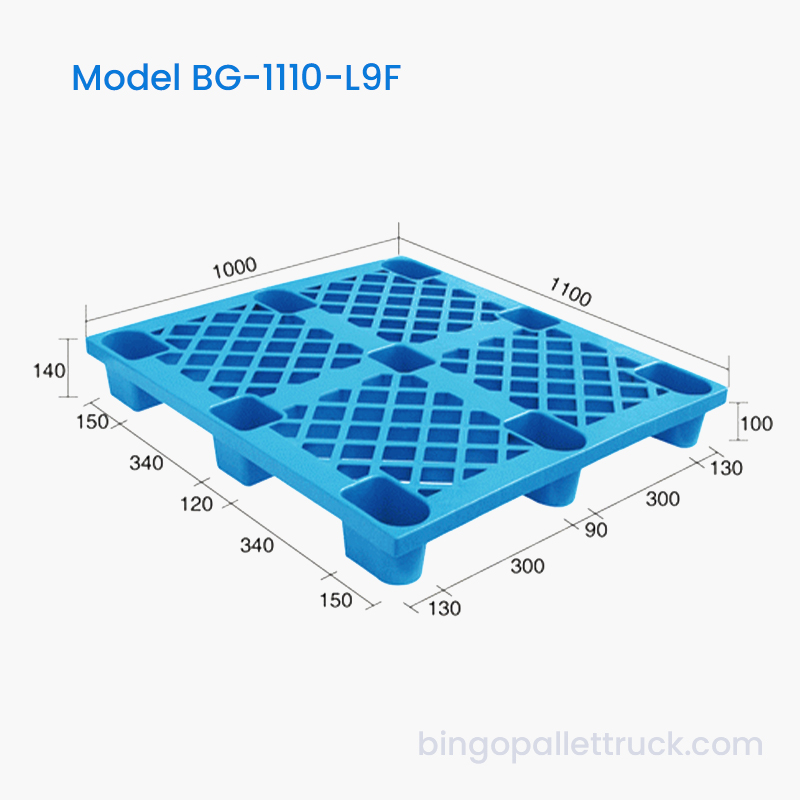
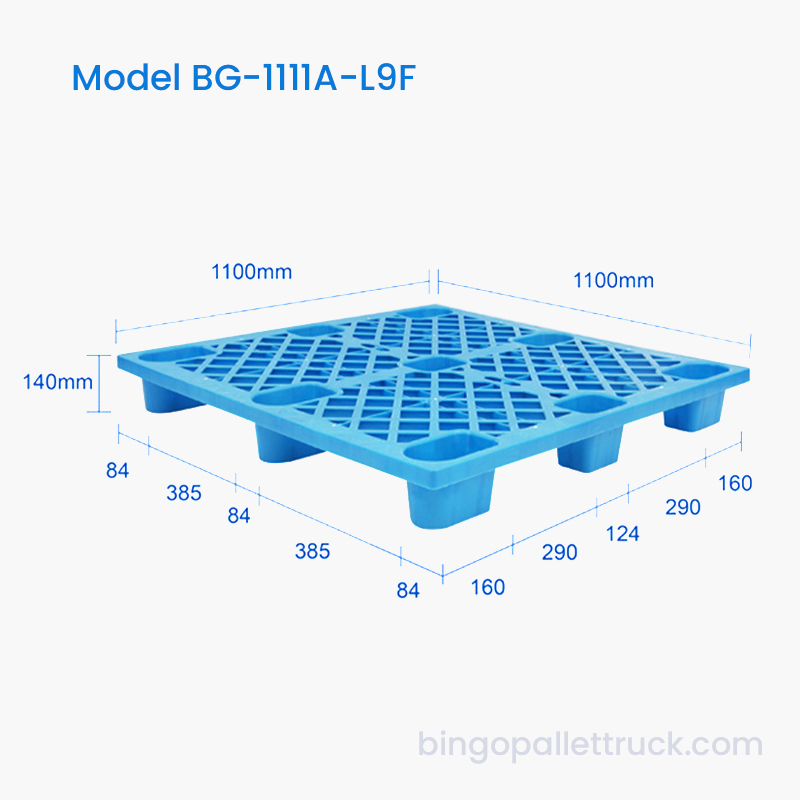
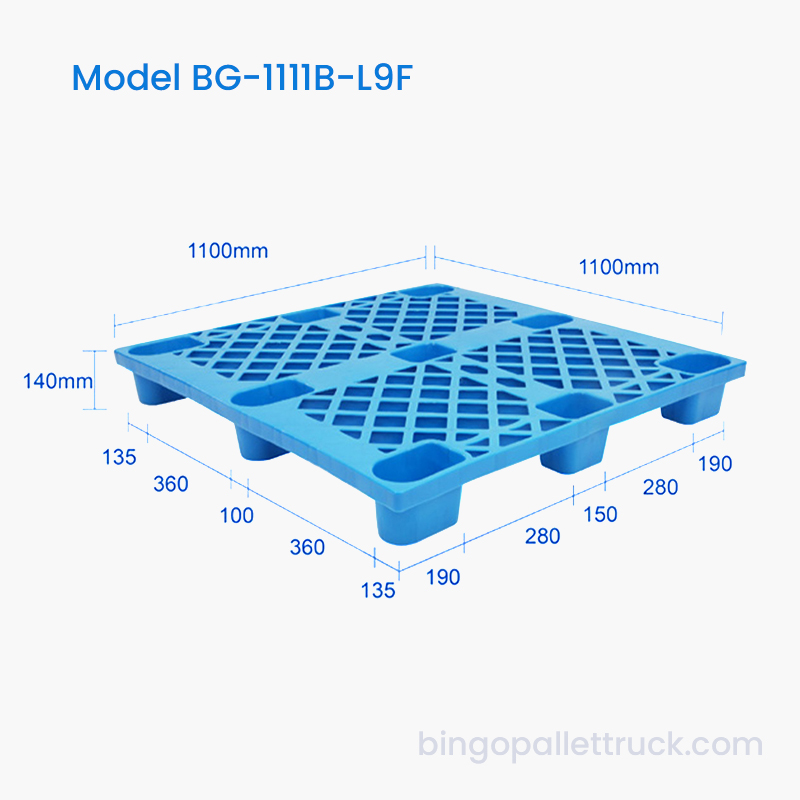
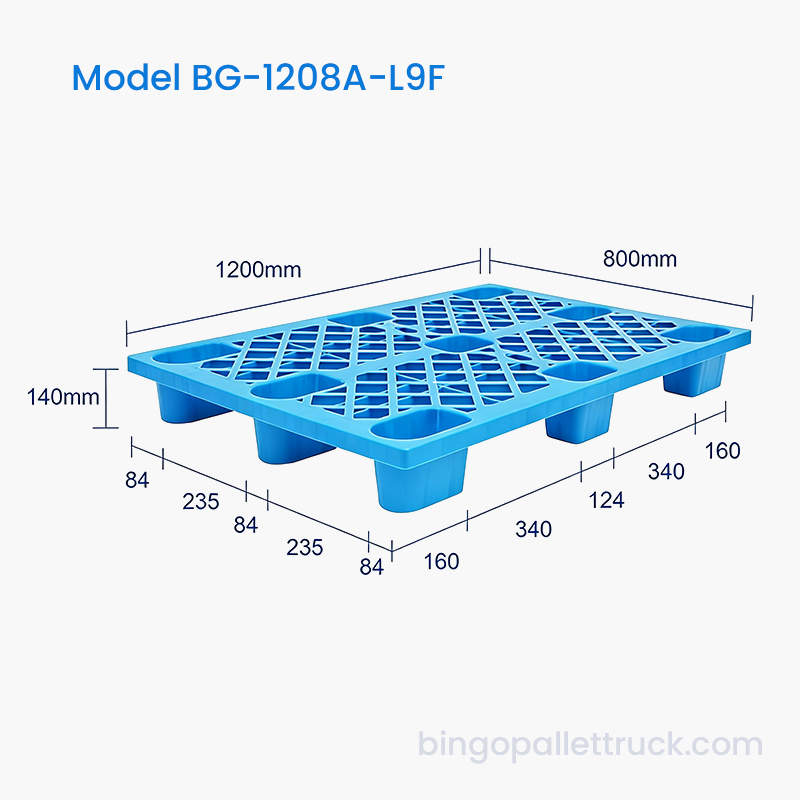
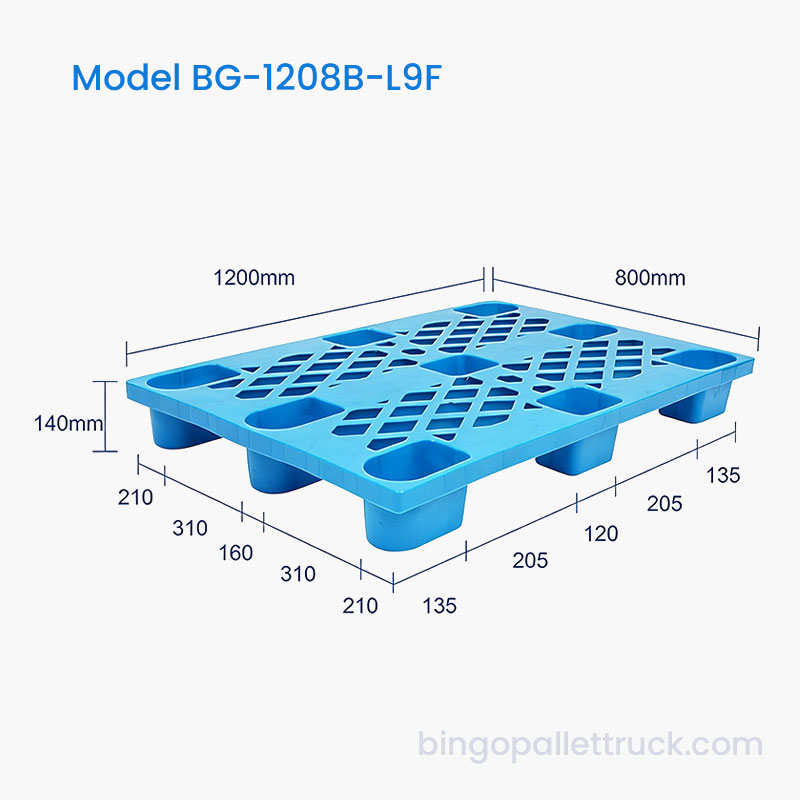
The nine-foot (nine-leg) base features a 3×3 grid of individual support legs distributed evenly across the underside of the pallet. This arrangement creates two sets of parallel channels running in both directions, enabling four-way fork entry — forks and pallet truck tines can approach from any side without repositioning the load.
Four-way entry makes nine-foot pallets exceptionally versatile in busy warehouse environments where loads must be handled quickly from variable approach angles. The defined corner and edge legs land cleanly on racking beam rails, delivering reliable performance in selective pallet racking systems. A standard HDPE nine-foot pallet typically supports a dynamic load of 1,000–1,500 kg and a static floor load of 4,000–6,000 kg, depending on deck design and material grade.
- Best for: General warehousing, selective racking systems, e-commerce fulfillment, retail distribution, and any operation using manual pallet trucks or forklifts.
- Key advantage: Maximum handling flexibility with four-way access compatible with all standard material handling equipment.
Three Runner Plastic Pallets: Stability for Heavy and Dense Loads
Three runner pallets replace the individual leg grid with three continuous longitudinal beams — or runners — spanning the full length of the pallet underside. Fork entry is possible only from the two short ends, making this a two-way entry configuration. Because the load is distributed along the full runner length rather than concentrated at discrete leg points, three runner pallets achieve exceptionally high floor-bearing load capacity — static ratings frequently exceed 5,000 kg for heavy-duty versions.
The runner structure also provides a broader, more stable contact footprint on the floor, reducing the risk of sinking into soft or uneven surfaces. This makes three runner pallets a preferred choice for outdoor storage areas, cold-store flooring with drainage channels, and heavy industrial applications such as machinery, coiled metal, and bulk chemical containers.
- Best for: Heavy or dense loads, floor-level block storage, industrial and manufacturing environments, and situations where maximum static load capacity is the priority.
- Key advantage: Superior static load capacity and floor stability compared to leg-based designs.
Six Runner Plastic Pallets: Enhanced Support for Racking and Conveyors
Six runner pallets extend the runner concept by incorporating six longitudinal support beams — typically arranged as three pairs — across the underside. This denser runner pattern significantly increases the bearing surface area in contact with racking beams and conveyor rollers, reducing pallet deflection under load and improving consistency in automated handling systems.
The additional runners distribute weight more evenly across the deck span, making six runner pallets well suited to rackable applications where pallet flex must be kept within strict tolerances — particularly in drive-in racking, push-back racking, and pallet live storage systems. Like three runner pallets, six runner designs offer two-way fork entry, so forklift approach direction must be planned within the facility layout.
- Best for: Rackable storage systems requiring low deflection, roller conveyor lines, drive-in and push-back racking, and operations handling medium-to-heavy uniformly distributed loads.
- Key advantage: Greater beam contact area than three runner designs, delivering improved racking stability and reduced deck flex.
Double Sided Plastic Pallets: Maximum Versatility and Structural Rigidity
Double sided pallets feature a fully decked surface on both the top and the bottom, with a structural core between them. Unlike single-sided pallets — which have a functional top deck and an open base — double sided designs can be loaded and handled from either face. This reversible usability effectively doubles the functional deck surface, extends pallet service life by distributing wear evenly, and provides exceptional structural rigidity under load.
The closed double-deck construction is particularly valuable in closed-loop, pooled pallet systems where pallets are continuously returned and reused — a damaged face can be flipped to restore full functionality without retiring the pallet. Double sided pallets also perform strongly in automated storage and retrieval systems (AS/RS) where consistent geometry on both faces is critical for sensor-based positioning and robotic handling. However, their greater weight compared to single-sided pallets should be factored into manual handling assessments.
- Best for: Closed-loop pallet pools, AS/RS automated warehouses, applications requiring maximum structural rigidity, and operations where long service life and reduced replacement frequency are priorities.
- Key advantage: Reversible usable faces, superior rigidity, and extended service life in high-cycle operations.
Base Type Comparison at a Glance
| Base Type |
Fork Entry |
Racking Suitability |
Static Load Capacity |
Typical Application |
| Nine Feet |
4-way |
Excellent |
4,000–6,000 kg |
General warehousing, selective racking, e-commerce |
| Three Runner |
2-way |
Moderate |
5,000+ kg |
Heavy loads, floor block storage, industrial |
| Six Runner |
2-way |
Very Good |
4,000–6,000 kg |
Drive-in racking, conveyor systems, medium-heavy loads |
| Double Sided |
4-way |
Excellent |
5,000–8,000 kg |
Pallet pools, AS/RS automation, high-cycle operations |
Comparison of Bingo plastic pallet base types across key operational criteria
How to Choose the Right Base Type for Your Operation
Matching the base type to your operational requirements prevents costly equipment mismatches and maximises pallet service life. The following criteria should guide your selection:
- Handling equipment on site: If manual pallet trucks are in regular use, four-way entry is essential — choose Nine Feet or Double Sided. Two-way Runner pallets require forklift handling and must be oriented correctly relative to the approach direction.
- Racking system type: For selective racking, Nine Feet pallets perform reliably. Drive-in, push-back, and pallet flow racking benefit from the greater beam contact surface of Six Runner designs. Double Sided pallets suit AS/RS systems where geometric consistency on both faces is required.
- Load weight and distribution: Loads above 3,000 kg in floor storage, or point-loaded heavy items such as machinery or drums, are better served by Three Runner or Six Runner bases, which spread weight over a larger contact area than leg-based designs.
- Pallet pool and return frequency: Closed-loop operations with high pallet turnover benefit strongly from Double Sided pallets — the reversible deck doubles usable life and reduces replacement frequency, lowering the total cost per cycle.
- Automation compatibility: Roller conveyors and AS/RS systems are typically configured for specific base profiles. Confirm pallet base geometry with your automation equipment supplier before finalising your selection.
As a Plastic Pallets Base Types Manufacturer, Bingo provides global customers with one-stop, integrated solutions for material storage and handling. Bingo's plastic pallet range spans all four base types — Nine Feet, Three Runner, Six Runner, and Double Sided — manufactured with strict quality inspection processes to ensure every product complies with international standards. Committed to delivering cost-effective solutions for manufacturing, e-commerce logistics, warehousing and distribution, and supermarket retail, Bingo upholds the philosophy of "Quality First, Win-Win Cooperation" in every product shipped worldwide.
Frequently Asked Questions
What is the difference between three runner and six runner plastic pallets?
Both designs use continuous longitudinal beams rather than individual legs, and both offer two-way fork entry. The key difference lies in beam density: three runner pallets have three beams providing broad floor contact and very high static capacity, making them ideal for the heaviest loads in floor storage. Six runner pallets have six beams arranged across the pallet width, increasing the bearing surface area on racking beams and conveyor rails and reducing pallet deflection — making them better suited to racked storage and automated conveyor applications where flex tolerance is critical.
Can nine-foot pallets be used in drive-in racking?
Nine-foot pallets can be used in drive-in racking, but their suitability depends on the span between the rack rails and the pallet's deflection rating. In deeper drive-in bays — where the unsupported span between rails is wide — the deck may flex beyond safe limits under heavy loads. Six runner pallets, with their greater beam contact surface, are generally the preferred choice for drive-in racking as they distribute load more consistently across the rail span and maintain geometry better over time.
Are double sided pallets heavier than single-sided pallets?
Yes. The closed double-deck construction uses more material than a single-sided design, resulting in a higher pallet weight — typically 30–50% heavier than an equivalent single-sided pallet of the same footprint. For operations involving significant manual handling steps, this additional weight should be factored into ergonomic assessments. In forklift-only or automated environments, the weight difference has no practical impact on operations, and the extended service life and reversibility of double sided pallets generally deliver a lower total cost of ownership over time.

 en
en  Español