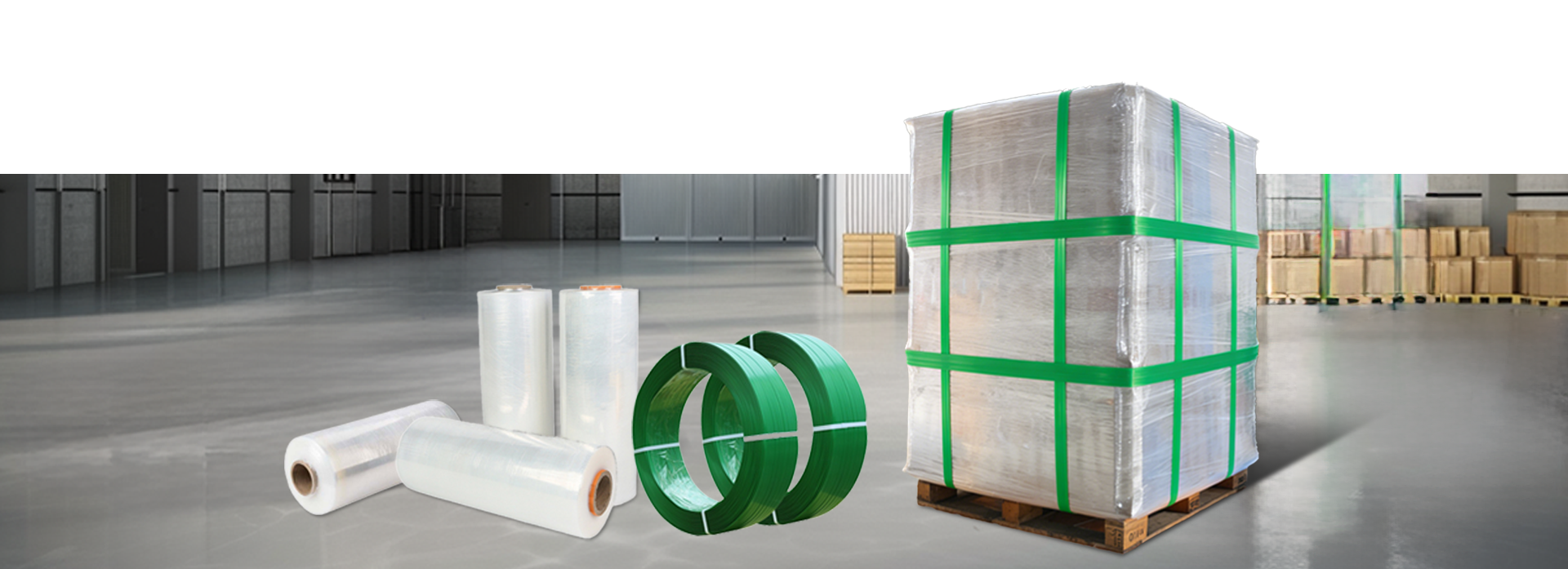
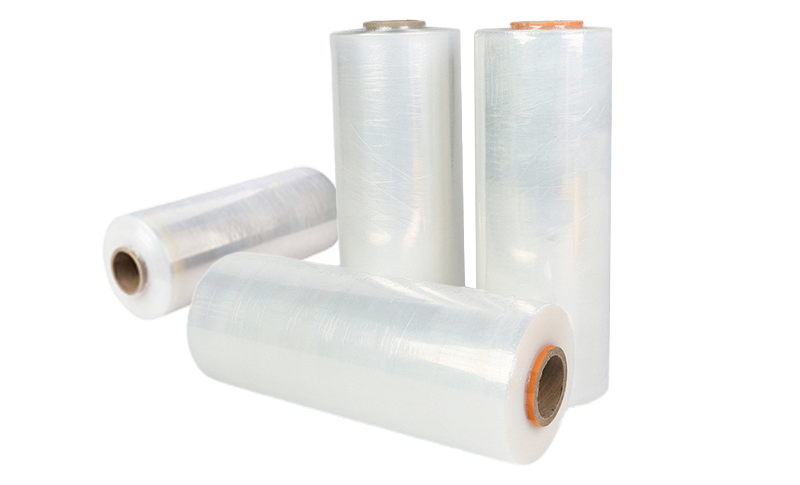
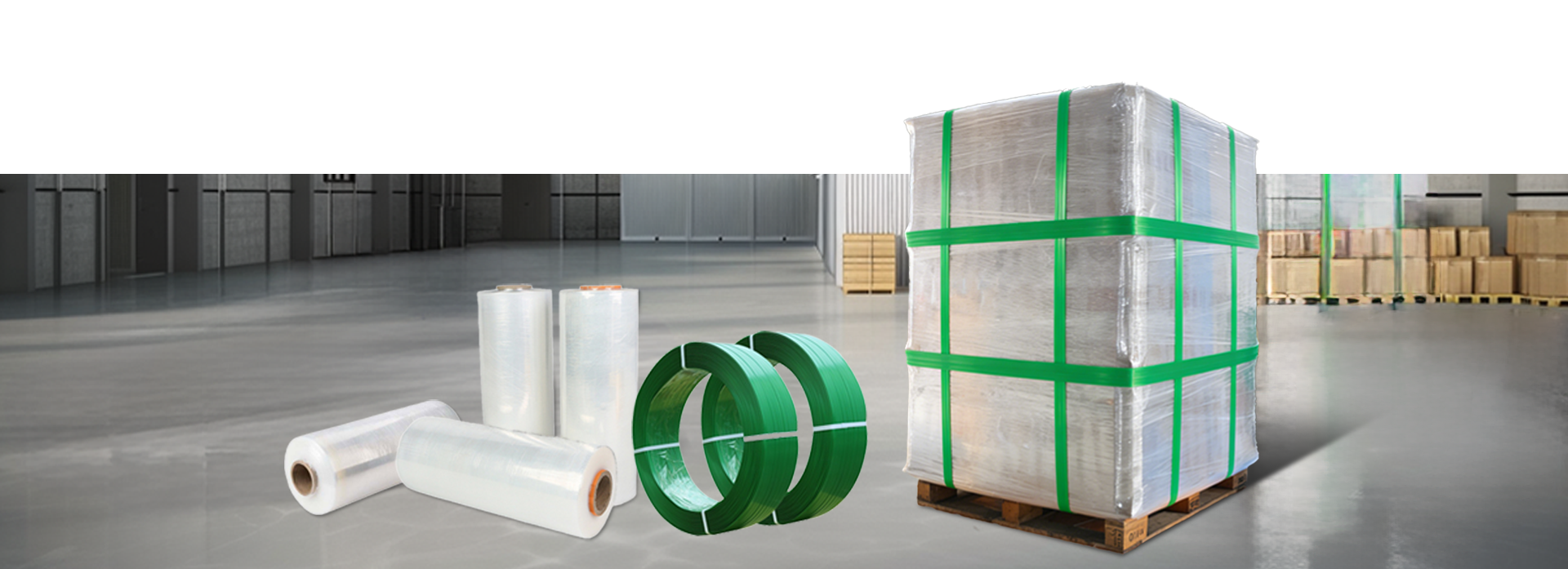
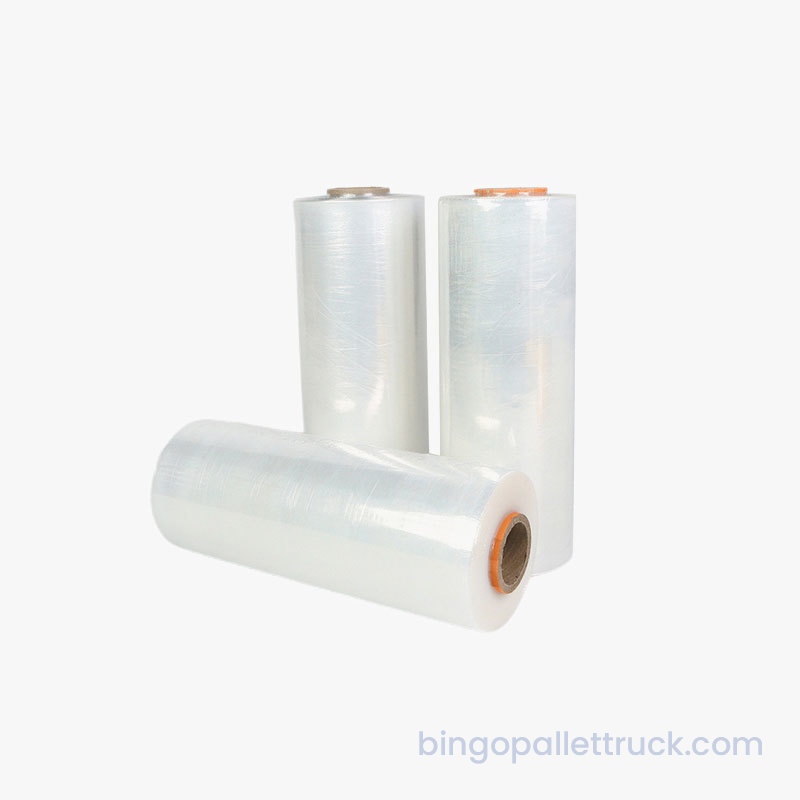
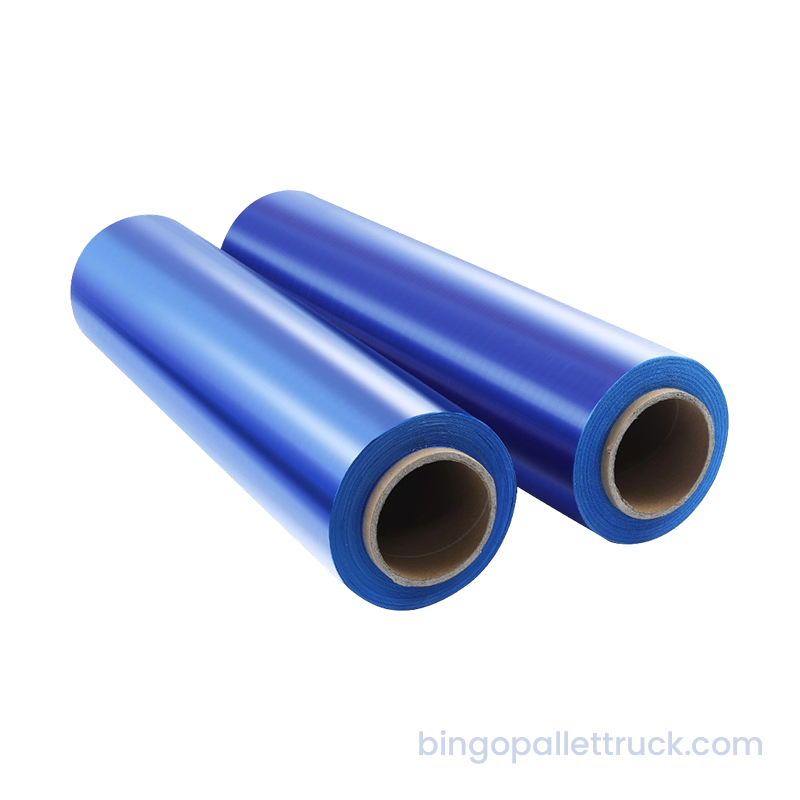
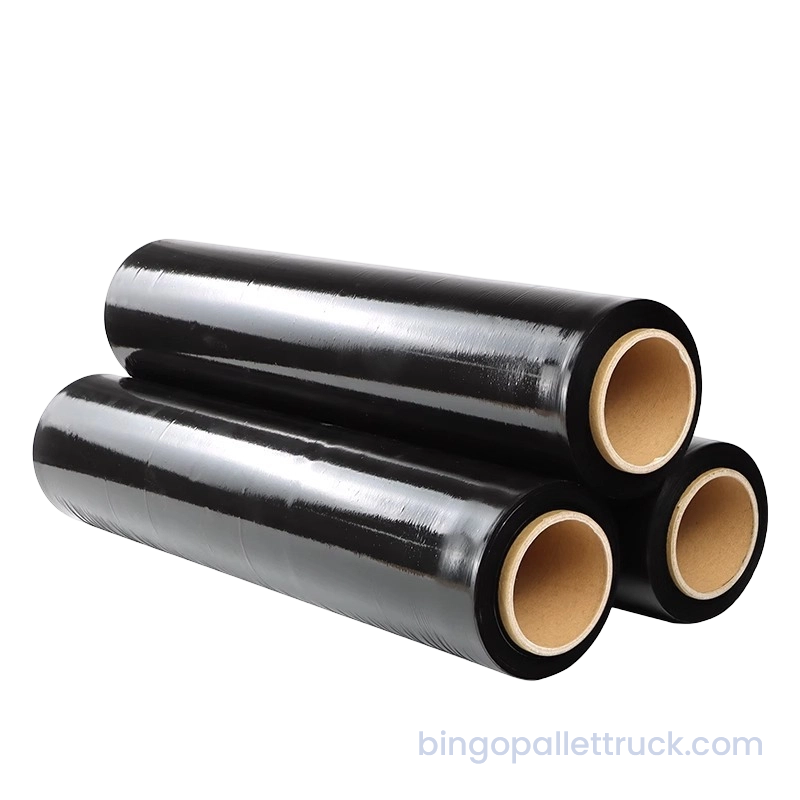
Stretch wrap — also widely known as stretch film or pallet stretch film — is a highly elastic plastic packaging material used to wrap, secure, and protect goods during storage and transportation. Made from high-quality linear low-density polyethylene (LLDPE) and produced by blow molding or casting technology, it delivers uniform thickness, high transparency, and excellent mechanical toughness in a lightweight, easy-to-handle format.
The working principle of stretch wrap relies on two core material properties working together:
- High elasticity under tension: Stretch film can be extended to 200%–300% of its original length without breaking. When applied under tension around a pallet load or bundle, the film's elastic memory pulls back toward its original state, generating a continuous compressive force that holds the goods tightly together throughout transit.
- Self-adhesion without adhesives: LLDPE stretch film adheres to itself on contact due to its inherent cling properties, requiring no glue, heat, or additional bonding agents. This allows the film to be wrapped in multiple overlapping layers that bond into a seamless, stable covering around the load.
Standard stretch wrap is available in widths of 50 cm, 75 cm, and 100 cm, thicknesses of 15–50 μm, and colors including transparent, black, and blue. It is produced in both hand stretch wrap format for manual application and machine stretch wrap format for use with semi-automatic or fully automatic wrapping machines.
Core Advantages of Stretch Film for Goods Protection and Packaging
The dominance of stretch wrap in modern logistics and warehousing packaging comes from a combination of protective performance, operational simplicity, and cost efficiency that alternative materials such as shrink wrap, strapping alone, or carton overwrapping cannot replicate at the same scale.
Exceptional Stretchability and Load-Holding Force
The ability of stretch film to extend to 2–3 times its original length while maintaining structural integrity is its most critical performance characteristic. This elasticity translates directly into a strong, sustained compressive force around the wrapped load, preventing individual cartons, parts, or containers from shifting, tipping, or separating during forklift handling, vehicle transit, and multi-leg supply chain journeys.
Puncture Resistance and Surface Protection
High-quality LLDPE stretch wrap resists tearing and puncturing from the sharp corners, protrusions, and irregular surfaces that are common on industrial and retail loads. This puncture resistance protects both the film's integrity during application and the goods beneath from scratches, abrasion, and physical contact damage throughout the supply chain.
Dust, Moisture, and Contamination Barrier
When applied in overlapping layers, pallet stretch film forms a near-sealed protective envelope around the load. This barrier effectively excludes dust, moisture, oil, and airborne contaminants that would otherwise degrade goods during outdoor storage, cross-dock transfers, or extended warehouse holding periods — extending the usable storage life of packaged goods.
No Adhesives Required — Fast and Clean Application
The self-cling property of stretch film eliminates the need for heat guns, adhesive tapes, or bonding agents to secure the wrapping. This makes application faster, cleaner, and residue-free on both the goods and the pallet. Removal at the destination is equally straightforward, without adhesive residue that would require cleaning.
Cost-Effective and Environmentally Responsible
Stretch wrap is non-toxic, tasteless, and recyclable, meeting green packaging requirements in markets with environmental compliance obligations. Its thin gauge — typically 15–50 μm — means a single roll covers a large surface area at low material cost, making per-pallet packaging costs lower than many traditional alternatives. Machine stretch wrap applied at optimized pre-stretch ratios further reduces film consumption per load.
Hand Stretch Wrap vs. Machine Stretch Wrap: Key Differences
Choosing between hand and machine stretch film is one of the first practical decisions for any operation implementing stretch wrapping. The right choice depends primarily on daily wrapping volume, labor availability, and consistency requirements.
Table 1: Comparison of Hand Stretch Wrap and Machine Stretch Wrap by Key Operational Criteria
| Criteria |
Hand Stretch Wrap |
Machine Stretch Wrap |
| Application Method |
Manual, by hand or dispenser |
Semi-auto or fully auto wrapping machine |
| Equipment Required |
None or simple hand dispenser |
Wrapping machine |
| Wrapping Speed |
Lower |
High |
| Wrapping Consistency |
Variable (operator-dependent) |
High and uniform |
| Film Consumption per Load |
Higher (less pre-stretch) |
Lower (optimized pre-stretch) |
| Best Suited For |
Low-volume, flexible operations |
High-volume, production-line use |
Industry Application Scenarios for Pallet Stretch Film
Pallet stretch film and stretch wrap products serve a wide range of industries with distinct goods types and packaging requirements. The following outlines the primary application environments and the specific protective value delivered in each.
Logistics and Warehousing
Pallet stretch film is the standard method for unitizing palletized loads of cartons, plastic totes, and industrial parts before forklift handling and long-distance transportation. A correctly wrapped pallet load maintains its structure and footprint throughout multi-modal transit, reducing product damage claims and simplifying unloading at the destination.
Manufacturing Industry
Manufacturers use stretch wrap to protect finished products, semi-finished goods, and raw materials — including metal parts, plastic components, and textiles — from surface scratches and contamination during in-plant storage and inter-facility transfer. Wrapping at point of production preserves goods condition through the entire supply chain to the end customer.
Food Industry
Stretch film used in food applications must meet food hygiene standards — LLDPE is non-toxic and tasteless, making it appropriate for wrapping food pallets, frozen goods, and fresh produce. The moisture-proof and dust-proof barrier formed by the film helps maintain freshness and prevents contamination during cold chain logistics and retail distribution.
Retail, Supermarkets, and Building Materials
In retail environments, stretch wrap keeps bulk goods, large items such as furniture and appliances, and palletized commodities clean and stable for display and storage. In the building materials sector, stretch film protects pipes, profiles, and tiles from moisture, dust, and collision damage during yard storage and transportation to construction sites.
Selecting the Right Stretch Wrap: Thickness, Width, and Color
Choosing the correct stretch film specification for a given application prevents both under-protection of the load and unnecessary material cost from over-specification. The three main selection parameters are thickness, width, and color.
- Thickness (15–50 μm): Thinner gauges (15–20 μm) suit lightweight loads with smooth, regular surfaces. Medium gauges (23–30 μm) cover the majority of standard pallet loads in logistics and manufacturing. Heavier gauges (35–50 μm) are used for loads with sharp corners, irregular profiles, or high weight that would risk puncturing thinner film.
- Width (50 cm, 75 cm, 100 cm): Narrower rolls are used for hand wrapping of smaller loads, individual items, or top-and-base pallet banding. Wider rolls cover tall pallet loads more efficiently and are standard for machine wrapping applications.
- Color (transparent, black, blue): Transparent film is the standard choice, allowing visual inspection of goods without unwrapping. Black or colored film provides opacity for loads where concealment of contents is required for security or commercial confidentiality during transit.
Frequently Asked Questions About Stretch Wrap and Stretch Film
What is the difference between stretch wrap and shrink wrap?
Stretch wrap and shrink wrap are both plastic films used to secure goods, but they work by entirely different mechanisms. Stretch film is applied under mechanical tension — the film's own elastic recovery holds the load together without any heat. Shrink wrap is applied loosely and then heated, causing it to contract tightly around the goods. Stretch wrap is faster to apply, requires no heat equipment, and is the standard choice for pallet unitizing in logistics; shrink wrap is more commonly used for individual product packaging and retail presentation.
How many layers of stretch film should be applied to a pallet load?
The number of wrapping layers depends on load weight, height, stability, and the film gauge being used. For standard pallet loads, a common practice is to apply 2–3 passes of overlapping film around the body of the load, with additional reinforcement wraps at the base where pallet-to-load connection is most critical. Heavier or less stable loads may require additional passes. Consistent overlap of 50% per pass ensures there are no gaps in the protective layer.
Is stretch film recyclable?
Yes. LLDPE stretch film is a recyclable plastic material. Used stretch wrap can be collected, compacted into bales, and sent to plastic film recycling facilities where it is reprocessed into secondary plastic products. Many logistics operations and distribution centers implement stretch film baling programs to manage film waste efficiently and reduce landfill disposal. Contaminated or heavily soiled film may not be accepted by all recycling streams — check with your local recycler for specific requirements.
Can stretch wrap be used in cold storage or freezer environments?
Yes. LLDPE stretch film retains its flexibility and cling properties at low temperatures, making it suitable for use in cold storage and freezer environments. It is a standard packaging material in food cold chain logistics for wrapping pallets of frozen and chilled goods. When selecting film for cold chain use, confirm that the specific product is rated for the operating temperature range of your storage or transport environment.
How should stretch wrap rolls be stored?
Stretch film rolls should be stored upright on their cores in a cool, dry, and shaded location away from direct sunlight and heat sources. UV exposure and elevated temperatures degrade LLDPE over time, reducing elasticity and cling performance. Rolls should not be stored on their flat sides for extended periods, as this can cause deformation of the core and uneven unwinding. Keeping rolls in their original packaging until use helps protect the film surface from dust and contamination.
Best Practices for Applying Pallet Stretch Film Effectively
Correct application technique is essential to achieving the full protective performance of pallet stretch film. Poorly applied stretch wrap — regardless of film quality — will fail to hold loads securely and may result in goods damage or stability hazards during handling.
- Always anchor the film at the pallet base first. Begin wrapping by securing the film to the bottom of the pallet, threading it through or around the base boards, before working upward. This ties the load to the pallet and prevents the entire unit from sliding as a whole.
- Apply consistent tension throughout the wrap. Uneven tension creates weak zones in the film layer where loads can shift. Maintain steady outward pressure on the film roll throughout the full height of the pallet for uniform holding force.
- Overlap each pass by approximately 50%. Overlapping ensures that no section of the load is covered by only a single film layer, maintaining consistent protection and strength across the entire wrapped surface.
- Add reinforcement wraps at the top and base. The top and base of a pallet load are the points most vulnerable to load shift during acceleration, braking, and cornering. Additional wraps at these zones significantly improve overall pallet stability.
- Use the correct film thickness for the load type. Applying thin film to heavy or sharp-edged loads risks puncture and wrap failure during transit. Always match the film gauge to the load characteristics as outlined in the specification selection guidance above.

 en
en  Español