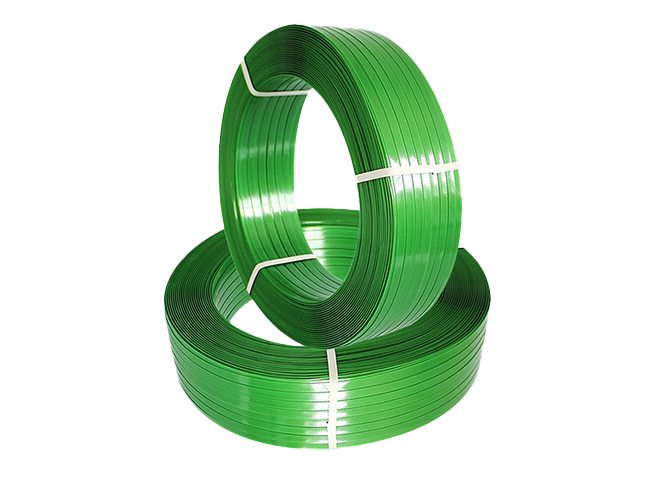
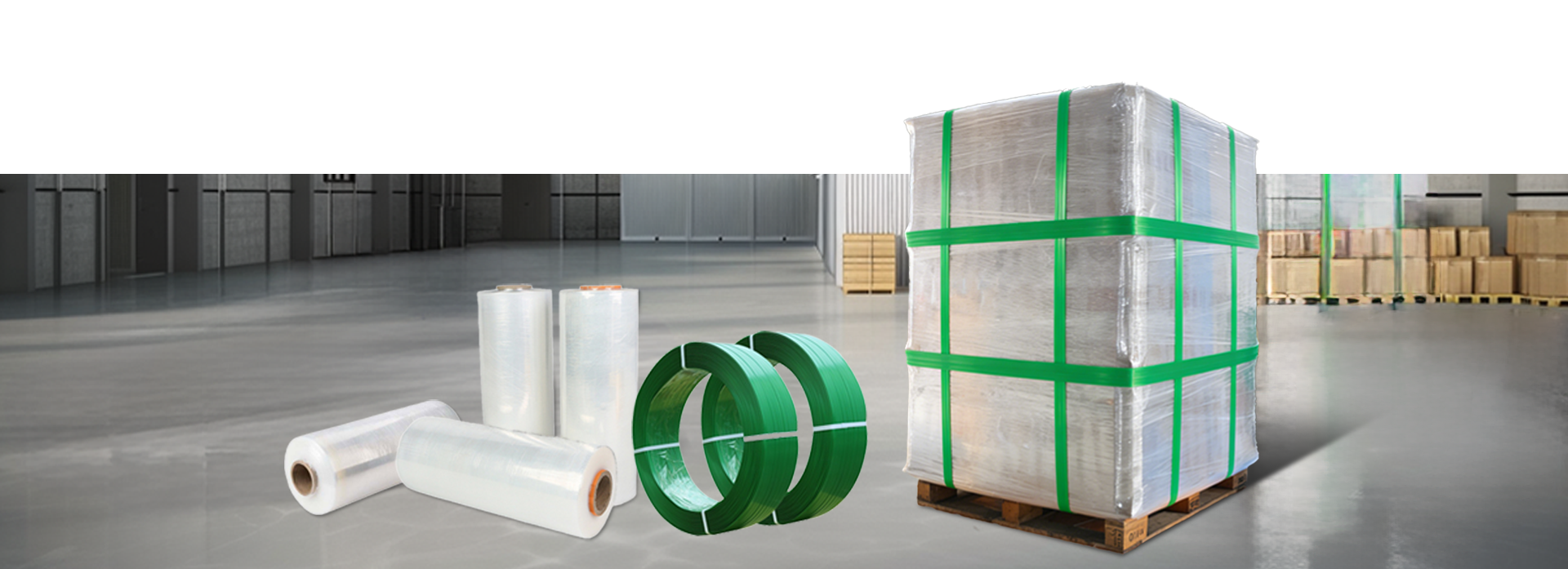
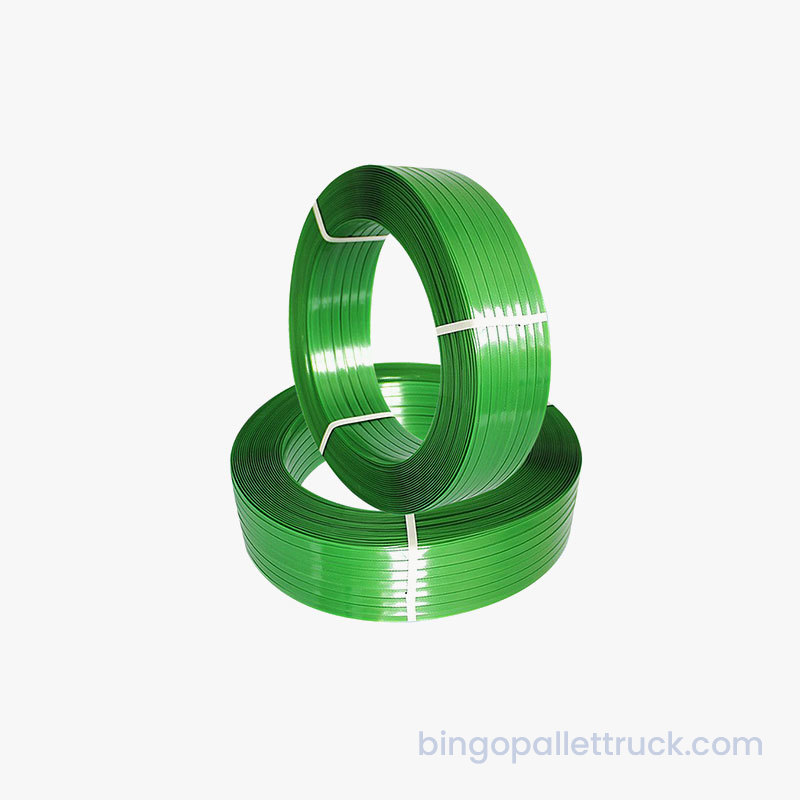
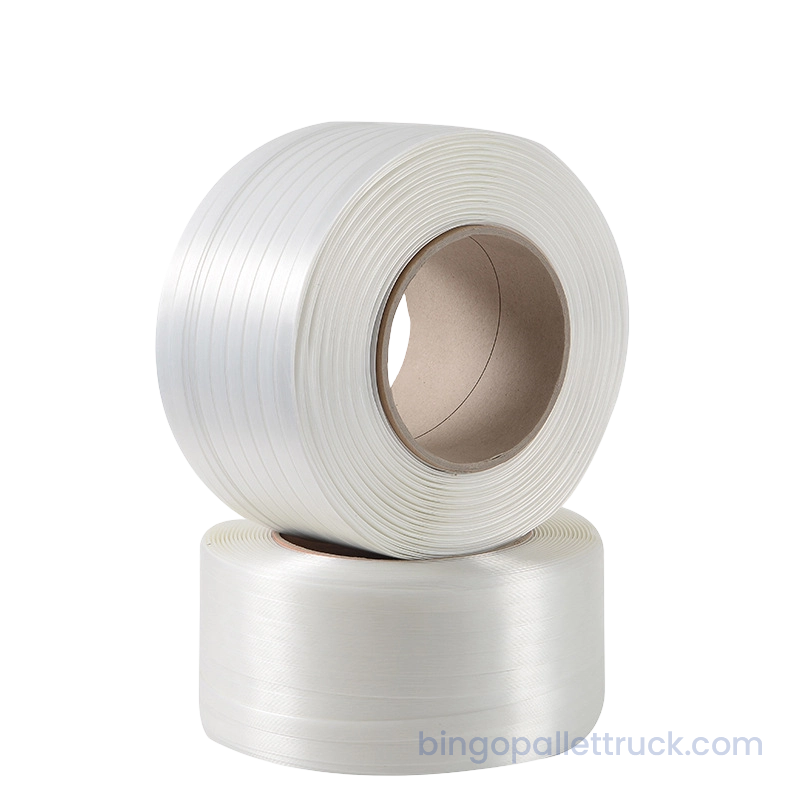
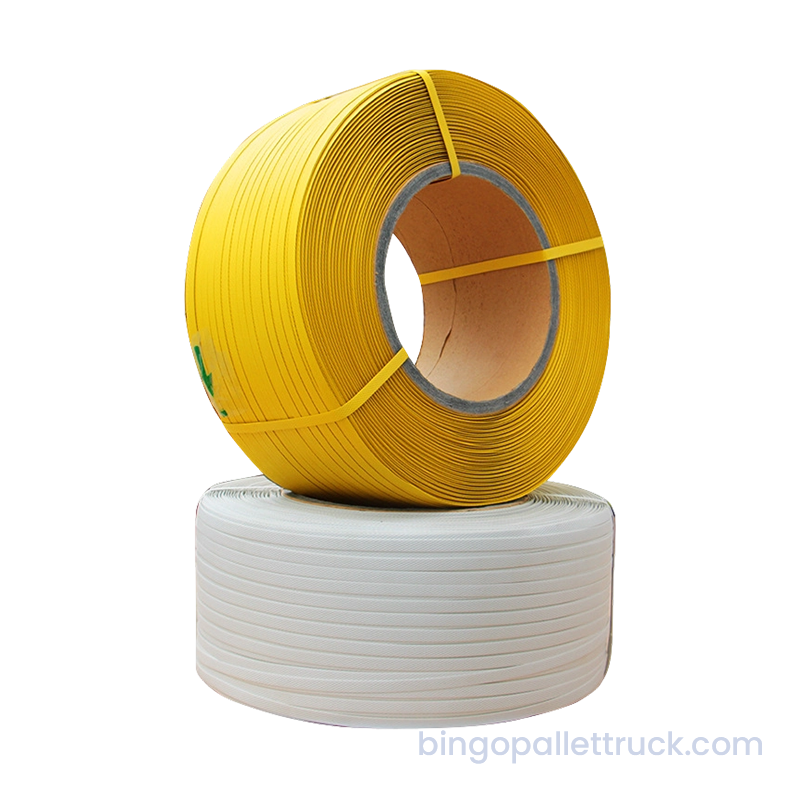
Packing strapping is a high-strength bundling material used to secure, fix, and reinforce goods, cartons, pallets, and bulk items during storage and transportation. Produced through extrusion, drawing, and shaping processes, it features uniform thickness, a smooth surface, and stable mechanical performance. It is one of the most widely used packaging accessories across logistics, manufacturing, agriculture, retail, and construction industries worldwide.
Packing strapping is available in three main material categories, each suited to different load levels and application environments:
- PP (Polypropylene) strapping: The most economical plastic option, suitable for light to medium-weight goods. Lightweight, flexible, and available in a wide range of widths and colors.
- PET (Polyester) strapping: A higher-performance plastic strapping with greater tensile strength and lower elongation than PP, making it suitable for heavier loads and as a substitute for light steel strapping in many applications.
- Steel strapping: The strongest option, used for heavy industrial goods such as metal parts, timber, and building materials where maximum tensile force and resistance to cutting are required.
In terms of application method, packing strapping is divided into hand packing strapping — used with manual tensioning and sealing tools — and machine packing strapping — designed for use with semi-automatic or fully automatic strapping machines for high-volume packaging lines. Specifications vary widely, with common widths of 10 mm, 12 mm, and 15 mm, thicknesses ranging from 0.5 mm to 1.5 mm, and tensile forces spanning 500 N to 5,000 N depending on material and grade.
Core Advantages of Packing Strapping for Goods Security
The widespread adoption of packing strapping across industries is driven by a combination of mechanical performance, operational convenience, and cost efficiency that alternative bundling methods — such as rope, tape, or wire — cannot consistently match.
High Tensile Strength for Reliable Load Security
Quality packing strapping is manufactured from high-grade raw materials to deliver tensile forces ranging from 500 N to 5,000 N depending on type and specification. This ensures that bundled goods remain firmly secured throughout forklift handling, conveyor transit, and long-distance road or sea transportation without loosening, stretching, or breaking under load.
Durability Across Harsh Transportation Environments
Packing strapping is engineered for resistance to friction, impact, and external mechanical forces encountered during real-world logistics operations. Its wear resistance and toughness allow it to maintain bundle integrity even when goods are subjected to vibration, stacking pressure, and physical contact with other freight during multi-leg transport journeys.
Versatility Across Load Weights and Industries
The availability of packing strapping in multiple materials, widths, thicknesses, and tensile grades means a single product category can address bundling requirements from lightweight retail cartons to heavy steel profiles and industrial machinery components. Plastic strapping covers light and medium loads; steel strapping handles the heaviest industrial applications — making packing strapping a genuinely cross-industry solution.
Operational Efficiency for Both Manual and Automated Use
Hand packing strapping can be applied quickly with simple manual tensioning tools, requiring minimal operator training. Machine-compatible strapping integrates with semi-automatic and fully automatic strapping machines to deliver high-speed, consistent bundling on packaging lines, significantly reducing labor intensity and cycle time in high-volume operations.
Cost-Effective and Environmentally Conscious
Plastic packing strapping is low in unit cost, recyclable, and reusable in suitable applications, aligning with green packaging requirements. Steel strapping, while higher in initial cost, is fully recyclable at end of life. Both options offer a favorable cost-per-bundle ratio compared to alternative securing methods, particularly at scale.
Packing Strapping Types Compared: Choosing the Right Material
Selecting the correct type of packing strapping for a specific application requires matching material properties to the load weight, goods type, and handling environment. The table below provides a direct comparison of the three main strapping materials to guide selection.
Table 1: Comparison of PP, PET, and Steel Packing Strapping by Key Selection Criteria
| Criteria |
PP Strapping |
PET Strapping |
Steel Strapping |
| Tensile Strength |
Low to medium |
Medium to high |
Highest |
| Suitable Load Weight |
Light to medium |
Medium to heavy |
Heavy to very heavy |
| Flexibility |
High |
Medium |
Low |
| Unit Cost |
Lowest |
Medium |
Higher |
| Recyclability |
Yes |
Yes |
Yes |
| Typical Applications |
Cartons, retail goods, agriculture |
Pallets, manufacturing, express |
Steel, timber, building materials |
Key Application Scenarios for Packing Strapping Across Industries
Packing strapping is used wherever goods need to be securely bundled for storage, handling, or transit. Its breadth of application spans six major industry sectors, each with distinct requirements for tensile strength, flexibility, and bundling method.
Logistics and Warehousing
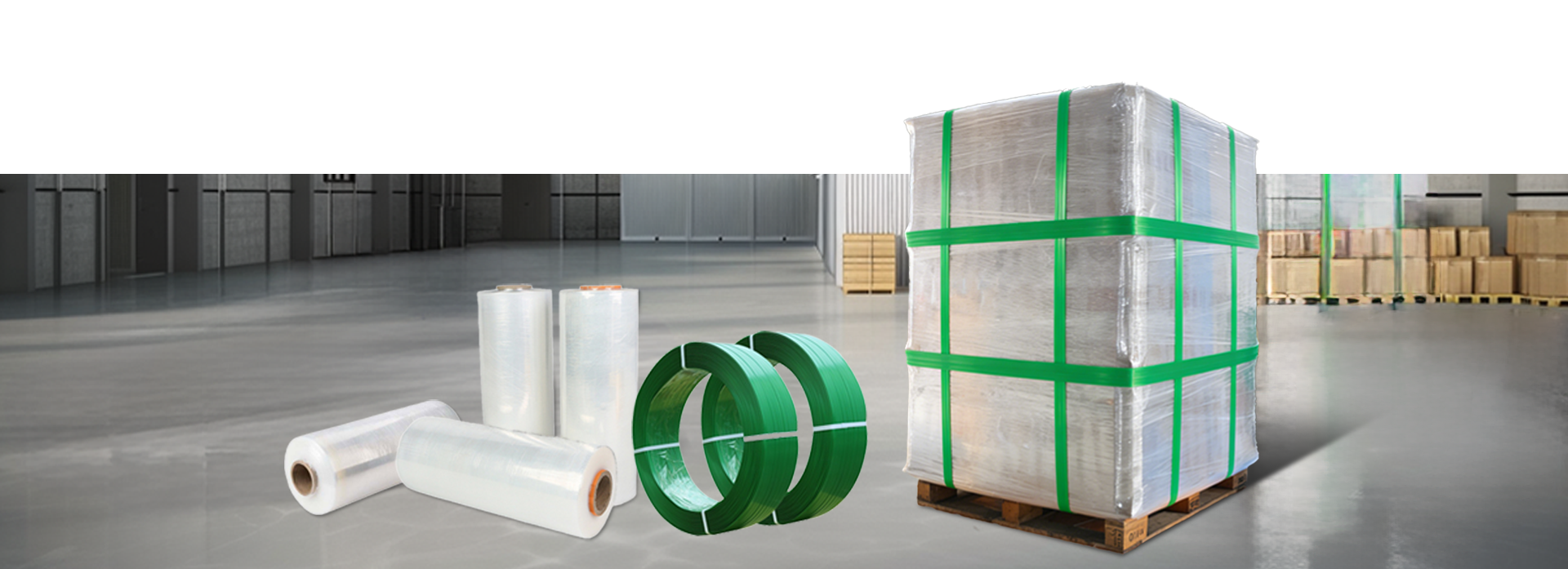
In logistics and warehousing environments, packing strapping is used to fix palletized goods, cartons, and bulk items, preventing load shift and scattering during forklift handling and long-distance transportation. Securing pallet loads with strapping is a fundamental step in ensuring goods arrive at their destination in the same condition they left the warehouse.
Manufacturing Industry
Manufacturers use packing strapping to bundle finished products, semi-finished goods, and raw materials — including metal parts, plastic components, textiles, and pipes — into secure, transportable units. Strapping enhances the structural integrity of packaged goods and simplifies storage and inter-facility transfer operations.
Agriculture
Agricultural applications include bundling crops, fruits, vegetables, and straw for transport and storage. Packing strapping keeps agricultural produce compact and contained, reducing damage and loss caused by shifting or spillage during transportation from farm to distribution point.
Building Materials Industry
Steel strapping is the preferred choice for bundling heavy building materials such as steel reinforcing bars, pipes, profiles, and tiles. The high tensile force and resistance to cutting of steel strapping ensure that these dense, heavy loads remain securely bound during transport and yard storage, where mechanical handling and environmental exposure are typical.
Express and Courier Industry
In courier operations, packing strapping reinforces cartons and packages to reduce damage during the high-frequency handling and sorting processes of parcel distribution. Applied as a secondary securing layer over standard carton sealing, strapping adds firmness that reduces the incidence of package deformation and content damage in transit.
Frequently Asked Questions About Packing Strapping
What is the difference between hand packing strapping and machine packing strapping?
Hand packing strapping is designed for use with manual tensioning tools and is suited to low-to-medium volume operations where flexibility and portability matter more than speed. Machine packing strapping is manufactured to tighter dimensional tolerances to feed reliably through semi-automatic and fully automatic strapping machines, enabling consistent, high-speed bundling on packaging lines with minimal operator involvement. The two product types are not interchangeable — always confirm the correct specification for your tools or equipment.
How do I choose the right width and thickness of packing strapping?
Width and thickness selection should be based on the weight and type of the goods being bundled. As a general guide: narrower, thinner strapping (10 mm, 0.5–0.6 mm) is appropriate for light cartons and retail goods; medium widths (12–15 mm, 0.7–1.0 mm) suit standard pallet loads and manufactured goods; wider, thicker strapping or steel strapping is required for heavy industrial items. When in doubt, select the next grade up to maintain a safety margin below the rated tensile limit.
Can plastic packing strapping be recycled?
Yes. Both PP and PET packing strapping are recyclable materials. PP strapping can be collected and reprocessed into new plastic products. PET strapping, made from the same base polymer as plastic bottles, is similarly recyclable through standard plastic waste streams. Steel strapping is fully recyclable as scrap metal. Implementing a strapping collection and recycling program is a straightforward way for businesses to reduce packaging waste and support environmental compliance targets.
What tools are needed to apply packing strapping manually?
Manual application of packing strapping typically requires three tools: a tensioner to pull the strapping tight around the load, a sealer to crimp or weld the strap ends together, and the appropriate seals or clips to create a secure join. For PET and PP strapping, friction-weld or heat-seal tools that bond the strap ends without a separate metal seal are also commonly used. The tool set required depends on the strapping material — confirm compatibility before purchase.
How should packing strapping be stored to maintain its performance?
Packing strapping should be stored in a dry, cool, and shaded environment away from direct sunlight, heat sources, and chemical exposure. Prolonged UV exposure degrades plastic strapping, reducing tensile strength and increasing brittleness. Coils and rolls should be stored upright or on horizontal racks to prevent deformation. Steel strapping should be kept in a dry location to prevent surface rust that can weaken the material over time.
Best Practices for Using Packing Strapping Safely and Effectively
Applying packing strapping correctly is as important as selecting the right type. Poor application technique can reduce effective tensile strength, damage goods, or create safety hazards during handling.
- Match the strapping specification to the load. Never use a lower-grade strapping than required for the load weight. Overloading the strapping increases the risk of unexpected breakage during transit.
- Apply strapping at the correct tension. Under-tensioned strapping allows loads to shift inside the bundle; over-tensioning can damage soft goods, deform cartons, or create stress concentrations that cause premature strap failure.
- Use edge protectors on sharp-cornered goods. When strapping over boxes with hard edges or irregular surfaces, plastic or cardboard edge protectors distribute the strap tension and prevent the strap from cutting into the packaging or the goods.
- Inspect strapping for damage before use. Discard any roll or coil that shows visible cracks, notches, or discoloration, as these defects significantly reduce effective tensile strength and may cause the strap to fail under load.
- Handle steel strapping with appropriate PPE. Cut ends of steel strapping are sharp and can cause laceration injuries. Operators should wear cut-resistant gloves when handling steel strapping coils and when removing steel strapping from incoming goods.

 en
en  Español