 en
 Español

Drum Handling Tools for the Pharmaceutical Industry: A Practical Selection Guide
Content
- 1 Start With the Drum, Not the Device
- 2 The Core Drum Handling Tools and Where Each One Fits
- 3 Containment Comes First: Sizing Spill Pallets Correctly
- 4 Materials, Cleanability and GMP Documentation
- 5 Load, Height and Aisle: The Numbers to Fix Before Ordering
- 6 Common Mistakes in Pharmaceutical Drum Handling Projects
- 7 A Short Pre Order Checklist
- 8 How Bingo Supports Pharma Drum Handling Projects
A 200 litre steel drum of ethanol arrives at a pharma warehouse dock. Two operators try to move it with a manual drum trolley, the drum passes its balance point, and 20 litres end up on the floor. Production stops, QA opens a deviation, and the clean-up costs more than the equipment that would have prevented it. The trolley was not the problem. The problem was that nobody had defined which functions the drum handling setup had to perform.
So here is the conclusion first: drum handling in pharmaceutical operations is not a single device decision, it is a four function decision. Every drum has to be contained, moved horizontally, lifted or tilted vertically, and then emptied or dispensed. Most spills, injuries and audit findings come from getting three of those functions right and ignoring the fourth, usually containment, or the match between the drum itself and the attachment that grips it.
Start With the Drum, Not the Device
The first question is not which drum lifter to buy, it is which drum you are handling. Standard 200 litre industrial drums differ in ways that decide the tool for you.
- Steel 200 litre drums: roughly 571 mm diameter and 880 to 900 mm high, tare weight 18 to 22 kg, gross 200 to 250 kg with dense liquids. Rigid, with a top rim and a bottom chime that most grippers can engage.
- HDPE 200 litre drums: tare about 9 to 11 kg, similar footprint, but the body flexes under load. A body clamp dimensioned for steel will not hold consistently, so you need a wider clamp, a cradle, or a lift that supports the base.
- Fibre drums and fibreboard kegs: light but humidity sensitive. Clamping the body can crush them, so base support is safer than a gripper.
- Small drums and kegs from 25 to 60 litres: often lifted by hand. These cause a surprising share of back injuries because operators assume they are light.
- Conical or tapered drums: no usable top rim. Rim clamps are the wrong tool here.
Then add the physical environment: floor or pallet, rack beam height, containment tray, or reactor charging point. A four drum containment pallet loaded with product can weigh close to 950 kg. That is not a drum gripper job, it is a pallet truck job.
The Core Drum Handling Tools and Where Each One Fits
It helps to sort the market by function rather than by product name, because the same device is often sold under several labels. The table below maps the common categories to the checkpoint that decides whether they survive a pharmaceutical environment.
| Tool | Primary function | Typical capacity | What to verify for pharma |
|---|---|---|---|
| Drum trolley or drum hand truck | Move one drum on flat floors | 300 to 350 kg | Non marking wheels, parking brake, cleanable frame, no exposed sharp edges |
| Drum gripper for forklift or stacker | Grip and lift a drum by rim or body | 300 to 500 kg | Clamp type must match the drum; steel rim clamps slip on flexible HDPE bodies |
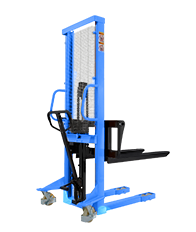
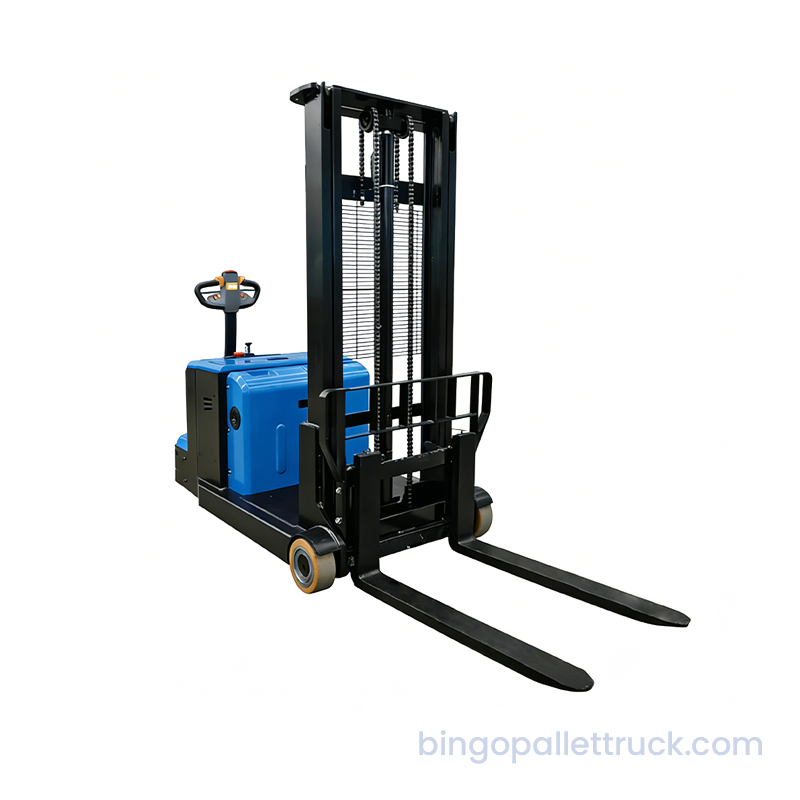
| Drum stacker or dedicated drum lifter | Lift a drum to a rack or feed point | 300 to 500 kg | Lift height with margin, stability under load, sealed controls |
| Drum rotator or tumbler | Rotate a drum for blending or emptying | Up to 500 kg | Motor enclosure rating, spill collection under the drum, emergency stop |
| Drum dolly or low profile mover | Move drums in tight spaces | 250 to 500 kg | Low profile entry height, wheel material, floor condition |
| Spill containment pallet | Contain leaks under two or four drums | 2 or 4 x 200 litre drums | Sump volume in litres, chemical compatibility, drain valve access |
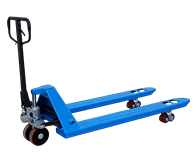
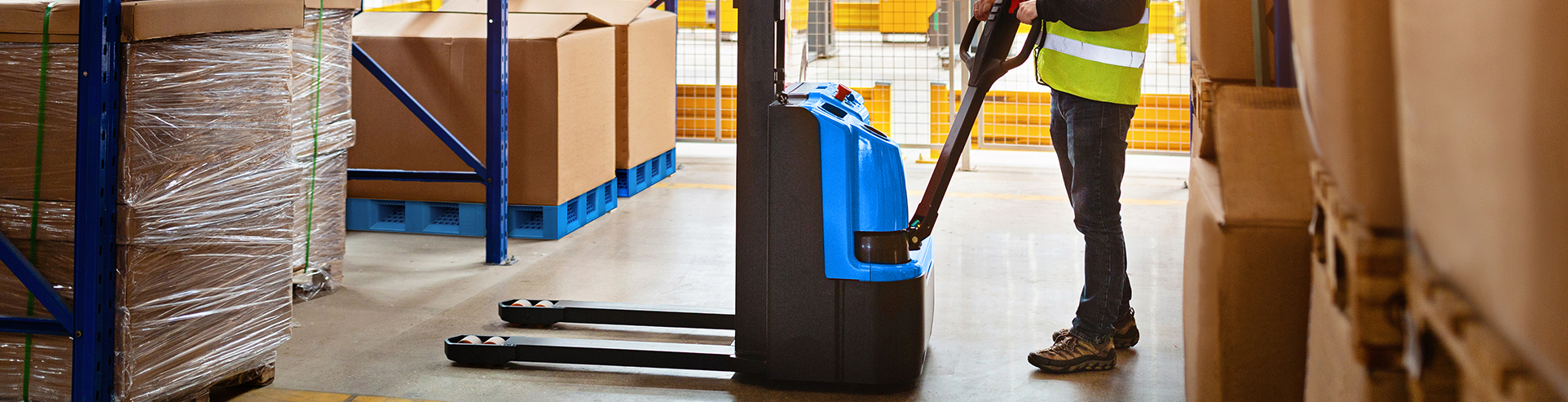
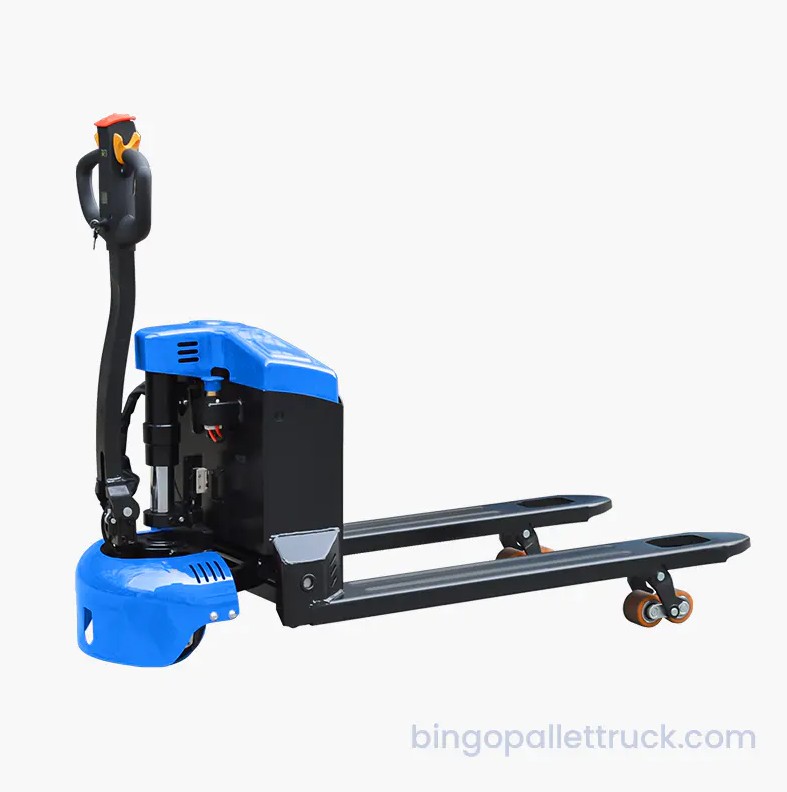
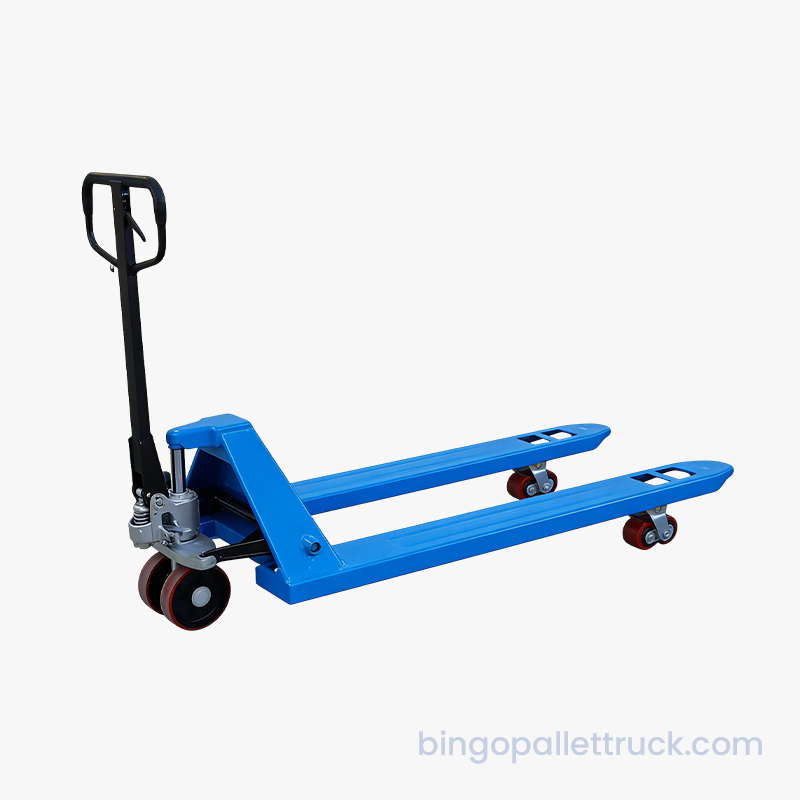
| Electric pallet truck with a drum pallet | Move drum-laden pallets at warehouse scale | 2000 to 3000 kg | Fork length and entry height, wheel type for the floor finish, sealed tiller |
| Overhead drum lifter with hoist and scale | Dispense from a drum into a vessel | 300 to 500 kg | Load cell calibration, secondary retention, documented inspection |
For most pharma sites the working combination is a containment pallet as the storage and transport base, a pallet truck for long horizontal moves, a stacker or lift for vertical placement, and a gripper or rotator only for the specific step it was designed for. Buying one device and asking it to do all four functions is where accidents start.
Containment Comes First: Sizing Spill Pallets Correctly
The fastest way to fail a containment audit is to buy trays by guesswork. The logic is simple: the containment device has to hold the contents of the containers standing on it. Standards such as US EPA 40 CFR 264.175 for container storage are commonly summarised as requiring a sump that holds either 10 percent of the total volume of all containers or 100 percent of the largest container, whichever is greater.
For four 200 litre drums that means at least 200 litres of sump capacity, and in practice more, because drum draining, pouring and pump drips add volume. When specifying, check these points:
- Sump capacity stated in litres, not just overall tray dimensions.
- HDPE grade and chemical compatibility with the products you store, including solvents and acidic intermediates.
- Loaded weight, since four full drums plus tray often reaches 950 to 1050 kg.
- Whether a pallet truck or drum trolley can actually enter the loaded tray, because clearance is the weak point in most installations.
- Drain plug with valve if the area is washed down regularly.
Containment is also the base of your handling flow. Keeping drums on a containment pallet from goods receipt to dispensing point removes the need to lift a bare drum more than once.
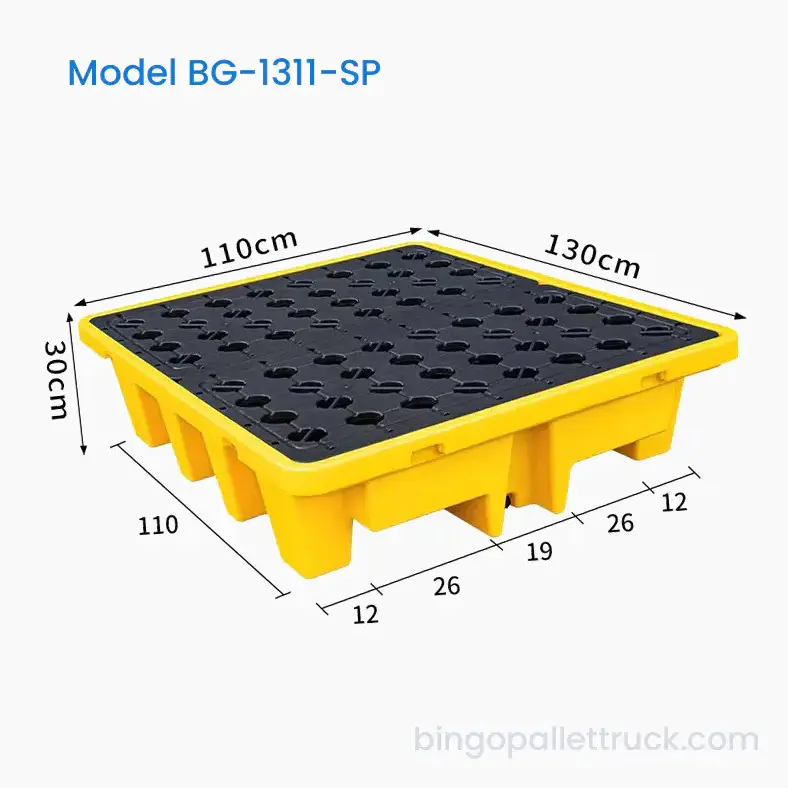
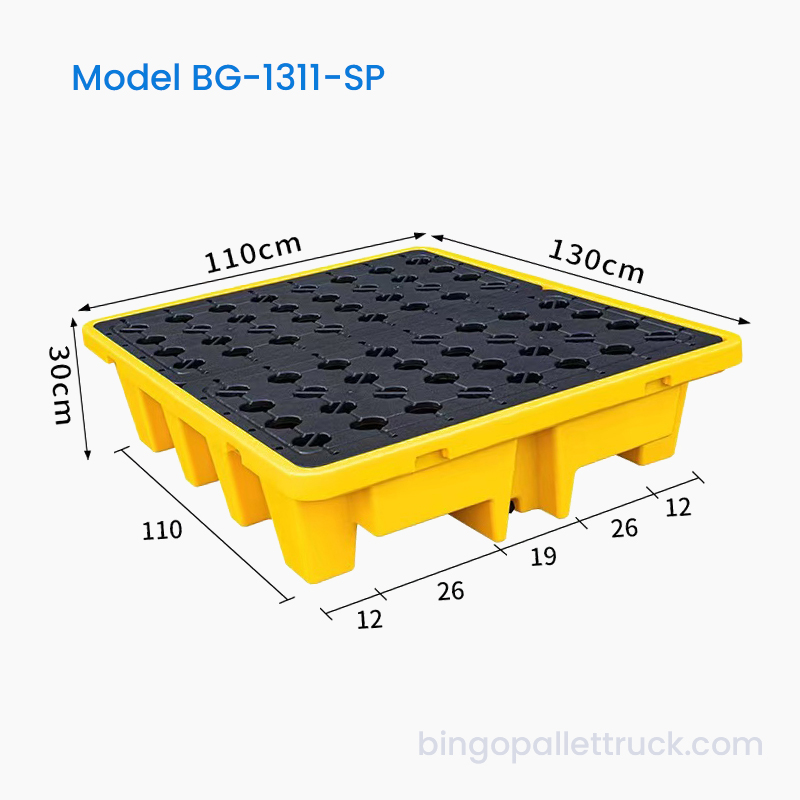 BG-1311-SP Leak Proof Plastic Spill Pallet for IBC Totes and DrumsThis HDPE containment pallet has a 200L sump and grid drain surface, supporting 1000L IBC totes and 200L drums in chemical or pharma handling areas.View Product →
Materials, Cleanability and GMP Documentation
In a pharma plant, the finish of a drum handling tool is a compliance topic, not a cosmetic one. Loose coating, corrosion and trapped product all show up in self inspections.
- Prefer 304 or 316 stainless steel or HDPE for any surface that is washed down or contacted by product.
- Avoid galvanised and zinc plated components near drum opening points. Zinc flakes and white corrosion residue are difficult to justify in a deviation report.
- Powder coated mild steel looks acceptable on day one and chips at drum contact points, which is exactly where rust begins.
- Choose non marking polyurethane or nylon wheels instead of plain steel, both for cleanliness and for reducing spark risk in solvent handling areas.
- Dedicate equipment to a zone. Moving the same drum trolley from a raw material dock into a dispensing room is a cross contamination route that is easy to write down and hard to defend.
- Check compatibility with your cleaning agents, typically IPA, peracetic acid and sodium hydroxide solutions, against seals, wheels, labels and paint.
- Ask for the documentation package up front: material certificates, spare parts list, maintenance instructions, load test certificates for lifting equipment, and calibration records for any load cell or scale. For equipment inside a validated area, IQ and OQ support matters more than a lower purchase price.
Load, Height and Aisle: The Numbers to Fix Before Ordering
Most specification errors are arithmetic errors. Work through these values before contacting a supplier:
- Drum gross weight. A 200 litre drum of a liquid with a density of 1.1 is about 220 kg of product before the drum itself.
- Containment load. Four drums plus tray is around 950 to 1050 kg, and that figure, not the drum weight, sets the required capacity of the pallet truck.
- Lift height. Rack beam height plus 150 to 200 mm of clearance. Standard stackers cover 1600, 2000 and 2500 mm lift.
- Aisle width. As a rule of thumb, plan 2.5 m or more for a walkie or stand-on pallet truck to turn out of a rack position, and more if the operator walks beside the truck.
- Door widths and thresholds. Drum lifters with containment bases are wider than they look in a catalogue photo.
- Floor condition. Expansion joints, drainage channels and ramps are where small 100 mm castors jam and loads shift.
Manual handling deserves a separate line in the risk assessment. A full drum becomes unrecoverable after a small lean angle, so a two operator manual tip is not a control measure, it is a hope. For vertical work, a walkie or stand-on unit from our electric stacker range is usually the simplest way to remove that manual step from the process.
Common Mistakes in Pharmaceutical Drum Handling Projects
- Buying a rim clamp gripper for HDPE drums, then discovering the drum slips when the body flexes.
- Sizing the truck or stacker to drum weight while ignoring the containment tray, pallet and dunnage underneath.
- Forgetting aisle width, door width and turning radius until the equipment is already on site.
- Specifying powder coated mild steel for a washdown zone.
- Skipping containment because the drums have never leaked in the past.
- Using one trolley for steel drums, plastic drums, kegs and fibre drums, then blaming the operators.
- Ordering without spare wheels, seals or a service plan for hydraulic units.
A Short Pre Order Checklist
- List every drum type, size, material and maximum gross weight on site.
- Map each movement: dock to storage, storage to dispensing, dispensing to waste.
- Confirm containment sump volume and chemical compatibility.
- Measure aisle widths, door widths, rack beam heights and floor transitions.
- Decide which movements should be manual, electric or overhead, and standardise.
- Request certificates, spare parts and calibration documentation with the quotation.
How Bingo Supports Pharma Drum Handling Projects
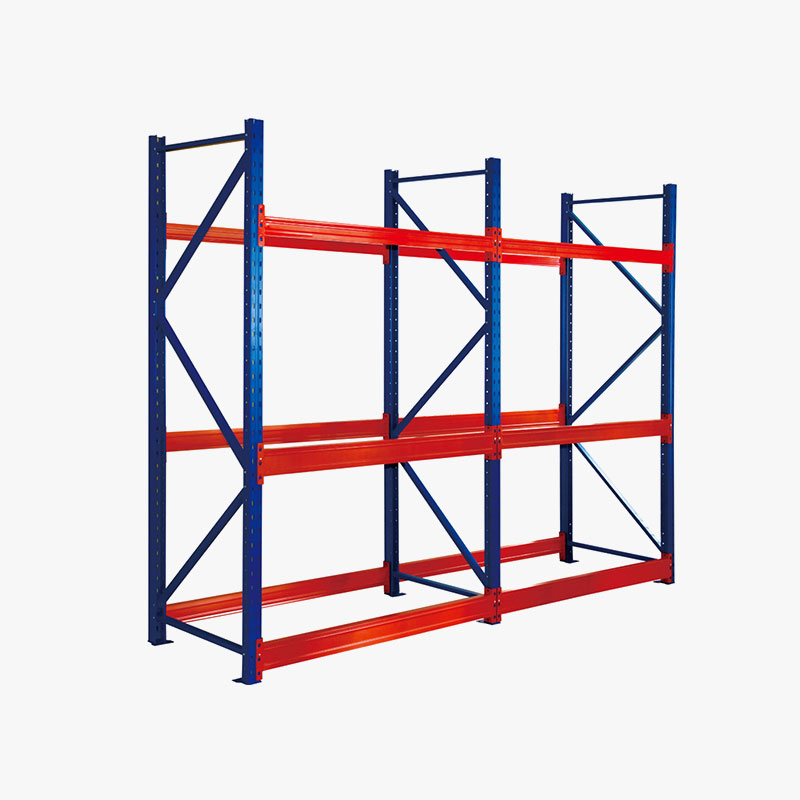
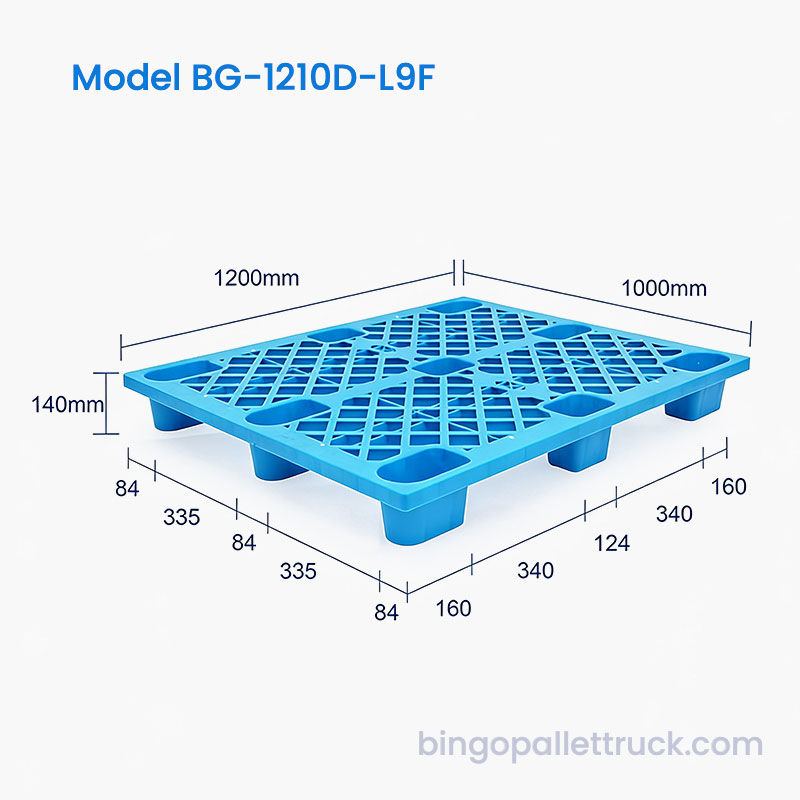
Yancheng Bingo Machinery Equipment Co., Ltd., trading as Bingo, supplies warehousing and logistics equipment across four systems: handling equipment, storage containers, packaging materials and warehouse racks. For pharmaceutical sites, the practical overlap with drum handling is fairly clear: spill containment pallets for chemical and solvent drums, electric pallet trucks and stackers in the 1500 to 3000 kg range for moving loaded pallets, HDPE plastic pallets that can be cleaned and do not shed splinters or nails, totes and crates for components and samples, stretch wrap and strapping for securing drum loads, and racking for the storage zone.
We publish a dedicated set of biomedical industry solutions covering pharmaceutical logistics layouts, from raw material receipt through dispensing to waste staging, and we work with customers worldwide on standard and custom specifications.
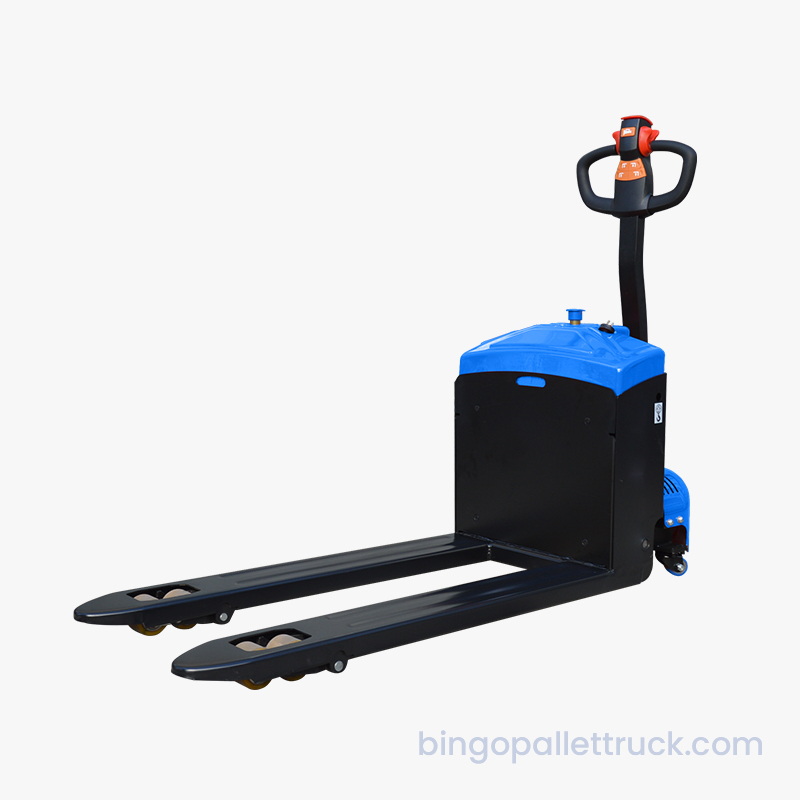 CBD20J 2000kg Electric Walkie Pallet Truck for WarehousingA pedestrian-operated 2000 kg pallet truck with built-in charger and emergency reverse, suited to warehouse material movement after containment and drum needs are defined.View Product →
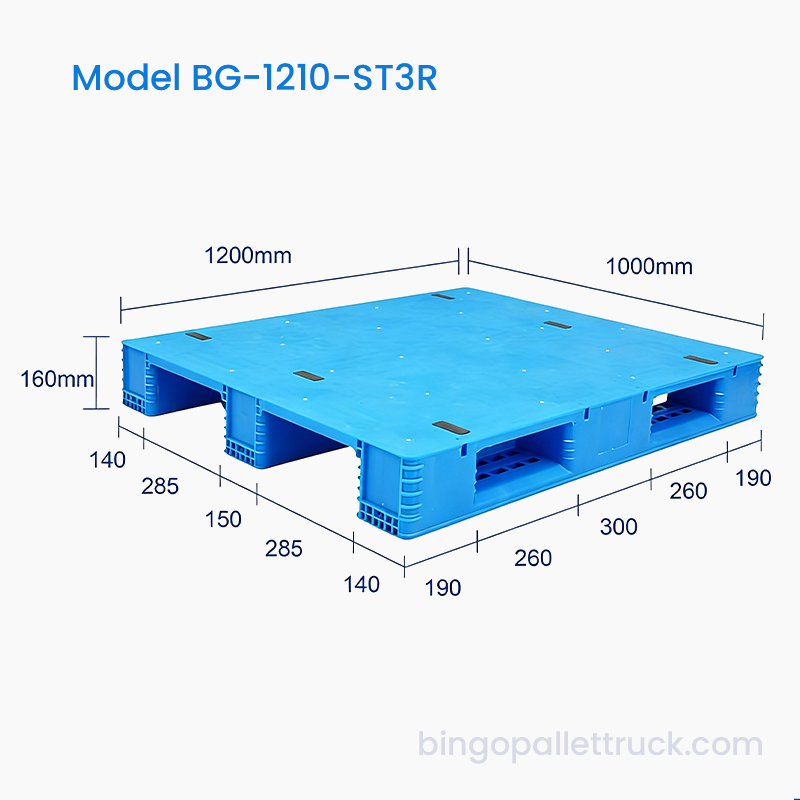 BG-1210-ST3R Solid Top Plastic Pallet for Cold StorageA 1200×1000mm HDPE pallet with flat anti-slip deck, three runners and 1000kg dynamic/6000kg static capacity, useful for cold-store warehouse logistics.View Product →
If you take one thing from this guide, let it be the order of operations: define the drum, define the containment, define the movements, and only then choose the device. Sites that follow that sequence buy fewer tools, spill less, and spend far less time explaining deviations to an inspector.

Copyright @ Yancheng Bingo Machinery Equipment Co., Ltd. All rights reserved Warehouse Logistics Equipment Manufacturer Pallet Truck Supplier
