 en
 Español
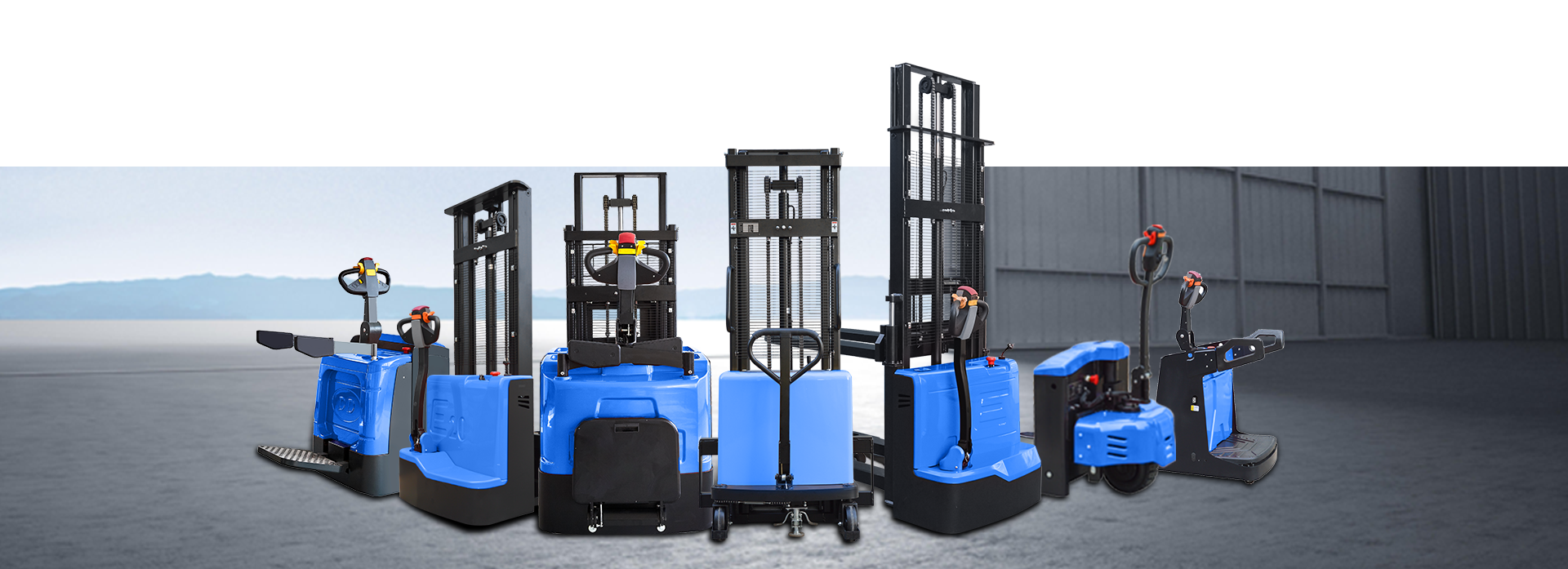

Commercial Material Handling Equipment: How to Specify a Complete Setup
Content
- 1 What Counts as Commercial Material Handling Equipment
- 2 Start With the Load and the Pallet Standard
- 3 Matching Powered Equipment to Throughput and Aisle Width
- 4 Containers and Packaging Consumables Decide Space Efficiency
- 5 Racking and Storage Structures Lock In the Layout
- 6 Specification Checklist and Common Procurement Risks
- 7 Bringing the Four Systems Together
A warehouse manager replacing a fleet of ageing pallet trucks often starts by requesting prices. The more reliable starting point is a one page specification: maximum unit load, pallet footprint, narrowest aisle, required lift height, and the container the goods actually arrive in. Those five numbers usually reduce a long equipment list to two or three workable options. Skip them, and the lowest quote can become the most expensive purchase, because a truck that cannot turn inside a racking aisle is useless no matter how well it is built.
The practical conclusion comes first: commercial material handling equipment should be specified as one connected system. Lifting and transport equipment, storage containers, packaging consumables and racking each set limits on the others, and the cheapest way to keep a project on budget is to fix those limits before the purchase order is issued.
What Counts as Commercial Material Handling Equipment
The term covers four product families that normally appear in the same warehouse, and they are almost always bought together even when they are ordered separately.
| Product family | Typical items | Specification that decides the fit |
|---|---|---|
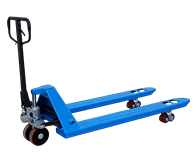
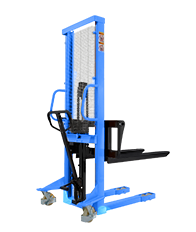
| Lifting and transport | Hand pallet trucks, walkie and stand on electric pallet trucks, semi electric and electric stackers, reach stackers | Rated capacity, load centre, lift height, aisle width, travel distance |
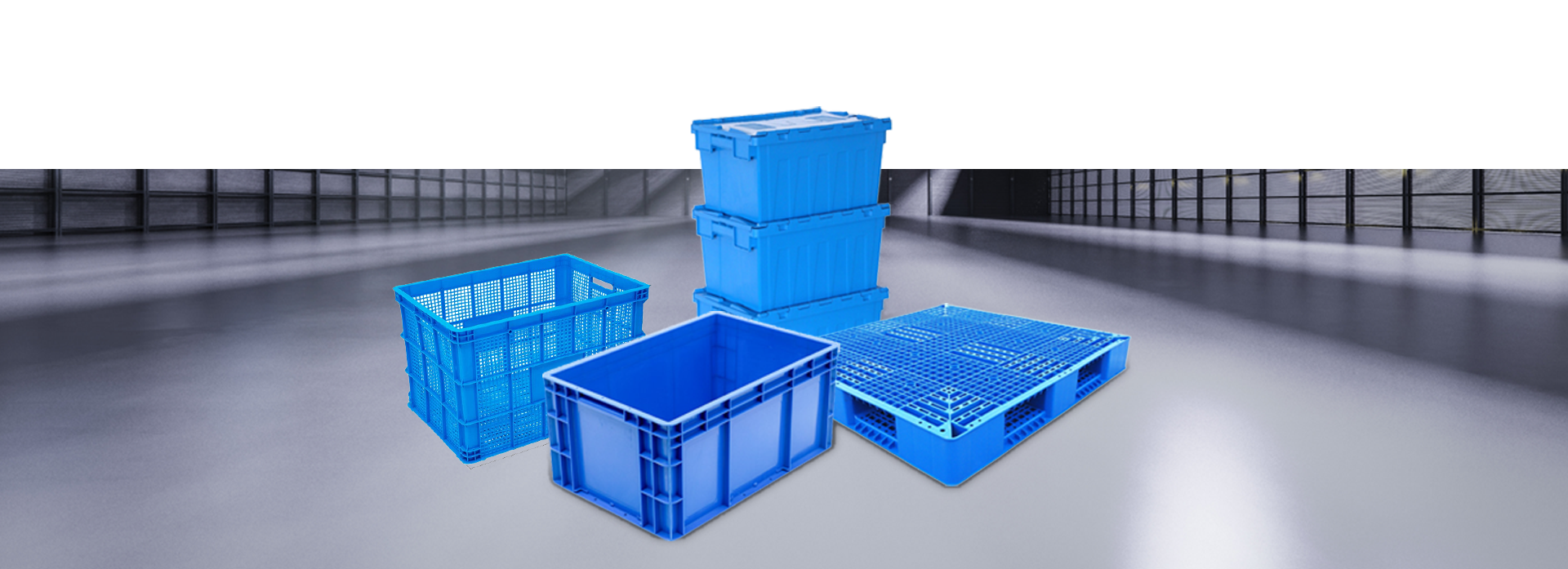
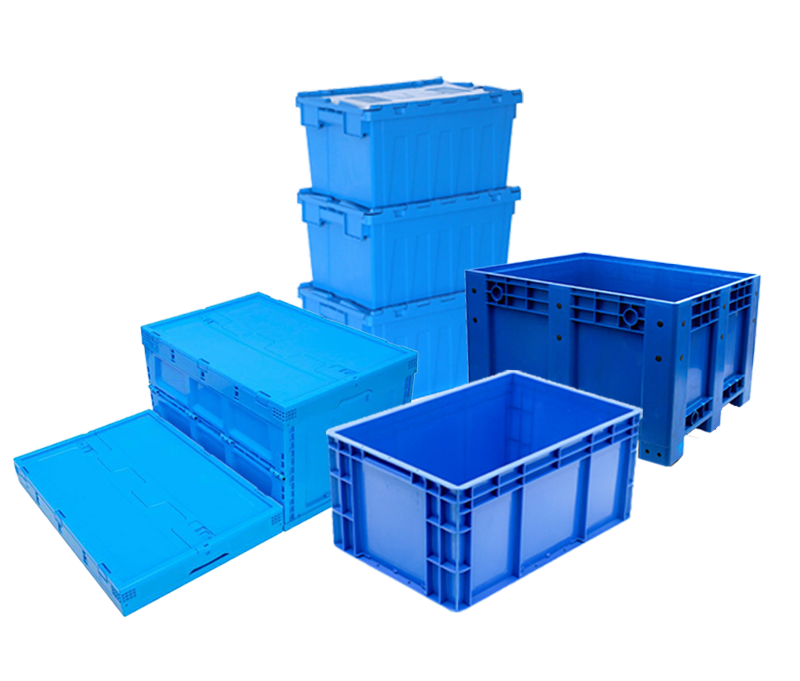
| Storage containers | Plastic pallets, stackable and nestable crates, collapsible totes, EU tote boxes, divided totes, pallet boxes, water tanks, spill pallets | Pallet standard and footprint, base type, deck type, stackability, rackability |
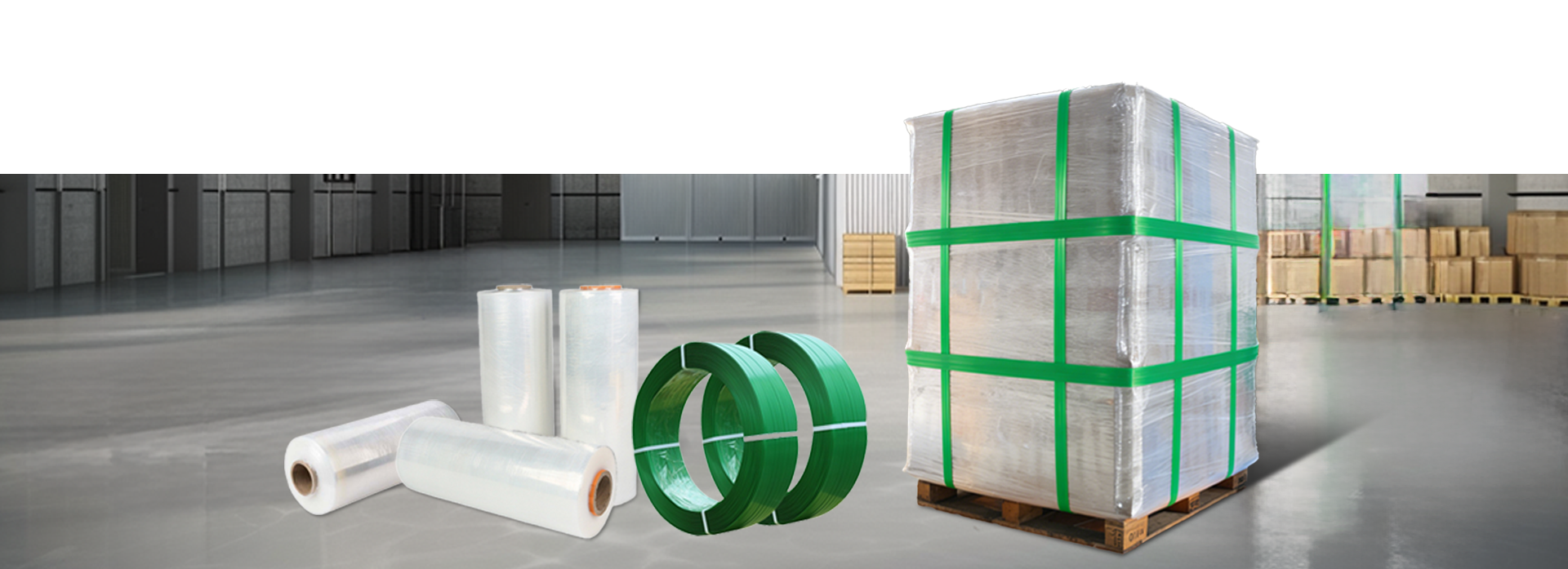
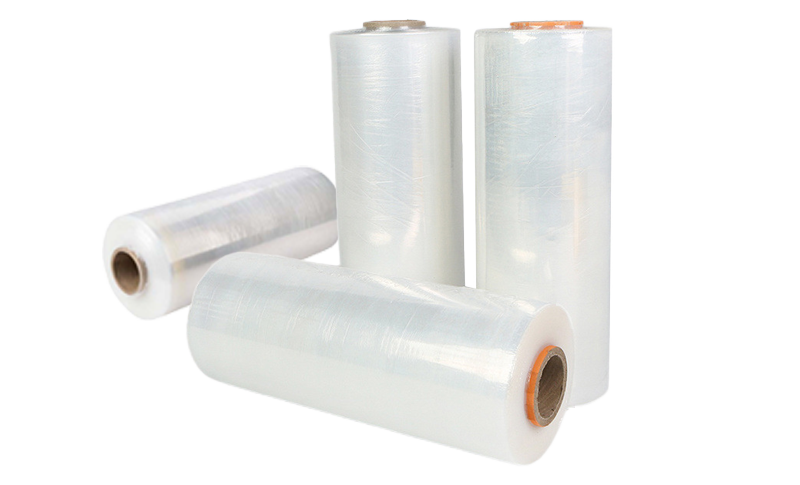
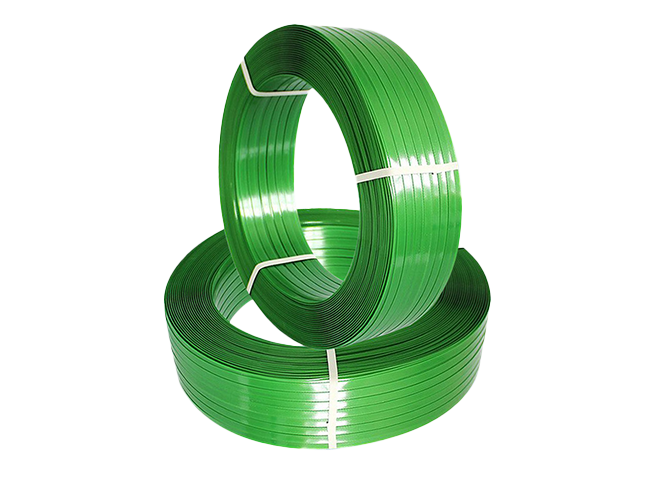
| Packaging materials | LLDPE stretch wrap in hand and machine grades, PET, polyester fibre and PP strapping | Film gauge and stretch ratio, strap tensile strength, application method |
| Racking and shelving | Selective, double deep, drive in, pallet flow, push back, shuttle, AS/RS, mobile and narrow aisle racking, plus boltless, carton flow, long span and mezzanine systems | Beam and frame capacity, beam pitch, aisle width, pick face access |
Buyers who treat these as unrelated purchases usually discover the mismatch at commissioning, when a pallet will not sit squarely on a beam or a stacker cannot reach the top level of a new rack.
Start With the Load and the Pallet Standard
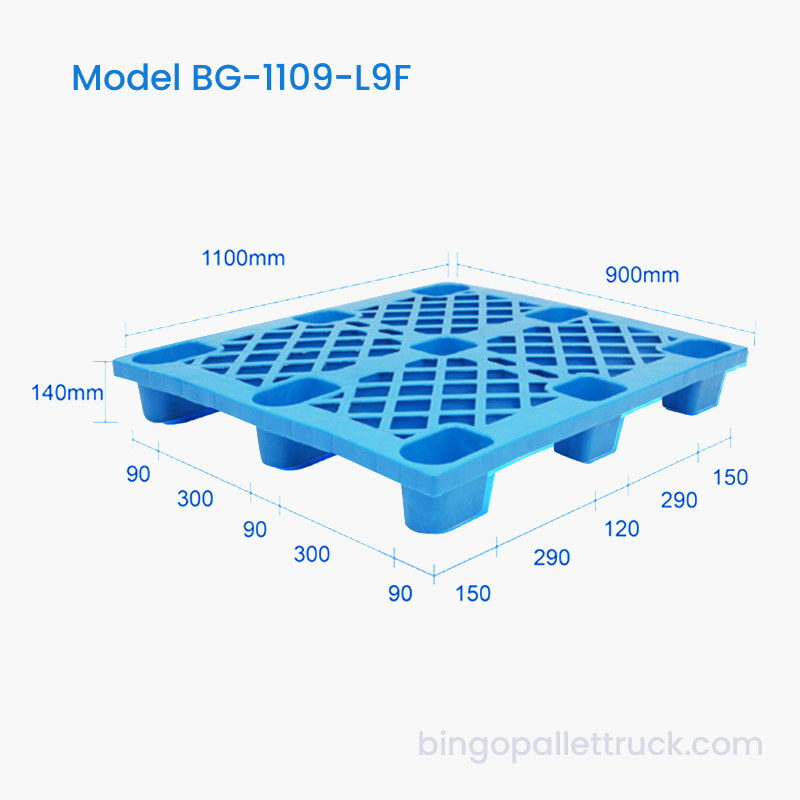
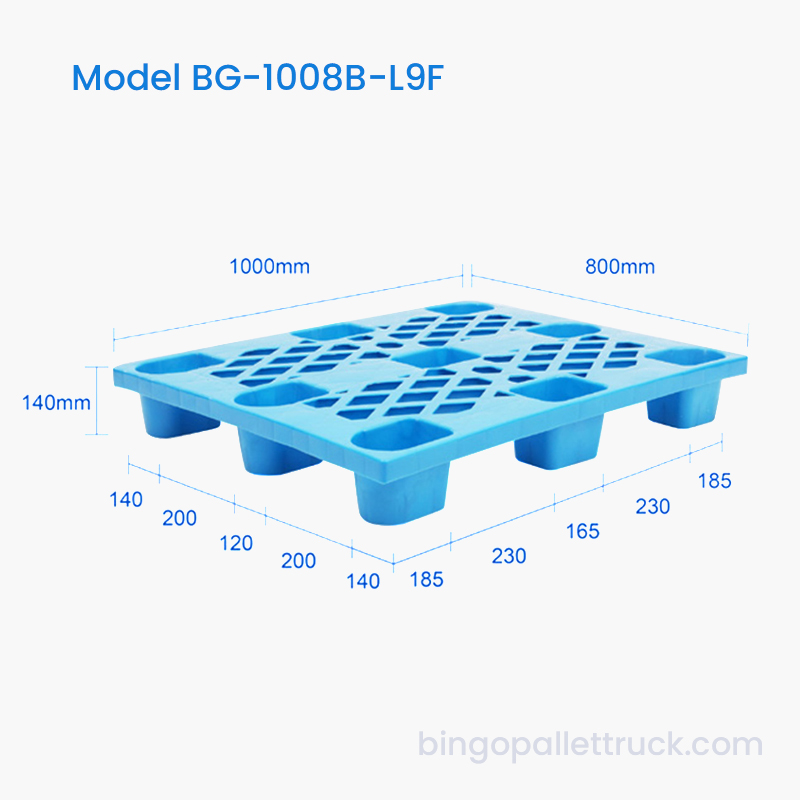
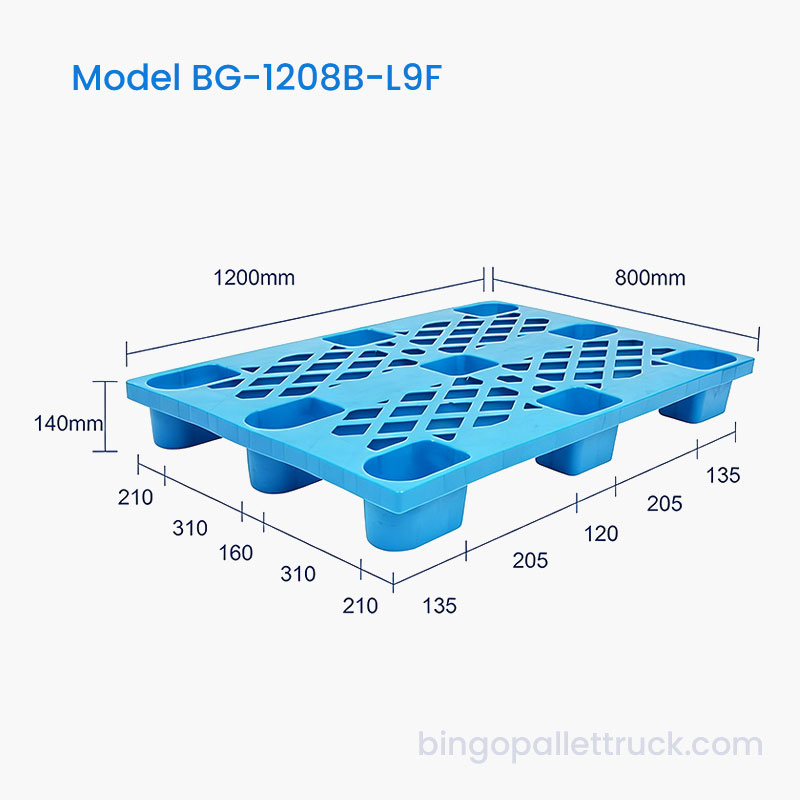
Pallet footprint is decided long before a truck is chosen, because it follows the regional logistics standard your customers and carriers already use. Common formats include 1200 x 1000 mm for global trade, 1200 x 800 mm for European distribution, 1100 x 1100 mm for Japan and Korea, 1219 x 1016 mm for GMA applications in North America, 1165 x 1165 mm for Australia and New Zealand, and 1200 x 1200 mm heavy duty versions for dense loads. Custom footprints are also available when an existing conveyor or rack was built around a non standard size.
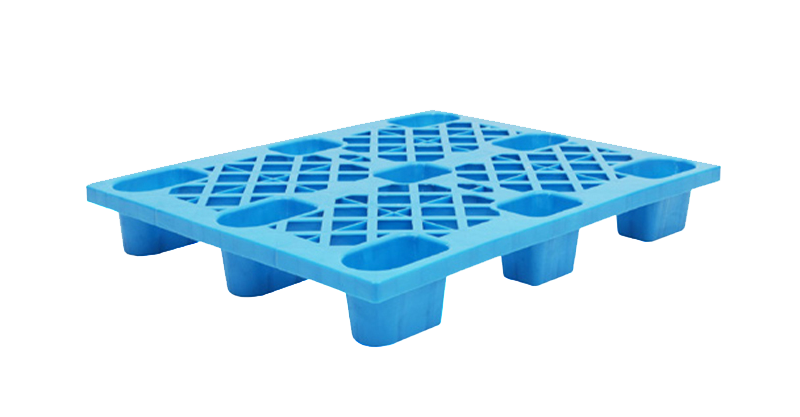
Once the footprint is fixed, the next decision is the base and deck. Nine leg and six runner bases suit different handling methods, three runner pallets are common under racking, and double sided pallets are used where loads are pushed or where both faces must be flat. A grid deck sheds dust and water and is often chosen for food and cold chain work, while a solid top keeps small parts, bags and liquids from falling through.
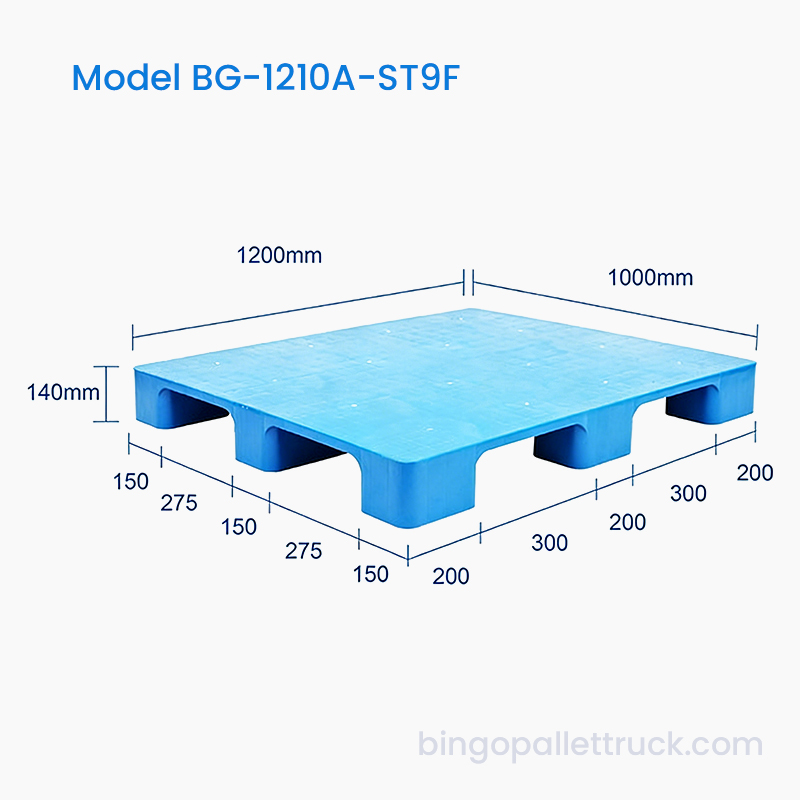 1200x1000mm Solid Top 9 Leg HDPE Plastic PalletSolid-top HDPE pallet with 800 kg dynamic and 4000 kg static ratings; suits stable stacking where small parts or liquids must not fall through.View Product →
Ask for three load figures rather than one: dynamic load while moving, static load while stacked on the floor, and racking load when the pallet is supported only at the edges. HDPE pallets behave differently in a freezer than at room temperature, so cold store projects should confirm material performance before ordering a full batch.
Matching Powered Equipment to Throughput and Aisle Width
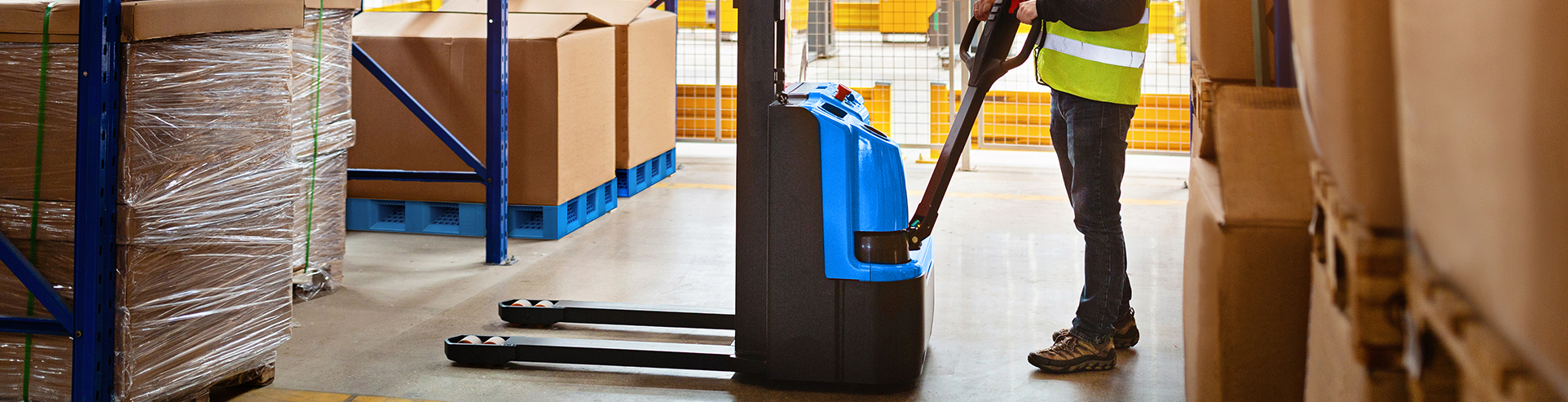
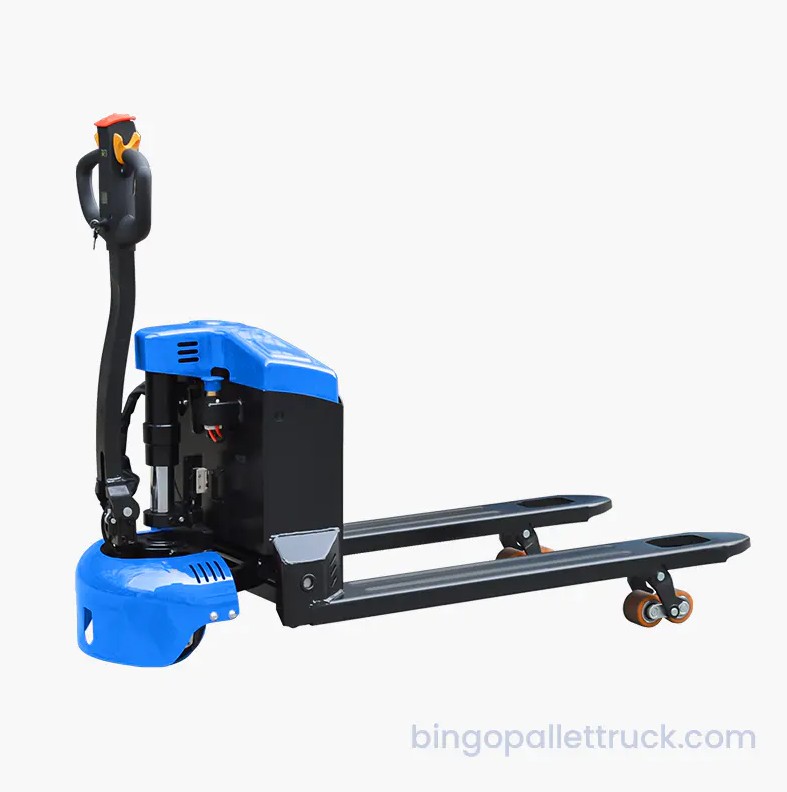
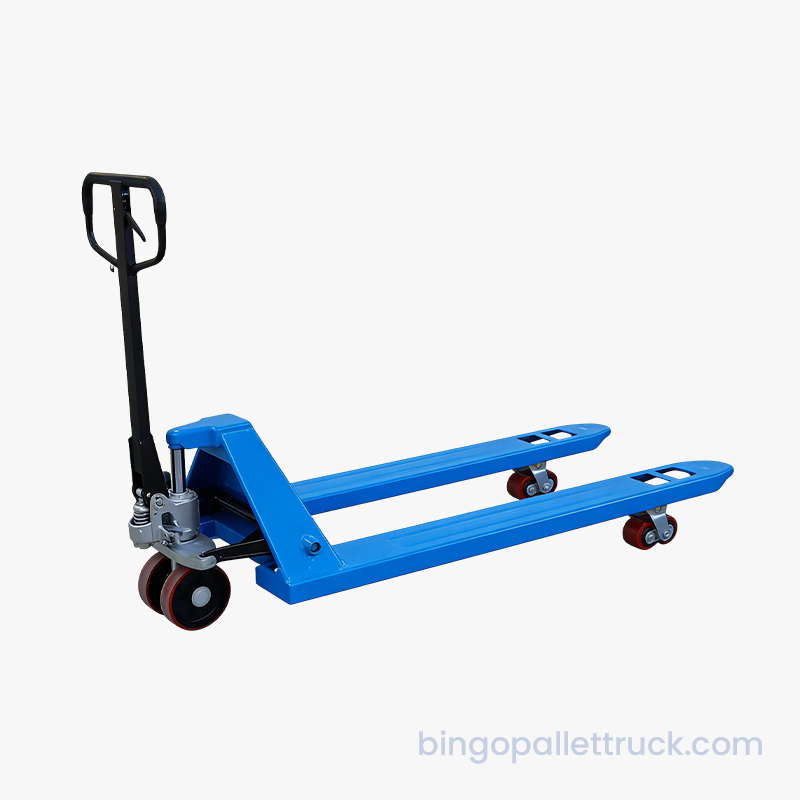
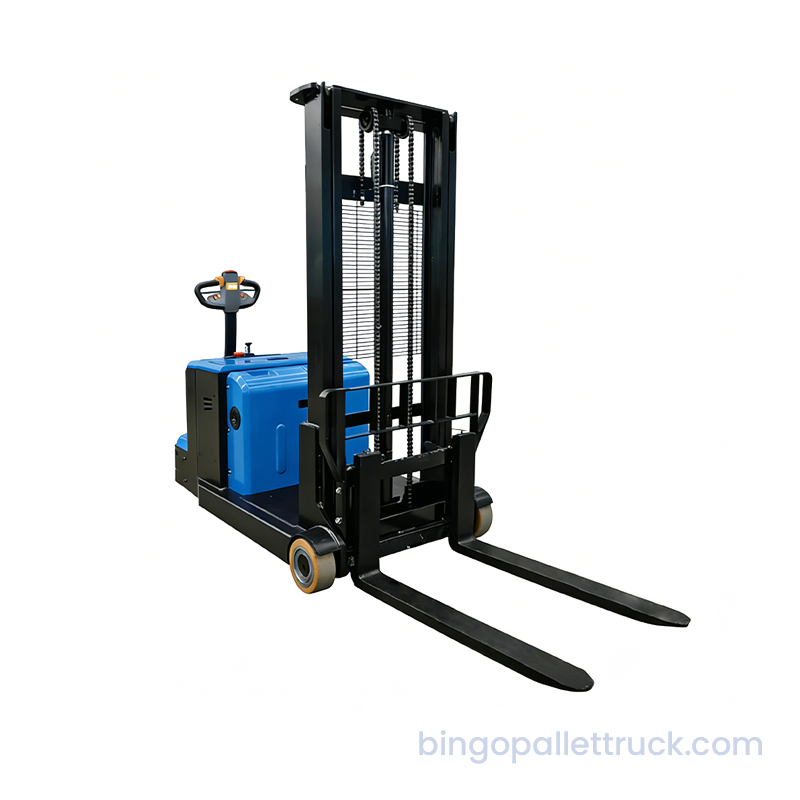
Hand pallet trucks with 2000 kg or 2500 kg capacity remain the most economical option for short horizontal moves on flat concrete, and they need almost no maintenance planning. The moment travel distances grow, the calculation changes. A walkie electric pallet truck reduces operator fatigue on long runs, while a stand on electric pallet truck with 2000 kg or 3000 kg capacity is faster over repeated trips because the operator rides rather than walks.
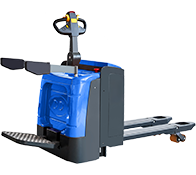
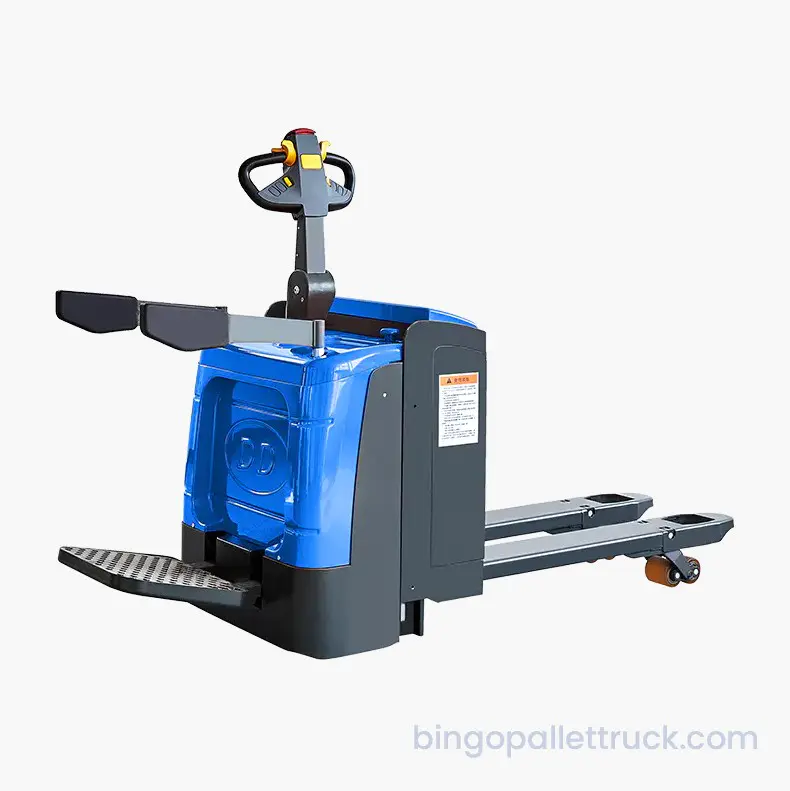
 CBD20E 2000 kg Stand-On Electric Pallet TruckStand-on 2000 kg electric pallet truck for repeated logistics trips; listed 1,670 mm turning radius and aisle widths support site clearance checks.View Product →
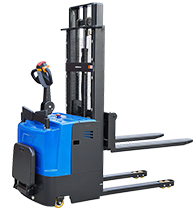
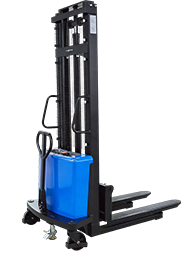
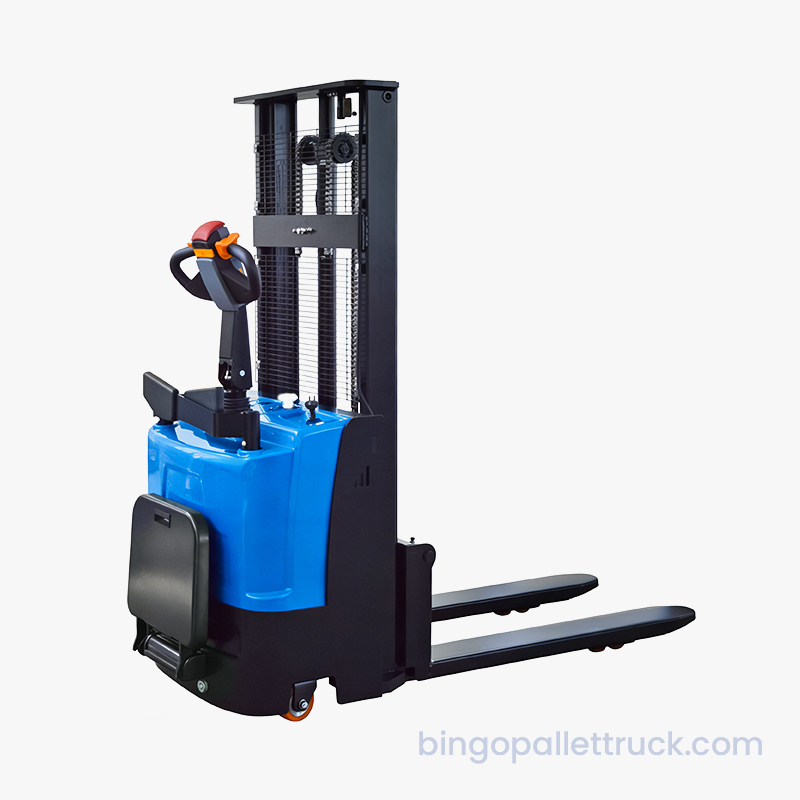
Vertical handling follows the same logic. Semi electric stackers at 1500 kg and 2000 kg are a practical bridge between manual work and full electrification. Electric stackers cover roughly 500 kg to 3000 kg and split into counterbalanced, straddle and reach designs, which changes both the footprint of the machine and the aisle it needs. Two measurements are worth checking on site before ordering: the closed mast height against doorways and container openings, and the turning radius plus clearance against the actual aisle, not the drawing.
Questions to settle before ordering powered equipment
- What is the heaviest load including the pallet, not just the goods?
- How high must the forks lift, and how high must the mast retract?
- Is the floor level, and are there ramps or dock plates on the route?
- How many hours per shift will the machine run, and is opportunity charging available?
Containers and Packaging Consumables Decide Space Efficiency
Containers look like a minor line item until floor space is measured. A warehouse holding goods in rigid crates on fixed shelving may recover a large share of its area by switching to collapsible crates that fold down for return transport, or to stack and nest totes that nest when empty and stack when loaded. The available range spans small divided boxes for components through to large stackable totes in the hundreds of litres, so the practical constraint is usually not choice but consistency: mixing footprints inside one rack wastes as much space as leaving a bay empty.
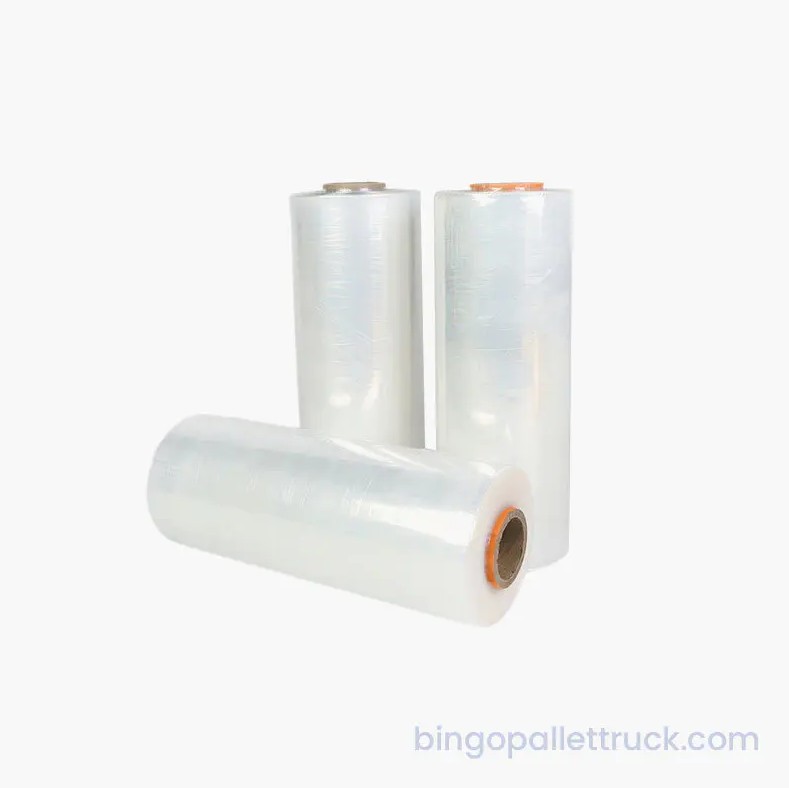
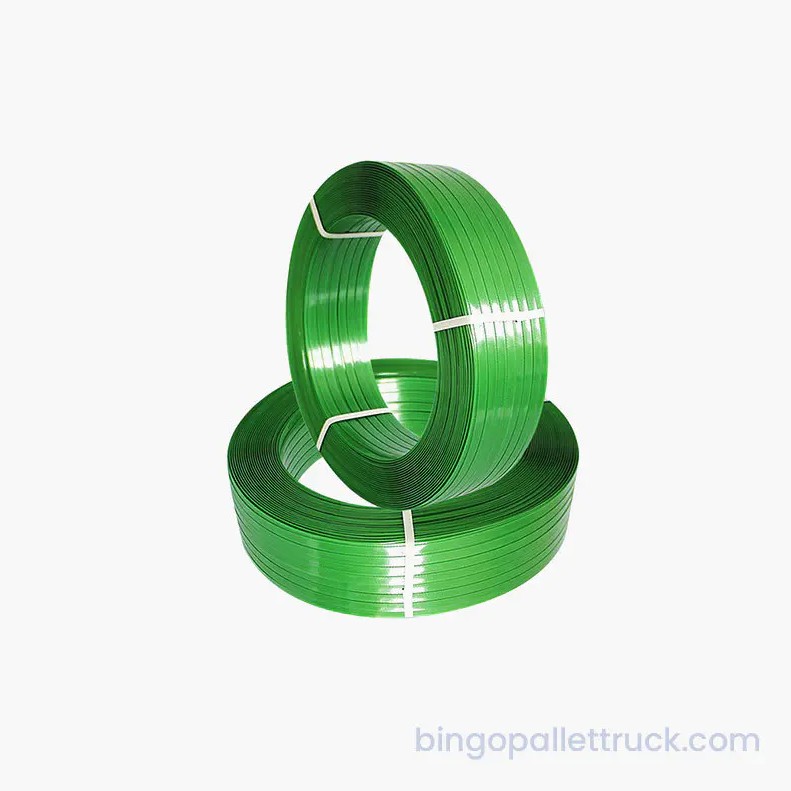
Packaging consumables are where small specifications create recurring cost. LLDPE stretch wrap is supplied in hand and machine grades, and machine film only performs as intended on a machine with the correct pre stretch. Clear film keeps labels readable, black film limits light exposure, and coloured film supports load identification across depots or product lines. Strapping follows the same pattern: PET is used for pallet loads that must stay tight under vibration, polyester fibre handles heavy or irregular bundles, and PP suits lighter carton sealing.
One check prevents most container problems: confirm that the loaded tote or crate is compatible with the pallet underneath it, that overhang stays within the rack beam, and that the stacked height fits the clear opening between beam levels.
Racking and Storage Structures Lock In the Layout
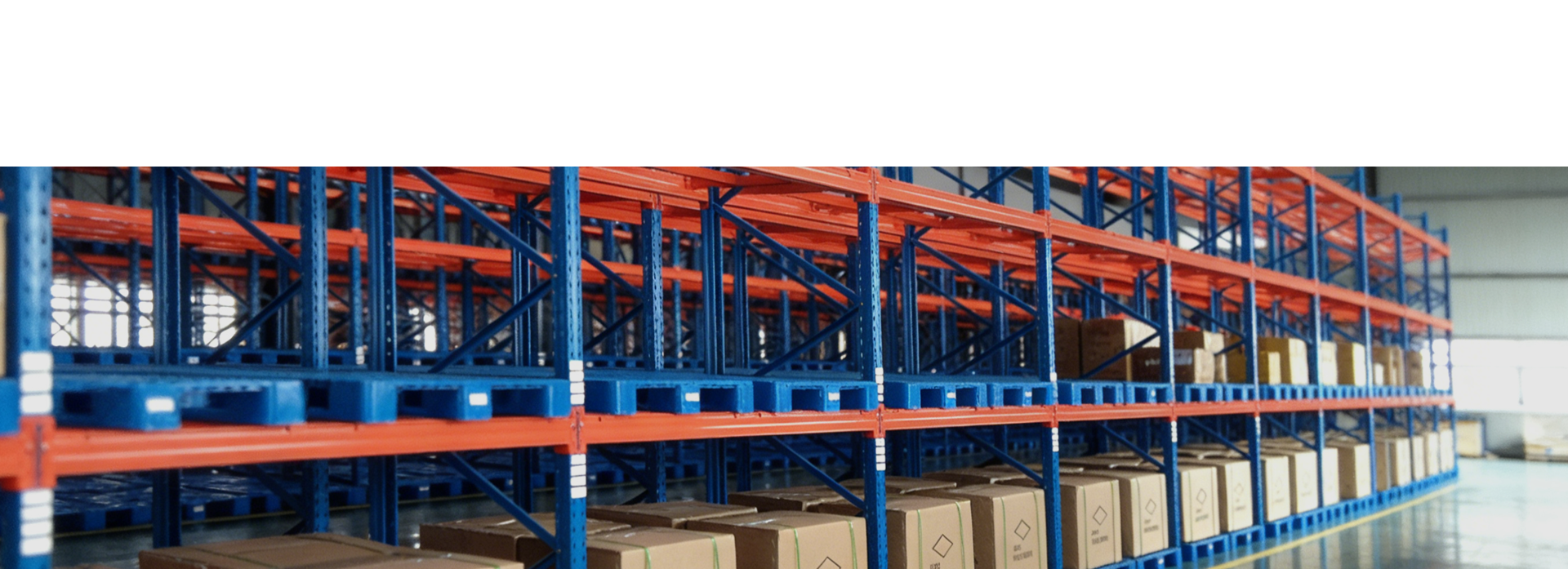
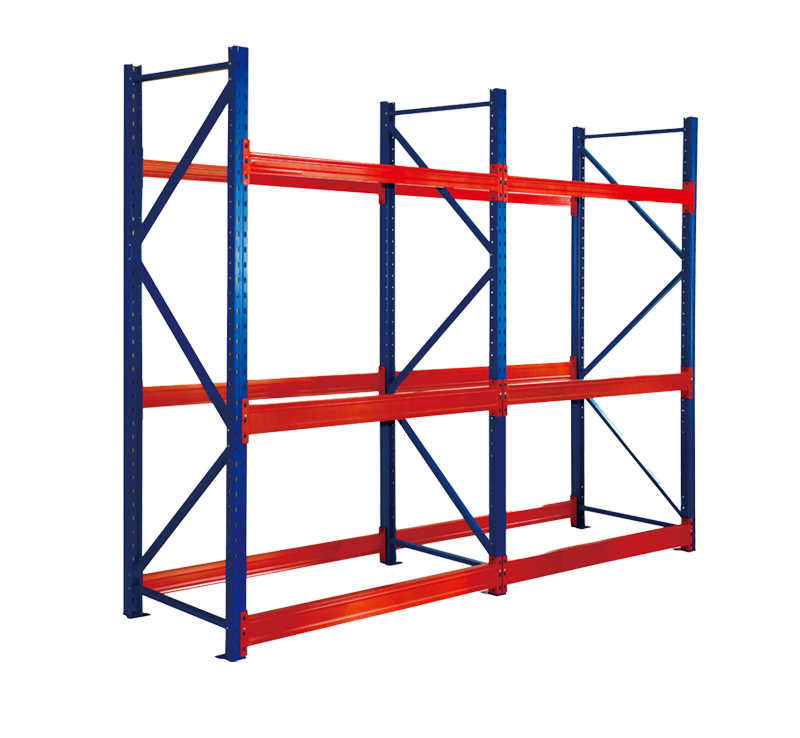
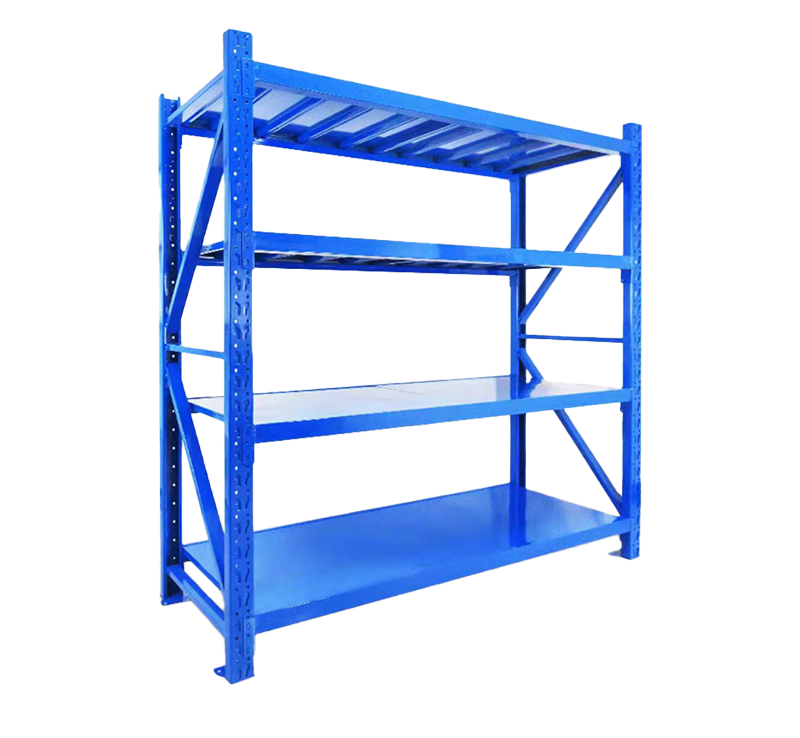
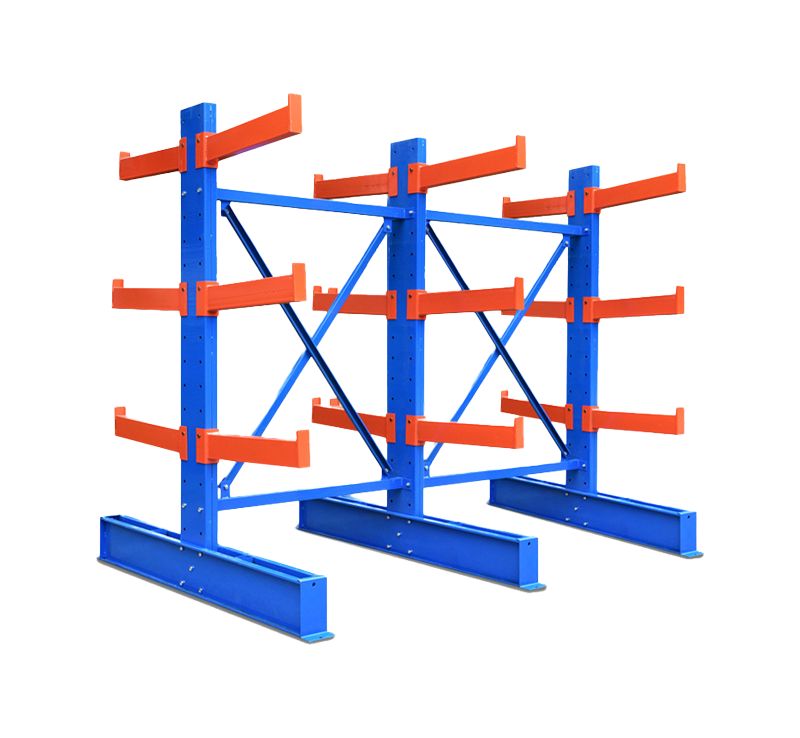
Racking is the least reversible purchase in the project, because it defines aisle width, travel paths and future expansion. Selective pallet racking gives direct access to every pallet and remains the default choice for mixed stock. Where space is tighter or stock is more uniform, double deep, drive in and drive through, pallet flow, push back, shuttle and automated storage systems raise density, each at the cost of access flexibility or capital. For piece picking, boltless shelving, carton flow, long span shelving and mezzanine floors handle the level below full pallets, while cantilever and drawer systems cover long loads and tooling.
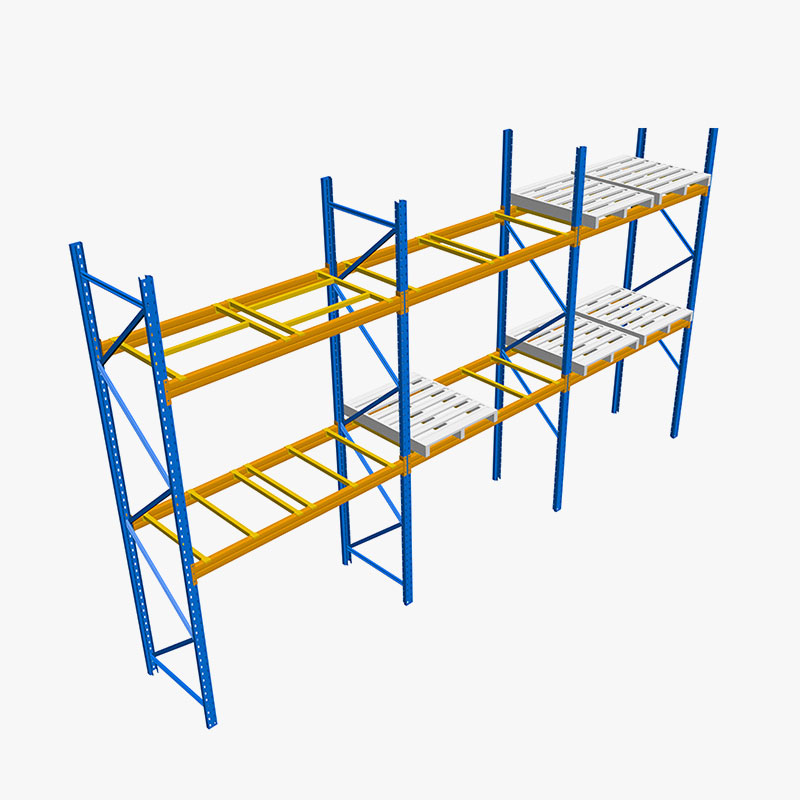 Heavy Duty Selective Pallet Racking with Adjustable BeamsSelective racking with adjustable beams and up to 1800 kg per layer; direct forklift access suits mixed stock and first-in, first-out warehouse layouts.View Product →
Before confirming a layout, request beam capacity per pair, frame capacity, upright depth, and the beam pitch relative to the load height, then walk the numbers against the handling equipment. A rack that is structurally sound but leaves an aisle narrower than the truck needs is still the wrong rack.
Specification Checklist and Common Procurement Risks
Most failures in this category are interface failures rather than manufacturing defects, and they are predictable.
- Capacity confusion: rated capacity is not the same as usable load once attachments, pallet weight and uneven stacking are counted.
- Load type confusion: dynamic, static and racking load ratings differ, and only the racking figure matters inside a beam bay.
- Pallet and container mismatch: a tote that overhangs the pallet can be damaged by the rack upright or caught by a conveyor.
- Aisle arithmetic based on drawings rather than measured clearance along the full travel path.
- Consumable compatibility: hand film on a machine, or a strap width too narrow for the carton edge, wastes material every shift.
- Service planning: consumables, wheels, batteries and replacement parts should be specified at the same time as the machine.
Working through this list takes an afternoon. Correcting the consequences on a live site takes considerably longer.
Bringing the Four Systems Together
Sourcing the four families from one supplier is not simply an administrative convenience. It shifts responsibility for the interfaces, pallet to rack, tote to pallet, film to machine, onto the party that can actually adjust a specification before production. Bingo supplies handling equipment, storage containers, packaging materials and warehouse racking as a single supply chain, and publishes application guidance for manufacturing supply chains, retail distribution, ecommerce fulfilment, food cold chain and biomedical storage through its industry specific solutions.
If you are planning a new facility or re equipping an existing one, the fastest route to a workable configuration is to send the load data, pallet standard, aisle measurements and throughput figures together, and ask for a matched proposal rather than a price list. You can speak with the Bingo team about your project requirements and get the specification reviewed before you commit.

Copyright @ Yancheng Bingo Machinery Equipment Co., Ltd. All rights reserved Warehouse Logistics Equipment Manufacturer Pallet Truck Supplier
