 en
en  Español

Forklift Pallet Rack Protection: A Practical Guide to Preventing Warehouse Damage
During a routine walkthrough at a distribution center, a warehouse manager noticed a small dent in the bottom flange of a pallet rack upright. No load was in that bay, so the dent was recorded as cosmetic. Three weeks later, a forklift grazing the same column caused the dented section to buckle, sending an entire bay of pallets to the floor. That is how pallet rack damage usually happens: small collisions, ignored warning signs, and a structure that fails far sooner than expected.
Forklift pallet rack protection is not an accessory. It is a fundamental part of warehouse safety and asset management. In most racking systems, uprights and aisle ends are designed to carry vertical loads, not lateral impacts. When a forklift hits an unprotected column at slow speed, the load capacity of that member can drop dramatically. Protect the rack before the first impact, then inspect and maintain the protection as part of normal operations.
Content
Why Pallet Rack Protection Matters More Than You Think
An unprotected upright is the weak point of every pallet rack. It is designed to carry compression loads from beams and pallets. A forklift impact from the side bends the column flange, and once the cross section is deformed, the load path changes. That bent column may still hold its current weight, but it loses most of its ability to absorb additional stress, such as a second impact, a shifted load, or normal rack vibration.
The chart above ranks the most common sources of pallet rack damage in warehouses without dedicated protection. Forklift impacts against uprights account for the largest share, followed by impacts at aisle ends. Loading and unloading errors also create consistent damage even when no collision happens. This distribution matters because the top two sources occur exactly where simple guards can make a difference. A protection program that covers uprights and aisle ends can therefore address most of the risk. The percentages may vary by facility, but the pattern is remarkably consistent.
One important detail is the difference between visible and hidden damage. A dent in the back of an upright may not be visible during a quick pass, but it still changes the structural capacity of the column. That is why protection should be installed before damage is detected, not after a bent frame is found.
Where to Focus: Uprights, Rack Ends, and Beam Ends
Pallet racking has three zones that are most likely to be hit by a forklift: uprights facing aisles, rack ends at aisle corners, and beam ends where loads enter and leave. Each zone needs a different type of guard because the impact angle and frequency are different.
| Protection Zone | Why It Is Vulnerable | Typical Protection |
|---|---|---|
| Rack uprights | Bare columns absorb lateral hits | Upright protectors, bolt-on steel guards |
| Rack ends and aisle corners | Frequent turning points, easily clipped | Rack end guards, bollards |
| Beam ends and frame connections | Impact can dislodge beam locks | Rack end barriers, impact plates |
An effective approach treats these three zones as one system. When a forklift turns at the end of an aisle, the rack end guard takes the first hit and directs the truck away from the upright. When a load is placed too quickly, the beam end impact plate protects the locking mechanism. In this way, protection works best when it is matched to the traffic pattern of each aisle.
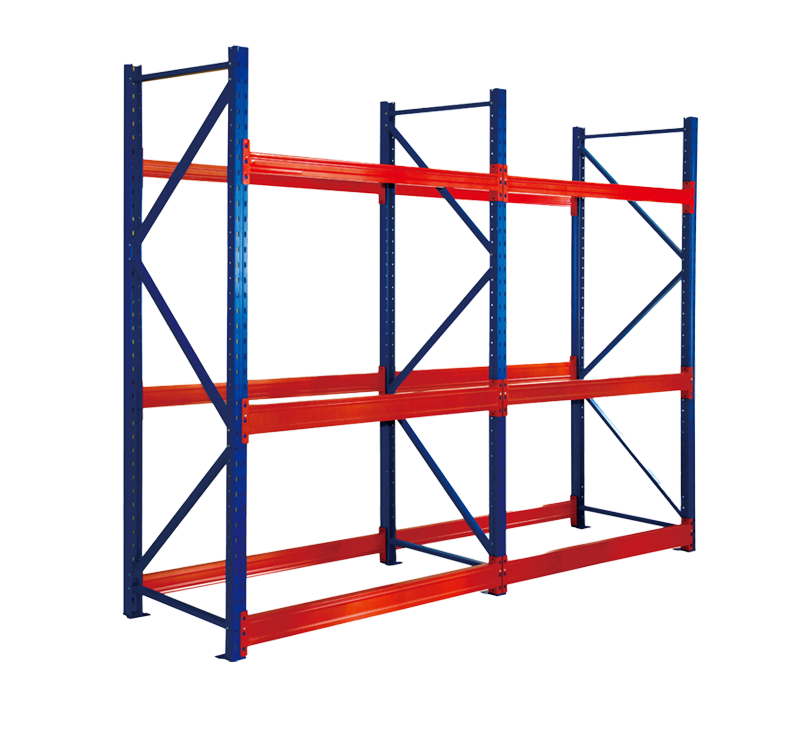
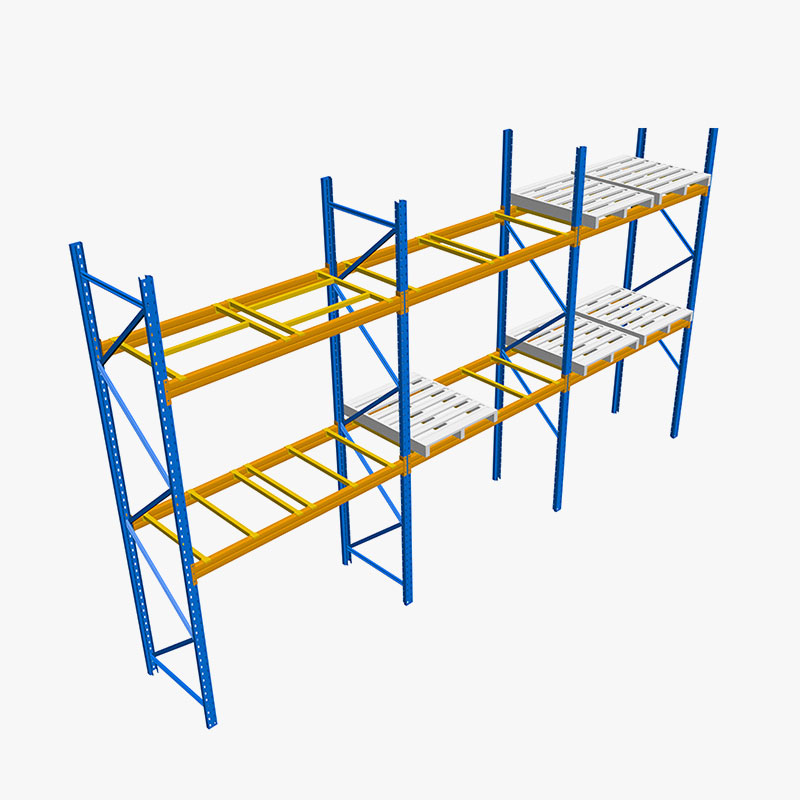 Heavy Duty Selective Pallet Racking with Adjustable BeamsThis adjustable beam pallet racking supports up to 1800 kg per layer and suits flexible storage layouts. It is relevant here as the structural base for evaluating aisle protection and forklift clearance needs.View Product →
Comparing Protection Options: Guards, Barriers, and Bollards
Warehouse operators can choose from several basic protection methods. Column guards wrap around an upright, rack end guards protect the outer face of a row, and bollards or barriers create a physical separation between forklift traffic and the rack. The right option depends on aisle width, truck type, and how often a specific area is hit.
The column chart illustrates the impact of a layered protection plan. A facility with no protection can easily record more than twenty rack damage incidents per year. Adding basic column guards reduces the number of direct upright hits, but it leaves aisle ends and beam ends exposed. A full protection program, which includes upright protectors, end guards, and barriers, brings the number down to a small single digit. This is not a fixed number; the trend is consistent with industry observations. Even a modest increase in protection produces a quick drop in repair costs and downtime.
The radar chart compares two common protection materials on five performance criteria. The blue polygon shows steel guards with high impact resistance and lower installation speed. The lighter polygon shows polymer guards with faster installation and slightly lower impact resistance. Cost and maintenance ease are comparable for both, while visibility favors lighter polymer guards in narrow aisles. The trade-off is clear: steel offers the strongest point protection, while polymer is easier to install and easier to inspect. For aisles with frequent hard impacts, steel remains the safer choice; for low traffic areas, polymer often provides enough protection at a lower installation cost.
Layout and Design Choices That Reduce Forklift Impacts
Rack protection does not stop at adding guards. The layout of the warehouse determines how often a forklift comes into contact with a rack. Narrow aisles, blind corners near rack ends, and loading areas without enough turning space create the conditions for impact. Design choices can remove those conditions before they become a problem.
The line chart shows a common pattern after a protection program is implemented. In the first three quarters, damage incidents remain high because the rack has no dedicated guards. At the end of quarter four, protection is installed and operator training begins. After that, the number of reported impacts drops steadily. The two segments of the line make the effect easy to see: the high plateau before protection and the downward trend after. This pattern is often even stronger in facilities that also adjust aisle layout and traffic flow.
- Keep clearance between forklift turning radii and rack ends above the minimum recommended by the rack manufacturer.
- Install mirrors or convex safety mirrors at blind aisle intersections.
- Use high visibility floor markings to guide operators into loading zones.
- Consider flow rack or drive-in racking designs that limit the distance a forklift travels inside the rack.
Layout changes are not always costly. Reassigning high traffic aisles away from rack ends, adding a turning circle at the end of each row, and training operators to approach perpendicular to the rack can reduce impact frequency without a major renovation.
Build a Simple Pallet Rack Protection Plan
You do not need to redesign your whole warehouse to start protecting pallet racks. A practical plan begins with a walkthrough and ends with scheduled checks. The steps below are simple enough for an existing facility and flexible enough for a new build.
- Walk every aisle and mark the uprights and rack ends that show any bend, scratch, or displaced guard.
- Install protection on the most exposed columns first, usually the first two uprights at each aisle end and every column near a turn.
- Train forklift operators to report any contact with the rack, even if the truck was not visibly damaged.
- Schedule a documented inspection after each reported impact and a full rack audit once a year.
- Review the layout for blind corners and cramped turning areas and adjust traffic flow before replacing guards.
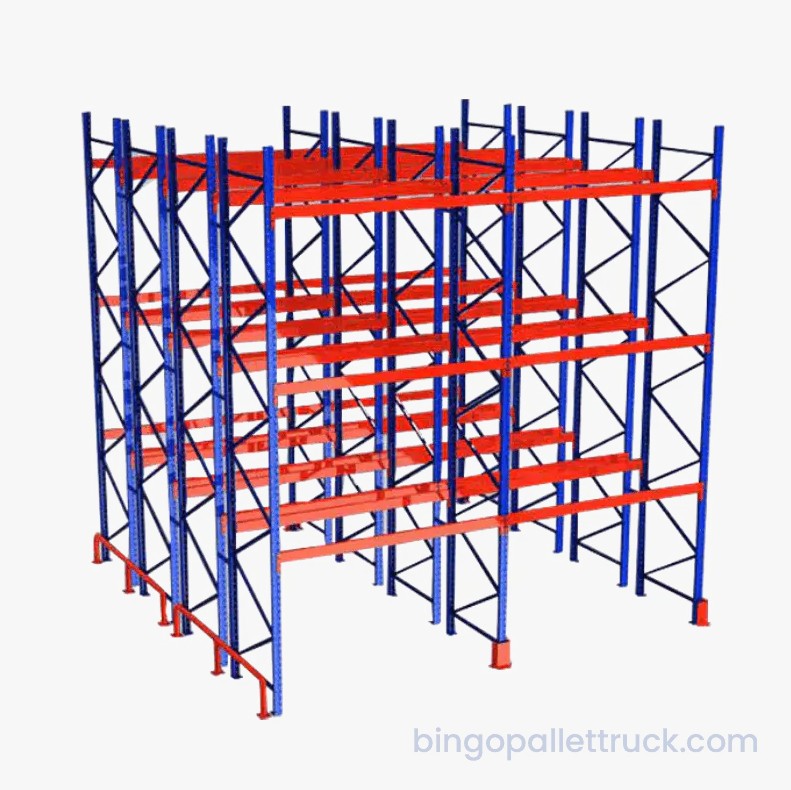
If the racking itself is older or does not match the current forklift fleet, consider upgrading the storage structure as part of a broader safety investment. A high density system can reduce the amount of time a forklift spends inside narrow rows, and a well designed selective rack supplies the clearance that operators need to place loads safely. For a facility specific recommendation, contact our warehouse solutions team or review our manufacturing supply chain solutions to see how an integrated racking and handling setup reduces collision risk.
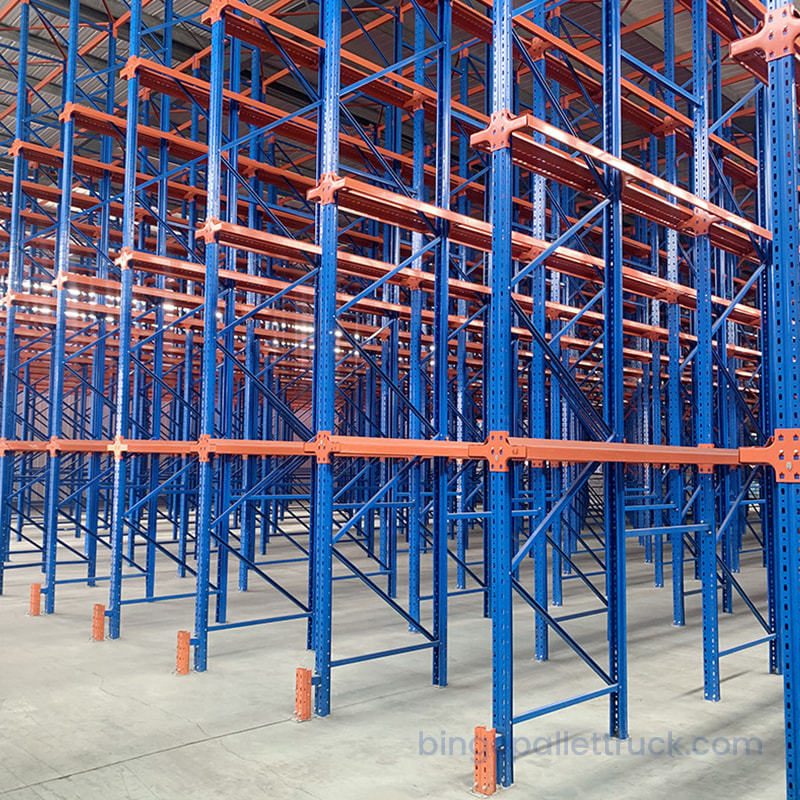 Customized Drive-in/Drive-thru Racking for High-Density StorageThis high-density racking integrates forklift lanes to boost capacity by 30–50% and supports LIFO or FIFO flow. It is worth considering when upgrading storage structures to reduce aisle navigation and collision risk.View Product →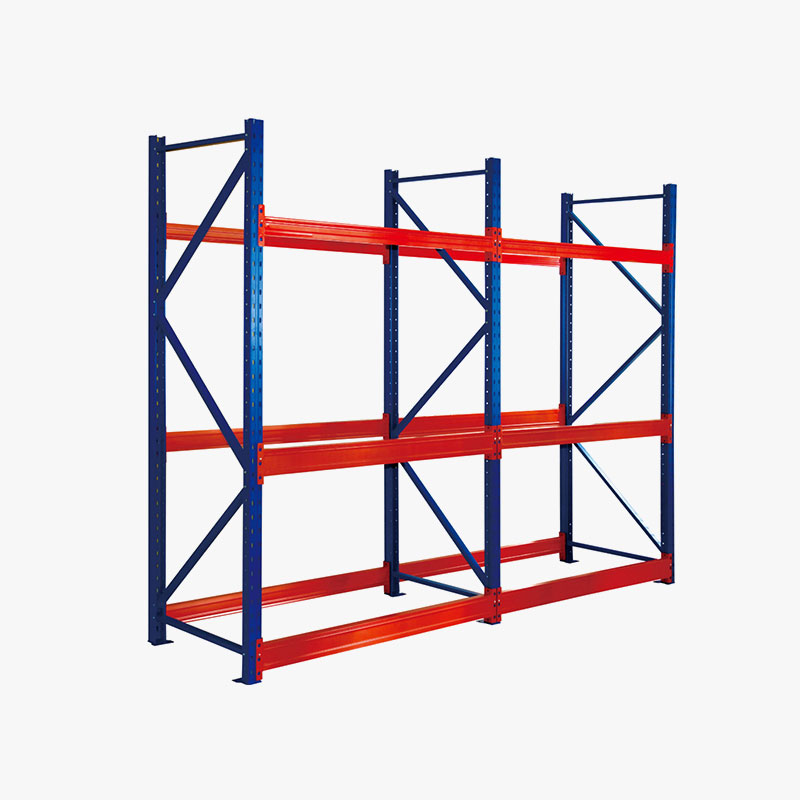

Copyright @ Yancheng Bingo Machinery Equipment Co., Ltd. All rights reserved Warehouse Logistics Equipment Manufacturer Pallet Truck Supplier
