 en
en  Español




Heavy Duty Electric Pallet Trucks: Complete 2000-3000 kg Buyer's Guide
Every warehouse supervisor knows the moment when manual pallet handling stops being workable. The heaviest pallets exceed 2500 kg, the dock staging area sits 80 meters from the storage bays, and the shift plan demands more pallet moves than two operators can push through. A heavy duty electric pallet truck rated at 2000 kg or higher changes that equation. It removes the physical pushing, shortens cycle time and lets one operator sustain a pace that two or three manual operators cannot match. This guide explains what separates a true heavy duty electric pallet truck from lighter models and how to choose the right configuration for your warehouse and budget.
Content
What Defines a Heavy Duty Electric Pallet Truck
A pallet truck becomes heavy duty when its rated capacity reaches 2000 kg, because at that level the chassis, drive motor, wheel set and controller must be engineered for sustained full-load work rather than occasional heavy lifts. Light-duty models handle 1000 to 1500 kg, which works for retail backrooms but fails in production and distribution environments. Heavy duty models use reinforced fork welds, larger drive wheels and motor controllers with thermal protection so the truck can run continuously through an eight-hour shift without derating. The two most common ratings are 2000 kg and 3000 kg. The 2000 kg class suits standard pallet loads with a safety margin, while the 3000 kg class handles double-stacked pallets, dense loads and trailers with heavier unit weights. Browse the full electric pallet truck lineup in our handling equipment section to see how these models fit into a complete family.
| Specification | 2000 kg class | 3000 kg class |
|---|---|---|
| Rated load capacity | 2000 kg | 3000 kg |
| Travel speed with load | 5 to 6 km/h | 5 to 6 km/h |
| Gradeability with load | 8 to 10 percent | 6 to 8 percent |
| Typical battery option | 24 V 210 Ah | 24 V 280 Ah |
| Fork length range | 1150 to 1800 mm | 1150 to 1800 mm |
| Typical application | Single pallet loads, dock staging | Double-stacked pallets, heavy unit loads |
The second distinction that matters is operator position. A walkie configuration keeps the operator on the floor, walking beside the handle, which makes the truck short and agile inside trailers and tight storage aisles. A stand-on configuration adds a riding platform and a steering tiller so the operator travels with the load, which removes walking time and raises comfortable route lengths from about 20 meters per cycle to 60 meters or more. Both configurations are available in the 2000 kg and 3000 kg classes. The right choice depends on route length, congestion and operator time aboard the truck.
What Heavy Duty Electric Power Costs and Saves
Before comparing models, look at the productivity gap between manual and battery-powered handling. The bars below show typical pallet movements per eight-hour shift at a 45-meter average move distance.
The numbers represent realistic shift output in mixed distribution work with a 45-meter average travel distance. A manual pallet jack moves between 150 and 200 pallets per shift because every trip requires pushing, pumping and rest breaks. A heavy duty walkie electric pallet truck lifts that figure to roughly 400 to 450 pallets per shift, since the motor covers all travel and the operator only walks to steer and position forks. A stand-on electric pallet truck pushes productivity to 600 to 700 pallets per shift because the operator rides and turnaround time drops sharply at both ends of the route. The exact output depends on aisle congestion, dock leveler condition and load weights, but the ranking stays consistent. Any operation moving more than 200 pallets per shift will hit a staffing ceiling with manual equipment long before it reaches an electric truck's limit.
The second chart shows cumulative cost over five years for the same workload, including equipment, batteries, maintenance, energy and operator labor.
The manual line starts low because a pallet jack costs a fraction of an electric truck, but it climbs fast as labor cost accumulates. The electric line starts higher, at roughly 26,000 USD with truck, battery and charger, but its annual operating slope is much flatter. The two curves cross between the ninth and the fifteenth month in most operations, so the electric truck repays its price premium well within the first two years. After the crossover, every additional month widens the total cost gap in favor of the electric truck. The reason is simple: the electric truck replaces pushing and walking with motor drive, so it does more work per operator hour and reduces the largest cost component in pallet movement. For two-shift operations, the payback is even faster because the same asset carries two or three times the annual volume. For a refresher on the main components, see our basic guide to electric pallet trucks.
Walkie or Stand-On: Which Configuration Fits Your Layout
Once you know you need heavy duty electric power, the walkie versus stand-on choice matters. Walkie models are the default for trailer loading, cross-docking and tight pickup aisles because the operator can step off easily and steer the short chassis around obstacles. Stand-on models earn their place in operations with longer travel distances, wider aisles and higher throughput targets, where riding between replenishment zones saves hours every day.
This chart splits the cost per pallet into labor cost and machine cost so you can see where each equipment type spends money. The manual pallet jack shows the highest labor component, usually 9 to 12 cents per pallet, because human effort is slow and expensive to sustain. The walkie electric pallet truck cuts labor cost to about 4 to 6 cents per pallet, while machine cost stays near 2 cents. The stand-on truck reduces labor further to 2 to 3 cents per pallet, with machine cost around 2.5 cents, because travel time disappears and the operator keeps pace all shift. Machine cost, including depreciation, battery charging and maintenance, stays small for every type and never offsets the labor advantage of electric power. At 100,000 pallets per year, one cent per pallet equals about 1,000 USD, so the manual-to-stand-on gap can reach 7,000 to 9,000 USD yearly.
The radar chart rates a walkie and a stand-on model in the 2000 kg class across six characteristics on a scale of one to five. Walkie trucks score higher on maneuverability and aisle flexibility, because the operator can leave the truck and pivot it inside a trailer or a narrow staging lane. Stand-on trucks score higher on travel speed and operator comfort, making them the better match for routes of 60 meters or more between dock and racking. The two configurations are close on load capacity and energy efficiency because both use the same class of drive motor and steel fork frame. Choose the walkie when your routes are short, your aisles are narrow and operators step off frequently for pallet positioning. Choose the stand-on when the route is long, the floor is clear and every minute of travel time can be converted into riding time.
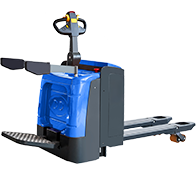
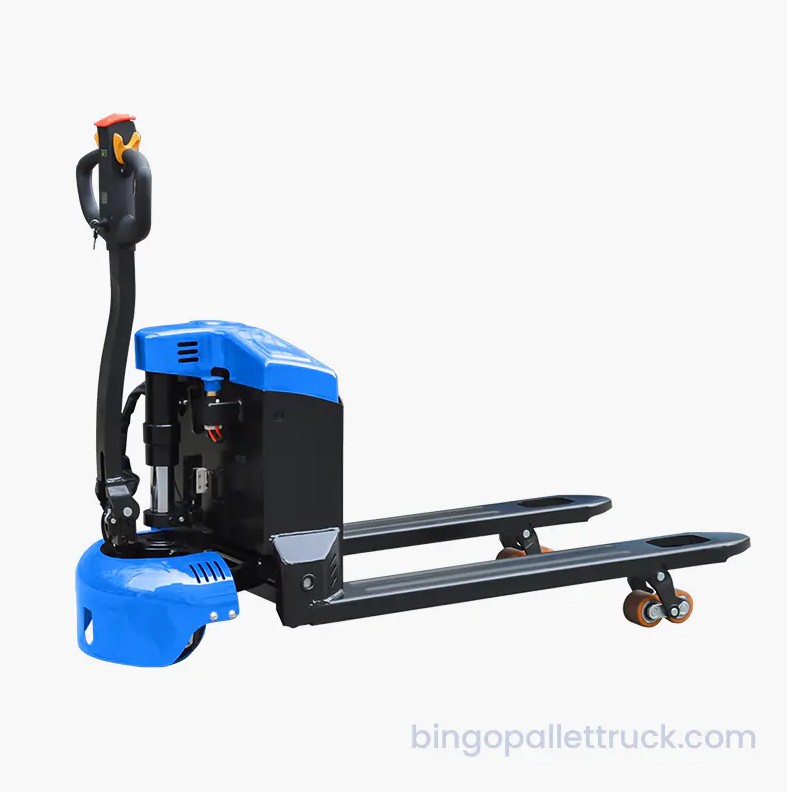
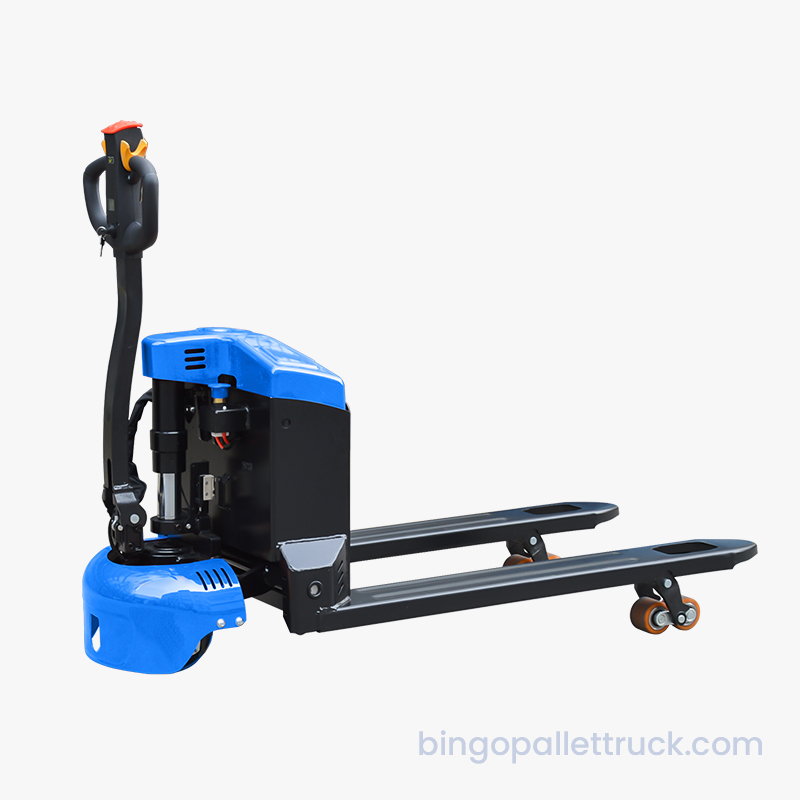
For most operations that keep average moves under 25 meters, a walkie configuration covers the job with the lowest purchase cost and the best space economy. Bingo offers a 2000 kg walkie electric pallet truck with a fold-down platform and side protection bars, built for dock work and production line feeding.
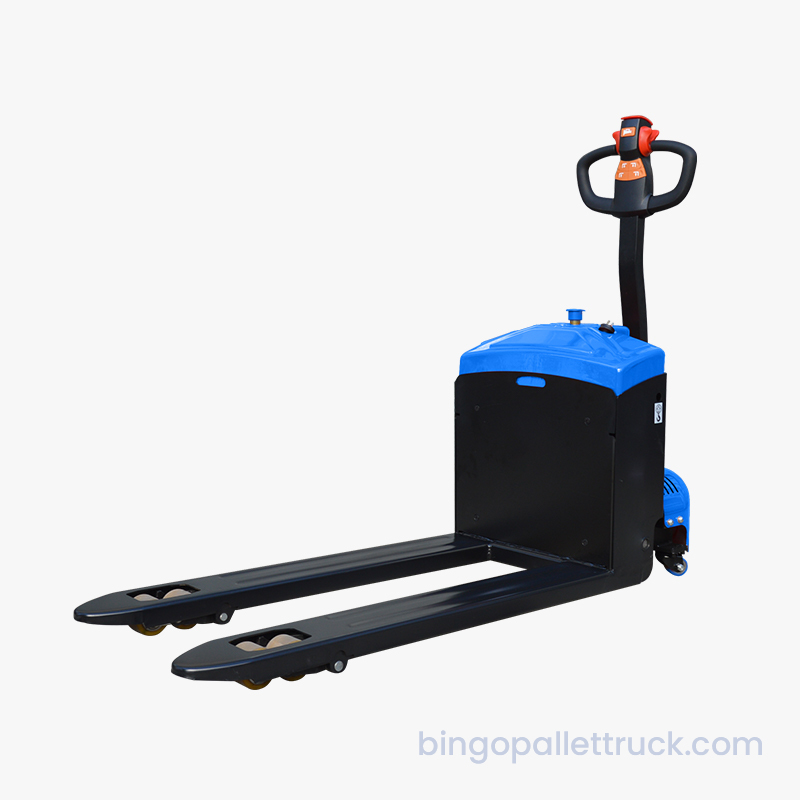 2000kg Walkie Electric Pallet Truck with Fold-Down PlatformThis compact walkie pallet truck suits short moves and dock work, featuring a fold-down platform, side protection bars, and an integrated charger for easy daily operation.View Product →
Key Buying Criteria for Heavy Duty Electric Pallet Trucks
Beyond capacity and operator position, a few specifications decide whether a heavy duty electric pallet truck will perform in your building.
- Capacity margin: buy a truck rated at least 20 percent above your heaviest regular pallet so fork deflection and motor load stay within safe limits.
- Battery runtime: a 24 V 210 Ah battery covers one shift of moderate work, while a 280 Ah pack or a lithium option suits double shifts and fast charging windows.
- Fork dimensions: 1200 by 1000 mm pallets need forks of at least 1150 mm length; check fork spread and entry height against the pallet bottom deck.
- Gradeability: a 2000 kg truck rated at 8 percent handles most dock ramps, but trailer nose ramps sometimes require a 3000 kg truck with larger drive wheels.
- Wheel and floor compatibility: polyurethane wheels suit smooth concrete, while softer compounds reduce vibration on brick or worn slabs.
- Service access: look for a hinged top cover, a centralized fuse box and replaceable contactors, since controller faults cause most heavy duty downtime.
A simple way to shortlist models is to run your worst-case pallet weight, longest route and shift length through the specification table above. If the 2000 kg class matches every number with margin, it will pay off faster than a bigger truck because purchase price and energy use are lower. If loads, ramps or double-stack patterns push close to the limit, the 3000 kg class is the safer procurement decision.
Integration with Pallets and Racking
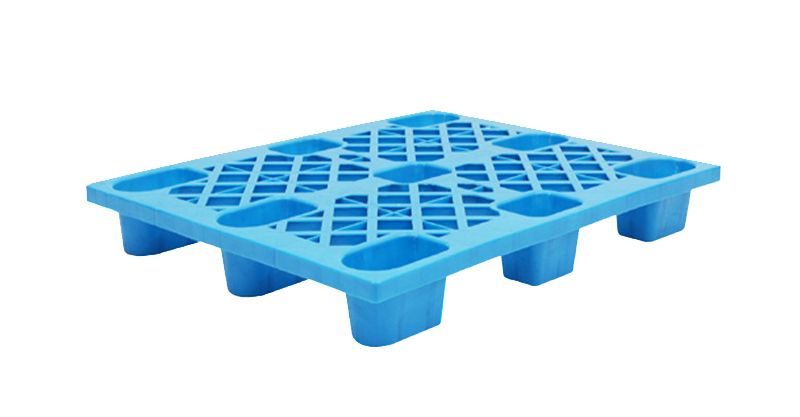
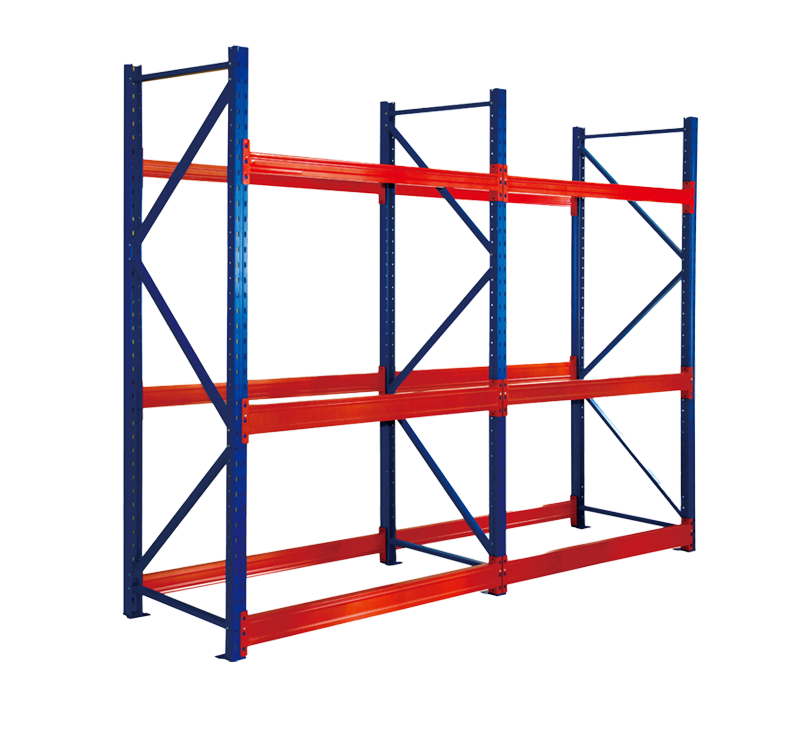
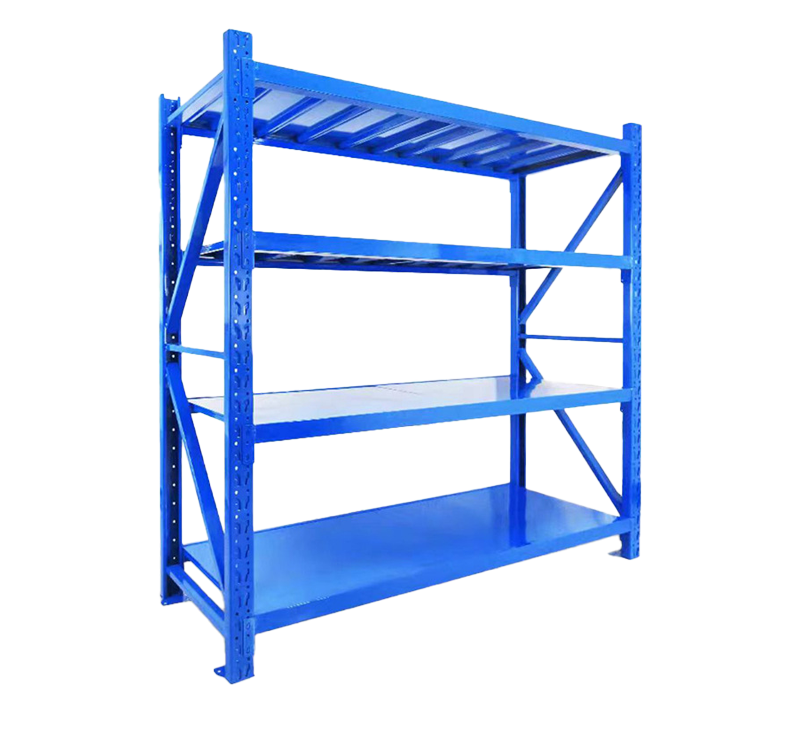
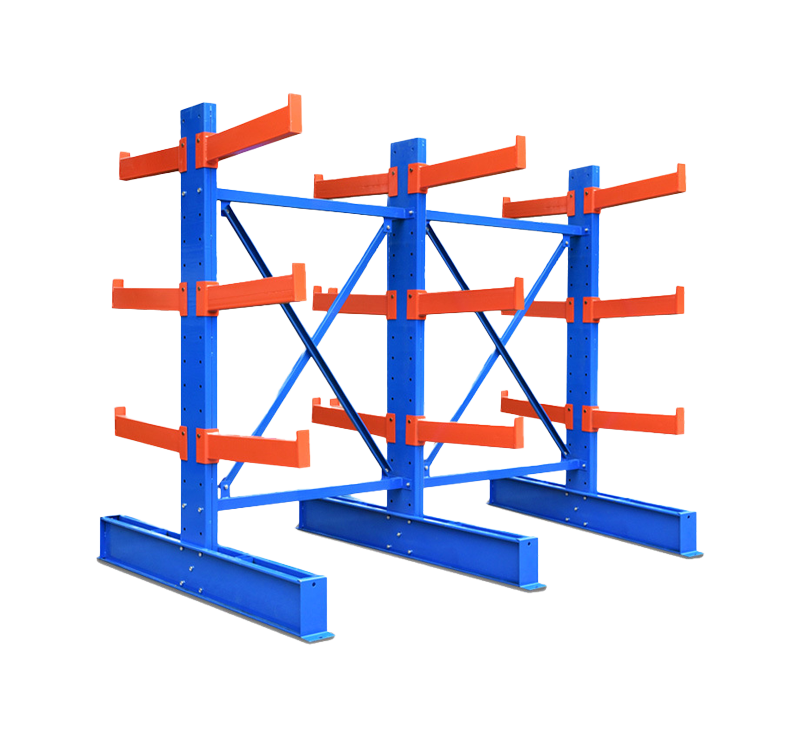
A heavy duty electric pallet truck does not work alone. The forks must enter your pallets cleanly, and the turning radius must match the rack layout. Plastic pallets with nine feet or three runners accept standard forks without snagging, while solid-top pallets require fork entry height to match the bottom deck clearance. When pallets arrive double-stacked, the truck needs enough fork spread and a high enough load wheel position to lift both together. In high-density racking, the same rule applies: the aisle width must clear the rack posts, and the load must stay below the beam capacity.
For warehouses that want the extra capacity margin without moving to a stand-on platform, Bingo also offers a 3000 kg walkie electric pallet truck with reinforced forks and a heavy-duty battery tray.
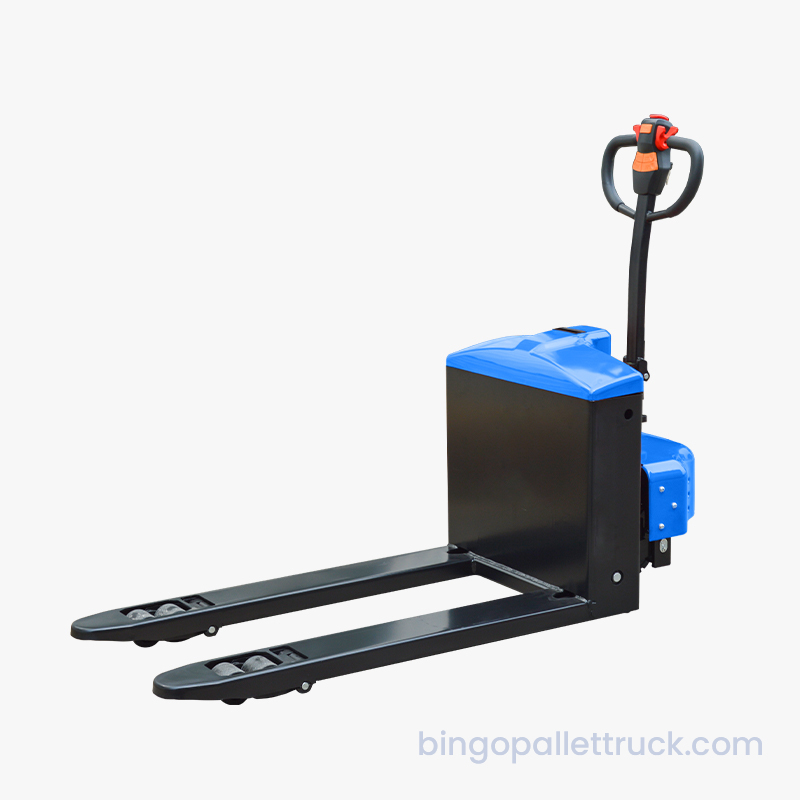 3000kg Heavy Duty Walkie Electric Pallet Truck with Reinforced ForksA higher-capacity walkie model with reinforced forks and a heavy-duty battery tray, built for operations that need extra load margin without upgrading to a stand-on unit.View Product →
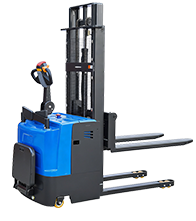
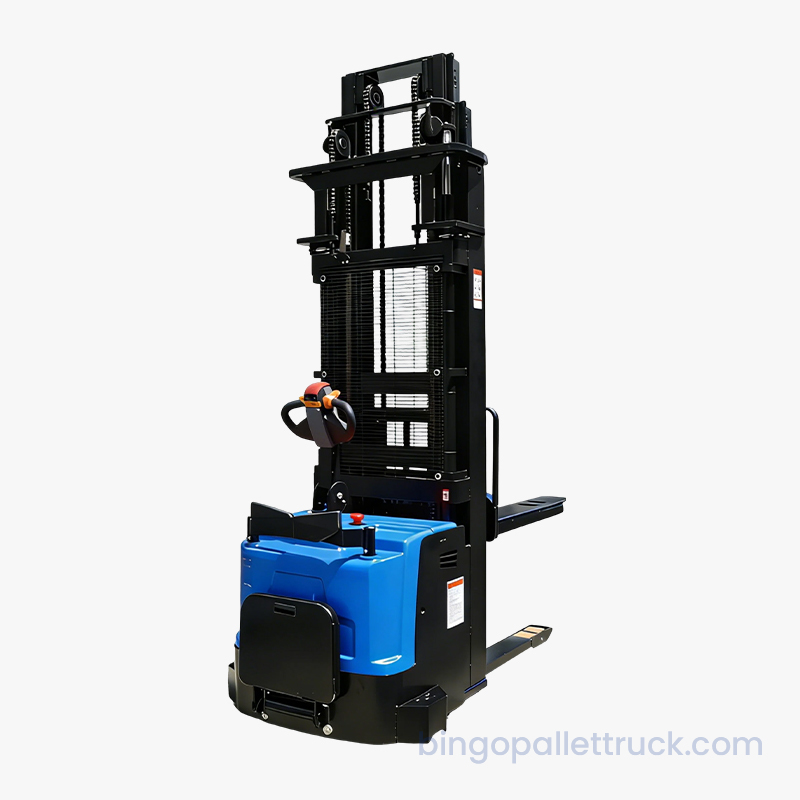
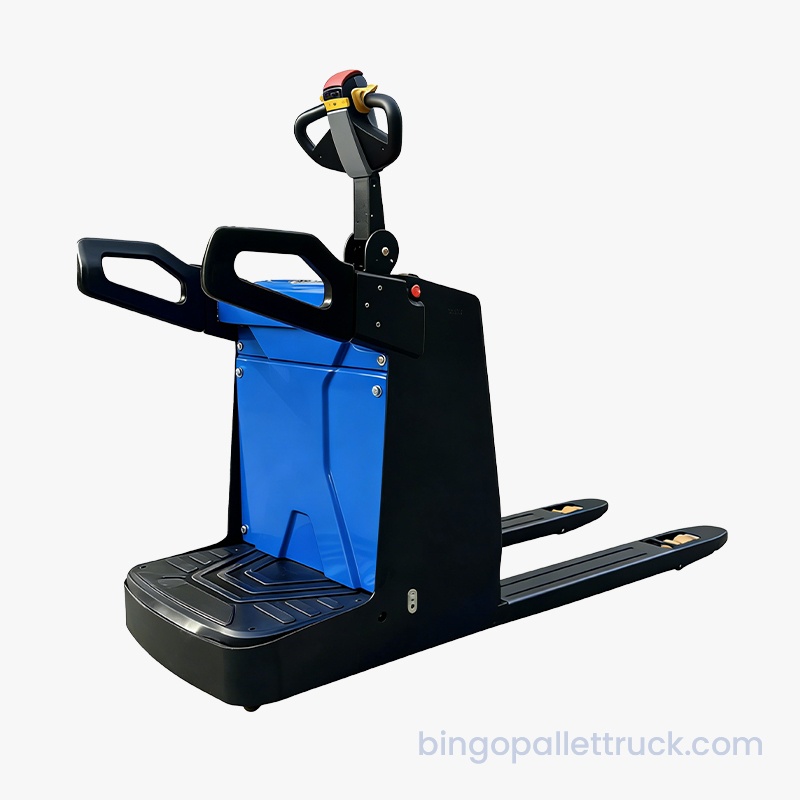
In the end, the decision comes down to three numbers: heaviest pallet, longest move distance and daily pallet volume. If volume exceeds roughly 200 pallets per shift, a heavy duty electric pallet truck will outperform manual handling in both cost and throughput. If route length exceeds 60 meters, a stand-on configuration multiplies the gain. Bingo's 3000 kg stand-on electric pallet truck, with a cushioned ride platform and a two-speed tiller, fits that long-haul profile.
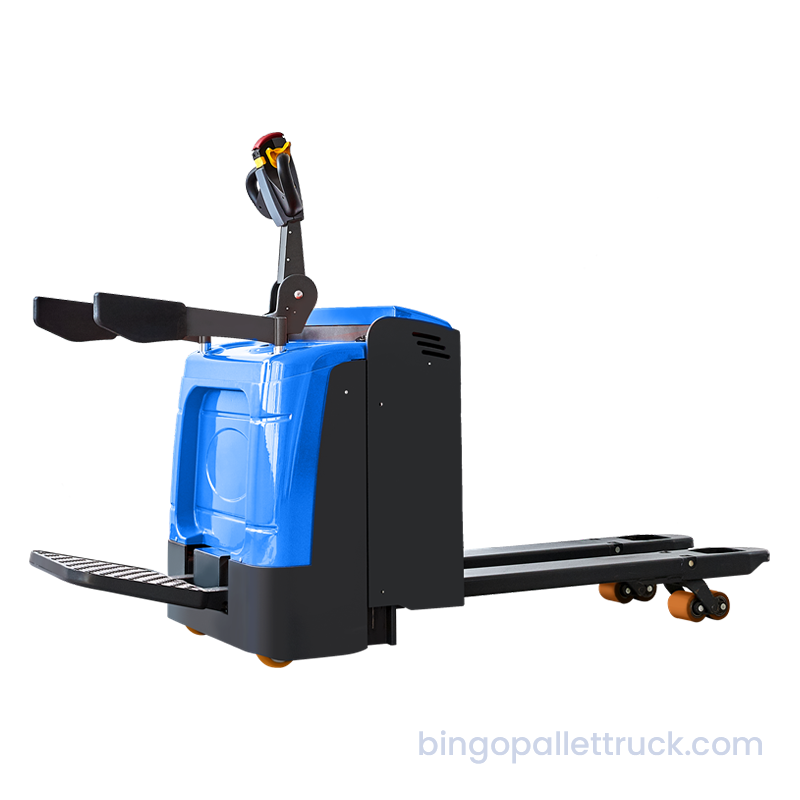 3000kg Heavy Duty Stand-On Electric Pallet Truck with Electric SteeringDesigned for longer routes, this stand-on truck offers a cushioned platform, two-speed tiller, electric steering, and anti-collision arms to reduce operator fatigue over full shifts.View Product →
Start with a walkie in the 2000 kg class for typical dock and trailer work, and step up to the 3000 kg class only when pallet weight, double-stack requirements or ramp grades demand the margin. The result is one operator, one battery-powered truck and a measurable drop in cost per pallet from the first full month. Discuss your load profile with the Bingo sales team and a specification sheet will point to the right model quickly.

Copyright @ Yancheng Bingo Machinery Equipment Co., Ltd. All rights reserved Warehouse Logistics Equipment Manufacturer Pallet Truck Supplier
