 en
 Español




Warehouse Equipment Guide: Handling, Storage, Racking and Packaging Choices
Content
- 1 The Four Equipment Groups in a Working Warehouse
- 2 Handling Equipment: Matching Capacity to Real Loads
- 3 Storage Containers: Pallets, Totes and Crates by Standard
- 4 Racking: Trading Selectivity for Density
- 5 Packaging Materials: The Smallest Line With the Largest Effect
- 6 A Specification Checklist That Prevents Returns
- 7 How Sector Requirements Change the Same List
Start with the heaviest load you move on an ordinary shift, not with the equipment catalogue. A distribution centre handling 900 pallet movements a day will wear out a 2,000 kg hand pallet truck long before the warranty ends, because the real payload includes the pallet, the stretch wrap and the carton on top, and that total often creeps to within 200 kg of the rated capacity. Warehouse equipment is rarely bought badly because of price. It is bought badly because the specification was written from a brochure instead of from the load, the aisle and the pallet already standing on the dock.
The practical conclusion comes first. Build the list around four groups, handling equipment, storage containers, packaging materials and racking, and specify every item in those groups against the same three inputs: unit load in kilograms, throughput in movements per hour, and the size standard your supply chain already uses. Brand, colour and control type are details that follow from those three numbers.
The Four Equipment Groups in a Working Warehouse
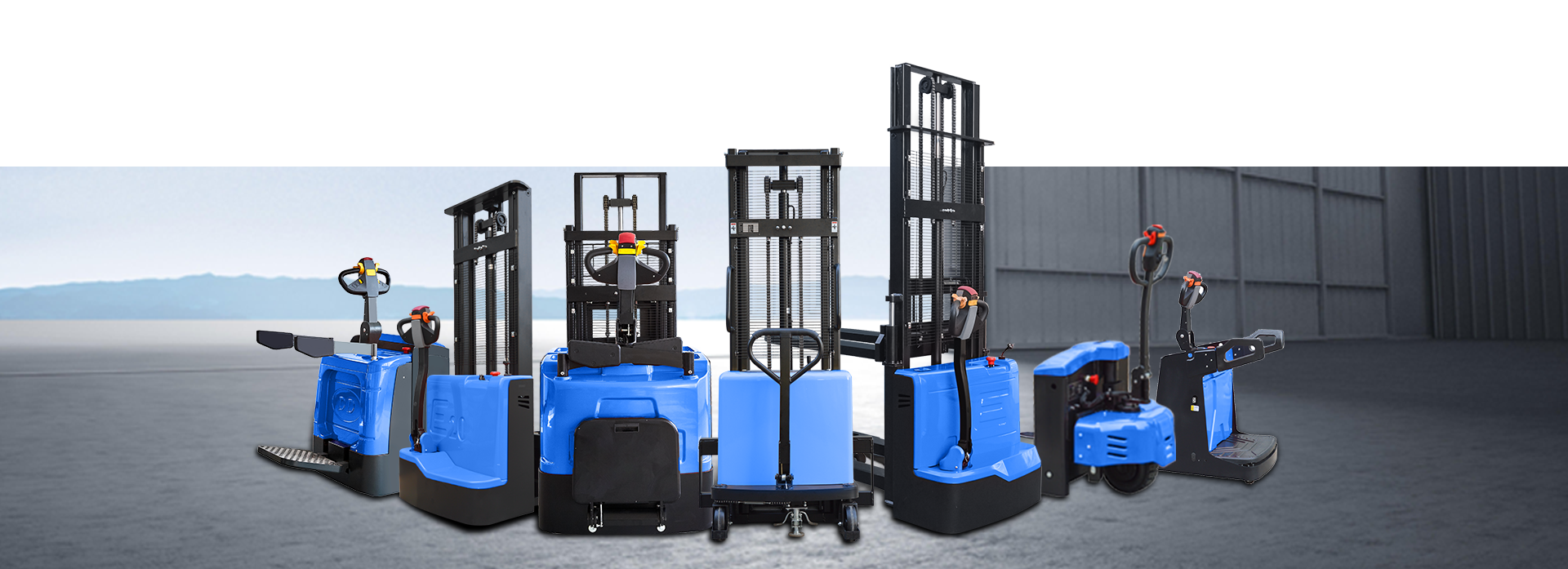
Long equipment lists usually collapse into a small number of families, and each family answers a different question. Handling equipment moves the load. Storage containers hold it. Packaging materials keep it stable. Racking decides how much of the building you can actually use. Buying one group in isolation produces the familiar sight of a new reach stacker working in an aisle too narrow for a full pallet turn, or pallets that fit the truck but not the beam spacing.
| Group | What it covers | Inputs that decide the specification |
|---|---|---|
| Handling equipment | Hand pallet trucks, electric pallet trucks, stackers, reach and counterbalanced models | Unit load, lift height, aisle width, shift length, floor condition |
| Storage containers | Plastic pallets, totes, crates, pallet boxes, water tanks | Size standard, deck type, stack or nest behaviour, rackability, operating temperature |
| Packaging materials | Stretch wrap, PET, polyester fibre and PP strapping | Load stability, hand or machine application, holding force, material recovery |
| Racking and shelving | Selective, double deep, drive in, push back, shuttle, automated, mezzanine, shelving | Pallet positions, selectivity, throughput, building height, floor flatness |
Read the table as a dependency chain rather than a menu. The unit load decides the container, the container decides the beam spacing, and the rack layout decides which truck can reach the top level.
Handling Equipment: Matching Capacity to Real Loads
Pallet trucks and stackers
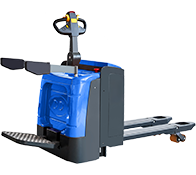
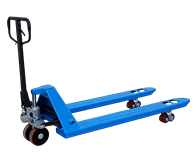
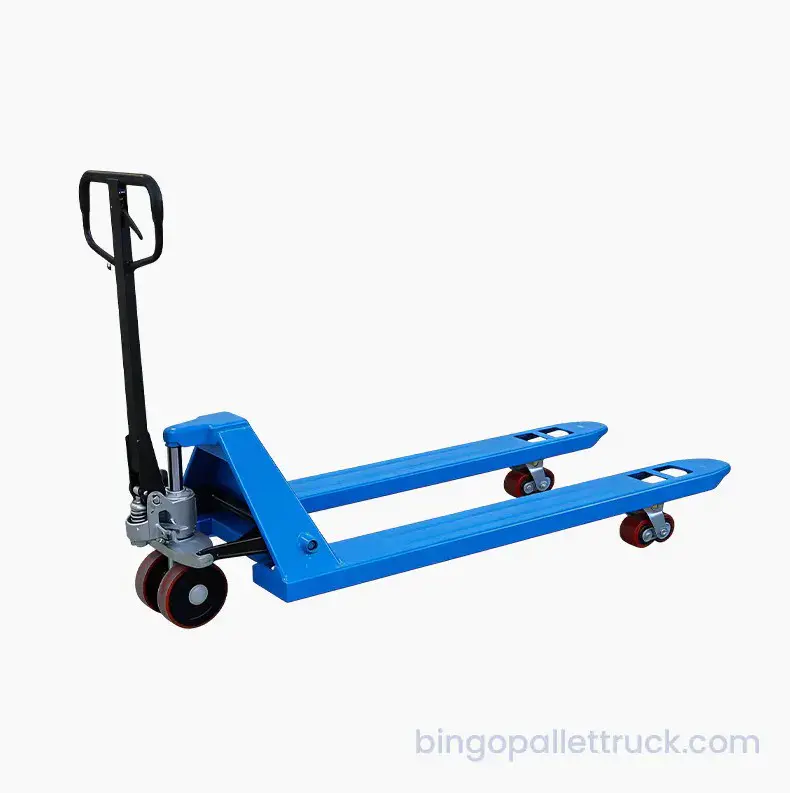
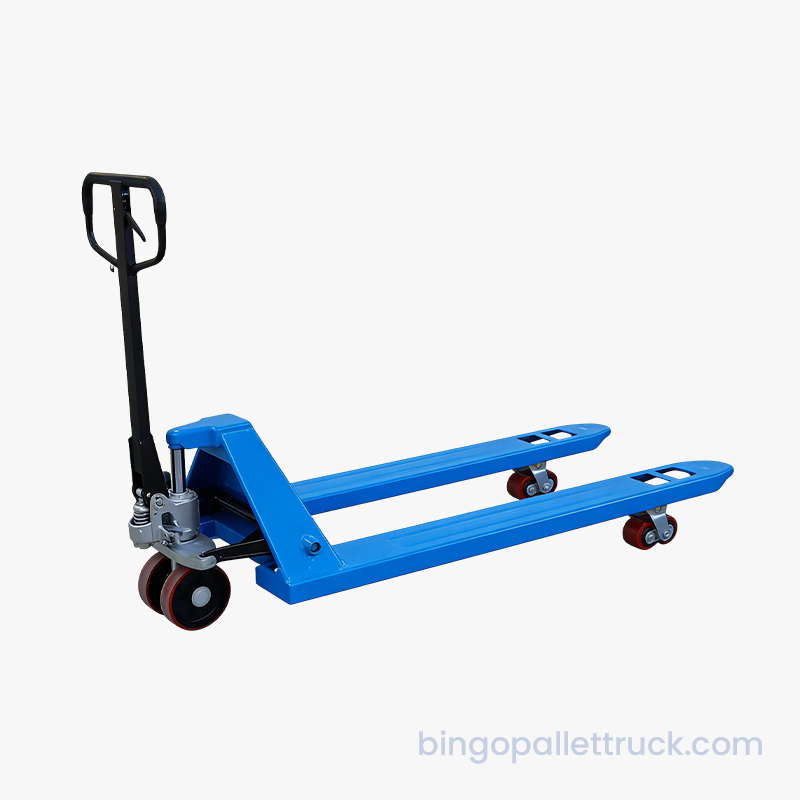
Hand pallet trucks sit at the entry of most fleets, commonly at 2,000 kg and 2,500 kg, with fork lengths matched to the pallet depth. They remain the cheapest way to move a load across a loading bay, but they stop being economical once the distance grows past roughly 30 metres or the shift runs longer than a few hours. Above that point a walkie electric pallet truck at 2,000 kg or 3,000 kg pays back on labour and operator fatigue.
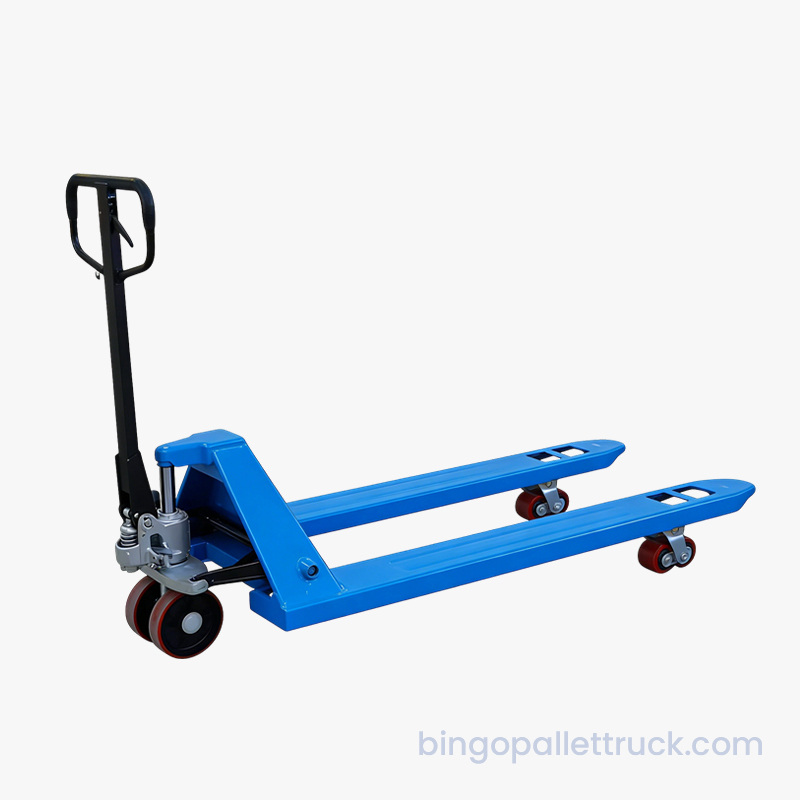 2500kg Hand Pallet Truck Heavy Duty Manual Pallet Jack for Heavy Load Material HandlingYou are here: Products / Hand Pallet Truck / 2500kg Hand Pallet Truck Heavy Duty Manual Pallet Jack for Heavy Load Material HandlingView Product →
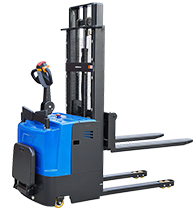
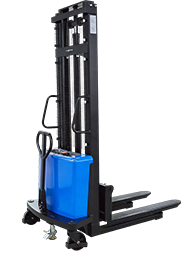
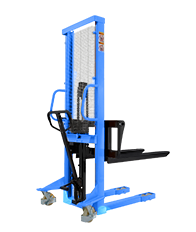
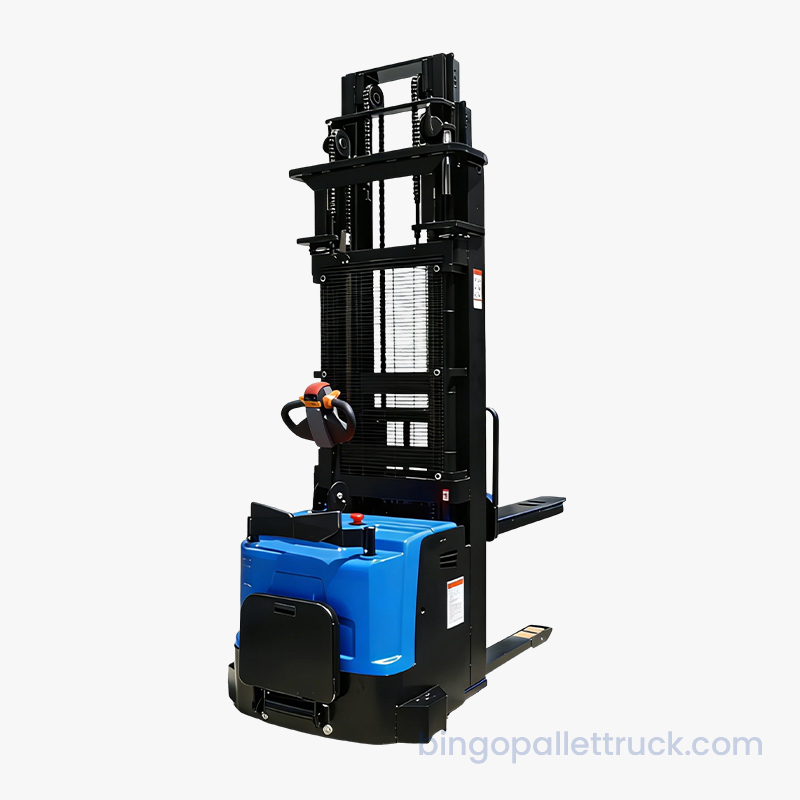
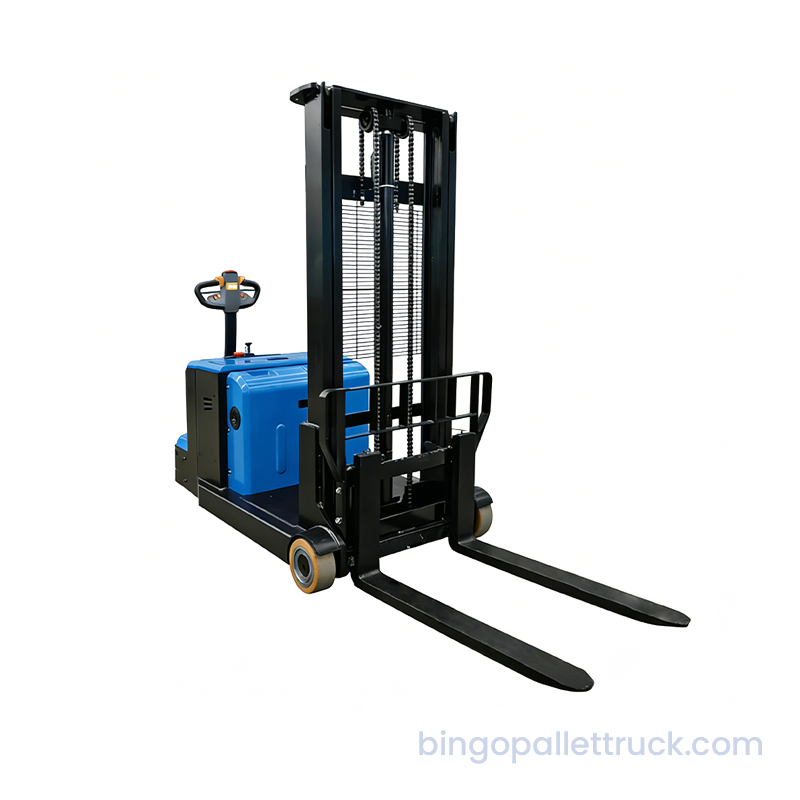
Stackers cover the next band, from 500 kg counterbalanced walkie models up to 3,000 kg stand on units, with reach versions where the pallet has to enter a rack rather than rest on the floor. The questions that change the price most are lift height, whether the mast has to pass under a low door, and whether the truck works in a cold store.
Two numbers are worth checking before the order is signed. First, residual capacity: a stacker rated at 1,500 kg may lift less at full height with the mast extended, and the data plate rather than the sales sheet is the document that matters. Second, aisle width: a counterbalanced truck needs a wider turning circle than a reach truck, and every extra 200 mm of aisle costs floor space across the whole building.
Storage Containers: Pallets, Totes and Crates by Standard
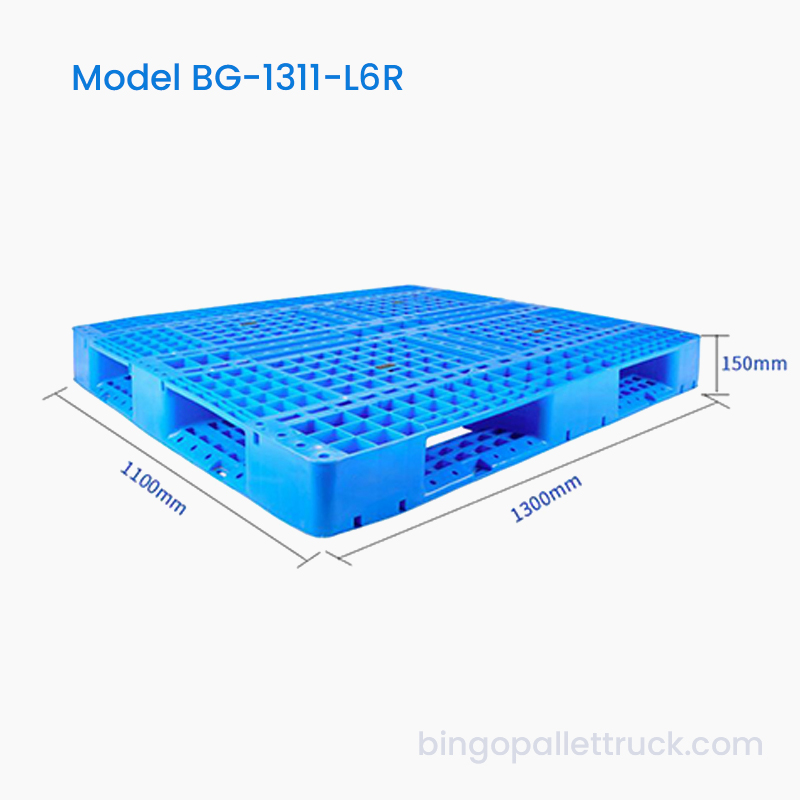
Plastic pallets are where international supply chains disagree most. A pallet that fits a European rack may overhang an Australian beam, and a GMA pallet from North America will not sit cleanly on a 1,200 x 1,000 mm handling system. The table below sets out the size families that cover most global distribution.
| Size family | Footprint | Typical use |
|---|---|---|
| Asia, Japan and Korea | 1,100 x 1,100 mm | Domestic distribution and automated warehouses in the region |
| Global standard | 1,200 x 1,000 mm | Export cartons, general warehousing, racking |
| European standard | 1,200 x 800 mm | Euro pallet flows, grocery and retail |
| Heavy duty | 1,200 x 1,200 mm | Dense loads and stacking in heavy industry |
| Australia and New Zealand | 1,165 x 1,165 mm | Regional grocery and manufacturing |
| North America GMA | 1,219 x 1,016 mm | North American grocery and retail |
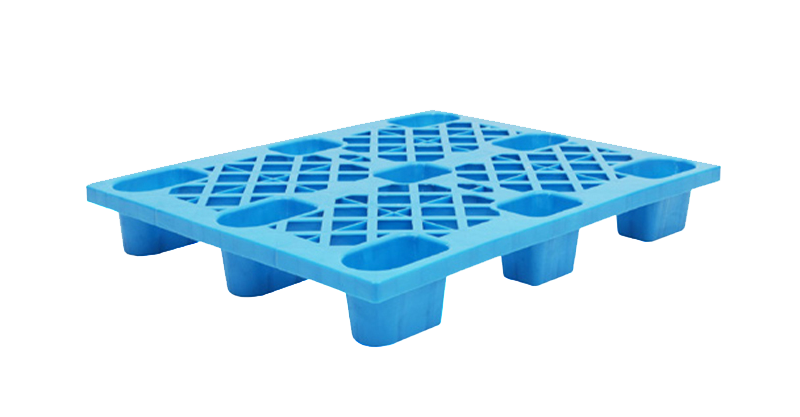
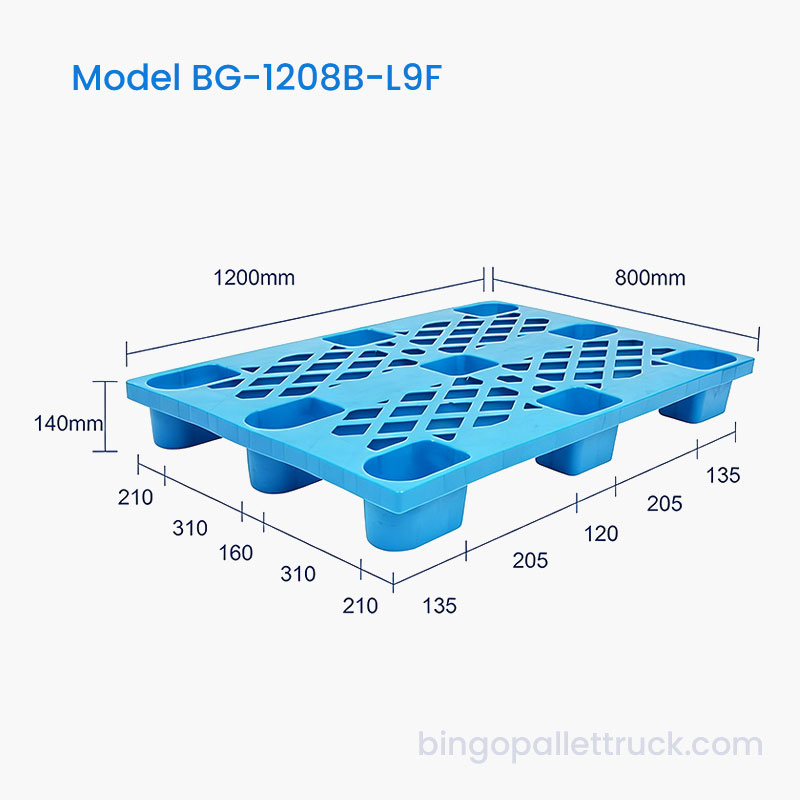
Beyond footprint, three structural choices decide whether a pallet earns its place. The base can be nine foot, six runner or three runner, which changes how the load travels on conveyors and how it behaves on a rack beam. The deck can be a grid for drainage and lower weight, or a solid top for small cartons and clean areas. The function can be stackable, nestable or rackable, and it is unusual for one pallet to be good at all three. Material matters too, with HDPE providing the impact resistance needed in cold stores.
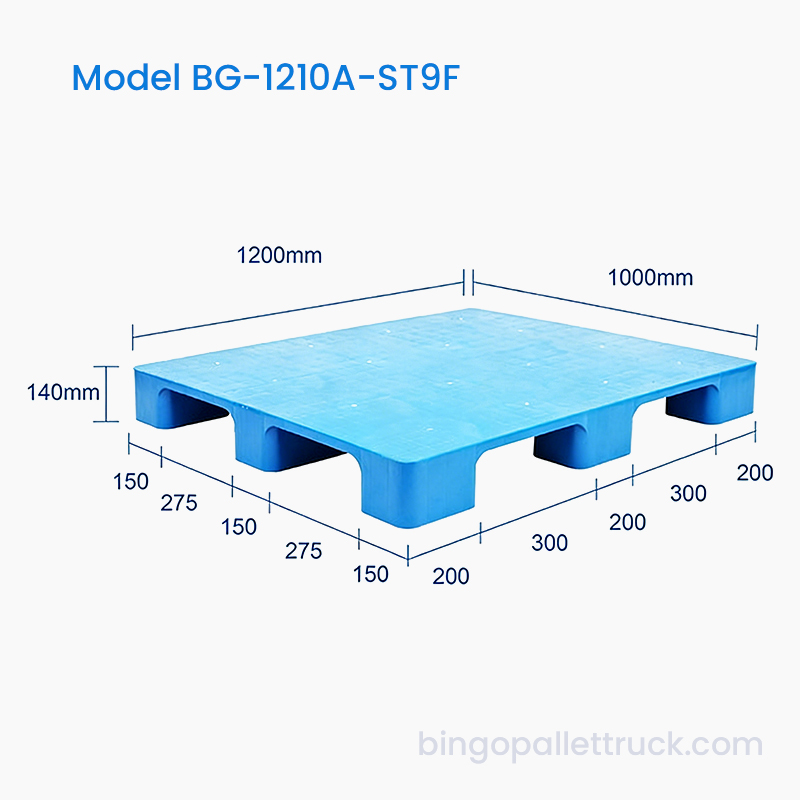 Durable 1200x1000mm Solid Top 9 Legs Plastic Pallet for Frequent Shipping UseThis 1200x1000x140mm flat top plastic pallet is a robust, cost-effective solution for medium to heavy load warehouse operations. Constructed from durable HDPE, it deli...View Product →
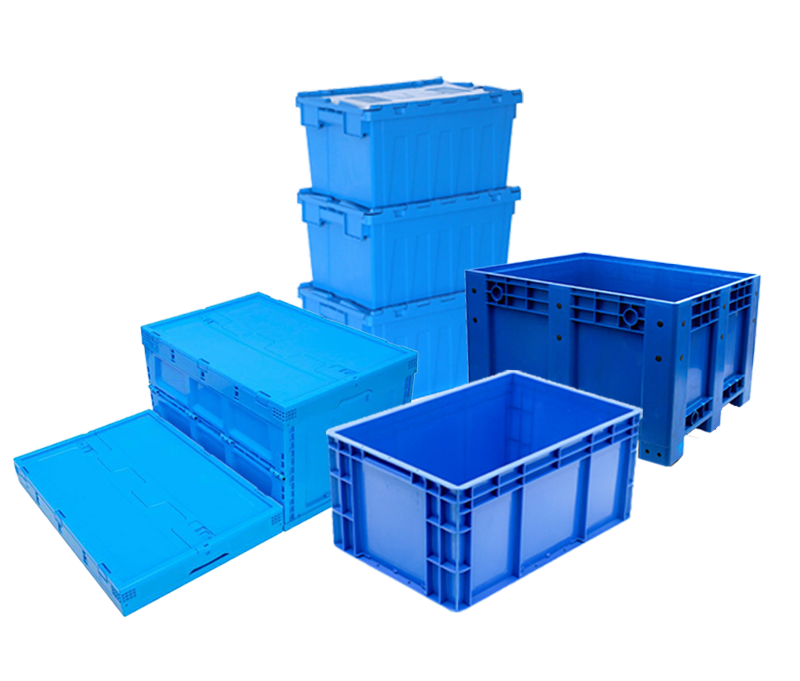
Container selection runs on the same logic at a smaller scale. Totes and crates range from about 1 litre to over 250 litres, and the useful question is behaviour rather than volume: nestable boxes save return transport, stackable boxes save floor space in the aisle, stack and nest boxes do both at different times, collapsible crates cut empty running substantially, and dividable totes remove the need for inner packaging on small parts. Bulk containers such as 600 litre pallet boxes and 50 to 600 litre water tanks extend the same family to liquids and loose materials.
Racking: Trading Selectivity for Density
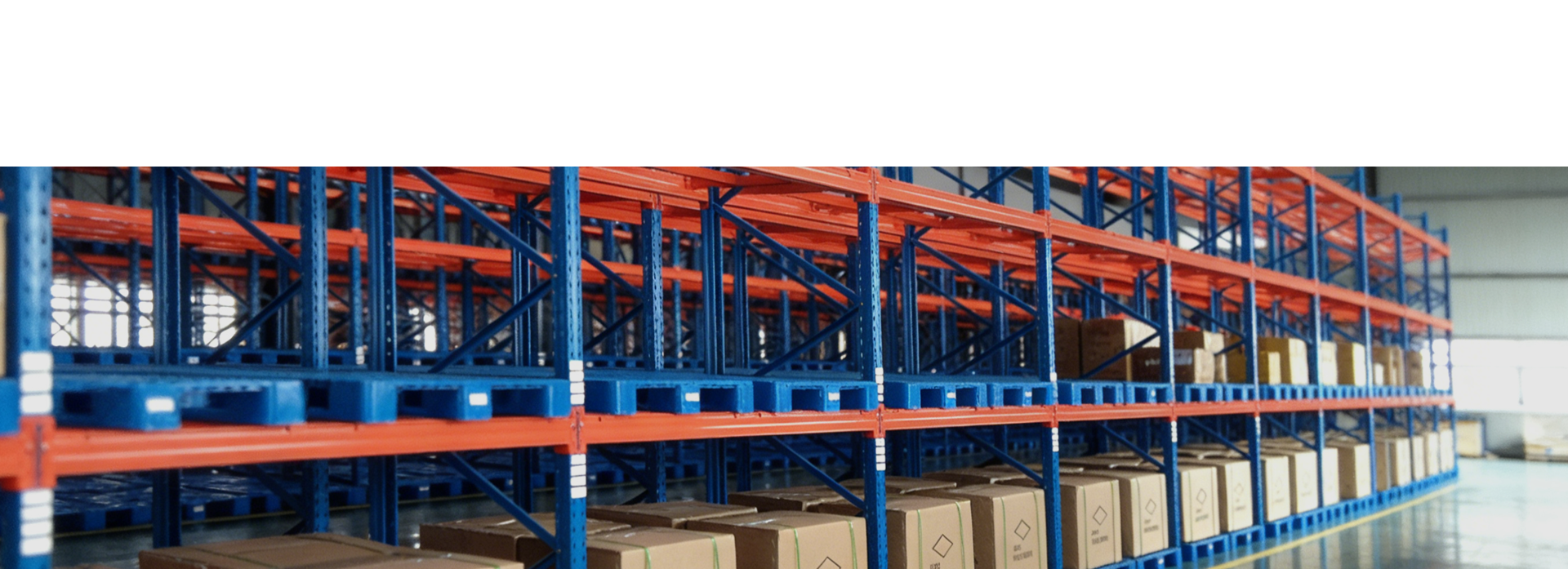
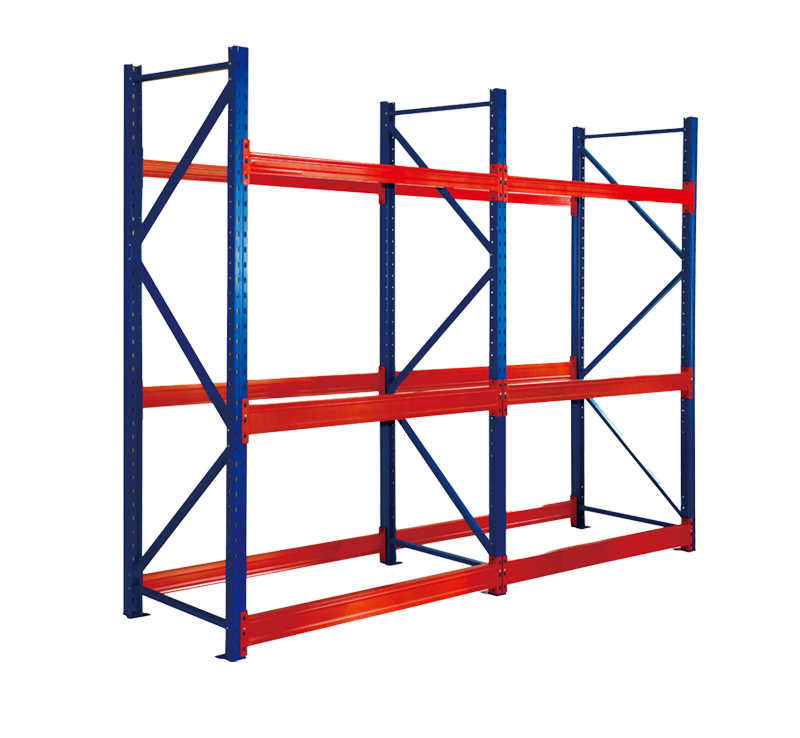
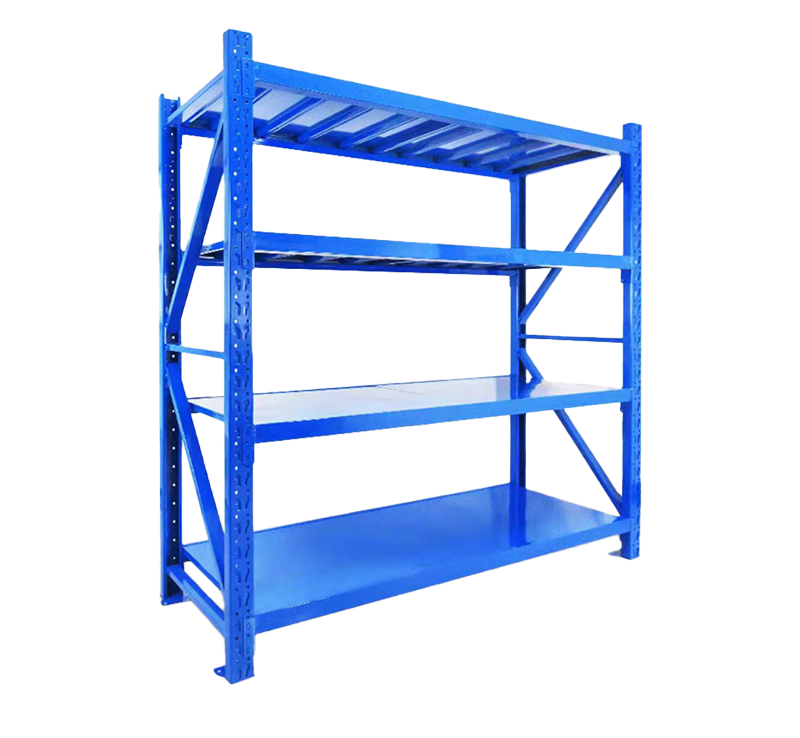
Racking is the largest single decision in most warehouse equipment budgets, because it fixes the building layout for years. Selective pallet racking gives direct access to every pallet, which makes it the default choice for high turnover and mixed stock. Each step away from selectivity buys density and costs access time. Double deep racking roughly doubles storage per aisle but needs a reach truck and accepts that the rear pallet is not directly accessible. Drive in and drive through racking fills an aisle with pallets on a last in first out basis, which suits slow moving homogeneous goods. Pallet flow, push back and shuttle systems use gravity or powered carriages to reclaim part of that access time, and automated storage takes the trade further by removing the operator from the aisle entirely.
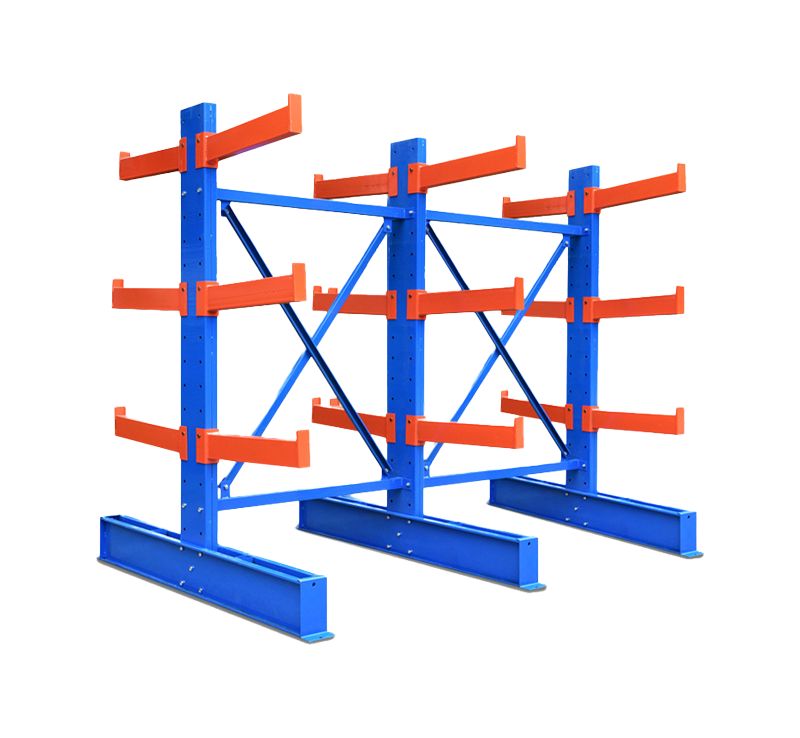
Above the rack, other systems answer narrower problems. Mezzanine racking adds a second working level where the building is tall but the floor plate is fixed. Cantilever racking holds long goods such as timber and pipe, drawer racking stores dies and heavy spares, and boltless shelving, long span shelving and carton flow racking handle hand picked items on a much lighter frame.
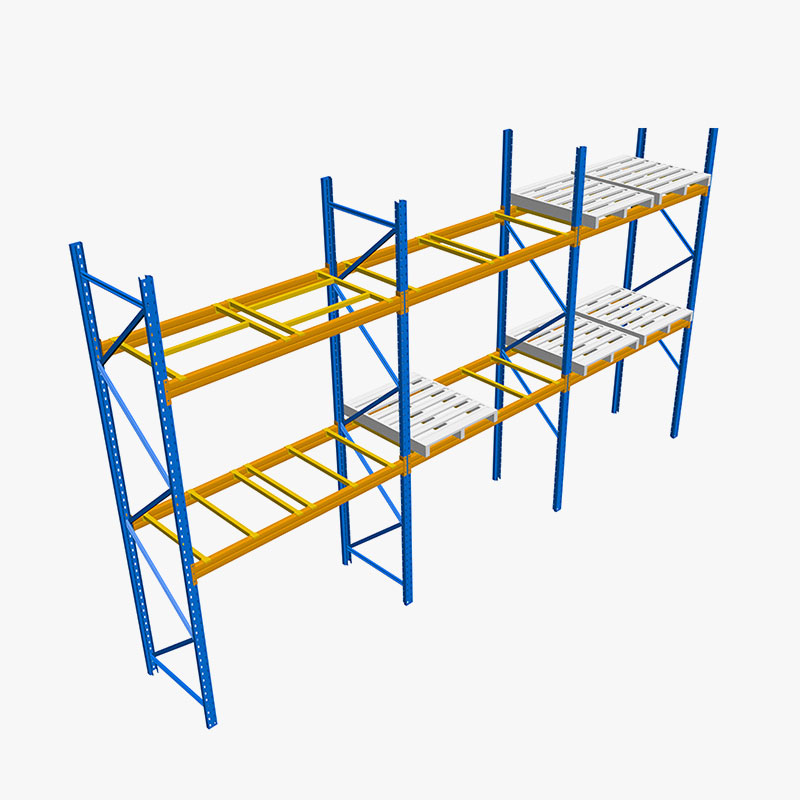 Heavy Duty Selective Pallet Racking Designed with Adjustable Beams for Flexible Storage ArThis heavy‑duty selective pallet racking system is engineered for optimal warehouse storage efficiency. Constructed from cold‑rolled steel, it features adjustable beam...View Product →
Packaging Materials: The Smallest Line With the Largest Effect
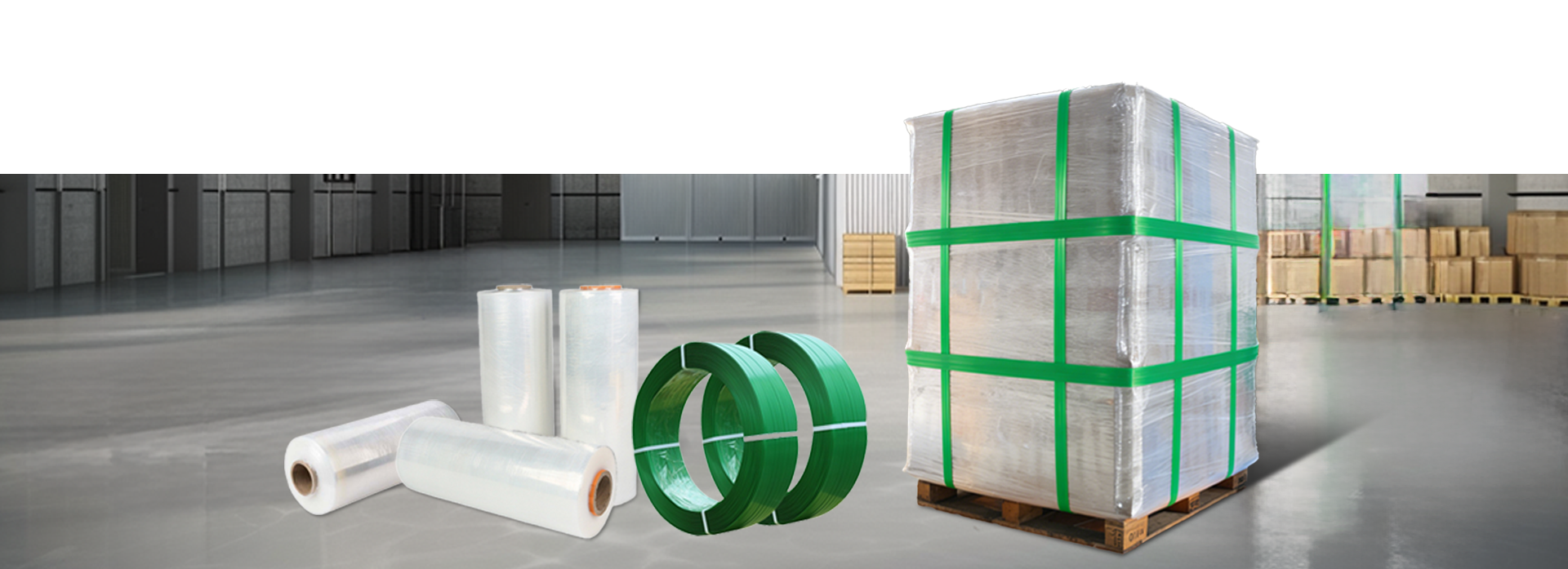
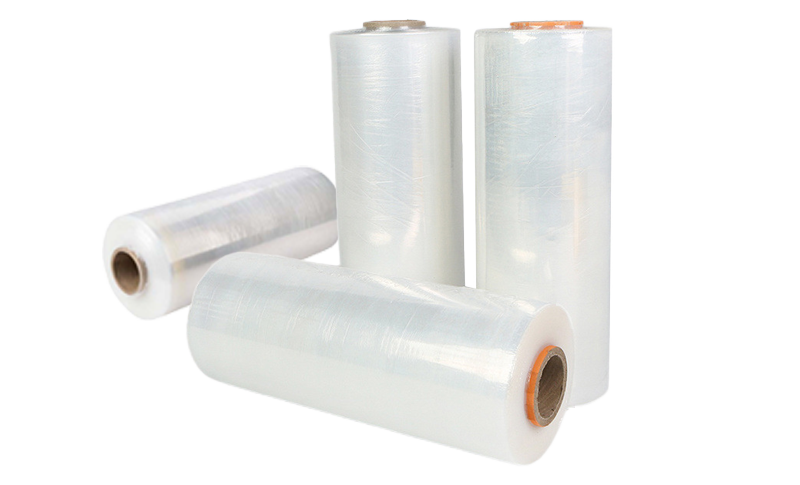
Stretch wrap and strapping are usually the smallest items in a warehouse equipment purchase and the ones that cause the most damage when chosen carelessly. Clear LLDPE stretch wrap suits general pallet packaging where load visibility matters, black wrap is used for security and light sensitive goods, and coloured film helps identify a customer, a route or a hazard class. The more important split is hand film against machine film, because machine film is formulated to run at high pre stretch on a turntable and performs poorly when applied by hand.
Strapping follows a similar three way choice. PET strapping handles pallet packing and heavy cartons, polyester fibre strapping is used for cargo bundling and shipping where elasticity and recovery matter, and PP strapping covers light carton sealing at a lower cost per metre. Selecting by load weight and edge sharpness rather than price per roll avoids the common failure of PP straps snapping on a sharp pallet corner.
A Specification Checklist That Prevents Returns
Before any purchase order, run the same short list past the equipment:
- Unit load including pallet, packaging and any liquid surge, in kilograms.
- Pallet or container standard, and whether it is fixed across all sites.
- Throughput in movements per hour at peak, not the daily average.
- Aisle and doorway dimensions measured on site, including door tracks and floor joints.
- Lift height required at the top beam, plus clearance for the mast.
- Operating temperature and humidity, especially for cold chain and clean areas.
- Floor condition and flatness, which affects stacker stability and rack tolerances.
- Spare parts availability, battery or charging strategy, and service response time.
- Container loading plan, because a truck that cannot be filled changes the cost per unit.
Tolerance is the item most often left out. Beam spacing is set in fixed increments, pallet dimensions carry manufacturing tolerance, and a pallet that measures a few millimetres over its nominal size can fail to enter a rack designed to the exact figure. Checking nominal against actual sizes on the first delivery is cheaper than reworking an aisle.
How Sector Requirements Change the Same List
The four groups stay the same across industries, but the weighting changes. In ecommerce warehousing and logistics the constraint is pick speed, so carton flow racking, order picking totes and electric pallet trucks matter more than deep storage density. In food cold chain the constraint is temperature, so HDPE pallets, cold rated batteries and film that keeps its cling below freezing become the deciding factors, and washable containers replace anything that traps water.
Manufacturing supply chains tend to optimise for line side handling, with small parts in dividable totes and stack and nest crates feeding assembly. Supermarket and retail distribution runs on standardised pallets and fast turnover selective racking. Biomedical storage adds traceability and cleanability requirements that push plastic containers ahead of wood and cardboard. In every case the specification starts from the unit load and works outward, which is also why sourcing handling equipment, containers, packaging and racking from one supplier reduces the risk of mismatched tolerances between them.
None of this requires a large capital project on day one. Most operations start with the pallet and the truck, then add racking when the floor runs out and packaging materials when damage rates appear in the monthly figures. What matters is that each addition is checked against the same three inputs, unit load, throughput and size standard, so the second purchase does not invalidate the first.
For a concrete starting point, measure ten loaded pallets at the dock, note the heaviest, and compare it against the data plate of the equipment you are considering. That single comparison prevents more bad warehouse equipment decisions than any brochure will.

Copyright @ Yancheng Bingo Machinery Equipment Co., Ltd. All rights reserved Warehouse Logistics Equipment Manufacturer Pallet Truck Supplier
