 en
en  Español



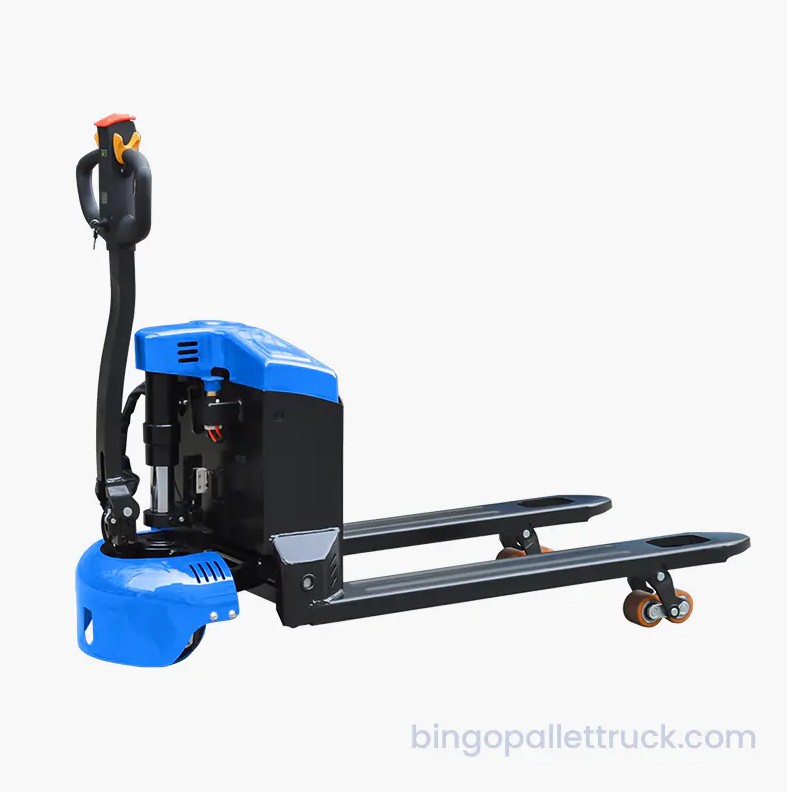
What are the key safety features of an electric stacker?
The most important safety features on an electric stacker are an emergency stop button, overload protection with automatic load sensing, a descent speed limiter, anti-slip and non-marking wheels, a battery discharge indicator, and a mechanical or hydraulic fork lowering brake. Together these features prevent the three most common warehouse accidents involving stackers: tip-overs from overloading, uncontrolled fork drops, and operator collisions in tight aisles. A stacker without at least these six protections should be considered inadequate for daily warehouse use, regardless of price or lifting capacity.
Content
- 1 Emergency Stop and Operator Presence Controls
- 2 Overload Protection and Load Sensing
- 3 Controlled Descent and Hydraulic Safety Valves
- 4 Stability Features That Prevent Tip-Overs
- 5 Braking Systems
- 6 Visibility and Warning Systems
- 7 Battery and Electrical Safety
- 8 Operator Training and Procedural Safety
- 9 Routine Maintenance That Preserves Safety Performance
- 10 Frequently Asked Questions
Emergency Stop and Operator Presence Controls
Every reliable electric stacker includes a red emergency stop button positioned within immediate reach of the operator handle. Pressing this button cuts power to the drive motor and hydraulic pump instantly, halting both horizontal movement and fork lifting or lowering at the same time.
Many models also include an operator presence sensor, sometimes called a dead man switch, built into the tiller handle. If the operator releases the handle or steps away, the stacker automatically stops moving. According to OSHA guidance on powered industrial trucks, a significant share of forklift and stacker related injuries occur when equipment continues moving without direct operator control, which is exactly the scenario this feature is designed to prevent.
Overload Protection and Load Sensing
How Overload Sensors Work
Overload protection systems use a load cell or hydraulic pressure sensor on the fork carriage to detect when a load exceeds the rated capacity. Once triggered, the system either prevents further lifting, sounds an audible alarm, or both, depending on the model. This stops one of the leading causes of stacker tip-over, which is attempting to lift a pallet heavier than the machine is rated for.
Typical Capacity Ranges
| Stacker Type | Typical Capacity | Common Use |
| Light Duty | 1,000 to 1,500 kg | Retail stockrooms, small warehouses |
| Standard Duty | 1,500 to 2,000 kg | General warehousing, distribution centers |
| Heavy Duty | 2,000 to 2,500 kg | Manufacturing, cold storage, bulk handling |
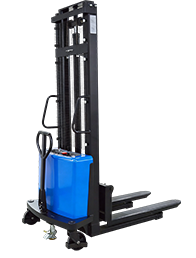
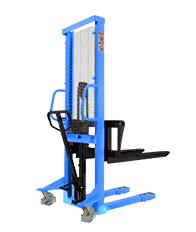
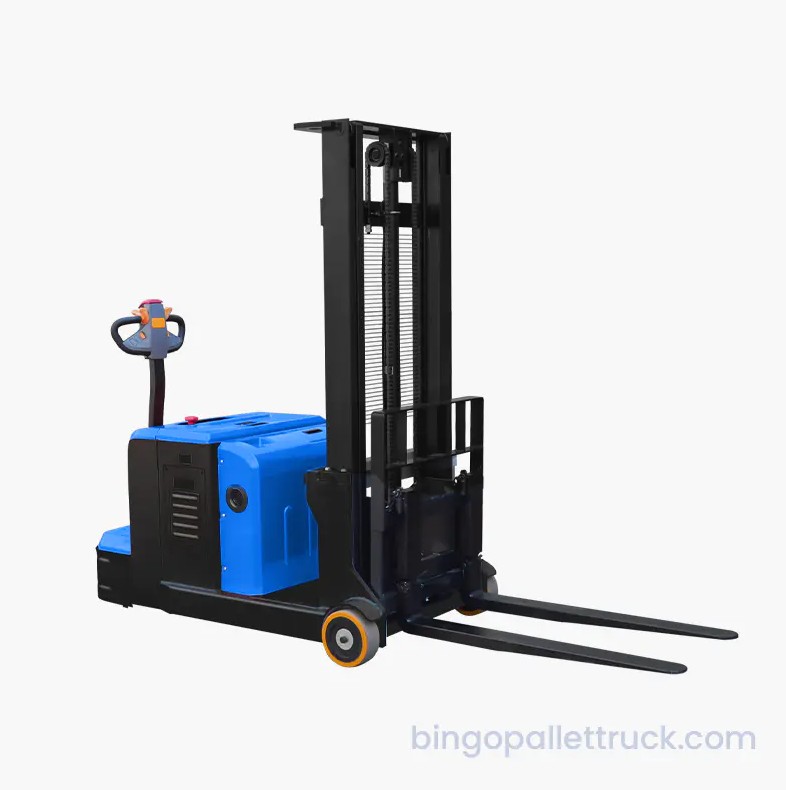
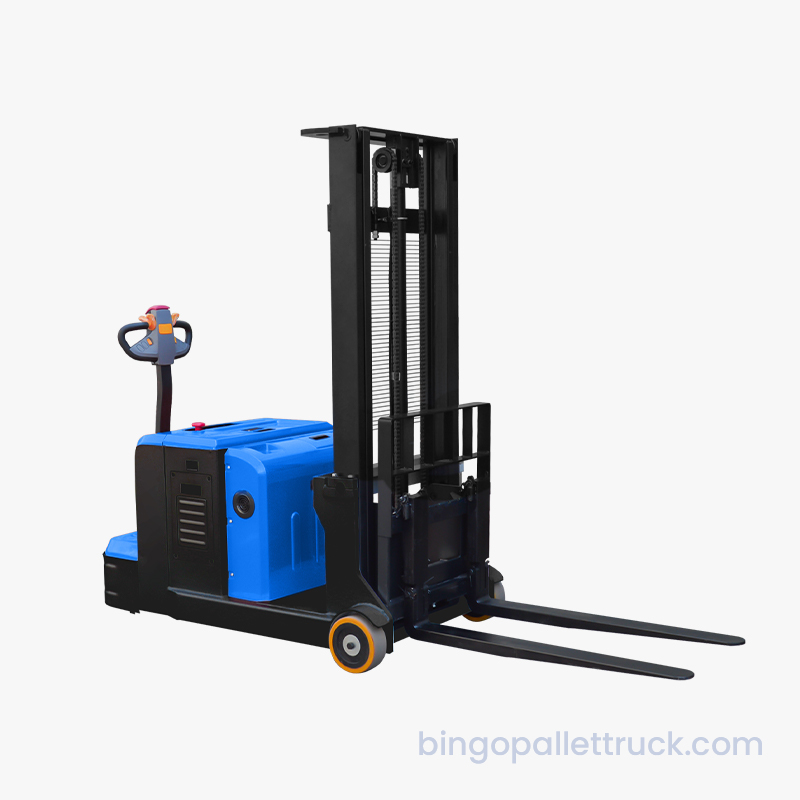
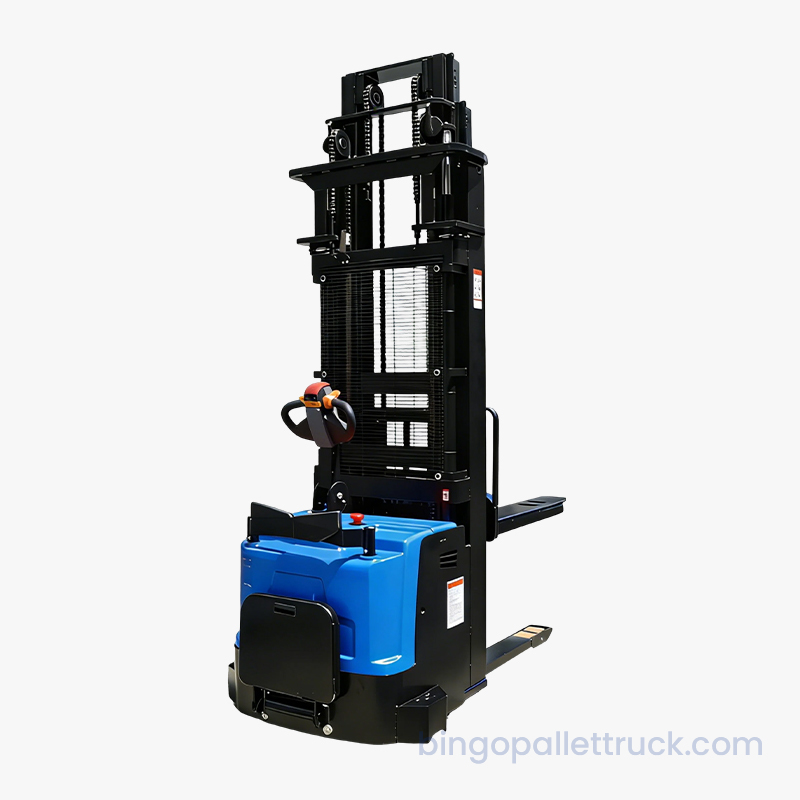
The electric stacker in our product range includes an integrated overload sensor that triggers an audible warning and locks the lift function once the rated capacity is reached, preventing operators from unintentionally exceeding safe limits during fast paced picking operations.
Controlled Descent and Hydraulic Safety Valves
Uncontrolled fork descent is one of the most dangerous failure modes for any lifting equipment. A quality electric stacker uses a hydraulic flow restrictor valve, sometimes called a descent speed limiter, that mechanically caps how fast the forks can drop even if hydraulic pressure is lost or a hose fails.
This differs from a simple hydraulic seal, which only controls normal lowering speed under regular operation. A true safety valve activates specifically during pressure loss scenarios, ensuring forks descend slowly and predictably rather than dropping suddenly, which protects both the load and anyone standing nearby.
Stability Features That Prevent Tip-Overs
Wide Base Leg Design
Most electric stackers use a straddle or wide leg base that extends around the pallet to lower the center of gravity during lifting. A wider stance significantly increases lateral stability, particularly when lifting loads to full mast height.
Mast Tilt and Lift Height Interlocks
Some models restrict travel speed automatically as fork height increases, since a raised load shifts the center of gravity upward and makes the stacker more prone to tipping during turns. This kind of height based speed interlock is increasingly common on mid range and premium stackers.
- Low center of gravity battery placement improves overall balance
- Reduced travel speed at maximum lift height limits momentum related tipping
- Reinforced outrigger legs distribute load weight evenly across the base
Braking Systems
Electric stackers typically use one of two braking mechanisms, and understanding the difference matters for safety evaluation.
| Brake Type | How It Works | Advantage |
| Electromagnetic Brake | Engages automatically when power is cut or handle released | Fail safe, stops instantly during power loss |
| Regenerative Braking | Reverses motor current to slow the unit | Smooth deceleration, extends battery charge |
Electromagnetic brakes are considered the safety standard because they engage automatically during any power interruption, including an emergency stop activation or battery failure, whereas regenerative braking alone depends on the motor still functioning correctly.
Visibility and Warning Systems
Because stackers often operate in narrow aisles with limited sightlines, visibility features play a direct role in preventing collisions with pedestrians and other equipment.
- LED work lights illuminate the travel path in dim warehouse zones
- Reversing alarms alert nearby workers when the unit moves backward
- Strobe or beacon lights increase visibility in mixed traffic areas
- High visibility paint on fork tips helps operators judge load clearance
The electric stacker we manufacture includes a built in reversing alarm and optional LED beacon light, both aimed at reducing blind spot collisions in busy distribution environments where foot traffic and vehicle traffic frequently cross paths.
Battery and Electrical Safety
Battery Discharge Indicators
A clear battery indicator prevents operators from continuing to work once charge drops to a level that could compromise lifting power or braking response. Most models display charge status on a simple LED or digital gauge visible from the operating position.
Sealed Electrical Components
Because stackers are frequently used in cold storage or washdown environments, electrical connections and control boards benefit from an IP54 or higher ingress protection rating, which shields internal components from dust and moisture that could otherwise cause short circuits or corrosion over time.
Operator Training and Procedural Safety
Even the most advanced safety hardware cannot fully replace proper operator training. According to OSHA powered industrial truck standards, operators must be certified before independently using any motorized stacker or forklift, and refresher training is required after any near miss incident or observed unsafe operation.
- Always check load weight against the rated capacity plate before lifting
- Keep forks low during travel and raise only when positioning a load
- Inspect brakes, wheels, and hydraulic hoses at the start of every shift
- Never allow a second person to ride on the forks or base of the stacker
Routine Maintenance That Preserves Safety Performance
Safety features degrade over time without proper maintenance. Hydraulic seals, brake pads, and load sensors should be inspected on a scheduled basis rather than only when a fault becomes obvious.
| Component | Recommended Check Interval |
| Brake system | Every 200 operating hours |
| Hydraulic hoses and seals | Every 300 operating hours |
| Load wheels and casters | Every 250 operating hours |
| Battery terminals and connections | Monthly |
Following a consistent inspection schedule, rather than relying solely on built in warning systems, ensures that mechanical safety features continue performing as designed throughout the equipment lifespan.
Frequently Asked Questions
Do All Electric Stackers Include Overload Protection
Not always. Entry level or budget models sometimes omit automatic load sensing, relying instead on a printed capacity plate and operator judgment, which increases the risk of accidental overloading.
Is an Emergency Stop Button a Legal Requirement
In most regions covered by workplace safety regulations, powered industrial trucks including electric stackers are required to include an accessible emergency stop or equivalent power cutoff mechanism.
How Often Should Safety Features Be Tested
Emergency stop buttons, brakes, and overload sensors should be functionally tested at the start of each shift as part of a standard pre-operation checklist, in addition to scheduled maintenance intervals.


Copyright @ Yancheng Bingo Machinery Equipment Co., Ltd. All rights reserved Warehouse Logistics Equipment Manufacturer Pallet Truck Supplier
