 en
en  Español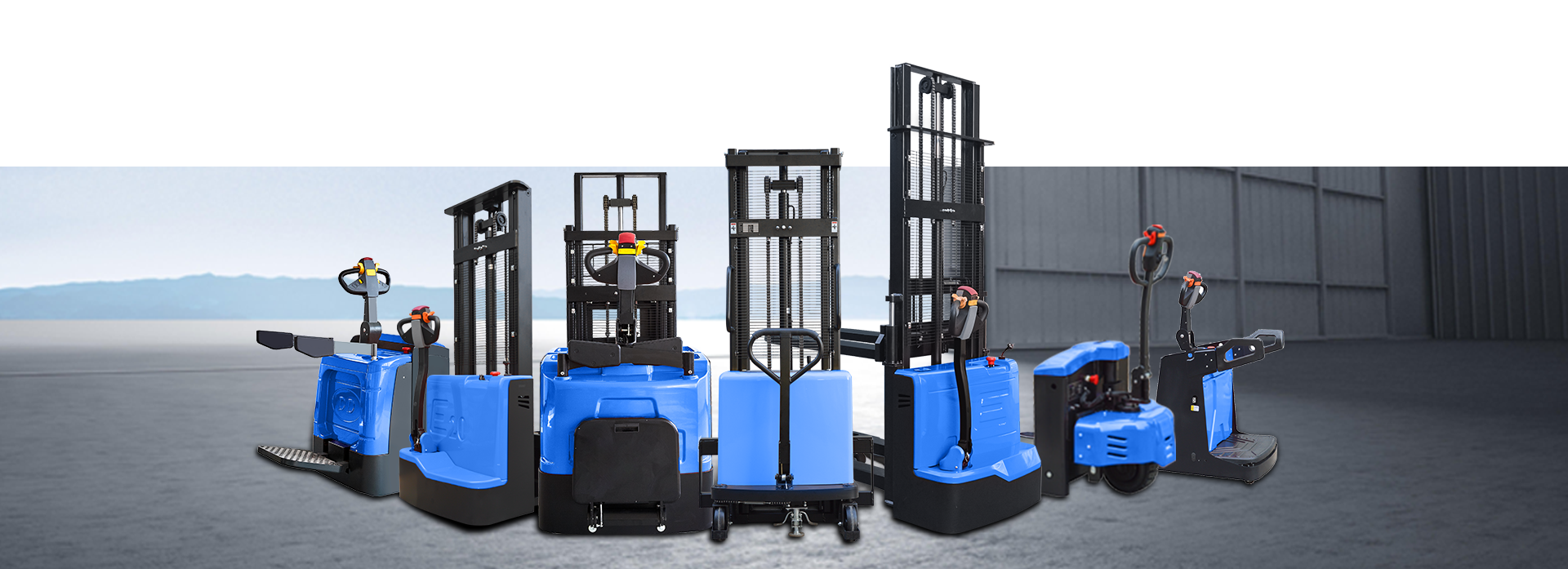

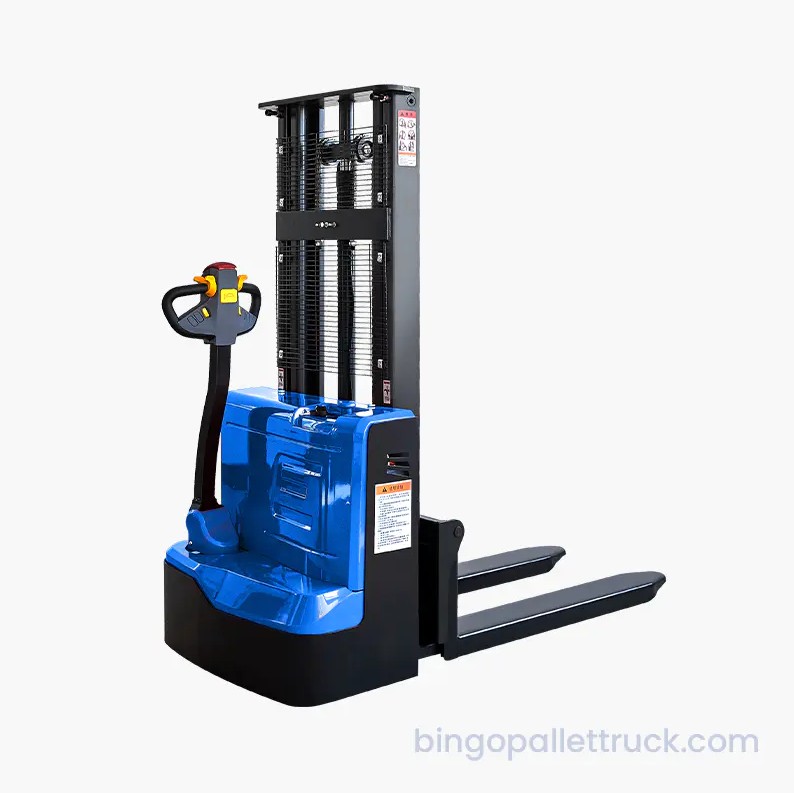
What is an electric stacker?
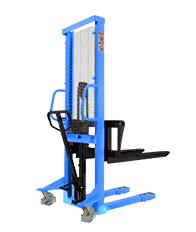
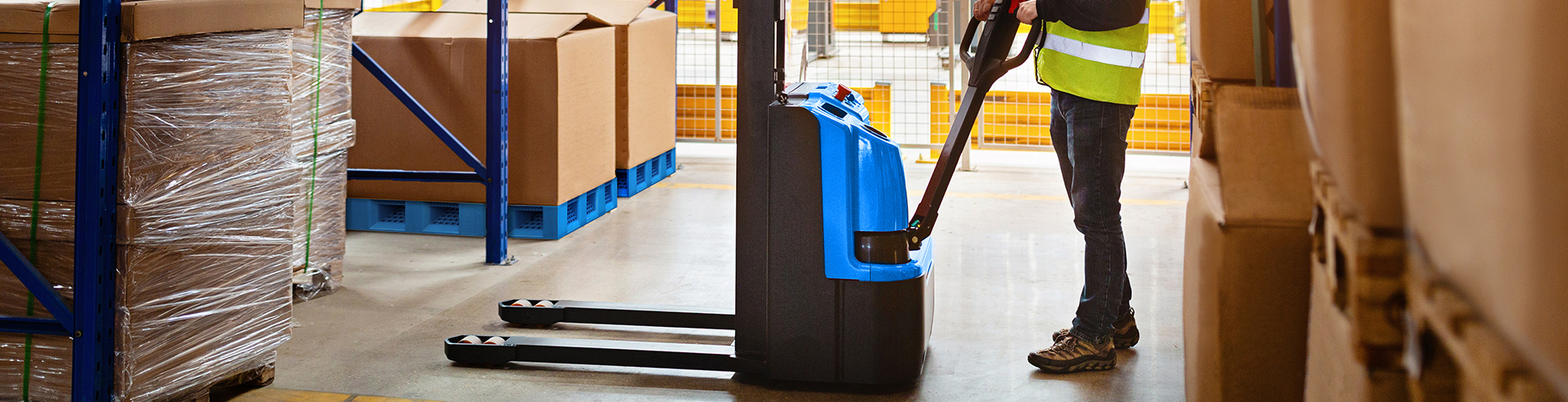
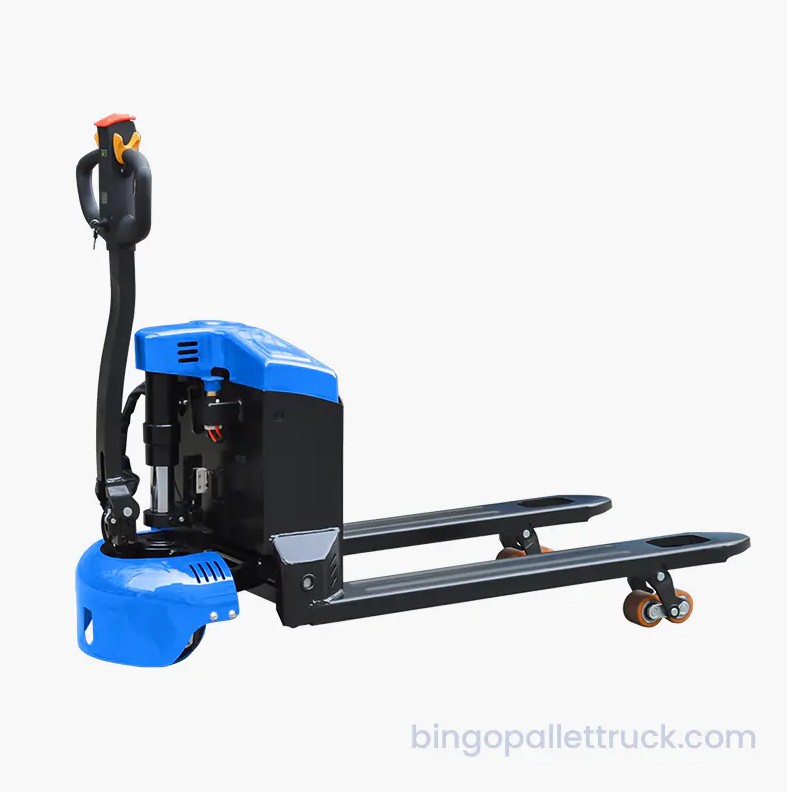
An Electric Stacker is a battery-powered industrial truck designed to lift, transport, and stack palletized loads in warehouses, distribution centers, and manufacturing facilities without physical effort from the operator. Unlike a pallet jack that only moves loads horizontally at floor level, an electric stacker includes a vertical mast that raises loads into racking systems, making it effectively a compact forklift for short-distance, indoor applications. Standard models handle load capacities of 1,000 to 3,000 kg and lift heights of 2 to 6 meters, with heavy-duty variants reaching 5,000 kg or higher, and electric models can increase productivity by 40 to 60 percent compared to manual alternatives (Source: NINGBO CHOLIFT, Load Capacities and Height Limitations of an Electric Stacker; HUPER Forklift, What Is an Electric Stacker).
Content
- 1 How An Electric Stacker Works
- 2 Types Of Electric Stackers And When To Use Each
- 3 Key Advantages Over Manual Stackers And Forklifts
- 4 Industries And Applications Where Electric Stackers Are Used
- 5 Electric Stacker vs Electric Forklift: Choosing The Right Tool
- 6 What To Check When Selecting An Electric Stacker
How An Electric Stacker Works
An electric stacker combines a battery-powered drive motor, a hydraulic mast assembly, and an electronic controller into a single compact unit. Understanding each subsystem explains why the machine performs tasks that manual equipment cannot.
Drive And Hydraulic System
The traction motor powers forward and reverse movement, while a separate hydraulic pump motor drives the mast lifting system. When the operator activates the lift control, hydraulic fluid under pressure extends the mast cylinder, raising the fork carriage and the load attached to it. The non-compressibility of hydraulic oil ensures that the load remains fixed at any height without continuous power input, and a controlled release valve allows smooth, gradual lowering (Source: IQS Directory, Principles, Types and Applications of Pallet Stackers). This hydraulic holding principle is what makes a stacker safe to position loads at height: the load stays at elevation even if the motor is off.
Battery And Controller
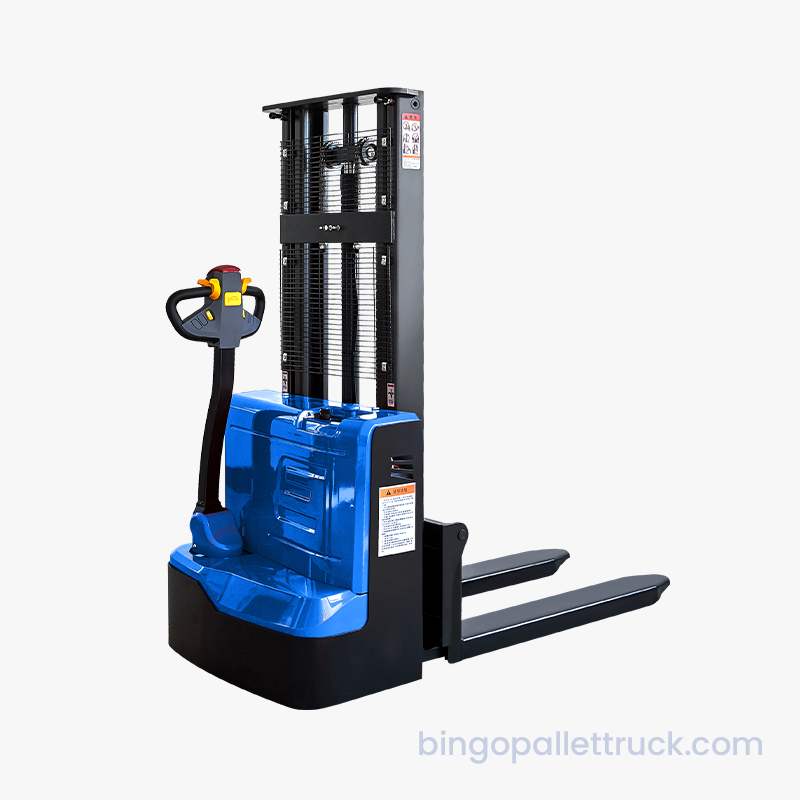
The rechargeable battery, either lead-acid or lithium-ion, powers both the drive and lift motors. Electronic controllers regulate motor speed, direction, and lifting rate, and typically include features such as automatic speed reduction when the mast is elevated, overload protection that prevents lifting beyond the rated capacity, and regenerative braking that feeds energy back to the battery during deceleration. Lithium-ion battery systems charge significantly faster than lead-acid equivalents and maintain more consistent power delivery throughout the discharge cycle, making them the preferred choice for multi-shift operations (Source: HUPER Forklift, What Is an Electric Stacker).
Mast And Fork Carriage
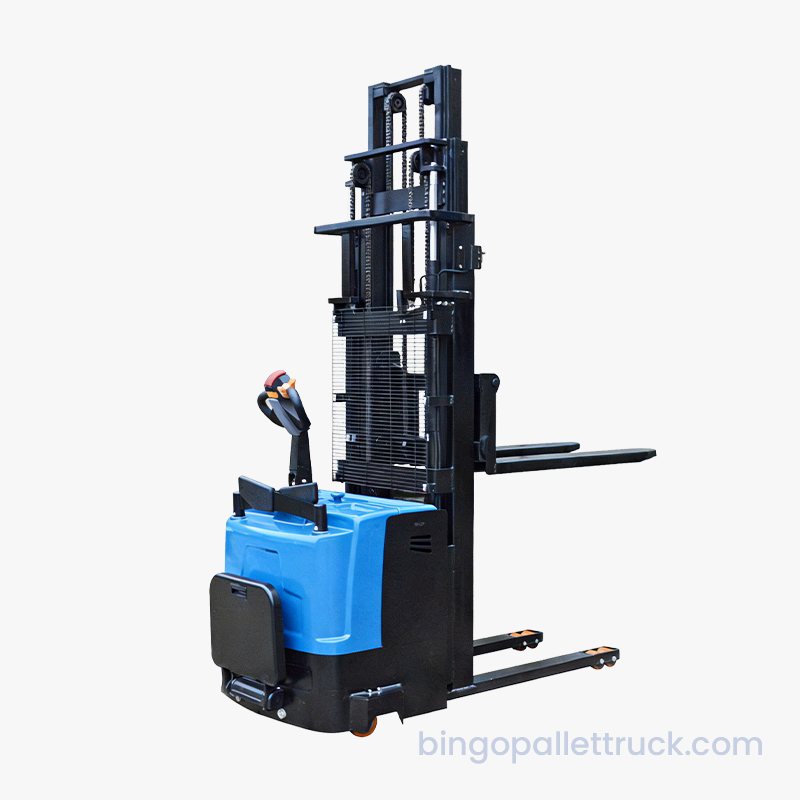
The mast is the vertical steel structure along which the fork carriage travels. Mast configurations include single, duplex, and triplex designs, each offering different combinations of collapsed height and maximum lift height. A triplex mast, for example, allows the stacker to operate in facilities with lower ceiling clearances while still achieving a high maximum lift height because the three-stage mast extends telescopically. The fork carriage carries the forks and any optional attachments and includes side shifters on some models for lateral positioning without repositioning the entire machine (Source: Build Your Perfect Outdoor, Electric Stacker Explained: Uses, Types and Selection Guide).
Types Of Electric Stackers And When To Use Each
Electric stackers are manufactured in several distinct configurations, each engineered for specific operational environments, aisle widths, and operator requirements.
Walk-Behind Electric Stacker
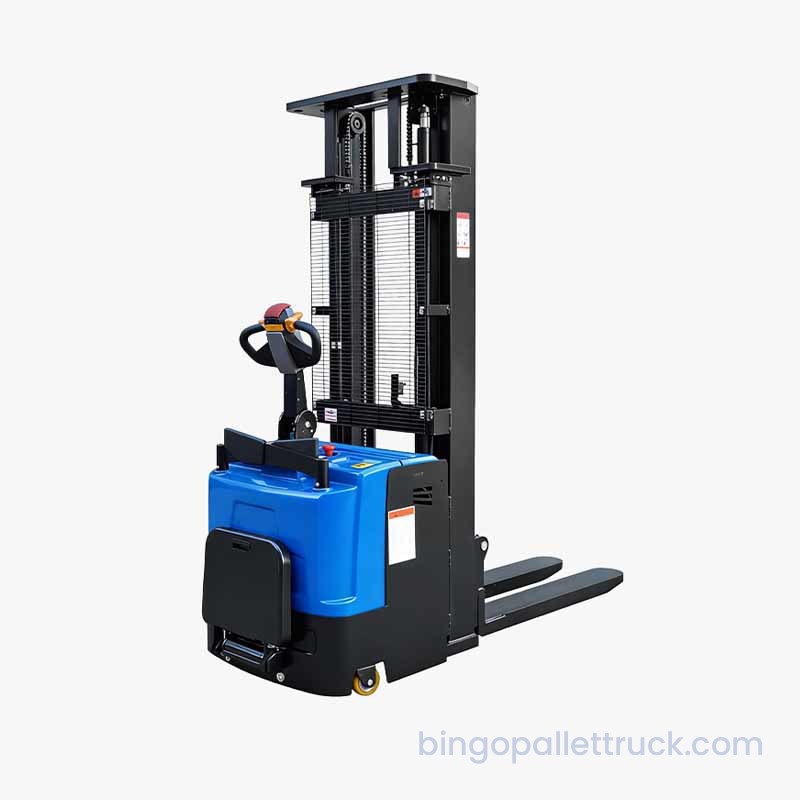
The operator walks behind or beside this configuration, steering through a tiller handle. It is the most compact and least expensive electric stacker type, suitable for small to medium warehouses, narrow aisles, and operations where the stacker is used intermittently rather than continuously. TCM confirms that pedestrian stackers provide excellent maneuverability in tight spaces and busy environments (Source: TCM, What Is a Stacker). Walk-behind models are particularly suitable for retail backrooms, small cold storage areas, and facilities where infrequent stacking tasks do not justify the investment in a larger ride-on machine.
Stand-On Electric Stacker
The stand-on configuration adds a fold-down or fixed operator platform to the walk-behind base, reducing operator fatigue on longer shifts and enabling faster travel speeds across medium-sized facilities. HUPER Forklift's product specifications describe stand-on models with load capacities of 1,500 to 2,500 kg and lift heights up to 6.2 meters, making them suitable for most standard racking heights in distribution centers (Source: HUPER Forklift, What Is an Electric Stacker). The standing position gives the operator better visibility of the mast and the load during placement in racking.
Sit-On Electric Stacker
The sit-on configuration encloses the operator in a cab, providing the greatest comfort during extended continuous operation. These models are used in large warehouses where the operator covers significant distances during a shift, and their higher load capacities and lift heights bridge the gap between compact pedestrian stackers and full counterbalance forklifts. IQS Directory's technical overview confirms that sit-on models handle loads of 1 to 2 tons with lifting heights up to 6.5 meters, with batteries lasting 8 to 12 hours on a single charge for continuous operation (Source: IQS Directory, Principles, Types and Applications of Pallet Stackers).
Straddle Stacker
The straddle stacker uses outrigger legs that extend alongside the forks, straddling the pallet rather than inserting underneath it. This design creates a compact overall footprint and provides excellent stability for the load weight because the outriggers extend the machine's effective wheelbase. Straddle stackers can handle closed-bottom pallets and various pallet configurations that would be inaccessible to designs requiring clearance underneath the pallet. Build Your Perfect Outdoor's technical guide identifies the straddle design as an entry-level configuration providing a straightforward, reliable solution for everyday pallet handling (Source: Build Your Perfect Outdoor, Electric Stacker Explained).
Counterbalance Electric Stacker
The counterbalance stacker eliminates outrigger legs entirely, balancing the load using a rear-mounted counterweight in the same way a full forklift does. This allows the forks to reach locations that straddle legs would block, such as alongside production machinery or into tight racking positions. Build Your Perfect Outdoor identifies this type as suitable for positioning components directly alongside production machinery where conventional straddle legs would interfere with equipment placement (Source: Build Your Perfect Outdoor, Electric Stacker Explained).
| Type | Operator Position | Typical Capacity | Best Suited For |
| Walk-behind | Walks behind tiller | 500 to 1,500 kg | Small warehouses, narrow aisles, occasional use |
| Stand-on | Stands on platform | 1,500 to 2,500 kg | Medium warehouses, regular daily use |
| Sit-on | Sits in cab | 1,000 to 2,000 kg | Large warehouses, long travel distances, multi-shift |
| Straddle | Walk-behind or stand-on | 1,000 to 2,000 kg | Compact footprint, closed-bottom pallets |
| Counterbalance | Walk-behind or sit-on | 1,000 to 3,000 kg | No outrigger clearance needed, machinery positioning |
Key Advantages Over Manual Stackers And Forklifts
The electric stacker occupies a specific capability band between manual handling equipment and full counterbalance forklifts, and its advantages within that band are well documented.
Productivity And Operator Fatigue Reduction
Electric models eliminate the physical effort of manual pump-and-carry lifting, reducing operator fatigue and enabling consistent output across a full shift. HUPER Forklift's data shows productivity gains of 40 to 60 percent over manual alternatives (Source: HUPER Forklift, What Is an Electric Stacker). Shouwomachine's 2026 warehouse guide confirms that choosing the right electric stacker over manual alternatives can improve warehouse productivity by 20 to 40 percent in the first year of operation (Source: Shouwomachine, Electric Stacker vs Electric Forklift 2026 Warehouse Guide).
Lower Acquisition And Operating Cost Versus Forklift
Electric stackers cost significantly less than equivalent-capacity counterbalance forklifts, often at one-third to one-half the price of a comparable forklift (Source: Shouwomachine, Electric Stacker vs Electric Forklift 2026 Warehouse Guide). Operating costs are also lower because there is no engine oil, exhaust system, or transmission fluid to maintain. Build Your Perfect Outdoor confirms that maintenance requirements consist primarily of battery care, periodic hydraulic checks, and controller diagnostics, significantly reducing service cost compared to diesel or LPG forklifts (Source: Build Your Perfect Outdoor, Electric Stacker Explained).
Zero Emissions For Indoor Environments
Battery-powered operation produces no exhaust emissions, making electric stackers suitable for food storage, pharmaceutical warehouses, cold storage facilities, and any indoor environment where combustion engine emissions would create air quality or regulatory compliance problems. TCM's application overview confirms this advantage for workshops, refrigerated warehouses, greenhouses, garden centers, and supermarkets where indoor air quality is a priority (Source: TCM, What Is a Stacker).
Compact Dimensions For Narrow Aisles
Electric stackers are significantly more compact than counterbalance forklifts because they do not require a rear counterweight mass. This compact footprint allows operation in narrower aisles than a forklift could navigate, directly increasing usable storage density in any facility where aisle width is a constraint. HU-LIFT's product technical overview confirms that reinforced steel chassis and compact design allow operation in narrow aisles without compromising stability or load capacity (Source: HU-LIFT, Electric Stacker Features and Types).
Industries And Applications Where Electric Stackers Are Used
The combination of compact dimensions, zero emissions, vertical lift capability, and moderate load capacity makes electric stackers the standard material handling choice across a broad range of industries.
- Warehouses and distribution centers: the primary application, where electric stackers load and unload racking systems, transfer pallets between zones, and support pick-and-pack operations at standard racking heights up to 6 meters
- Food and beverage: cold storage and controlled-temperature environments require zero-emission equipment, and the easy-clean steel structures of electric stackers suit hygiene requirements in food processing and storage facilities (Source: Build Your Perfect Outdoor, Electric Stacker Explained)
- Retail and e-commerce: regional retail chains use standard electric stackers to replenish shelving inventory from backroom storage during quieter trading periods, with the compact footprint allowing operation near shelving (Source: Build Your Perfect Outdoor, Electric Stacker Explained)
- Manufacturing and production: counterbalance electric stackers position components alongside production machinery and move work-in-progress between stations without the aisle width requirements of full forklifts
- Loading docks: electric stackers transfer pallets between trucks and warehouse floors without requiring additional equipment at the dock, improving turnaround time and reducing labor requirements during vehicle loading and unloading (Source: Alibaba, All About Electric Stacker)
- Pharmaceutical and healthcare: clean operation and precise load control make electric stackers suitable for sensitive inventory environments where controlled movement and zero emissions are required by operating protocols
Electric Stacker vs Electric Forklift: Choosing The Right Tool
The most common selection decision in warehouse equipment planning is whether a specific application requires an electric stacker or a full electric counterbalance forklift. The answer depends on the specific combination of load weight, lift height, travel distance, and aisle width involved.
Shouwomachine's 2026 warehouse guide provides a clear decision framework: if a warehouse mainly moves standard pallets over short distances in tight spaces, a quality 1.5 to 2 ton electric stacker is the cost-effective starting point, while heavy, fast-paced, long-distance, or high-racking operations above 6 meters require an electric counterbalance forklift (Source: Shouwomachine, Electric Stacker vs Electric Forklift 2026 Warehouse Guide). Many facilities end up operating both types because they solve different problems: the stacker handles local replenishment and short-cycle pallet movement while the forklift manages heavy dock operations and high-racking applications.
Operator training requirements also differ. Walk-behind electric stackers in many markets do not require the same formal certification as counterbalance forklifts, resulting in faster operator qualification and broader flexibility in operator assignment (Source: Shouwomachine, Electric Stacker vs Electric Forklift 2026 Warehouse Guide).
What To Check When Selecting An Electric Stacker
Matching the stacker's specification to the application requirements prevents both under-performance and unnecessary over-investment in capability that the operation does not need.
- Load capacity: the rated capacity of the stacker must exceed the heaviest load it will handle at the maximum lift height required; capacity ratings reduce at height, so check the load chart at the intended stacking height rather than only at ground level
- Maximum lift height: confirm the stacker's mast configuration can reach the top of the highest rack position with a standard pallet, including any overhead clearance required for mast entry into the rack opening
- Aisle width: measure the narrowest operating aisle and confirm the stacker's turning radius and overall width are compatible with that dimension before purchase
- Battery type and charge time: lead-acid batteries are lower upfront cost but require longer charging times and regular electrolyte maintenance; lithium-ion batteries charge faster and are maintenance-free, with higher upfront cost recovered in multi-shift operations
- Floor conditions: electric stackers are designed for smooth, level concrete; rough, sloped, or outdoor surfaces reduce performance and may compromise stability, so confirm floor suitability before deployment
- Operator requirements: walk-behind models suit occasional use and shorter distances; stand-on or sit-on configurations are more appropriate for continuous multi-shift use where operator fatigue over a full working day is a practical consideration
The Bingo Pallet Truck Electric Stacker range covers walk-behind, stand-on, and heavy-duty configurations with load capacities and mast specifications matched to standard warehouse racking environments, providing a reliable entry point for facilities evaluating electric stacking solutions for the first time or expanding an existing fleet.

Copyright @ Yancheng Bingo Machinery Equipment Co., Ltd. All rights reserved Warehouse Logistics Equipment Manufacturer Pallet Truck Supplier
