 en
 Español


What Is a Loading Dock? Types, Equipment, Safety, and Design Basics Explained
Content
- 1 Dock Height Is the Number That Rules Everything Else
- 2 The Main Loading Dock Types
- 3 What Belongs at Every Dock Position
- 4 Loads at the Dock Edge: Pallets and Containers
- 5 Moving Freight On and Off the Dock
- 6 When Volume Grows, the Bottleneck Moves
- 7 Safety Rules That Are Not Optional
- 8 Matching the Dock to the Operation
Freight that arrives late is often blamed on the carrier. In plenty of warehouses the real bottleneck sits at the wall: a loading dock that was built at the wrong height, fitted with a leveler that cannot reach the trailers that actually show up, or squeezed into a yard that never had room for a truck to back in cleanly.
A loading dock is a raised platform where trailers reverse into position and goods cross between the building and the vehicle. The concept is simple. The numbers behind it are not, and once you know them, every other decision at the dock becomes much easier to justify to a finance team.
Dock Height Is the Number That Rules Everything Else
Here is the short answer: match the dock to your trailer fleet, not to one trailer you happened to measure, and let the leveler absorb the difference.
Docks in North America are commonly built at 48 to 52 inches, which is roughly 1220 to 1320 mm above the yard. European and many Asian facilities sit between 1.1 and 1.3 meters. Trailer bed heights move with suspension type and load, so an empty air-ride trailer can sit noticeably higher than a fully loaded one on the same route. The dock leveler bridges that gap, and its working range is the figure that decides whether loading feels flat or feels like a climb.
When the gap between dock height and trailer bed exceeds the leveler range, you get a permanent slope. Drivers feel it as an awkward approach. Operations managers feel it as reduced effective capacity, more load shift on the forks, and faster wear on wheels, pallets, and floor joints. A few degrees of slope changes how a 2,500 kg load behaves far more than most buyers expect when they are comparing equipment specifications on paper.
The Main Loading Dock Types
No single layout wins everywhere. Yard depth, trailer mix, and arrivals per hour decide it.
Flush and Enclosed Docks
Trailers back straight into doors set in one building face. This is the default for most warehouses, distribution centers, and food or pharmaceutical facilities, because freight stays out of the weather and doors can be sealed or sheltered. Cold chain operations are far easier to control in this layout.
Open Docks
The dock face is exposed and levelers are mounted on an exterior wall. It is cheaper to build and quicker to approach, but rain, snow, and wind reach both the freight and the floor, which raises slip risk in winter.
Sawtooth and Finger Docks
Positions are angled, or arranged along a projecting pier, so more doors fit into a shorter building face. This is common in parcel and e-commerce hubs with many arrivals per hour. The trade-off is tighter backing geometry and apron space that must be planned carefully before the first truck arrives.
| Layout | Geometry | Typical fit | Main trade-off |
|---|---|---|---|
| Flush or enclosed | Doors in one straight face, trailers back in at 90 degrees | General warehousing, food, pharmaceuticals | Needs yard depth and sealed doors |
| Open face | Levelers on the exterior wall, no canopy | Mild climates, low cost builds | Weather exposure, slippery floors |
| Sawtooth | Doors set at an angle to the building face | High door count on limited frontage | Harder backing, more apron planning |
| Finger | Two rows of doors on a projecting pier | Cross-dock and parcel hubs | Long internal travel distances |
| Ground level with yard ramp | No raised dock at all | Temporary sites, low volume, tight budgets | Slow cycles, full weather exposure |
What Belongs at Every Dock Position
A working dock position is a small system rather than a hole in the wall. Leave any of these out and the whole position runs slower than it should.
- Dock leveler, mechanical, hydraulic, or air powered, rated well above the heaviest truck that will use it and with a working range above and below dock level.
- Vehicle restraint or wheel chock, so a trailer cannot creep forward while a forklift is inside it. Restraints wired to a signal light remove the guesswork.
- Seals or shelters, to close the gap around the trailer. Foam or fabric seals suit a uniform fleet, while shelters give more clearance for mixed trailer types.
- Bumpers, which absorb impact instead of the building. Worn bumpers quietly change the geometry of the leveler lip.
- Dock lights and communication lights, inside and outside, so both driver and loader know when it is safe to move.
- Door and floor condition. A door that does not open fully, or floor joints that have spalled, adds seconds to every single move and hours to every week.
Loads at the Dock Edge: Pallets and Containers
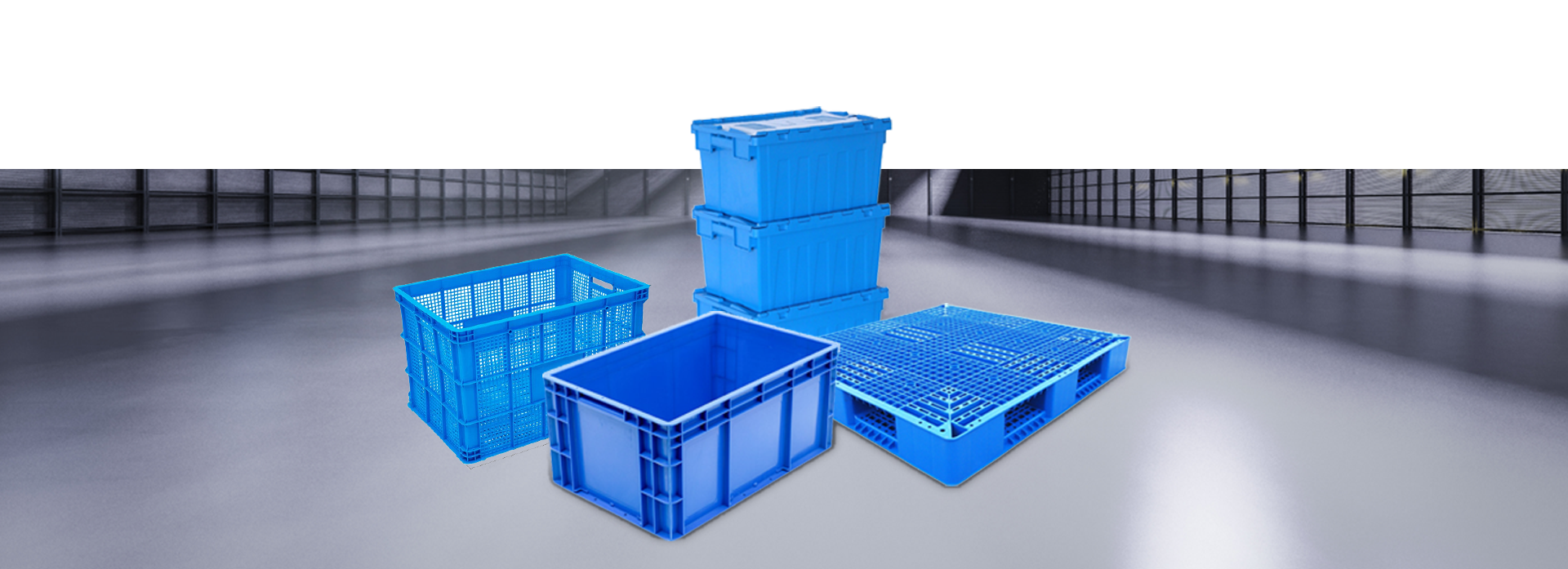
Whatever the hardware, freight only crosses as fast as its base allows. Pallets and containers are the interface between your dock and every vehicle that visits it, and their condition decides whether a leveler becomes a source of incidents.
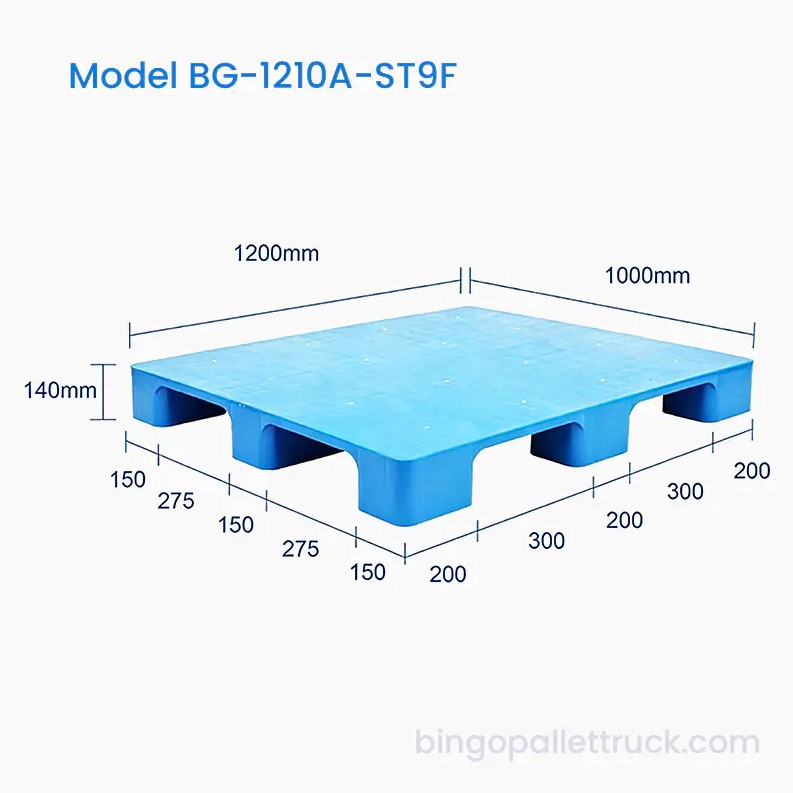
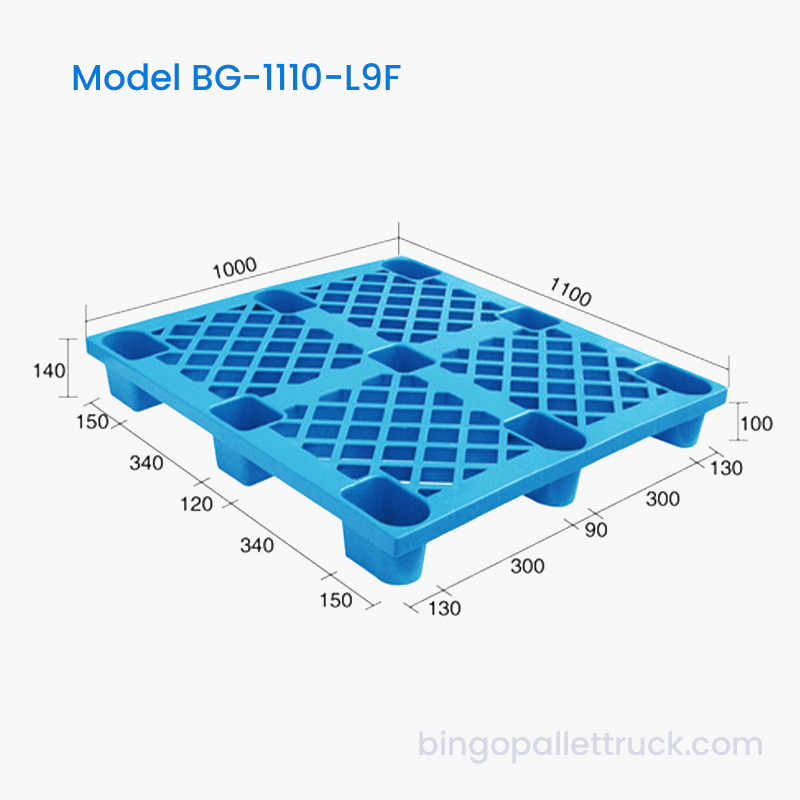
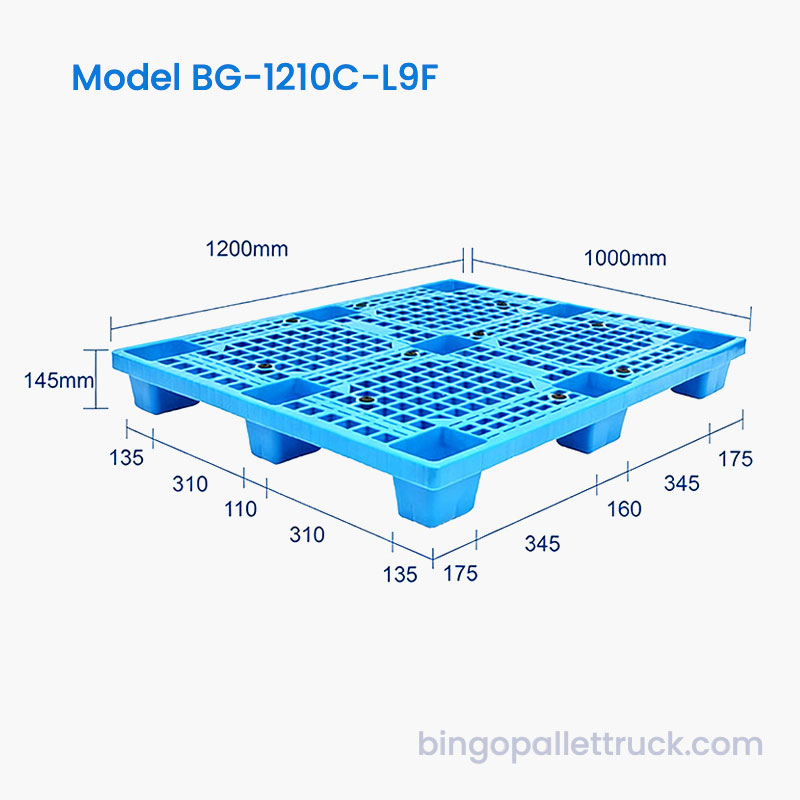
Pallet footprints are regional. The 1200 x 1000 mm size dominates global and ISO-style operations, 1200 x 800 mm is the European standard, 1100 x 1100 mm is common in Japan and Korea, and 48 x 40 inches remains the North American norm. A dock that receives mixed international freight should plan for more than one footprint, and should size rack beams and aisle widths around the largest one it accepts.
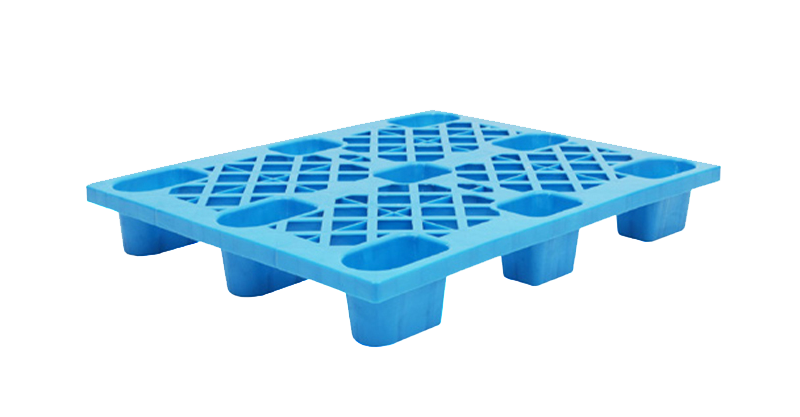
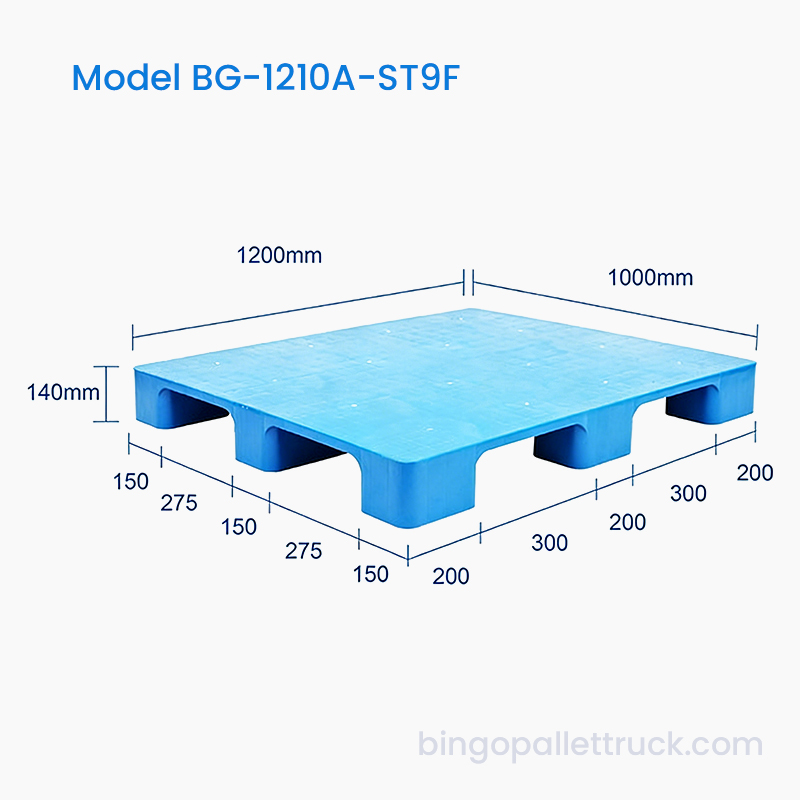 BG-1210A-ST9F 1200x1000 Solid-Top Plastic Pallet for Warehouse ShippingA 1200×1000 mm HDPE solid-top pallet with 800 kg dynamic and 4000 kg static capacity, easy-clean surface, four-way forklift access for frequent shipping.View Product →
Two practical checks matter more than the material data sheet. First, is the pallet rackable, nestable, or only stackable? That determines how much space it consumes when it is empty. Second, what condition is it in? A cracked deck board or a missing runner fails at the worst possible moment, usually halfway across a leveler with a load on top. In food and cold chain work, plastic pallets earn their cost through washability, consistent weight, and no protruding nails to catch on packaging or hands.
Moving Freight On and Off the Dock
Inside a trailer, space is tight and the floor is often worn or uneven. Dock equipment therefore splits into two jobs: short, low level moves within the trailer and on the apron, and longer hauls into the building.
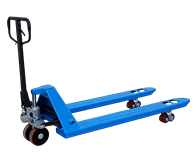
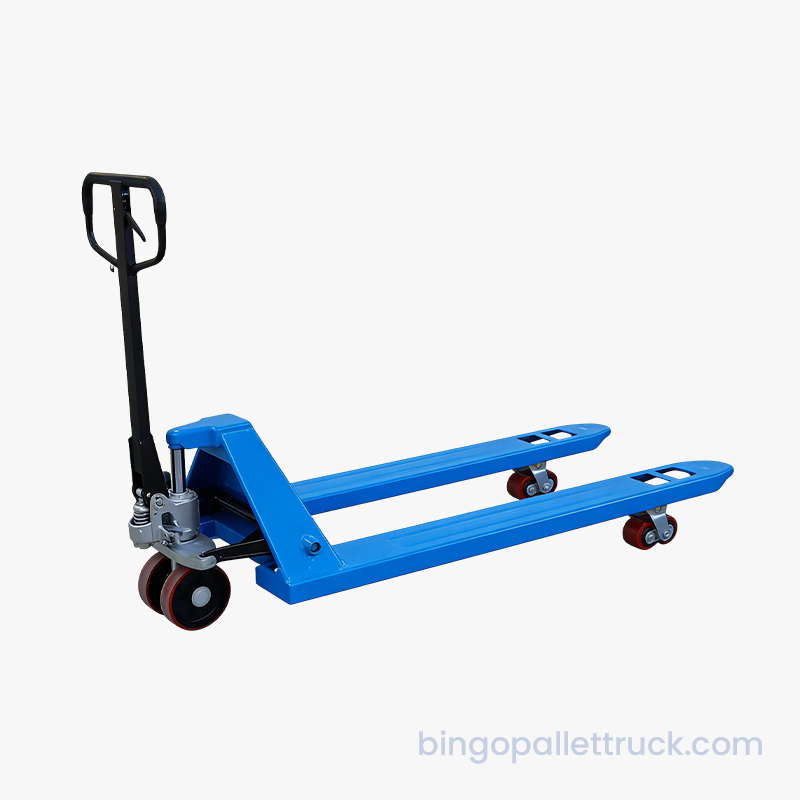
Manual pallet trucks still handle a large share of the first job. A 2,000 to 2,500 kg hand pallet truck fits under most standard pallets, needs no charging, and remains the cheapest way to move a pallet from the trailer nose to the dock edge. Its limits are equally clear: the operator supplies the force, and a slope at the leveler turns a manageable load into hard, slow work by mid shift.
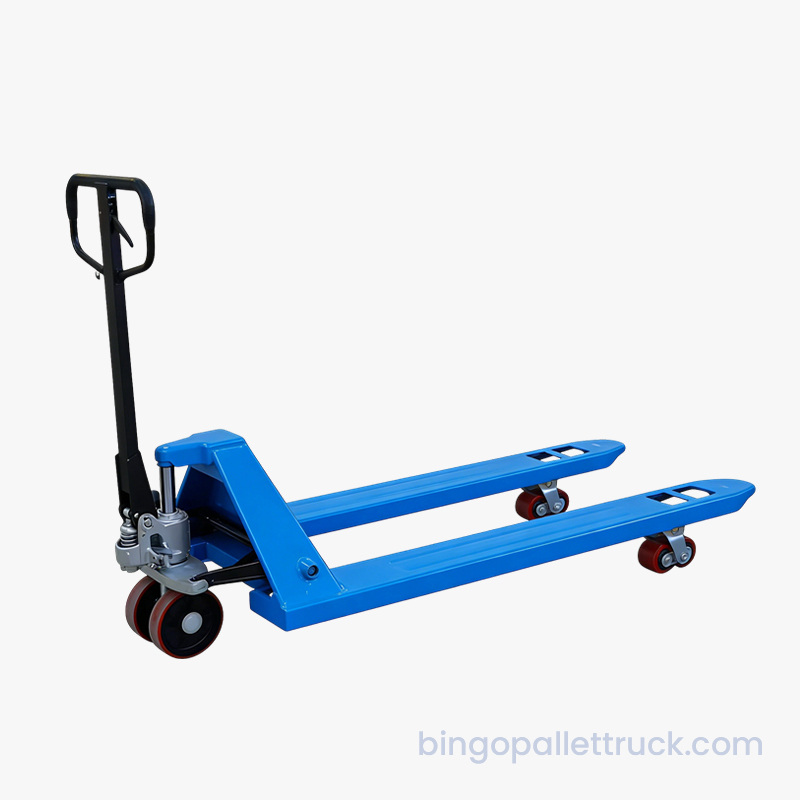 CBY25S/CBY25L 2500kg Heavy-Duty Hand Pallet Truck for Dock HandlingA 2500 kg manual pallet truck with 1220 mm forks and 550/685 mm widths, suited to dock-edge handling without charging or powered equipment.View Product →
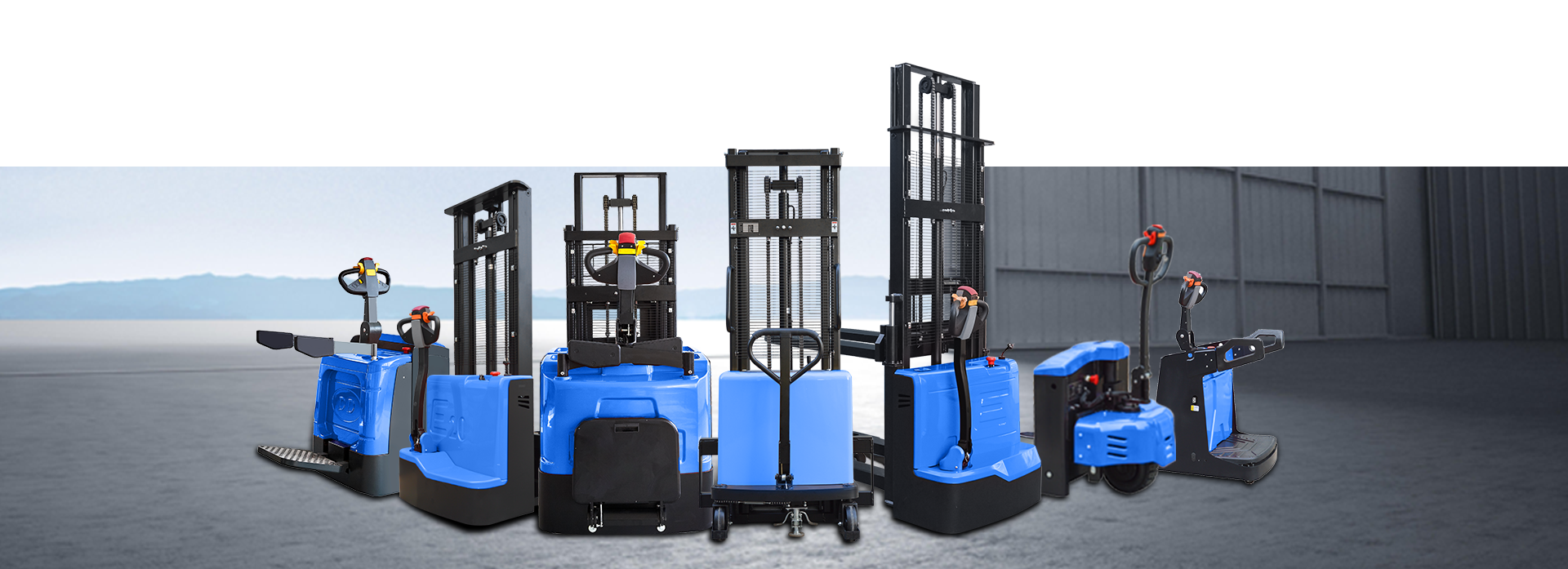
Where distances grow, powered equipment takes over, and the specifications that matter most are load capacity, fork length, and whether the unit is designed for walk-behind or stand-on operation. Fork length is the one buyers underestimate. Forks shorter than the pallet leave the load unstable on the tips, while forks longer than the pallet damage whatever sits behind it. If you are comparing manual and powered options for the same dock, this explanation of electric pallet truck differences is a useful starting point.
If you want a wider view of how powered pallet trucks fit into daily warehouse work, see what an electric pallet truck is and where it belongs.
When Volume Grows, the Bottleneck Moves
Growth shows up at the dock first. The same ten doors that handled sixty trailers a day now handle a hundred, and the constraint shifts from the leveler to the travel path behind it.
Three changes usually pay for themselves long before anyone discusses a new building: powered horizontal transport for loads traveling more than thirty or forty meters, staged lanes marked on the dock floor so a trailer is never unloaded into a random pile, and a fixed door assignment by carrier or route so teams learn their own traffic patterns.
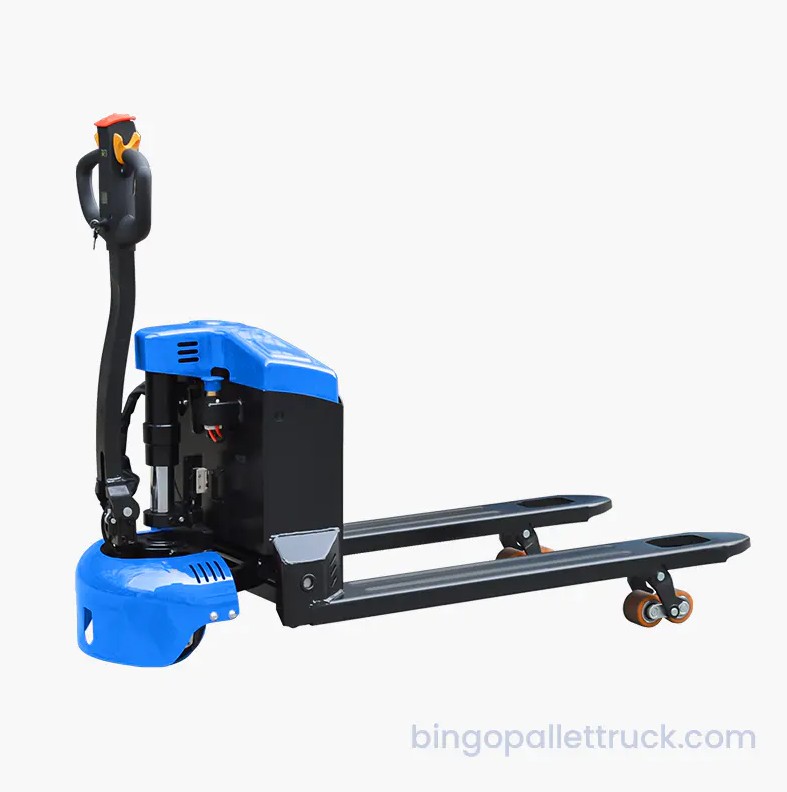
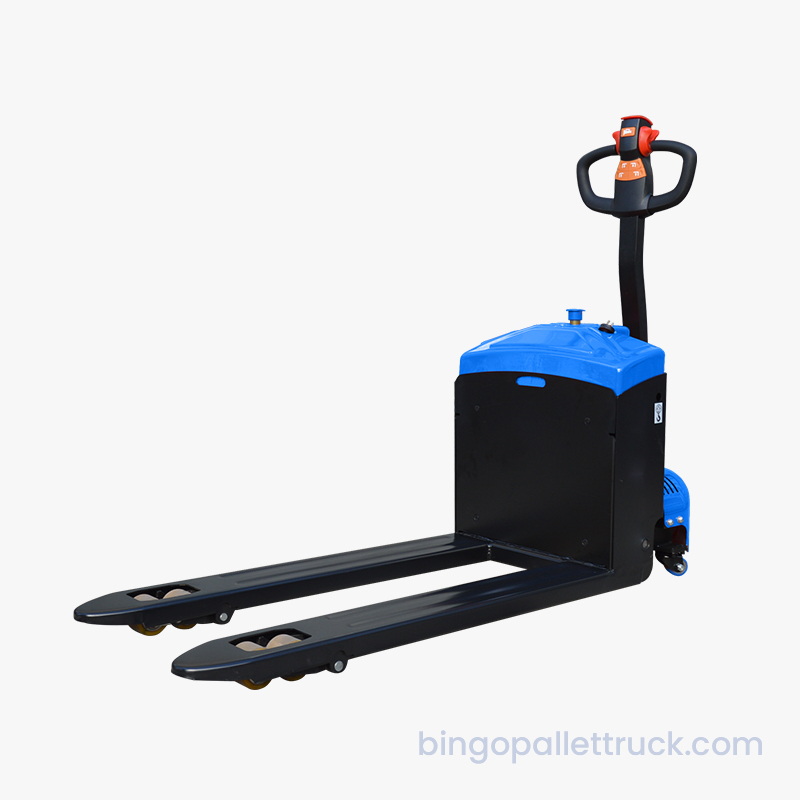 CBD20J 2000kg Electric Walkie Pallet Truck for WarehouseA 2000 kg pedestrian pallet truck with emergency reverse, built-in charger, and compact walk-behind design for trailer-to-rack transfers beyond manual pushing distances.View Product →
Electric walk-behind pallet trucks around 2,000 kg are the common first step. They keep the compact footprint of a manual truck, remove the operator's physical limit, and comfortably match the load range of general merchandise pallets moving between the trailer, the staging lane, and the first rack bay.
Safety Rules That Are Not Optional
Dock safety is mostly about repetition, because the same risk is repeated hundreds of times a week. These habits hold up under audit and under pressure.
- Secure the trailer before the leveler goes down, using a restraint or chock plus a visible signal.
- Never allow anyone to walk on a leveler lip or into the gap between trailer and dock.
- Keep dock edges marked and keep the approach lane clear of empty pallets and packaging debris.
- Inspect bumpers, lights, and leveler lip condition on a schedule, not after something breaks.
- Train operators on the actual equipment in the building, including the maximum load each unit can carry on the actual slope at each door.
Matching the Dock to the Operation
A loading dock is not a feature you buy by the meter. It is a set of matched numbers: dock height against trailer fleet, leveler range against suspension variation, door count against arrival rate, and pallet footprint against the racking and vehicles inside the building.
Get those four aligned and the dock stops being the place where schedules quietly fall apart. Operations that combine storage, picking, packing, and outbound loading under one roof tend to face very similar layout questions, and a look at how e-commerce warehousing logistics handles dock to rack flow is a practical next step before you commit to any equipment list.

Copyright @ Yancheng Bingo Machinery Equipment Co., Ltd. All rights reserved Warehouse Logistics Equipment Manufacturer Pallet Truck Supplier
