 en
en  Español







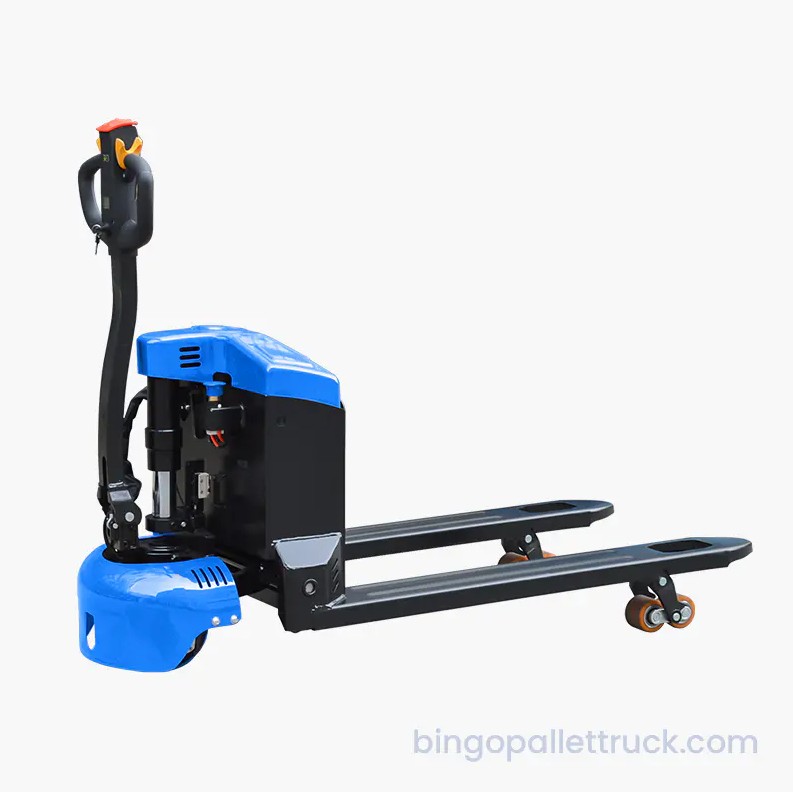
Electric Pallet Trucks Explained: Types, Costs, Specs and Buying Guide
A warehouse supervisor watching an operator pull a loaded manual pallet jack across the dock usually sees the same pattern: the first trips are quick, then fatigue sets in and the pace drops. Replacing manual units with electric pallet trucks changes that pattern, because the machine carries the load and the operator only steers. The result is a steadier throughput from the first hour of a shift to the last. This guide explains what an electric pallet truck is, how walkie and stand-on configurations compare, and which specifications and costs matter most before placing an order.
Content
What Is an Electric Pallet Truck?
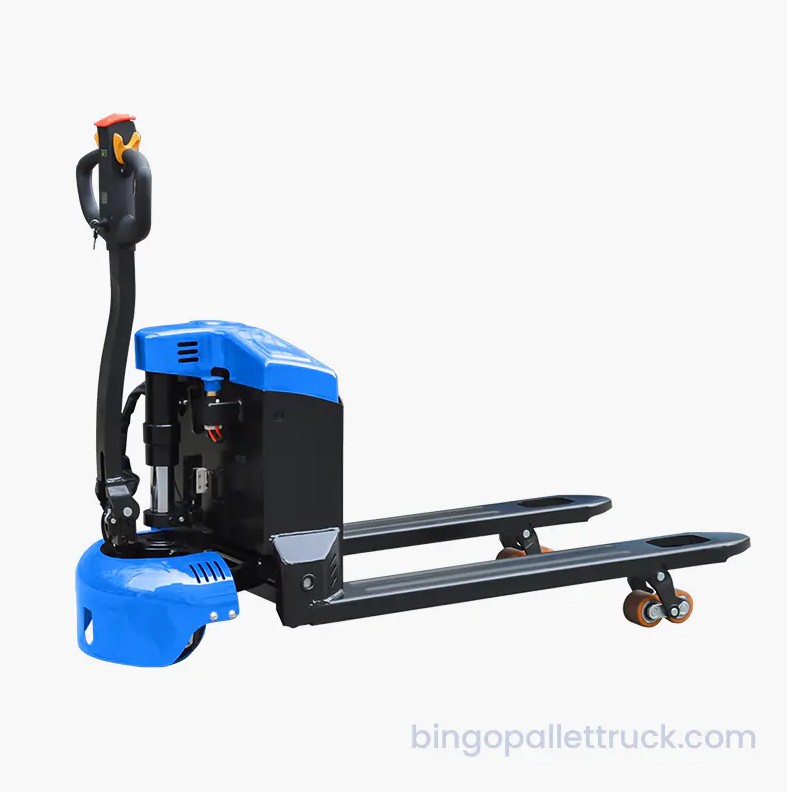
An electric pallet truck, also called an electric pallet jack, is a battery-powered unit that lifts, transports, and lowers palletized loads using an electric drive motor and a hydraulic lift system. On walkie models the operator walks behind the truck and steers with the tiller; on stand-on models the operator rides on a rear platform. Most machines in this class run on a 24 V electrical system and handle loads from 1,500 kg up to 3,000 kg. Fork lengths are matched to pallet depth, commonly 1,150 mm to 1,220 mm for the standard 1,200 mm pallet. Because the motor does the heavy work, operator strength stops being the limiting factor in how many pallets can be moved per hour.
For a practical look at how these machines are used in daily warehouse routines, our article on what an electric pallet truck is covers common workflows and operator habits.
| Parameter | Walkie electric pallet truck | Stand-on electric pallet truck |
|---|---|---|
| Load capacity | 2,000 kg | 2,000 kg to 3,000 kg |
| Loaded travel speed | up to 5.5 km/h | up to 8.5 km/h |
| Lifting speed with load | 20 to 30 mm/s | 20 to 35 mm/s |
| Electrical system | 24 V | 24 V |
| Standard fork length | 1,150 to 1,220 mm | 1,150 to 1,220 mm |
| Operator position | walking behind the unit | standing on a rear platform |
Manual Versus Electric: The Difference Is Throughput
The biggest difference between a manual pallet jack and an electric pallet truck is not speed on paper; it is consistent throughput over a full shift. A manual jack depends on operator strength for every meter of travel, so trip times lengthen as muscles tire. An electric truck delivers constant traction, and the operator focuses on steering and lifting. That consistency makes scheduling and labor planning far easier.
The chart compares typical loaded pallets moved per hour over a travel distance of about 30 meters in a medium-size warehouse. A manual pallet jack moves roughly 12 pallets per hour in this scenario, and that rate declines as the shift progresses. A walkie electric pallet truck lifts the rate to about 30 pallets per hour, roughly 2.5 times the manual figure. A stand-on electric pallet truck reaches about 45 pallets per hour because the operator rides with the unit and spends no time walking. The practical effect is that one electric unit can replace two or three manual jacks during peak periods. It also reduces the physical load on the operator, which improves attention and lowers the risk of mistakes near loading docks.
Walkie or Stand-On: Which Configuration Fits Your Operation
Both configurations do the same core job, but the operator position changes performance, comfort, and the distances the machine can cover efficiently.
Walkie Electric Pallet Truck
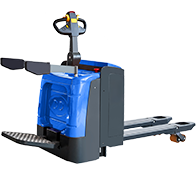
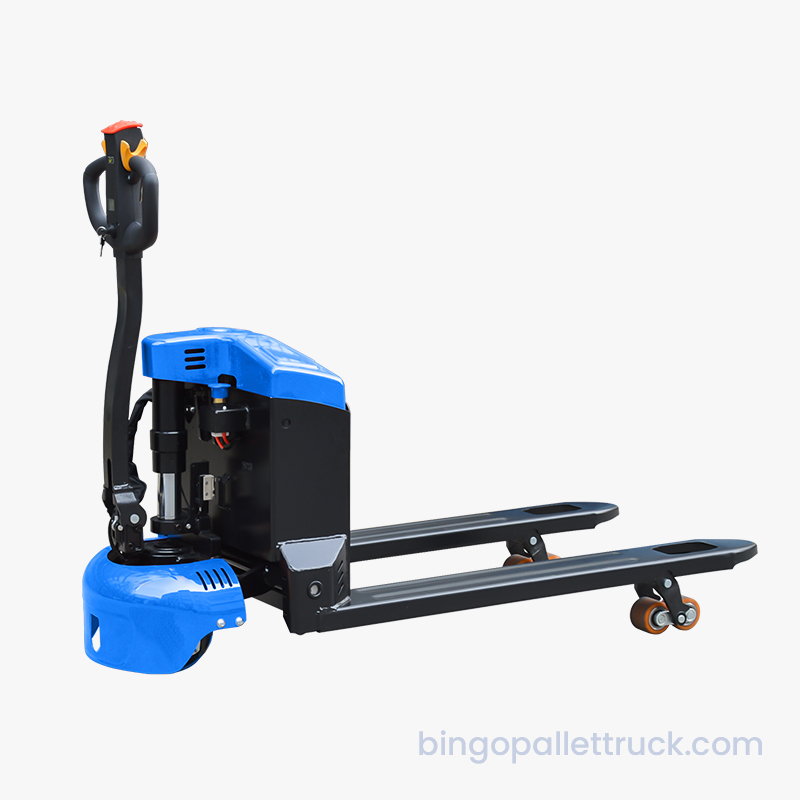
A walkie electric pallet truck is operated from behind, with the tiller controlling direction, speed, and lifting. This layout gives precise steering in narrow aisles and allows the operator to step away quickly for line feeding, order picking, or dock work. Walkie units in the standard range are typically rated at 2,000 kg, which covers most single-pallet loads. They are also the more budget-friendly option when the travel distance between pick and drop points is short.
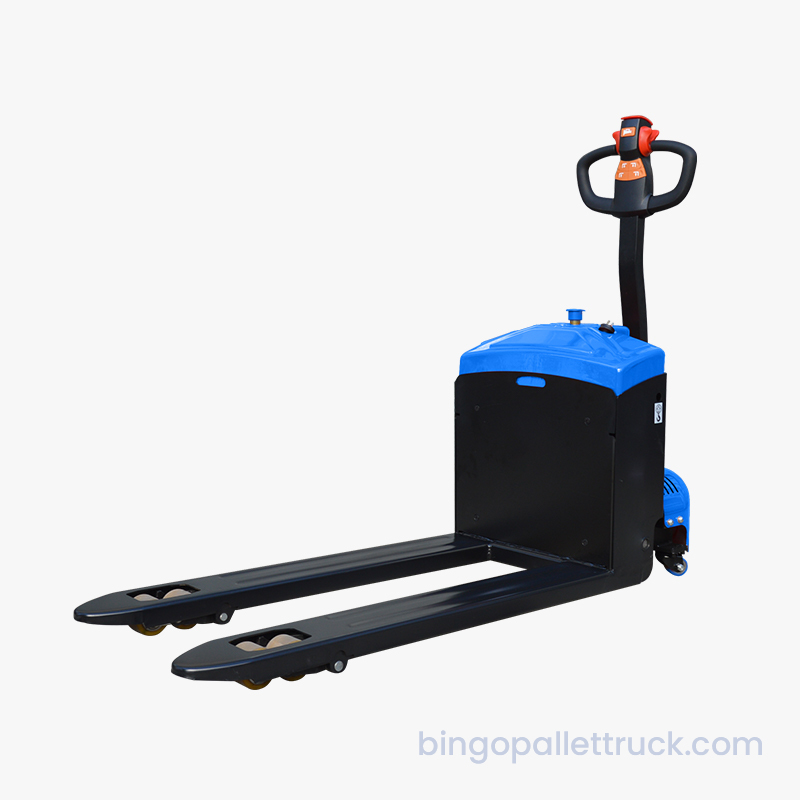 2000 kg Electric Walkie Pallet Truck with Built-in ChargerThis walkie pallet truck suits short moves and frequent stops. Its steel body, emergency reverse, and removable covers support easy maintenance, making it a practical fit for narrow-aisle docks and line feeding.View Product →
Stand-On Electric Pallet Truck
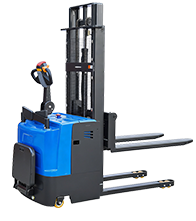
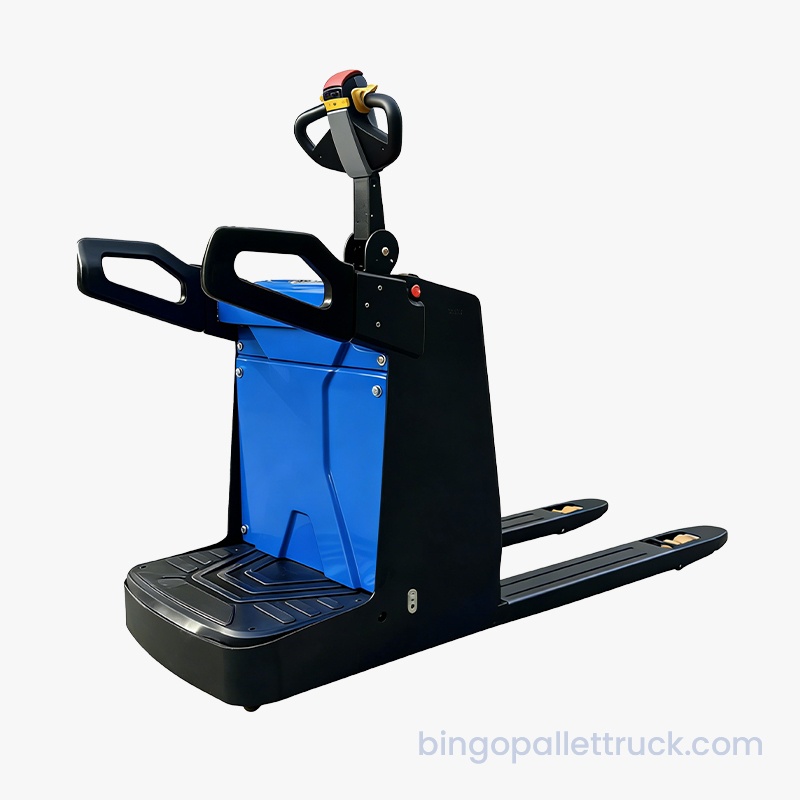
A stand-on electric pallet truck adds a fold-down platform at the rear so the operator rides with the machine. Travel speeds are higher, and the operator does not walk during transport, so the truck performs best on routes longer than about 50 meters. Capacities reach 2,000 to 3,000 kg, and the rider platform reduces fatigue during multi-hour shipping and receiving cycles. The trade-off is a longer chassis and a larger turning circle, which must fit the existing aisle layout.
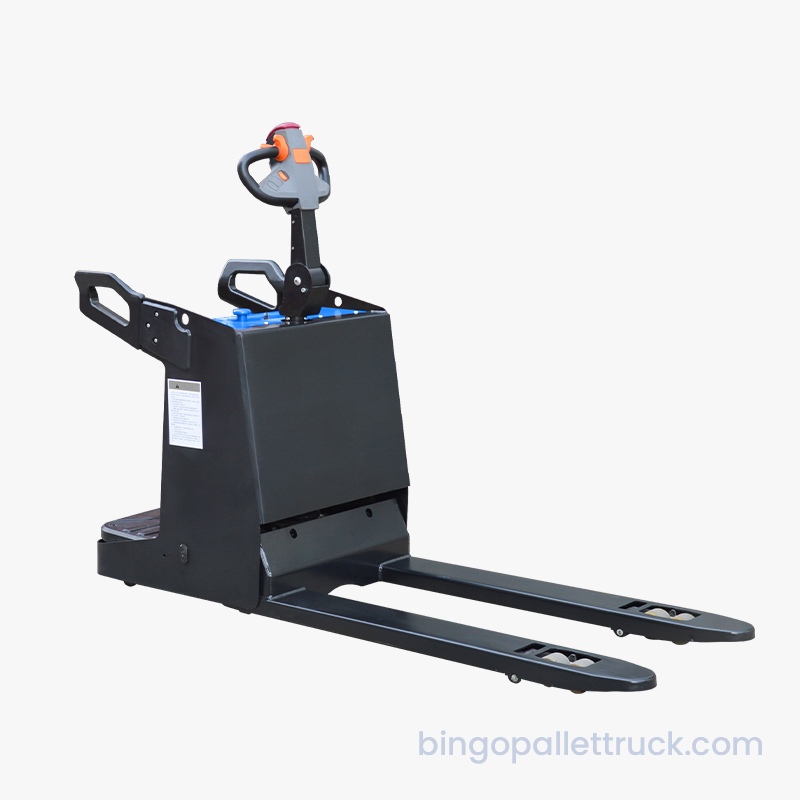 2000 kg Industrial Stand-on Pallet Truck with Electric SteeringFor longer transport routes, this stand-on truck reduces operator fatigue with a riding platform, electronic steering, and shock-absorbing pedals. It fits the article's comparison as a speed and comfort option.View Product →
 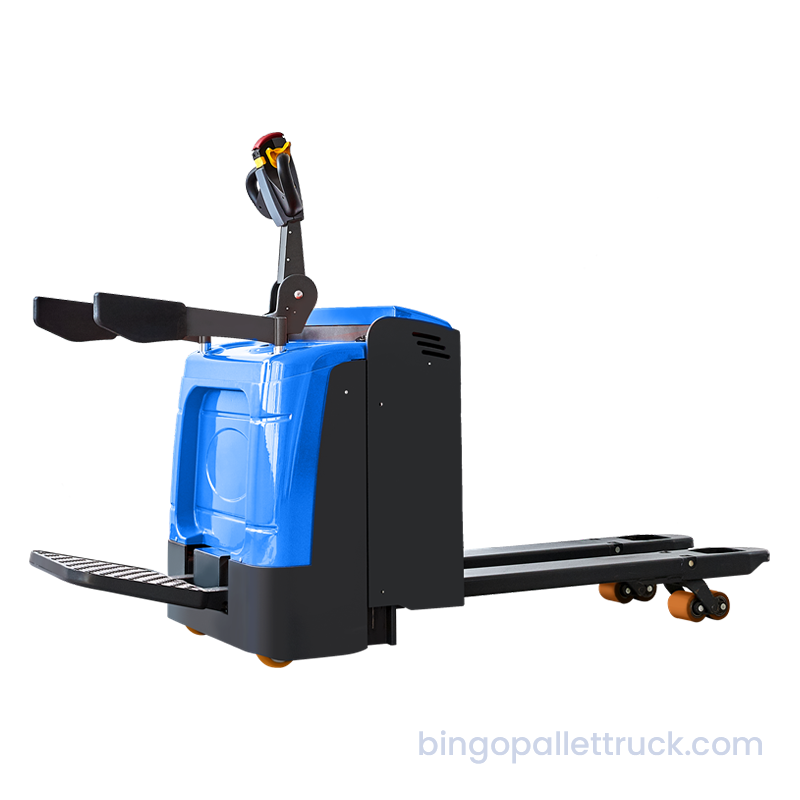 3000 kg Heavy Duty Stand-on Pallet Truck with Reinforced BodyBuilt for heavier loads, this stand-on model offers a low center of gravity, reinforced tie-rod structure, and anti-collision arms. It extends capacity for high-intensity operations compared with the 2000 kg variants.View Product →
The radar chart compares walkie and stand-on electric pallet trucks across six evaluation criteria, with the outer ring showing the best possible score. The blue polygon of the walkie model extends farthest on maneuverability, aisle efficiency, and cost efficiency. The orange polygon of the stand-on model covers a larger area on travel speed, operator comfort, and load capacity. Neither polygon fully contains the other, which means the right choice depends on the layout and the task mix, not on a universal winner. Operations with many short moves and frequent stops get more value from a walkie truck, because the operator can step off quickly at each station. Operations moving pallets over longer distances get more value from a stand-on truck, because the riding position removes walking time from every cycle. If the warehouse does both, splitting the fleet between the two configurations is usually more sensible than standardizing on a single model.
What an Electric Pallet Truck Really Costs
The purchase price is the first number a buyer sees, but the five-year cost is what decides the investment. Operating costs include charging electricity, battery replacement, drive wheel wear, hydraulic oil, and repairs. The largest item by far is the operator's wage, because a slower machine does not reduce the hourly pay rate; it only reduces the number of pallets moved per hour. A faster electric truck lowers the cost per move even when its purchase price is several times that of a manual jack.
The line chart shows the cumulative five-year cost of operating one manual pallet jack versus one walkie electric pallet truck in the same shipping activity. The two lines start at different heights because the electric truck carries a higher initial purchase price, roughly three times the price of a manual jack. The manual jack line climbs faster, since it relies on more operator hours to achieve the same throughput and therefore accumulates more labor cost per pallet. The lines cross during the first year of operation, which is the payback point for the higher electric truck investment. After that crossing, the electric truck becomes progressively cheaper on a total cost basis. Over five years the electric truck saves about 41,000 dollars in this scenario, and the gap widens further in operations with longer shifts. Exact figures change with wage rates and electricity prices, but the crossing pattern stays consistent across most warehouse settings.
The horizontal bars summarize the five-year total cost of ownership for three equipment options in the same workload scenario. The manual pallet jack carries the highest total cost because it needs more operator time per pallet and slows the whole loading process. The walkie electric pallet truck reduces the five-year total by roughly 41,000 dollars compared with the manual unit. The stand-on electric pallet truck is slightly cheaper again in this scenario, because it completes longer transport runs faster and trims labor hours further. The gap between the two electric options is small, while the gap between either electric option and the manual jack is large. Buyers should therefore prioritize moving from manual to electric first, then choose between walkie and stand-on according to the actual travel distances.
Battery, Charging, and Maintenance
Two battery types are common on electric pallet trucks. Lead-acid batteries have a lower purchase price, tolerate warmer environments, and deliver roughly 1,200 to 1,500 charge cycles when maintained correctly. Lithium batteries cost more initially, charge in about a third of the time, hold capacity better in cold storage, and often exceed 2,000 cycles. Charging strategy matters as much as the battery chemistry: opportunity charging during breaks works well with lithium, but repeated topping up shortens lead-acid life. Daily checks are simple: keep the charging contacts clean, check the hydraulic fluid level monthly, inspect the load wheels and drive tire for flat spots, and lift the forks a few times to confirm smooth operation. This small discipline prevents most breakdowns and keeps the truck out of the service bay.
Checklist Before You Order
- Pallet dimensions and fork length: the forks must fully support the pallet stringers without overhang.
- Capacity margin: a 2,000 kg truck serves most standard loads, but consistent 3,000 kg unit loads need the higher-rated model.
- Aisle width and turning circle: compare the truck turning radius with the narrowest rack aisle in the building.
- Shift length and charging window: match battery capacity to the working hours between charge opportunities.
- Floor condition: smooth concrete suits polyurethane wheels, while rough asphalt may need rubber or nylon wheels.
- Operator training: even a simple walkie unit requires controlled steering and load-balance practice.
- Spare parts and service response: confirm the availability of wheels, batteries, and controllers in your region.
The Bottom Line
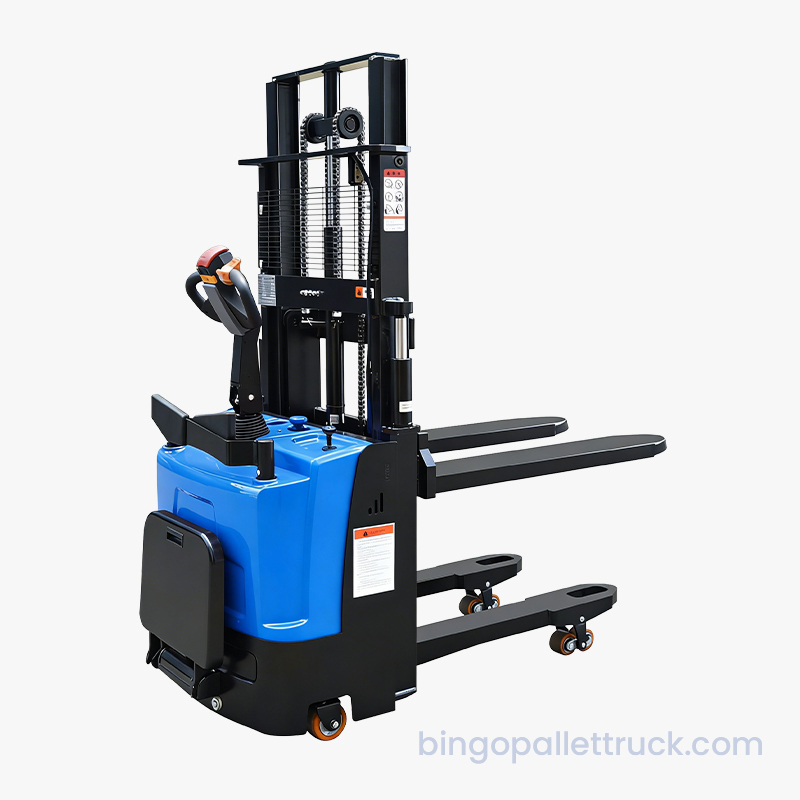
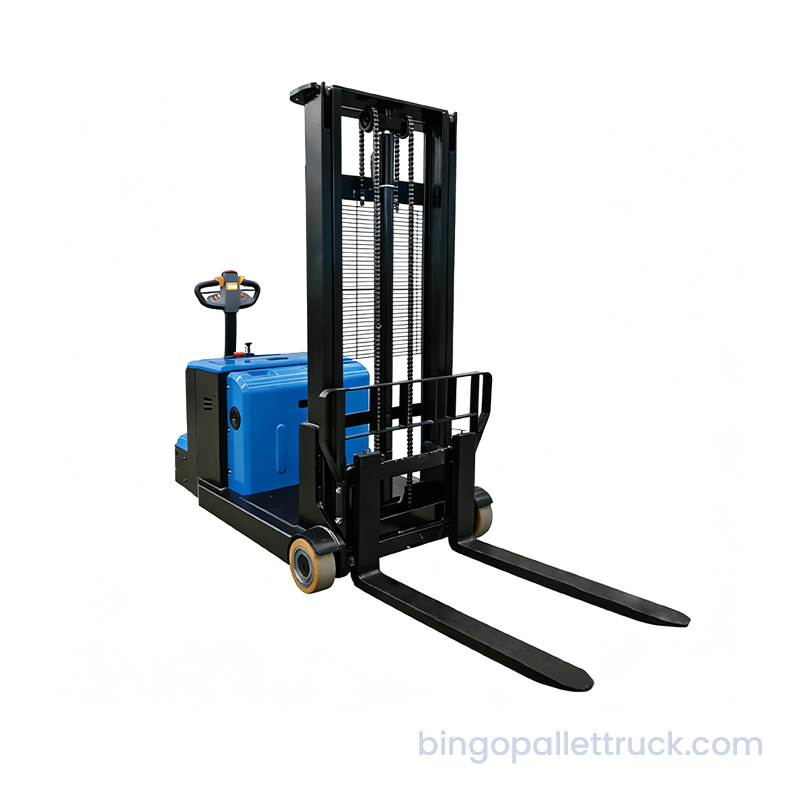
An electric pallet truck pays for itself through higher operator output, stable cycle times, and a lower cost per moved pallet. Choose the configuration first: walkie for tight spaces and short moves, stand-on for longer transport routes and heavier loads. Then validate capacity, fork length, battery type, and turning radius against the real warehouse layout. The standard product range covers 2,000 kg walkie units and 2,000 to 3,000 kg stand-on models, all on 24 V systems with fork lengths sized for common pallet standards. If the operation is a mix of short and long moves, splitting the fleet between the two configurations is often more effective than buying one type for everything. Talk to our team about your pallet dimensions, aisle widths, and shift pattern before you choose a model.

Copyright @ Yancheng Bingo Machinery Equipment Co., Ltd. All rights reserved Warehouse Logistics Equipment Manufacturer Pallet Truck Supplier
