 en
en  Español




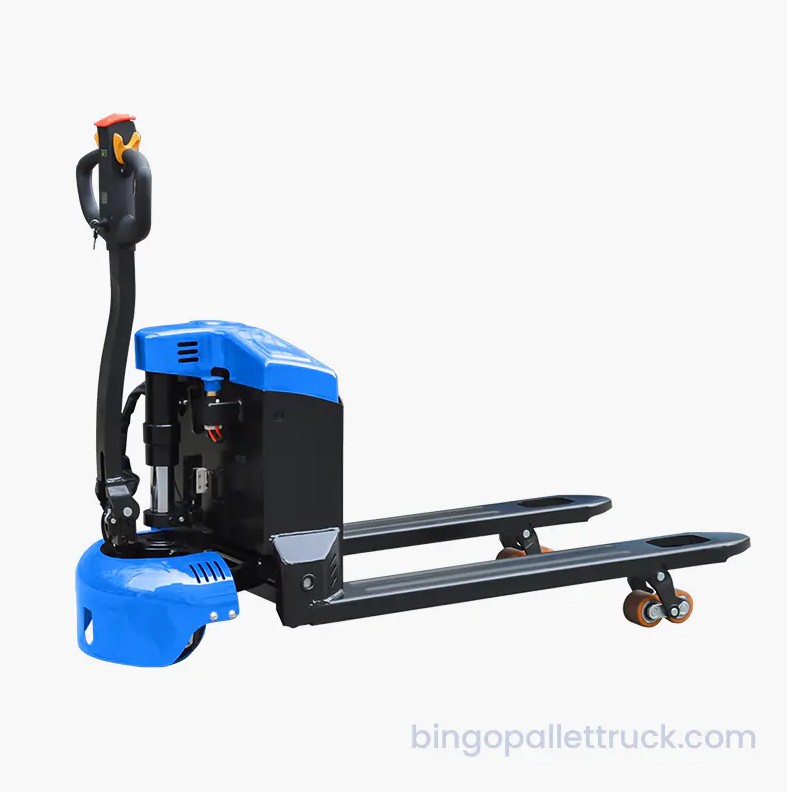
What is an electric pallet truck?
Content
- 1 What is an electric pallet truck?
- 1.1 Core Definition: How an Electric Pallet Truck Works
- 1.2 Key Structural Components of an Electric Pallet Truck
- 1.3 Types of Electric Pallet Trucks
- 1.4 Standard Operating Parameters and Specifications
- 1.5 Battery Technology: Lead-Acid vs. Lithium-Ion
- 1.6 Where Electric Pallet Trucks Are Used: Key Applications
- 1.7 Electric Pallet Truck vs. Manual Pallet Jack: Key Differences
- 1.8 Safety Systems on Modern Electric Pallet Trucks
- 1.9 Summary: The Electric Pallet Truck in Context
- 2 What are the advantages of electric pallet trucks?
- 2.1 Advantage 1: Dramatically Higher Operator Productivity
- 2.2 Advantage 2: Substantially Reduced Operator Injury Risk
- 2.3 Advantage 3: Greater Load Capacity and Handling Precision
- 2.4 Advantage 4: Zero Direct Emissions — Critical for Indoor Air Quality
- 2.5 Advantage 5: Lower Total Operating and Maintenance Costs
- 2.6 Advantage 6: Lithium-Ion Technology Adds Operational Flexibility
- 2.7 Advantage 7: Versatility Across Industries and Environments
- 2.8 Advantages Summary: Electric Pallet Truck vs. Manual Pallet Jack
- 2.9 When to Choose Electric Pallet Trucks: Decision Guide
- 2.10 Conclusion: An Investment That Pays Back Across Multiple Dimensions
- 3 How Long Does an Electric Pallet Truck Last? The Direct Answer
- 4 Can Electric Pallet Trucks Be Used Outdoors? The Direct Answer
- 4.1 Why Standard Indoor Models Struggle Outdoors
- 4.2 What Makes an Electric Pallet Truck Suitable for Outdoor Use
- 4.3 Common Outdoor Use Scenarios and Their Requirements
- 4.4 Indoor vs. Outdoor Electric Pallet Truck: Key Specification Comparison
- 4.5 Safety Considerations for Outdoor Electric Pallet Truck Operation
- 4.6 Maintenance Requirements for Outdoor Operation
- 4.7 Alternatives to Electric Pallet Trucks for Demanding Outdoor Environments
- 4.8 Summary: Choosing the Right Electric Pallet Truck for Outdoor Use
What is an electric pallet truck?
An electric pallet truck — also called a powered pallet jack, electric pallet mover, or electric pump truck — is a battery-powered material handling vehicle designed to lift palletized loads clear of the floor and transport them horizontally across flat surfaces. It uses an electric motor to drive both the hydraulic lifting system and the travel function, eliminating the manual pumping and physical pushing required by traditional hand pallet jacks. Electric pallet trucks are the standard ground-level load movement tool in warehouses, distribution centers, manufacturing facilities, cold stores, food production plants, and retail backrooms worldwide. They typically handle loads of 1,500 to 3,000 kg, travel at speeds of 5 to 12 km/h, and can operate for a full 8-hour shift on a single battery charge. Understanding what an electric pallet truck is — its construction, types, working principles, and operating parameters — is essential for any operation making equipment selection or procurement decisions.
Core Definition: How an Electric Pallet Truck Works
The operating principle of an electric pallet truck is straightforward: the two steel forks slide under the deck boards of a standard pallet, an electrically driven hydraulic pump raises the forks — and the pallet — clear of the ground, and a traction motor drives the vehicle to the destination, where the forks are lowered and the pallet is released. All three functions (lift, travel, and lower) are controlled by the operator through a tiller arm on walk-behind models, or from a standing platform or seated cab on ride-on models.
The Lifting Cycle
When the operator activates the lift function, an electric motor drives a hydraulic pump that forces fluid into cylinders beneath the fork assembly. The forks rise — typically 85 to 200 mm above floor level — lifting the pallet with them. This height is sufficient to clear floor surface irregularities and allow smooth transport, but is not intended for elevated storage in racking (which requires a stacker or forklift). Lowering is controlled by a proportional valve that releases hydraulic fluid back into the reservoir at a controlled rate, allowing precise positioning of the load at the destination.
The Travel System
A DC or AC electric traction motor drives the powered drive wheel — typically a single large-diameter polyurethane or rubber wheel mounted under the tiller arm head on walk-behind models. The operator steers by rotating the tiller arm left or right, which turns the drive wheel and changes the truck's direction. Speed is controlled by the degree of tiller pressure or by a thumb-operated speed butterfly on the tiller handle. Modern electric pallet trucks use electronic motor controllers that provide smooth, proportional speed response and regenerative braking — converting kinetic energy back into battery charge when the truck decelerates.
Key Structural Components of an Electric Pallet Truck
An electric pallet truck consists of several interdependent mechanical, electrical, and hydraulic systems. Understanding each component helps operators use the equipment correctly and maintenance staff identify and address problems promptly.
- Forks: Two parallel steel tines, typically 1,150 mm long and 150–185 mm wide in standard configuration, designed to fit within the entry openings of EUR/EPAL and GMA pallets. Forks can be produced in extended lengths (1,200–2,400 mm) for long-load applications or in wider profiles for custom pallet systems.
- Load wheels: Small tandem wheels mounted at the tips of each fork. When the forks are lowered, load wheels roll on the floor and bear a portion of the pallet's weight. When the forks are raised, load wheels retract upward, allowing the full load weight to rest on the fork structure.
- Hydraulic system: Comprising an electric pump motor, hydraulic pump, cylinder(s), control valve, and reservoir. The pump builds hydraulic pressure to raise the forks; the control valve meters fluid release to lower them. Total hydraulic fluid volume in a standard walk-behind electric pallet truck is typically 1.5 to 3 liters.
- Drive motor and controller: The traction motor — typically rated at 0.5 to 1.5 kW for walk-behind models and up to 3 to 5 kW for ride-on models — drives the truck under load and during travel. The electronic controller modulates power delivery for smooth acceleration, speed control, and regenerative braking.
- Battery system: Typically a 24V or 48V lead-acid or lithium-ion battery pack, housed in the truck's main body under the operator handle area. Battery capacity is rated in ampere-hours (Ah): walk-behind models commonly use 100 to 200 Ah batteries; ride-on models may use 200 to 500 Ah packs for extended shift coverage.
- Tiller arm: The articulated steering and control handle through which the walk-behind operator controls all truck functions. The tiller arm typically includes a thumb-operated direction and speed control (butterfly or lever), lift and lower buttons, a horn button, and an emergency stop. The tiller folds down flat for compact storage.
- Drive wheel and castors: The single driven wheel provides traction and steering; two or more small load-bearing castor wheels at the rear of the fork assembly provide stability under load. Drive wheel diameter is typically 230 to 280 mm on walk-behind models.
- Braking system: An electromagnetic disc brake, spring-applied and electrically released, engages automatically when power is removed — holding the truck stationary on grades and providing a controlled stop when the operator releases the tiller or the battery is disconnected.
Types of Electric Pallet Trucks
Electric pallet trucks are manufactured in several configurations, each optimized for a different combination of load weight, travel distance, aisle width, and operator preference. Selecting the right type is as important as selecting the right capacity.
| Type | Operator Position | Capacity Range | Max Speed | Ideal Application |
|---|---|---|---|---|
| Walk-behind (pedestrian) | Walking beside or behind | 1,500–2,000 kg | 6 km/h | Short hauls, confined spaces, retail, receiving docks |
| Ride-on (stand-on platform) | Standing on rear platform | 2,000–2,500 kg | 12 km/h | Large warehouses, long-distance pallet transport |
| Seated ride-on | Seated in cab | 2,500–3,500 kg | 15 km/h | Heavy loads, cold stores, very long travel distances |
| Double pallet (tandem) | Walk-behind or ride-on | Up to 4,000 kg (2 pallets) | 7 km/h | High-volume picking, double-deep truck loading |
| Scale-integrated | Walk-behind | 1,500–2,000 kg | 6 km/h | Shipping/receiving with in-line pallet weighing |
| AGV (automated) | No operator (autonomous) | 1,000–2,000 kg | 2–3 m/s | Automated warehouses, fixed-route repetitive transfers |
Standard Operating Parameters and Specifications
Electric pallet trucks are designed around internationally standardized pallet dimensions. The most common reference pallets are the EUR/EPAL pallet (1,200 × 800 mm) and the North American GMA pallet (1,219 × 1,016 mm). Fork lengths and widths are sized to enter all four-way entry points of these standard pallets without modification.
Typical Performance Specifications
- Rated load capacity: 1,500 to 2,500 kg (walk-behind); up to 3,500 kg (heavy-duty ride-on)
- Fork lift height: 85 to 200 mm above floor level
- Travel speed (loaded): 4 to 7 km/h (walk-behind); 8 to 12 km/h (ride-on)
- Travel speed (unloaded): 5 to 9 km/h (walk-behind); 10 to 15 km/h (ride-on)
- Fork length: Standard 1,150 mm; extended options up to 2,400 mm
- Minimum aisle width required: Approximately 1,800 to 2,200 mm for standard-size walk-behind models
- Battery voltage: 24V (most walk-behind); 48V (many ride-on and heavy-duty models)
- Battery capacity: 100 to 200 Ah (walk-behind); 200 to 500 Ah (ride-on)
- Operating time per charge: 6 to 10 hours (lead-acid); comparable or longer with lithium-ion opportunity charging
- Gradeability (loaded): Typically 8 to 15% maximum gradient depending on model and load
Battery Technology: Lead-Acid vs. Lithium-Ion
The battery system is the heart of an electric pallet truck, and the choice between traditional lead-acid and modern lithium-ion technology has significant operational implications. Both technologies are in widespread use, and each has distinct characteristics that make it more or less suitable for specific operational patterns.
Lead-Acid Battery Systems
Lead-acid batteries have powered electric pallet trucks for decades and remain the most widely deployed battery technology in the global installed base of these vehicles. They are well understood, supported by a broad maintenance and replacement supply chain, and have a lower upfront cost than lithium-ion alternatives. However, lead-acid batteries must be fully discharged before recharging, require 8 to 10 hours for a full recharge, need regular watering to maintain electrolyte levels, and deliver declining voltage output as they discharge — causing the truck to become progressively slower and less powerful as the shift progresses. For single-shift operations with overnight charging time available, lead-acid remains a practical and cost-effective choice.
Lithium-Ion Battery Systems
Lithium-ion batteries have become the preferred technology for high-utilization operations and multi-shift environments. Key advantages over lead-acid include the ability to opportunity-charge at any state of charge without accelerating degradation — a 30-minute charge can restore 40% to 60% of capacity, enabling continuous multi-shift operation with a single battery pack and no battery swapping infrastructure. Lithium-ion batteries also maintain near-constant voltage throughout 80% to 90% of their discharge cycle, delivering full performance from the start to the near-end of the shift. Their service life of 2,000 to 3,000 charge cycles is approximately double that of lead-acid equivalents. While the upfront cost is higher, the total cost of ownership over the battery's service life is often lower when shift productivity, maintenance savings, and infrastructure costs are factored in.
Where Electric Pallet Trucks Are Used: Key Applications
Electric pallet trucks are deployed across an exceptionally wide range of industries and operational contexts. Their versatility comes from the combination of substantial load capacity, compact dimensions, low floor clearance requirements, zero emissions, and quiet operation.
- Warehousing and distribution: Moving incoming goods from receiving docks to storage staging areas; transferring pallets between storage zones; loading outbound shipments. Ride-on models cover the long travel distances of large distribution centers efficiently.
- E-commerce fulfillment centers: Transporting totes, boxes, and palletized stock between receiving, storage, picking, packing, and dispatch areas in high-velocity fulfillment operations.
- Retail and supermarket logistics: Compact walk-behind models navigate retail back-of-house areas and loading bays to receive supplier deliveries and replenish shop floor areas.
- Food production and cold chain: Zero-emission electric operation is essential in food production areas and refrigerated cold stores. Cold-store-specification models with heated battery compartments and moisture-resistant electronics operate reliably at temperatures as low as -30°C.
- Pharmaceutical and medical device logistics: Clean, emission-free operation in GMP-controlled environments where air quality standards prohibit combustion equipment.
- Manufacturing floor logistics: Inter-station component transport on production lines where quiet operation and absence of exhaust are essential for worker health and process cleanliness.
- Loading dock operations: Loading and unloading trucks, trailers, and containers at shipping and receiving docks, where the truck must maneuver in the confined space of the vehicle body and negotiate the ramp or dock leveler grade change.
Electric Pallet Truck vs. Manual Pallet Jack: Key Differences
The distinction between an electric pallet truck and a manual hand pallet jack is fundamental and determines the appropriate choice for a given application. The table below summarizes the key operational differences.
| Feature | Manual Pallet Jack | Electric Pallet Truck |
|---|---|---|
| Lifting mechanism | Hand-pumped hydraulic (8–12 pump strokes) | Electric hydraulic pump (2–4 seconds) |
| Travel method | Operator push/pull | Electric traction motor |
| Travel speed (loaded) | 3–4 km/h | 5–12 km/h |
| Operator physical effort | High (push, pump, steer) | Minimal (steering only) |
| Practical load limit (ergonomic) | ~800–1,200 kg | 1,500–3,000 kg (full rated capacity) |
| Purchase cost | $200–$800 | $3,000–$12,000+ |
| Running cost per shift | Zero (no energy cost) | $0.50–$2.00 (electricity) |
| Injury risk | High (back, shoulder, wrist strain) | Low (no propulsion effort required) |
| Shift productivity | Declines with operator fatigue | Consistent throughout shift |
| Maintenance requirements | Very low (occasional hydraulic service) | Moderate (battery, motor, hydraulic, wheels) |
Safety Systems on Modern Electric Pallet Trucks
Modern electric pallet trucks incorporate a comprehensive set of safety systems designed to protect the operator, surrounding pedestrians, and the load in busy warehouse environments. These features represent a significant safety advantage over manual pallet jacks, which have no equivalent safety mechanisms.
- Electromagnetic parking brake: Spring-applied disc brake that engages automatically when the operator releases the tiller or when the truck is powered off, preventing unintended movement on slopes or in busy areas
- Tiller-position automatic braking: The truck automatically decelerates and stops when the tiller arm is raised to the upright (operator release) position, preventing runaways if the operator lets go
- Electronic speed limiting: Maximum travel speed is electronically governed and automatically reduces in tight steering situations, on grades, or when the lift height sensor detects an elevated load
- Overload protection: Electronic or hydraulic pressure-relief systems prevent the lifting function from raising loads that exceed the rated capacity, protecting the hydraulic system and preventing tip-over from overloading
- Operator presence / belly button switch: A soft cushion switch on the front of the tiller head detects collision between the truck and the operator, triggering an emergency stop to prevent crush injuries
- Blue safety spotlights: Forward-projecting blue LED lights cast a visible warning spot on the floor ahead of the truck's travel path, alerting pedestrians at intersections and around racking ends before the truck arrives
- Audible reverse alarm: An automatic audible warning activates when the truck travels in reverse, alerting nearby personnel to the truck's backward movement
Summary: The Electric Pallet Truck in Context
An electric pallet truck is a precision-engineered, battery-powered industrial vehicle that handles one of the most fundamental tasks in logistics: moving palletized loads from one ground-level position to another safely, efficiently, and repeatedly throughout a working shift. It combines electric traction drive, electric hydraulic lifting, and sophisticated electronic controls into a compact, maneuverable package that handles loads of 1,500 to 3,000+ kg at speeds of 5 to 12 km/h — while requiring minimal operator physical effort. Available in walk-behind and ride-on configurations, powered by lead-acid or lithium-ion batteries, and deployable in environments from ambient warehouses to -30°C cold stores, the electric pallet truck is the most widely used powered industrial vehicle in the world for good reason: it performs its defined task better than any alternative at a cost and size point that makes it accessible to operations of virtually every scale and industry type.
What are the advantages of electric pallet trucks?
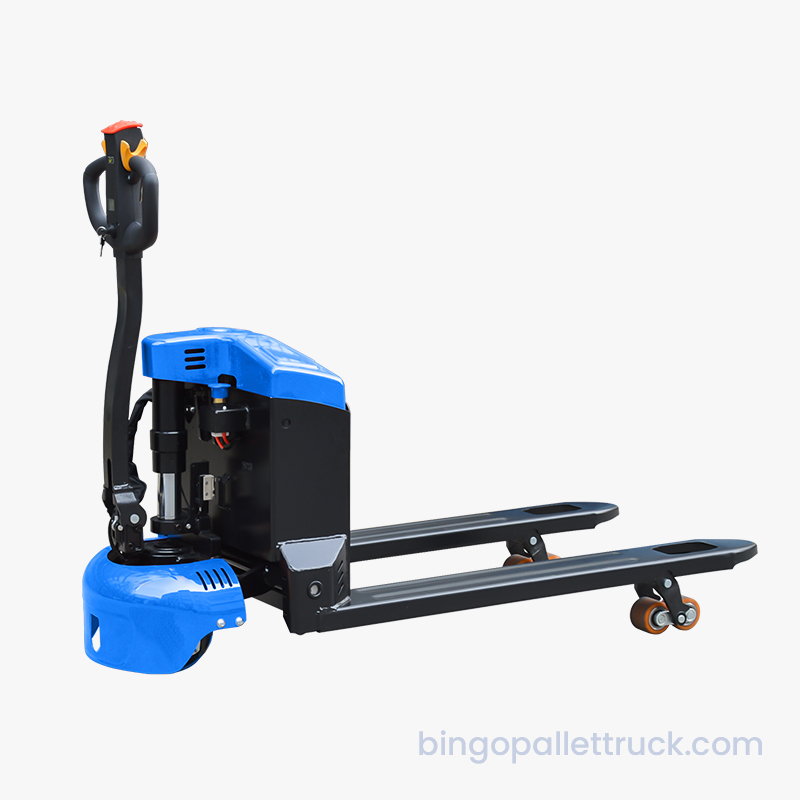
The advantages of electric pallet trucks over manual pallet jacks and other material handling alternatives are substantial, measurable, and well-documented across global logistics and warehousing operations. The seven core advantages are: dramatically higher productivity, significant reduction in operator musculoskeletal injury risk, greater safe load handling capacity, zero direct emissions for clean indoor environments, lower total operating and maintenance cost, operational flexibility from modern lithium-ion battery technology, and broad versatility across industries and temperature environments. Together, these advantages explain why electric pallet trucks have displaced manual hand pallet jacks as the standard pallet transport tool in virtually every professional warehousing and logistics operation globally — and why operations that have not yet made this transition consistently find it to be among the highest-return equipment investments available in materials handling.
Advantage 1: Dramatically Higher Operator Productivity
Productivity — measured as pallets moved per operator hour — is the most immediately quantifiable advantage of electric over manual pallet handling. The productivity gains operate through three compounding mechanisms: higher travel speed, faster lift cycles, and sustained performance throughout the full shift.
Higher Travel Speed
A manual pallet jack operator pushing a loaded pallet moves at a typical pace of 3 to 4 km/h, constrained by the physical effort required and accumulating fatigue. A walk-behind electric pallet truck travels at 5 to 7 km/h under load without any propulsion effort from the operator — approximately 75% faster than manual pace. A ride-on electric model traveling at 10 to 12 km/h moves loads three times faster than a manual operator. In a warehouse where each pallet move involves a round trip of 50 to 100 meters, this speed difference translates directly into a significantly higher number of load movements completed per hour. Over a full 8-hour shift, the cumulative productivity gain is enormous.
Faster Lift and Lower Cycles
Raising a loaded manual pallet jack requires 8 to 12 hand-pump strokes before the forks reach sufficient height for transport — a process taking 10 to 20 seconds per lift cycle. An electric pallet truck raises the forks at the press of a button in 2 to 4 seconds. For an operator performing 60 pallet lifts per shift, this saves approximately 12 to 15 minutes of non-productive time per shift from lifting alone — plus equivalent time savings on the lowering cycle. The cumulative time saving across all lift and lower operations is a meaningful productivity contribution on top of the travel speed advantage.
Consistent Output Throughout the Shift
Manual pallet jack operators typically show measurable productivity decline in the second half of shifts, and more pronounced decline during extended or double shifts, as physical fatigue accumulates. Electric pallet truck operators maintain consistent output from start to end of shift because the truck, not the operator, provides all propulsion and lift effort. Operational studies of warehouse transitions from manual to electric pallet handling consistently demonstrate 30% to 100% improvement in pallets moved per operator hour, with the variation depending on travel distances, load frequency, and floor conditions.
Advantage 2: Substantially Reduced Operator Injury Risk
Manual pallet handling is among the highest-risk physical work activities in warehousing and logistics. The repetitive pushing, pulling, and pumping motions of manual pallet jack operation create sustained mechanical loading on the operator's lower back, shoulders, wrists, knees, and ankles — loading that accumulates across hundreds of daily cycles into significant musculoskeletal injury risk. Electric pallet trucks eliminate the physical root cause of these injuries.
Elimination of Propulsion and Lifting Forces
Moving a 1,000 kg loaded pallet on a manual jack across a flat concrete floor requires an initial starting force of approximately 100 to 200 N and a sustained travel force of 50 to 100 N. On an incline, ramp, or rough surface, these forces multiply substantially. Over 60 loaded pallet moves in an 8-hour shift, the cumulative physical work involved is extraordinary. An electric pallet truck operator applies essentially none of this force — the traction motor provides all propulsion, and the electric pump provides all lift force. The operator's physical role is limited to light steering inputs.
Lower Back Injury Prevention
Lower back disorders are the leading occupational musculoskeletal injury in logistics and warehousing worldwide. The International Labour Organization estimates that musculoskeletal disorders account for more than 30% of all occupational diseases globally. Operations that have transitioned from manual to electric pallet truck operation report reductions in musculoskeletal injury rates of 40% to 70% — a figure that reflects the near-complete elimination of the sustained pushing forces and awkward lumbar loading postures that are the primary biomechanical drivers of occupational back injury in pallet handling tasks.
Significant Indirect Cost Savings from Injury Prevention
The financial cost of a single workplace back injury — including medical treatment, lost productivity, temporary replacement labor, workers' compensation premiums, and potential litigation — commonly reaches $20,000 to $50,000 per incident in developed markets. For operations with multiple manual pallet jack operators performing high-frequency pallet moves, injury prevention represents one of the most financially significant advantages of transitioning to electric pallet trucks, often exceeding the direct savings from fuel, energy, and maintenance in total cost-of-ownership calculations.
Advantage 3: Greater Load Capacity and Handling Precision
Electric pallet trucks can safely and efficiently handle loads that exceed the practical ergonomic limits of manual pallet jack operation, and they do so with greater precision and control.
Full Rated Capacity Practically Achievable
Manual pallet jacks are rated for up to 2,500 kg, but moving a pallet at or near this weight requires physical pushing force far beyond the safe ergonomic capacity of most operators — particularly on any surface other than perfectly smooth, level concrete. In practice, manual operators rarely safely move loads above 800 to 1,200 kg on a regular basis without significant physical strain and injury risk. Electric pallet trucks rated at 2,000 to 2,500 kg move these loads under motor power with no increase in operator physical effort whatsoever — making the full rated capacity genuinely and safely usable throughout the shift.
Precise Speed and Positioning Control
Electronic proportional speed control allows the operator to approach dock edges, racking bays, and other vehicles at exactly the desired speed — from full travel speed to a precise crawl — with smooth, predictable deceleration. Regenerative braking provides controlled, progressive stopping without the abruptness of mechanical braking. This precision is impossible with manual pallet jacks, where stopping a heavy loaded pallet requires the operator to physically restrain the momentum of the load. The ability to place loads precisely and to stop exactly where needed reduces product damage from load collisions and improves the safety of dock-edge and vehicle-loading operations.
Ramp and Incline Capability
Moving a loaded pallet up a ramp manually is among the highest-risk activities in warehouse operations, requiring maximum physical effort and creating extreme lumbar loading. Electric pallet trucks — particularly ride-on models with dual drive wheels — can ascend grades of up to 15% with rated loads under motor power, eliminating the need for manual ramp handling entirely. This capability is essential for container loading, dock ramp navigation, and multi-level facility access.
Advantage 4: Zero Direct Emissions — Critical for Indoor Air Quality
Electric pallet trucks produce no exhaust gases at the point of operation. This zero-emission characteristic is not merely an environmental benefit — it is a direct operational, regulatory, and health requirement for many of the environments where pallet handling takes place.
Safe Operation in Enclosed Facilities
LPG-powered and diesel-powered equipment used in enclosed warehouses generates carbon monoxide (CO), nitrogen oxides (NOx), and respirable particulate matter that can reach hazardous concentrations without adequate ventilation. Electric pallet trucks produce zero exhaust gases at the point of use, making them inherently safe in fully enclosed facilities without special ventilation requirements. This advantage eliminates the ventilation infrastructure costs (powered ventilation systems, additional roof openings) that combustion-powered equipment requires in enclosed buildings.
Mandatory in Food, Pharma, and Clean Environments
In food production, food storage, pharmaceutical manufacturing, and medical device distribution environments, the absence of combustion byproducts is a regulatory requirement rather than merely a preference. Hydrocarbon vapors and combustion particulates from LPG or diesel equipment can contaminate open food products, pharmaceutical packaging, and sterile surfaces. Electric pallet trucks are the only viable powered pallet handling solution in these regulated environments, and their zero-emission operation directly supports compliance with HACCP, BRC, ISO 22000, GMP, and equivalent food and pharmaceutical safety frameworks.
Significantly Lower Noise Levels
Electric pallet trucks operate at 65 to 72 dB(A) — similar to a normal conversation — compared to the 80 to 95 dB(A) generated by LPG and diesel forklifts. This noise reduction has direct occupational health benefits: operators of combustion-engine equipment face increased risk of noise-induced hearing loss during prolonged operation; electric pallet truck operators do not. The lower ambient noise level in electrically equipped facilities also enables effective verbal communication between warehouse workers without shouting — improving both safety and operational efficiency.
Advantage 5: Lower Total Operating and Maintenance Costs
Despite a higher initial purchase price than manual pallet jacks, electric pallet trucks deliver a lower total cost of ownership when all operating, maintenance, and indirect costs are factored into the analysis across the equipment's service life.
Low Energy Cost Per Unit of Work
Electric motors convert 85% to 95% of input electrical energy into mechanical work. The energy cost of operating a walk-behind electric pallet truck for a full 8-hour shift is typically $0.50 to $2.00 in electricity charges at standard industrial rates — a negligible operating cost compared to LPG or diesel fuel costs for powered alternatives performing equivalent work. Even accounting for the amortized cost of battery replacement, the energy cost advantage of electric pallet trucks over combustion alternatives is substantial over a multi-year operating period.
Fewer Maintenance-Intensive Systems
Electric pallet trucks have significantly fewer moving parts and maintenance-intensive systems than any combustion-powered alternative. There is no engine oil to change, no air filter, no spark plugs, no fuel system, no exhaust system, no cooling system beyond basic motor thermal management, and no transmission to service. Routine maintenance is limited to battery care, hydraulic fluid monitoring, wheel and bearing inspection, and brake system checks. Annual maintenance costs for electric pallet trucks are typically 30% to 50% lower than for LPG counterbalance forklifts performing equivalent work, and significantly lower than manual pallet jacks would incur if they were expected to match the productivity output of electric models (which would require more units and more labor).
Advantage 6: Lithium-Ion Technology Adds Operational Flexibility
The increasing adoption of lithium-ion battery technology in electric pallet trucks has added a new layer of operational advantage that further differentiates electric pallet trucks from both manual alternatives and older lead-acid-powered electric models.
Opportunity Charging Enables Multi-Shift Operation
Traditional lead-acid batteries require a full charge cycle of 8 to 10 hours after deep discharge before the truck can be returned to service — a constraint that limits each battery to one shift per day and requires either battery changing infrastructure or careful shift scheduling. Lithium-ion batteries can be opportunity-charged at any state of charge without the "memory effect" or degradation risk that makes partial charging harmful to lead-acid batteries. A 30-minute opportunity charge at a break or shift change can restore 40% to 60% of lithium-ion battery capacity, enabling continuous multi-shift coverage with a single battery pack per truck and eliminating the capital cost and space requirements of battery changing rooms and spare battery inventories.
Consistent Power Delivery Throughout the Shift
Lead-acid batteries deliver declining terminal voltage as they discharge. A fully charged lead-acid pallet truck at the start of a shift travels noticeably faster and has more powerful lift capability than the same truck at 30% charge at the end of the shift — creating productivity variation through the day that complicates operational planning. Lithium-ion batteries maintain a near-constant voltage profile across 80% to 90% of their discharge cycle, delivering full rated speed and lift capacity from the first pallet move of the shift to the last, and making productivity output far more predictable and consistent for operations planners.
Extended Battery Service Life
Lead-acid batteries for electric pallet trucks typically provide a service life of 1,000 to 1,500 charge cycles before capacity degradation makes replacement necessary — approximately 3 to 5 years in single-shift operations. Lithium-ion batteries are rated for 2,000 to 3,000 charge cycles or more at equivalent depth of discharge, effectively doubling or tripling the interval between battery replacements. Over the operating life of the truck, this extended battery lifespan substantially reduces the total battery replacement cost — helping offset the higher initial cost of lithium-ion equipped models.
Maintenance-Free Operation
Lead-acid batteries require regular watering (replenishing evaporated electrolyte water) — typically every 5 to 10 charging cycles depending on operating temperature and charge rate. Failure to water lead-acid batteries correctly leads to accelerated sulfation and premature capacity loss. Lithium-ion batteries are completely maintenance-free in this regard — no watering, no equalization charges, no specific discharge protocol. This maintenance simplification reduces the training burden on warehouse staff, eliminates the risk of battery damage from improper maintenance practices, and removes a routine maintenance task from warehouse supervisors' already-demanding workload.
Advantage 7: Versatility Across Industries and Environments
Electric pallet trucks serve a broader range of operational environments than any other pallet handling equipment category, demonstrating a versatility that stems from their combination of compact dimensions, zero emissions, quiet operation, and wide temperature range capability.
Cold Store and Freezer Warehouse Operation
Electric pallet trucks are the only viable powered pallet handling solution for temperature-controlled environments below -10°C. Combustion-powered equipment cannot reliably start or run at these temperatures, and the exhaust gases they produce would contaminate controlled-atmosphere cold stores. Cold-store-specification electric pallet trucks — with heated battery compartments that maintain battery electrolyte above minimum operating temperature, moisture-sealed electronics, cold-temperature hydraulic fluid, and stainless-steel or galvanized frame components — operate reliably in environments down to -30°C, enabling the high-efficiency pallet handling that modern frozen food and pharmaceutical cold chain logistics demands.
Narrow Aisle and Space-Constrained Environments
Walk-behind electric pallet trucks have a very compact turning radius — typically requiring an aisle width of only 1,800 to 2,200 mm to complete a 90-degree turn with a loaded pallet — far less than the 2,800 to 4,000 mm needed by counterbalance forklifts. This compact maneuvering requirement allows electric pallet trucks to operate in retail stockrooms, food production areas, delivery vehicle bodies, and other space-constrained environments where larger powered equipment simply cannot access.
Advantages Summary: Electric Pallet Truck vs. Manual Pallet Jack
| Advantage Area | Manual Pallet Jack | Electric Pallet Truck | Electric Advantage |
|---|---|---|---|
| Travel speed (loaded) | 3–4 km/h | 5–12 km/h | 75–200% faster |
| Pallets moved per shift (typical) | 30–50 | 60–100 | 30–100% more |
| Operator propulsion effort | 50–150 N sustained | Near zero | ~100% reduction |
| Back injury risk | High | Low | 40–70% fewer injuries |
| Practical max load (ergonomic) | 800–1,200 kg | 1,500–3,000 kg | 2–3× higher capacity |
| Exhaust emissions | None | None | Equal (both zero) |
| Noise level | Very low (mechanical only) | Low (65–72 dB(A)) | Both low; electric comparable |
| Ramp / incline handling | Extremely difficult and risky | Up to 15% grade under motor power | Safe ramp operation enabled |
| Cold store operation (below -10°C) | Possible but operator comfort limited | Yes (cold-store spec models to -30°C) | Full powered operation in cold stores |
When to Choose Electric Pallet Trucks: Decision Guide
The advantages of electric pallet trucks are most compelling in specific operational contexts. The following guide summarizes the key factors that favor the transition from manual to electric pallet handling.
- High pallet volume: Operations moving more than 20 to 30 loaded pallets per operator shift will see significant productivity and labor cost advantages from electric pallet trucks, as the speed advantage compounds across every pallet movement.
- Long travel distances: Any operation where average pallet movement distances exceed 20 to 30 meters per trip — typical in warehouses, distribution centers, and large manufacturing facilities — will see major productivity gains from the higher travel speeds of electric models.
- Heavy loads: Operations regularly moving pallets above 1,000 kg should transition to electric models to eliminate the ergonomic injury risk associated with heavy manual pallet handling.
- Ramp or incline navigation: Any facility where pallet movements require crossing ramps, dock levelers, or grade changes should use electric pallet trucks to eliminate the high-risk manual ramp handling task.
- Regulated environments: Food production, pharmaceutical, medical device, and cold chain facilities where air quality, contamination control, or temperature requirements apply should use electric pallet trucks as a regulatory and product safety necessity.
- High workforce turnover or injury history: Operations experiencing elevated rates of musculoskeletal injury complaints, workers' compensation claims, or high turnover from physically demanding manual pallet handling should prioritize the transition to electric pallet trucks as an immediate workforce health and retention intervention.
Conclusion: An Investment That Pays Back Across Multiple Dimensions
The advantages of electric pallet trucks are not marginal improvements over manual alternatives — they are transformative differences in productivity, safety, operational capability, and cost that compound across every shift, every pallet movement, and every year of the equipment's service life. Higher throughput, fewer injuries, heavier loads handled safely, cleaner working environments, lower maintenance demands, multi-shift operational flexibility from lithium-ion technology, and deployment capability across the full spectrum of temperature and regulatory environments together create a value proposition that makes the investment in electric pallet trucks clearly justified for any operation moving significant pallet volumes on a regular basis. For operations still relying on manual pallet jacks for high-volume or heavy-load applications, the transition to electric pallet trucks represents one of the highest-return and most rapidly payback equipment investments available in materials handling today.
How Long Does an Electric Pallet Truck Last? The Direct Answer
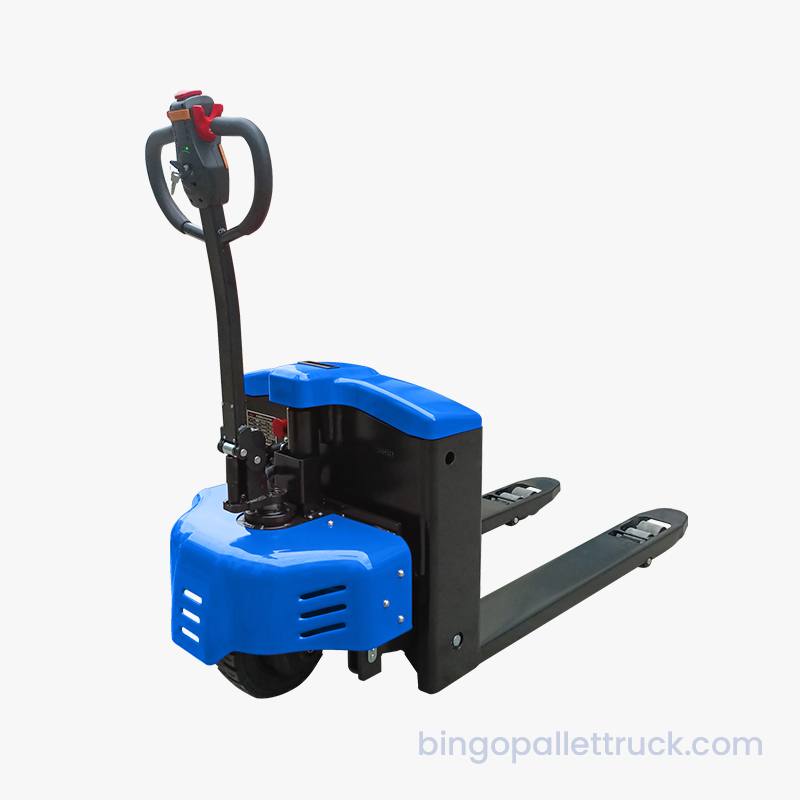
An electric pallet truck typically has a service life of 7 to 10 years under normal warehouse operating conditions, with well-maintained units in light-duty applications frequently lasting 12 to 15 years or more. However, this figure varies significantly based on usage intensity, maintenance quality, battery type, and the operational environment. In high-throughput logistics facilities running two or three shifts per day, the same machine may reach the end of its economically useful life in as few as 5 to 7 years due to accelerated component wear.
The service life of an electric pallet truck is best understood not as a single number but as a function of several interacting factors. The structural frame may outlast the battery system by a decade; the drive motor may outlast the control electronics; and the wheels and bearings may need replacing multiple times before the machine is retired. Understanding which components determine practical lifespan — and how to manage them — is the key to maximizing return on the capital investment an electric pallet truck represents.
Key Factors That Determine Electric Pallet Truck Lifespan
No single factor determines how long an electric pallet truck lasts — lifespan is the outcome of several variables that interact throughout the machine's working life. Understanding each factor helps fleet managers make better decisions about purchasing, maintenance, and replacement.
Usage Intensity and Operating Hours
The most important determinant of lifespan is how many hours per day the machine operates and how demanding those operating conditions are. Industry benchmarks suggest that an electric pallet truck operated for 1,500 to 2,000 hours per year — equivalent to roughly one shift, five days a week — will reach the end of its recommended service life in 7 to 10 years. A machine running two or three shifts per day accumulates 3,000 to 5,000+ hours annually and may require replacement or major overhaul in 4 to 6 years despite good maintenance.
Beyond hours, the nature of the work matters: continuous heavy-load movement on flat concrete floors is far less damaging than frequent ramp traversal, uneven surfaces, impact loading from rough pallet entry, or repeated emergency stops. Machines subjected to demanding duty cycles wear out bearings, drive train components, and structural connections faster than hour counts alone would suggest.
Battery Type and Battery Management
The battery is typically the first major system to require replacement and is often the largest cost item in the machine's maintenance history. Battery lifespan depends critically on the battery chemistry and how well the charging and discharging regimen is managed:
- Lead-acid flooded batteries: The traditional choice; expected service life of 1,000 to 1,500 full charge cycles — approximately 3 to 5 years with single-shift operation. Highly sensitive to overcharging, undercharging, and deep discharge below 20% remaining capacity. Require regular watering and equalization charges. Cost-effective to replace but generate ongoing maintenance work.
- AGM (Absorbed Glass Mat) and VRLA batteries: Sealed, maintenance-free variants of lead-acid chemistry; similar cycle life to flooded batteries but with slightly better energy density and no watering requirement. Service life 3 to 5 years under normal use.
- Lithium-ion (LiFePO4) batteries: Increasingly the preferred choice for new equipment; rated for 2,000 to 3,000 charge cycles — 8 to 12 years at single-shift operation. Tolerant of partial charging (opportunity charging), virtually maintenance-free, faster charging, and more consistent power output throughout the discharge cycle. Higher initial cost but lower total cost of ownership over the machine's life.
The single most damaging thing operators do to lead-acid batteries is regularly discharging them below 50% of capacity before charging. This deeply discharged state sulfates the battery plates, permanently reducing capacity. Implementing a policy of charging whenever the battery reaches 30% to 40% remaining capacity — rather than waiting for a complete discharge — can extend lead-acid battery life by 30 to 50%.
Maintenance Quality and Frequency
The gap between a well-maintained and a poorly maintained electric pallet truck lifespan can easily be 5 years or more. Preventive maintenance addresses wear before it cascades into more serious damage: a worn wheel bearing that is not replaced causes vibration that accelerates damage to the drive motor, chassis welds, and electronic components. A hydraulic seal that is not replaced at the first sign of leakage leads to oil loss that damages the pump and cylinder, turning a $30 seal replacement into a $600 hydraulic system repair.
Recommended preventive maintenance intervals for electric pallet trucks include:
- Daily: Visual inspection of forks, wheels, battery connection, horn, and warning lights; check for fluid leaks; test lift and travel functions before first use
- Monthly: Check hydraulic oil level; inspect battery condition and electrolyte levels (lead-acid); clean battery terminals; check tire/wheel condition and tread wear; inspect brake function
- Every 250 hours or 6 months: Check all electrical connections for corrosion and tightness; inspect brush condition on motor (if brush-type motor); lubricate all pivot points and load wheel bearings; check hydraulic cylinder seals; test safety features
- Annual or every 500 hours: Full drivetrain inspection; brake pad measurement and replacement if below minimum thickness; hydraulic oil change; motor insulation resistance test; full functional test of all electrical systems
Operating Environment
The environment in which the pallet truck operates has a substantial impact on component wear rates and overall lifespan. Electric pallet trucks designed for indoor warehouse use have specific environmental tolerances that, when exceeded, accelerate degradation:
- Cold storage environments (below 0°C): Battery capacity is reduced by 20–40% in cold storage conditions, leading to more frequent deep discharges and shortened battery life. Hydraulic oil viscosity increases, stressing the hydraulic pump during initial operation. Motors and electronics may experience condensation when the machine transitions from cold to ambient temperature areas.
- Dusty or dirty environments: Dust infiltration into motor windings, bearings, and electrical connectors accelerates wear and corrosion. Regular cleaning of ventilation openings and periodic compressed air cleaning of motor compartments is essential in dusty applications.
- Wet or humid environments: Moisture accelerates battery terminal corrosion, electronic component degradation, and motor winding insulation breakdown. Machines in food processing or beverage facilities with frequent washdowns need higher IP-rated components and more frequent electrical insulation testing.
- Rough or uneven floors: Floor surface quality is a major determinant of wheel and bearing wear rate. Cracked concrete, expansion joints, dock plates with lips, and abrasive surfaces increase wheel replacement frequency and chassis fatigue.
Build Quality and Component Grade
Not all electric pallet trucks are built to the same standard. Premium commercial-grade machines use heavier-gauge steel frames, sealed bearings rated for millions of cycles, industrial-grade motor controllers with robust thermal protection, and hydraulic cylinders with high-pressure seals. Entry-level machines may use lighter frames and lower-rated components that are adequate for light-duty use but deteriorate rapidly under sustained commercial operation. When evaluating purchase cost, the total cost of ownership over the projected service life — including maintenance, battery replacement, and parts — almost always favors the higher-quality unit.
Component-by-Component Lifespan Breakdown
The overall lifespan of an electric pallet truck is determined by which of its major components wears out or becomes uneconomical to repair first. Understanding the expected life of each major component helps fleet managers plan maintenance budgets and replacement schedules.
| Component | Expected Service Life | Key Wear Drivers |
|---|---|---|
| Steel frame / chassis | 15–25+ years | Impact damage, fatigue cracking, corrosion |
| Lead-acid battery | 3–5 years (1,000–1,500 cycles) | Deep discharge, overcharge, temperature |
| Lithium-ion battery | 8–12 years (2,000–3,000 cycles) | Deep discharge, high temperature, overcharge |
| Drive motor (brushless) | 10,000–15,000 hours | Overloading, overheating, moisture ingress |
| Drive wheels (polyurethane) | 2,000–5,000 hours (floor-dependent) | Floor abrasion, overloading, chemical exposure |
| Load wheels / rollers | 1,500–4,000 hours | Floor quality, load impacts, contaminants |
| Hydraulic pump and cylinder | 8,000–15,000 hours | Contaminated hydraulic oil, seal wear |
| Motor controller / PCB | 8–15 years | Moisture, heat, vibration, voltage spikes |
| Brake system | 3–7 years (usage-dependent) | Frequency of braking, load weight, ramp use |
How to Extend the Service Life of an Electric Pallet Truck
Several practical measures, consistently applied, can meaningfully extend the productive service life of an electric pallet truck beyond the baseline 7 to 10 year range — in some cases keeping machines in reliable operation for 15 years or more.
- Implement an operator training and accountability program: Operator behavior is the primary driver of abnormal wear and impact damage. Training operators to enter pallets at correct speed, avoid hitting dock bumpers and racking legs, and report damage or unusual behavior immediately prevents the minor incidents that accumulate into major damage.
- Maintain a proper battery charging regimen: For lead-acid batteries, charge after every shift regardless of remaining capacity; never leave a discharged battery overnight without charging; perform monthly equalization charges. For lithium-ion, take advantage of the opportunity charging capability by charging during breaks and lunch periods rather than waiting for a full discharge.
- Never exceed the rated load capacity: Operating consistently at or above the nameplate load capacity strains the drive train, hydraulic system, and frame simultaneously. Even occasional overloading — such as carrying two heavy pallets when the machine is rated for one — causes cumulative structural fatigue that shortens frame life significantly.
- Keep the machine and operating area clean: Oil, dust, and chemical spills that contaminate wheels, bearings, and electrical connections accelerate wear. A clean machine is not just a regulatory requirement — it is a maintenance tool. Regular cleaning allows early identification of leaks, cracks, and wear that would be obscured by accumulated grime.
- Address minor repairs immediately: Small problems on electric pallet trucks cascade into larger ones with continued operation. A cracked fork tine, a loose wheel, a slow hydraulic descent, or a flickering warning light should be taken off service and repaired before the next shift — not deferred until the next scheduled service.
- Maintain floor quality: Where the facility floor condition is within the operator's control, regular crack filling, joint maintenance, and recoating of abraded surfaces reduce wheel and bearing wear rates significantly. A smooth, sealed concrete floor can add years to wheel and drive component life compared to rough or chemically contaminated surfaces.
Service Life Comparison: Electric vs Manual Pallet Trucks
It is useful to compare electric pallet truck service life with that of manual (hand-pump) pallet trucks, particularly for operations that use both types or that are evaluating a transition from manual to electric equipment.
| Parameter | Electric Pallet Truck | Manual Pallet Truck |
|---|---|---|
| Typical service life | 7–10 years (up to 15 with good maintenance) | 10–20+ years |
| Maintenance complexity | High — electrical, hydraulic, mechanical systems | Low — mechanical and hydraulic only |
| Productivity (pallets/hour) | 40–80 pallets/hour (operator walking) | 15–25 pallets/hour |
| Max travel speed | 4–6 km/h (pedestrian type) | Walking pace only |
Manual pallet trucks have longer absolute service lives because they have fewer failure-prone components — no battery, no motor, no electronics, and no motor controller. However, their lower productivity means that the higher total cost of ownership of an electric unit is quickly offset by the labor cost savings in any application where the machine is used for more than a few hours per day. For facilities handling more than 50 pallet movements per day, the economic case for electric equipment is compelling regardless of the initial purchase price premium.
Can Electric Pallet Trucks Be Used Outdoors? The Direct Answer
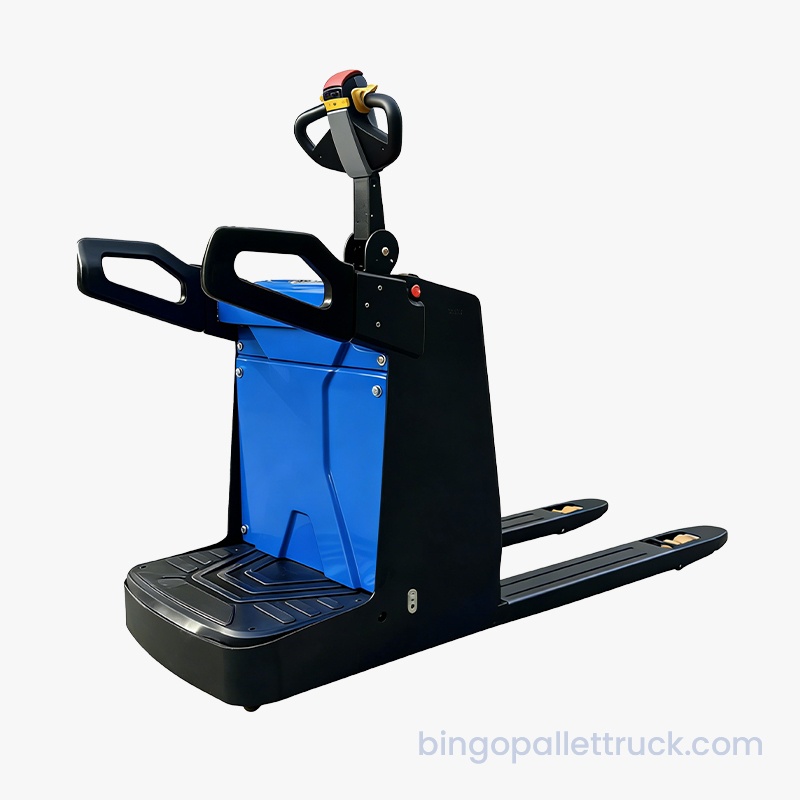
Yes — electric pallet trucks can be used outdoors, but not all models are equally suited for it. Standard indoor electric pallet trucks are engineered for smooth warehouse floors and are not designed to handle the uneven surfaces, weather exposure, moisture, and debris common in outdoor environments. Purpose-built outdoor electric pallet trucks — often called all-terrain or heavy-duty outdoor models — are specifically designed with larger wheels, sealed electronics, reinforced chassis, and more powerful motors to operate reliably outside.
The key factors that determine whether an electric pallet truck can safely and effectively operate outdoors are: wheel type and size, IP (Ingress Protection) rating of electrical components, battery and charger weatherproofing, motor power, chassis clearance, and traction control capabilities. Using a standard indoor model outside — even briefly — risks mechanical failure, electrical damage, reduced battery life, tipping hazards, and voided equipment warranties. The sections below explain each consideration in detail.
Why Standard Indoor Models Struggle Outdoors
Most electric pallet trucks sold globally are optimized for flat, sealed concrete or epoxy-coated warehouse floors. Their design assumptions break down quickly when taken outside.
Small, Hard Wheels Designed for Smooth Floors
Standard indoor electric pallet trucks typically use polyurethane (PU) wheels — hard, narrow wheels that roll with minimal resistance on smooth concrete. On outdoor surfaces such as asphalt, gravel, compacted dirt, yard pavement with cracks, or loading dock areas with debris, these small hard wheels lose traction, transfer excessive vibration to the load, and are prone to getting stuck or skipping over surface irregularities. A PU drive wheel encountering even a modest slope of 5 to 8% gradient on a damp outdoor surface may lose grip entirely, creating a dangerous runaway load situation.
Unsealed Electronics and Moisture Risk
Indoor electric pallet trucks typically have an IP rating of IP20 to IP44 — sufficient to protect against accidental contact and light splashing in warehouse environments, but inadequate for rain, puddles, high-pressure cleaning, or sustained outdoor moisture exposure. Water ingress into the motor controller, wiring connectors, or battery housing causes short circuits, accelerated corrosion, and component failure. Even mist or condensation from rapidly changing temperatures (moving from a cold outdoor environment into a warm indoor space) can cause moisture problems in electronics rated only for indoor conditions.
Limited Motor Power for Grades and Rough Terrain
Standard electric pallet trucks are designed for essentially flat surfaces. Their drive motors — typically 1.0 kW to 2.0 kW — provide enough torque for smooth indoor use but may overheat or stall when asked to move loaded pallets up outdoor grades, across soft ground that creates rolling resistance, or on surfaces that require repeated acceleration and braking. Sustained motor overload triggers thermal cutout protection, causing the truck to stop mid-operation — a serious problem when a loaded pallet is partway up a ramp.
Low Ground Clearance
Many standard indoor electric pallet trucks have frame clearance of only 30 to 50 mm above the ground. On outdoor surfaces with raised expansion joints, speed bumps, uneven paving, or accumulated debris, this minimal clearance causes the frame to ground out — creating mechanical stress on the chassis, potential damage to the fork tips, and in severe cases, a destabilized load.
What Makes an Electric Pallet Truck Suitable for Outdoor Use
Outdoor-capable electric pallet trucks differ from their indoor counterparts across several key engineering parameters. Understanding these differences allows buyers and operators to correctly specify the right equipment for mixed indoor-outdoor operations.
Wheel Type: Pneumatic, Rubber, or Foam-Filled
Outdoor-rated electric pallet trucks use larger-diameter, softer wheels that provide traction and shock absorption on uneven surfaces:
- Pneumatic (air-filled) tires: Provide the best ride quality and traction on rough outdoor surfaces, including loose gravel and compacted dirt. However, they are susceptible to punctures and require pressure monitoring and maintenance.
- Solid rubber tires: Puncture-proof and low-maintenance. Larger diameter (typically 250 mm to 400 mm) and softer compound than PU wheels, offering better traction and vibration absorption without the maintenance demands of pneumatics.
- Foam-filled tires: Combine the shape and cushioning of pneumatic tires with the puncture resistance of solid rubber. A popular compromise for mixed-surface operations.
The drive wheel on an outdoor model is typically 300 mm to 400 mm in diameter, compared to 200 to 250 mm on standard indoor units. This larger diameter increases ground contact area, reduces the risk of getting caught on surface irregularities, and improves climbing ability on grades.
For regular outdoor use in open yards, construction sites, or agricultural environments, an IP rating of IP65 or higher for the motor controller, battery housing, and key electrical connectors is the recommended minimum. For food processing or wash-down environments that happen to have outdoor access, IP66 or IP67 rated components are appropriate.
Motor Power and Torque for Gradient Performance
Outdoor-rated electric pallet trucks typically have drive motors of 2.0 kW to 4.0 kW — significantly more powerful than standard indoor units. This additional power provides the torque needed to move loaded pallets up outdoor grade changes, handle soft ground resistance, and maintain consistent speed on uneven terrain. Grade climbing ability is typically specified as a percentage: outdoor-capable models are generally rated for 10% to 15% gradients under full load, compared to 5% or less for standard indoor models.
Battery Type and Cold Weather Performance
Standard lead-acid batteries used in indoor electric pallet trucks lose significant capacity in cold outdoor conditions — a battery delivering full capacity at 20°C may deliver only 50 to 70% of rated capacity at 0°C, dramatically reducing operating range on a single charge. Outdoor and cold-storage applications benefit from lithium-ion battery systems, which maintain more consistent performance across a wider temperature range (typically -10°C to +45°C), charge faster, and have a longer cycle life than lead-acid equivalents. Some outdoor models also offer heated battery compartments for operation in sub-zero conditions.
Common Outdoor Use Scenarios and Their Requirements
The type of outdoor surface and operation determines the specific equipment specification needed. Not all outdoor applications require the same level of weather protection or terrain capability.
Loading Dock and Yard Areas (Paved)
Moving pallets between a warehouse and trucks in a paved yard or across a loading dock apron is one of the most common mixed indoor-outdoor applications. The surface is generally smooth enough that large solid rubber wheels perform well, and moisture exposure is primarily from rain and overnight condensation rather than immersion. For this application, a model with solid rubber or foam-filled wheels, IP54 to IP55 electrical protection, and a motor in the 2.0 to 2.5 kW range is typically sufficient.
Construction Sites and Agricultural Yards
These environments involve compacted gravel, loose soil, uneven terrain, and significant dust exposure. Pneumatic or foam-filled tires, IP65-rated electronics, higher ground clearance (at least 75 to 100 mm), and a heavy-duty chassis are necessary. Standard electric pallet trucks are completely unsuitable here — only specifically designed all-terrain or rough-terrain models should be used.
Outdoor Cold Storage and Freezer Yard Operations
Operations in outdoor freezer areas — moving pallets between refrigerated trucks and cold stores — combine moisture exposure with temperature extremes. Lithium-ion batteries, sealed electronics to at least IP55, and components rated for operation down to -25°C or lower are required. Condensation management is also critical when equipment transitions between extreme cold and warmer areas.
Ports and Intermodal Freight Terminals
Port environments expose equipment to salt air, high humidity, rain, and hard surfaces with regular grade changes at container entry points. Salt-accelerated corrosion is a significant concern — corrosion-resistant coatings on the chassis, stainless steel fasteners, and IP66-rated electrical systems are standard requirements for port electric pallet truck operation. Capacity requirements at ports are also typically higher, with many operations requiring trucks capable of handling 2,000 to 3,000 kg loads on outdoor surfaces.
Indoor vs. Outdoor Electric Pallet Truck: Key Specification Comparison
| Specification | Standard Indoor Model | Outdoor-Rated Model |
|---|---|---|
| Wheel type | Polyurethane (hard) | Solid rubber, pneumatic, or foam-filled |
| Drive wheel diameter | 200 – 250 mm | 300 – 400 mm |
| IP rating (electronics) | IP20 – IP44 | IP54 – IP66 |
| Drive motor power | 1.0 – 2.0 kW | 2.0 – 4.0 kW |
| Max gradient (loaded) | Up to 5% | 10% – 15% |
| Ground clearance | 30 – 50 mm | 75 – 120 mm |
| Battery type | Lead-acid (standard) | Lithium-ion or sealed lead-acid |
| Operating temperature range | 5°C – 40°C | -10°C to +45°C (lithium-ion) |
| Chassis construction | Standard steel, painted | Reinforced steel, powder-coated or galvanized |
| Typical load capacity | 1,500 – 2,000 kg | 1,500 – 3,000 kg |
Safety Considerations for Outdoor Electric Pallet Truck Operation
Outdoor environments introduce safety hazards that do not exist in controlled warehouse settings. Even a correctly specified outdoor-rated pallet truck must be operated with additional precautions.
Surface Gradient and Stability
Electric pallet trucks — even outdoor models — have a relatively narrow wheelbase and a high center of gravity when loaded. On slopes exceeding the rated gradient, the risk of load shift and vehicle tipping increases substantially. Operators should always travel with the load on the uphill side when moving on any gradient, travel at reduced speed on grades, and never turn on a slope. Loads should be secured where possible when working on uneven outdoor terrain.
Wet Surface Traction
Even outdoor-rated trucks with rubber tires experience reduced braking distances and steering response on wet surfaces. Stopping distances can increase by 30 to 50% on wet asphalt or concrete compared to dry conditions. Operators should reduce travel speed in wet conditions, increase following distance from other vehicles and personnel, and avoid sudden directional changes. Anti-slip coatings or surface treatments on outdoor traffic areas further reduce risk.
Visibility and Pedestrian Safety
Outdoor yard environments often lack the controlled pedestrian traffic zones of a managed warehouse. Blind corners, loading dock edges, reversing trucks, and poor visibility in rain or low-light conditions all increase collision risk. Outdoor electric pallet trucks used in active yard environments should be equipped with warning lights, audible alarms, and where required, flashing beacons to alert pedestrians and other vehicle operators to their presence.
Electrical Safety After Water Exposure
Even with adequate IP-rated components, any electric pallet truck that has been subjected to heavy rain, flooding, or pressure washing should be inspected before returning to service. Water ingress into connectors that are rated for splash resistance but not immersion can cause delayed electrical failures. Allow wet equipment to dry thoroughly, check for visible water in the battery compartment, and if in doubt, have the unit inspected by a qualified technician before reuse.
Maintenance Requirements for Outdoor Operation
Outdoor operation significantly increases the maintenance demands on electric pallet trucks compared to the same equipment used exclusively indoors. A proactive maintenance schedule is essential for sustaining reliability and safe operation.
- Wheel and tire inspection: Check tire pressure (pneumatic models) at the start of each shift. Inspect solid rubber and foam-filled tires for cuts, embedded debris, and wear. Replace tires showing significant chunking or flat spots, as these affect stability and traction on outdoor surfaces.
- Chassis and fork cleaning: Outdoor use accumulates mud, grit, and chemical contamination on the chassis and forks. Regular cleaning prevents corrosion and keeps drain ports clear. Use low-pressure water wash where the IP rating permits; avoid directing water jets at electrical enclosures even on IP65-rated models unless specifically rated for jet washing.
- Connector and seal inspection: Inspect all electrical connectors, cable entry points, and enclosure seals quarterly for signs of water ingress, corrosion, or seal degradation. Replace seals and apply appropriate connector protection where deterioration is found.
- Battery maintenance: Lead-acid batteries used in outdoor models should be checked for electrolyte level, terminal corrosion, and casing damage more frequently than indoor equivalents — monthly in demanding outdoor environments. Lithium-ion batteries require less routine maintenance but should be inspected for physical damage and checked for thermal management system function.
- Brake and drive system checks: Outdoor use on grades and rough surfaces accelerates wear on brake components and drive wheel bearings. Conduct brake function checks at weekly intervals and have drive bearings inspected at the manufacturer's recommended service intervals — typically every 500 to 1,000 operating hours.
- Corrosion protection: Apply appropriate corrosion-inhibiting treatments to exposed metal surfaces, particularly in coastal or high-humidity environments. Touch up any chipped or scratched paintwork promptly to prevent rust from establishing on the chassis.
Alternatives to Electric Pallet Trucks for Demanding Outdoor Environments
For very demanding outdoor environments — rough terrain, steep grades, heavy loads, or sustained outdoor-only operation — electric pallet trucks may not be the most appropriate solution even in outdoor-rated configuration. Alternative equipment types should be considered.
Counterbalance Electric Forklifts
Electric counterbalance forklifts are more robustly built for outdoor use, have larger tires, significantly higher ground clearance, and greater load capacities (typically 1,500 to 5,000 kg). They handle grades up to 15 to 20% and provide a more stable, enclosed operating environment for the operator. For yard operations involving heavy pallet loads on variable surfaces, an electric counterbalance forklift is often a safer and more capable choice than even an outdoor-rated pallet truck.
Rough Terrain Forklifts
For genuinely off-road applications — construction sites, lumber yards, agricultural operations on unprepared ground — rough terrain forklifts with large pneumatic tires, high ground clearance, and four-wheel drive capability are the appropriate equipment class. Electric pallet trucks, even outdoor-rated models, are not designed for true off-road conditions and should not be used as substitutes.
LPG or Diesel-Powered Pallet Movers
In environments where battery charging infrastructure is unavailable or impractical, and where continuous outdoor operation is required over long shifts, LPG or diesel-powered counterbalance forklifts may be more operationally practical. These can refuel quickly and maintain full performance regardless of battery state of charge or ambient temperature — advantages that matter in demanding outdoor logistics operations.
Summary: Choosing the Right Electric Pallet Truck for Outdoor Use
Electric pallet trucks can absolutely be used outdoors — provided the correct model is selected for the specific outdoor conditions involved. The following checklist summarizes the key specification requirements before committing to an outdoor-capable electric pallet truck:
- Wheel type: Solid rubber, foam-filled, or pneumatic tires — not polyurethane. Drive wheel diameter of at least 300 mm for outdoor surface capability.
- IP rating: Minimum IP54 for covered outdoor areas; IP65 or higher for open yard use in rain and dust.
- Motor power: At least 2.0 kW drive motor; 3.0 to 4.0 kW for grades above 8% or heavy loads.
- Grade rating: Confirm the loaded gradient rating matches or exceeds the steepest outdoor surface the truck will encounter.
- Ground clearance: At least 75 mm for paved outdoor areas; 100 mm or more for rougher surfaces.
- Battery technology: Lithium-ion strongly recommended for temperature-variable outdoor environments; sealed lead-acid as a minimum for outdoor use.
- Corrosion protection: Powder-coated or galvanized chassis; stainless steel hardware in coastal or chemical exposure environments.
- Safety features: Warning lights and audible alarm as a minimum for mixed traffic outdoor environments; operator presence systems for sloped or high-traffic areas.
Matching these specifications to the actual outdoor conditions of the operation — rather than purchasing the nearest available standard model — is the difference between equipment that performs reliably for years and equipment that fails prematurely, creates safety incidents, or voids its manufacturer warranty through misapplication.

Copyright @ Yancheng Bingo Machinery Equipment Co., Ltd. All rights reserved Warehouse Logistics Equipment Manufacturer Pallet Truck Supplier
