 en
 Español

Manual Material Handling Equipment: A Practical Buying Guide for Warehouses
Content
- 1 What Counts as Manual Material Handling Equipment
- 2 Four Numbers That Decide the Choice
- 3 Rated Capacity Across Common Manual Devices
- 4 Push Force Rises Faster Than Payload
- 5 Cost Per Move Changes With Distance
- 6 Comparing Manual Options Side by Side
- 7 Do Not Forget the Load Unit Underneath
- 8 A Short Selection Checklist
- 9 When Manual Handling Stops Making Sense
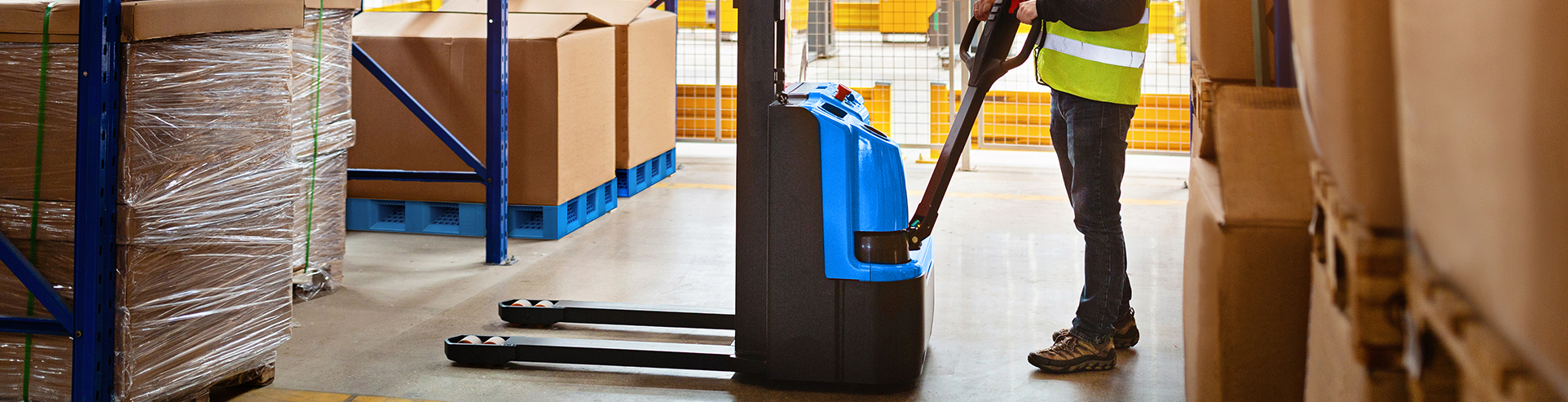
A 900 kg pallet of bottled goods sits eight metres from the loading bay door. One operator, one hand pallet truck, forty moves across a single shift. That scenario decides almost everything about which manual material handling equipment belongs on the floor: the peak load weight sets the minimum rated capacity, the eight metres determines how much of the shift disappears into pushing and pulling, and the forty repeats decide how quickly fatigue turns into a shoulder or lower back injury.
The conclusion comes first, because it is not complicated. Three numbers drive the decision: peak load weight, one-way travel distance, and required lift height. Everything else, from wheel material and handle geometry to floor condition and pallet type, either supports those three numbers or quietly works against them.
What Counts as Manual Material Handling Equipment
Manual material handling equipment is any device that lifts, moves, or positions a unit load using human effort for travel, with no driven travel motor. The lifting itself is often assisted by hydraulics or a mechanical advantage, but the operator supplies the motion and keeps the load under control.
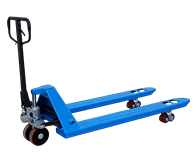
- Hand pallet trucks rated at 2000 kg to 2500 kg, with a hydraulic pump that raises a pallet 85 mm to 200 mm clear of the floor.
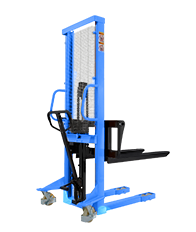
- Manual stackers rated around 1000 kg, able to place a pallet on a rack beam or mezzanine using a mast and a hand pump or foot pedal.
- Sack trucks and hand trucks rated at 150 kg to 300 kg, useful for boxes, bags and drums on routes a pallet truck cannot reach.
- Platform and cage trolleys rated at 250 kg to 500 kg, best for mixed cartons and tote boxes that never touch a pallet.
- Drum handlers, skates and rollers rated at 300 kg to 500 kg, used for single drums, cable reels and one-off machinery moves.
The word manual describes how the equipment travels, not how the load is raised. That distinction matters at the point of purchase. A 2500 kg hand pallet truck that rolls easily when empty can become hard to stop when it is fully loaded on a dock leveller with a slight slope.
| Device | Typical rated capacity | Best working distance | Common use |
|---|---|---|---|
| Hand pallet truck | 2000 kg to 2500 kg | Up to 30 m | Palletised goods on flat concrete |
| Manual stacker | 1000 kg | Under 20 m | Lifting to a rack beam or mezzanine |
| Platform trolley | 250 kg to 500 kg | Up to 60 m | Mixed cartons, tote boxes and small parts |
| Sack truck | 150 kg to 300 kg | Short transfers | Boxes, bags and drums on uneven ground |
| Drum handler | 300 kg to 500 kg | Short transfers | 200 litre drums, lifting and tipping |
Four Numbers That Decide the Choice
1. Peak Load Weight, Not Average Load Weight
Rated capacity is a maximum for a level, undamaged floor with a centred load. Real loads are rarely centred, are often stacked high, and sometimes sit on a pallet with a cracked board. Buying at 100 percent of the peak load leaves no margin for any of that, so most warehouse teams specify 20 to 30 percent headroom above the heaviest routine move.
2. One-Way Travel Distance
Under about 15 metres, a hand pallet truck is usually the fastest and cheapest option because there is no battery to charge and no charging bay to build. Between 15 and 30 metres, the labour cost per move begins to climb. Beyond 30 metres, and beyond roughly 60 moves per shift, the arithmetic generally shifts toward powered equipment, which is why distance belongs in the specification before the model number.
3. Lift Height and Repetition Count
If a pallet only needs to clear the floor by 100 mm, a pallet truck is sufficient. If it has to land on the second rack beam at 1800 mm, the load must be raised, held and positioned, which moves the requirement into the stacker class. Count repetitions as carefully as weight: 200 lifts of 5 kg per shift and 20 lifts of 50 kg per shift carry very different risk profiles for the same person.
4. Floor, Slopes and Route Condition
Rolling resistance rises with rough concrete, expansion joints, dock plates, ramps and debris. A truck that needs 20 N of force to keep moving on polished concrete may need three or four times that on a worn yard ramp. Walk the full route with the loaded truck before signing the order, at the heaviest load and at the busiest time of day.
For loads up to 2500 kg on level concrete, a standard hand pallet truck remains the workhorse of the category, and it is usually the first item on the list.
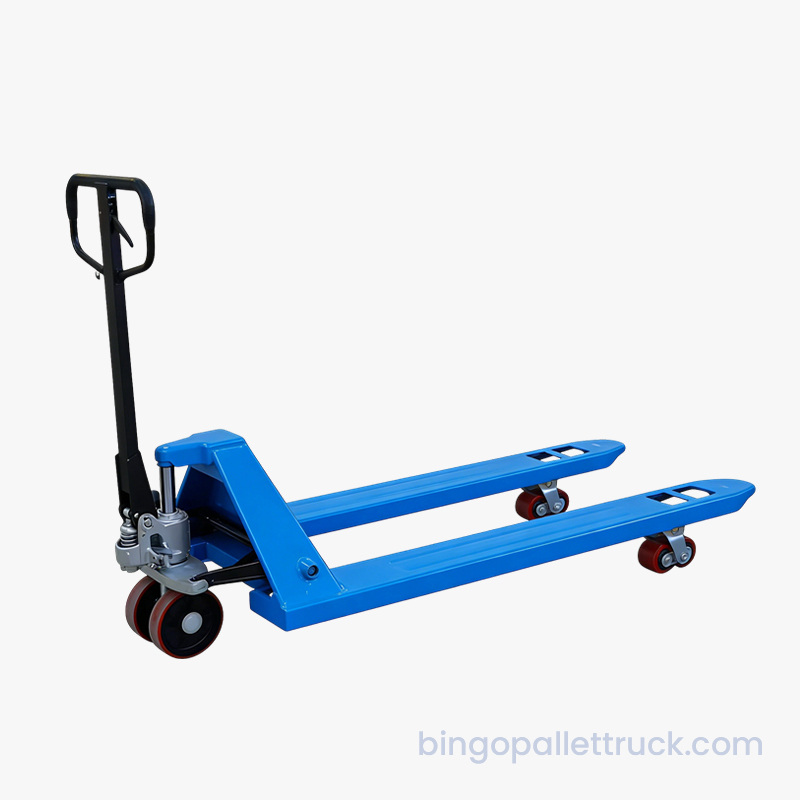 2500kg Hand Pallet Truck Heavy Duty Manual Pallet Jack for Heavy Load Material HandlingYou are here: Products / Hand Pallet Truck / 2500kg Hand Pallet Truck Heavy Duty Manual Pallet Jack for Heavy Load Material HandlingView Product →
Rated Capacity Across Common Manual Devices
The chart above compares the published rated capacity of the manual handling devices most often found on the same warehouse floor. Hand pallet trucks sit at the top of the range at 2500 kg, because the load is carried on a pallet supported by a wide fork and two or four load rollers. Manual stackers step down to roughly 1000 kg, and that reduction is not accidental: the higher a load must be raised, the more the mast and base have to resist tipping. Platform trolleys, drum trolleys and sack trucks cluster between 250 kg and 500 kg, where payload is limited by deck size, wheel diameter and the operator's own pushing effort. Reading capacity in isolation can mislead, because a 2500 kg rated truck still asks one person to start, steer and stop the whole moving mass. Always confirm the figure on the plate of the specific model, since the same nominal size is often built in light, medium and heavy duty versions.
Push Force Rises Faster Than Payload
The two curves show how the force needed to keep a pallet truck rolling grows with payload under two different wheel and bearing conditions. Both lines are calculated from a simple rolling resistance model with an 80 kg truck mass, so the absolute numbers will move with floor quality and tyre type, but the shape of the curves does not change. The lower curve represents large diameter wheels running on precision bearings, where the resistance coefficient stays near 0.012. The upper curve represents small hard wheels on a rougher surface, where the coefficient can reach 0.03, more than double. At a 250 kg payload the difference between the two is around 30 N, which most operators would not notice. At 1500 kg the gap widens to well over 150 N, and that is the point where a truck stops feeling heavy and starts feeling difficult to control. Many ergonomics programmes set an internal ceiling near 200 N for sustained pushing, so a truck that is comfortable when half loaded can exceed the limit when it is full, which is why wheel specification deserves the same attention as rated capacity.
Cost Per Move Changes With Distance
This grouped column chart compares a relative cost index per pallet movement for manual, semi-electric and fully electric handling across three distance bands. The figures come from an illustrative planning model rather than a cost study, but the shape of the columns reflects how the three options actually behave on a warehouse floor. Manual handling starts cheapest at short distances because there is no purchase price, no battery to replace and no charging infrastructure to install. Its cost index then climbs steeply, because every additional metre is paid for in operator time and accumulated fatigue. Semi-electric and electric options start higher, since capital cost and maintenance are loaded onto the front end, but their cost per move stays comparatively flat as distance grows. The crossover normally lands somewhere between 15 and 30 metres, and it arrives earlier when labour rates are high, when the shift runs around the clock, or when the route includes a ramp.
Comparing Manual Options Side by Side
The radar chart scores three common manual devices on the five criteria that usually decide a purchase. Load capacity favours the hand pallet truck, which carries palletised loads up to 2500 kg on a wide fork. Tight-aisle access favours the platform trolley, which turns in a smaller radius and slips between racking uprights more easily than a pallet truck with a long fork. Low initial cost is close between the trolley and the pallet truck, while the manual stacker sits slightly behind because the mast, base legs and hydraulic system add material and cost. Low operator effort is where the trolley wins clearly, because a moderate carton load on four swivel castors asks very little of the person pushing it. Low maintenance is broadly similar across the three, since none of them carries a battery, drive motor or control board to service. Reading the three shapes together explains why mixed fleets are normal: no single device wins on every axis, and the right answer is usually a combination matched to the task.
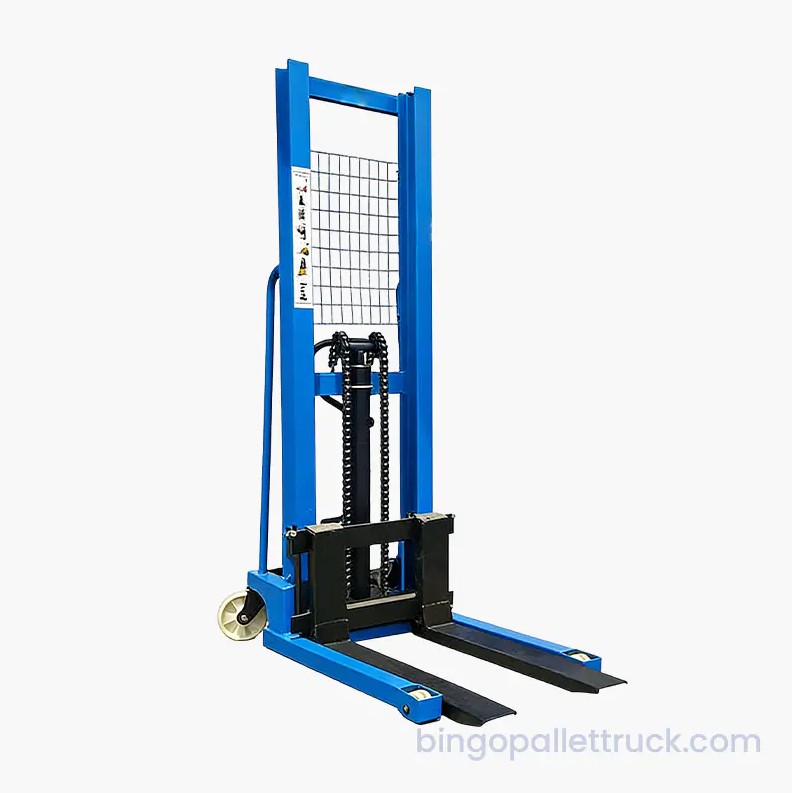
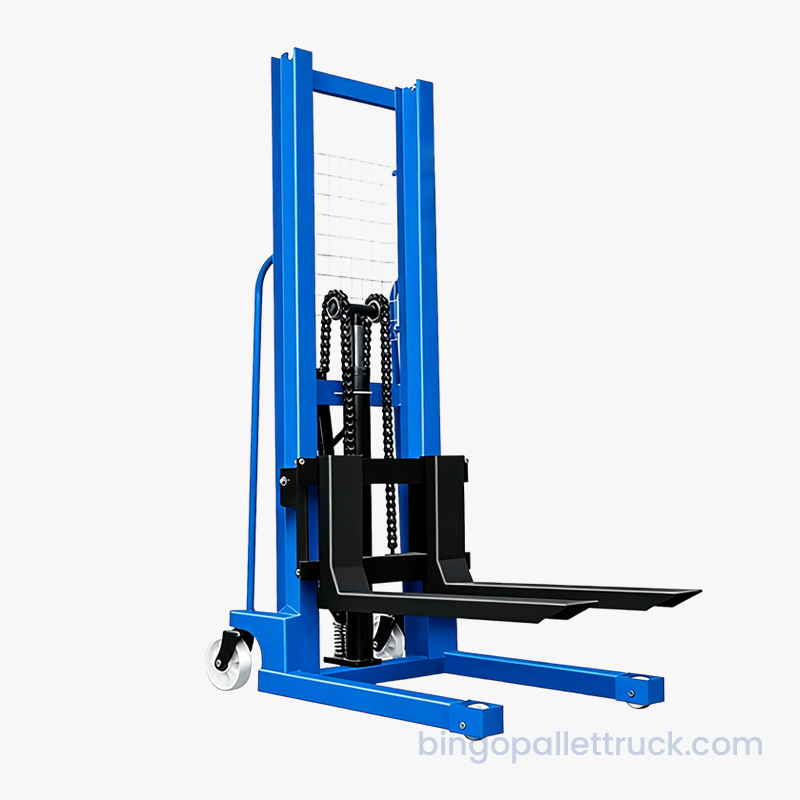
Where a load has to be raised rather than simply moved, a manual stacker fills the gap between a pallet truck and a powered unit, and models with adjustable forks cover more than one pallet size without extra attachments.
 1000kg Manual Stacker with Adjustable Forks for Multiple Pallet SizesYou are here: Products / Manual Stacker / 1000kg Manual Stacker with Adjustable Forks for Multiple Pallet SizesView Product →
Do Not Forget the Load Unit Underneath
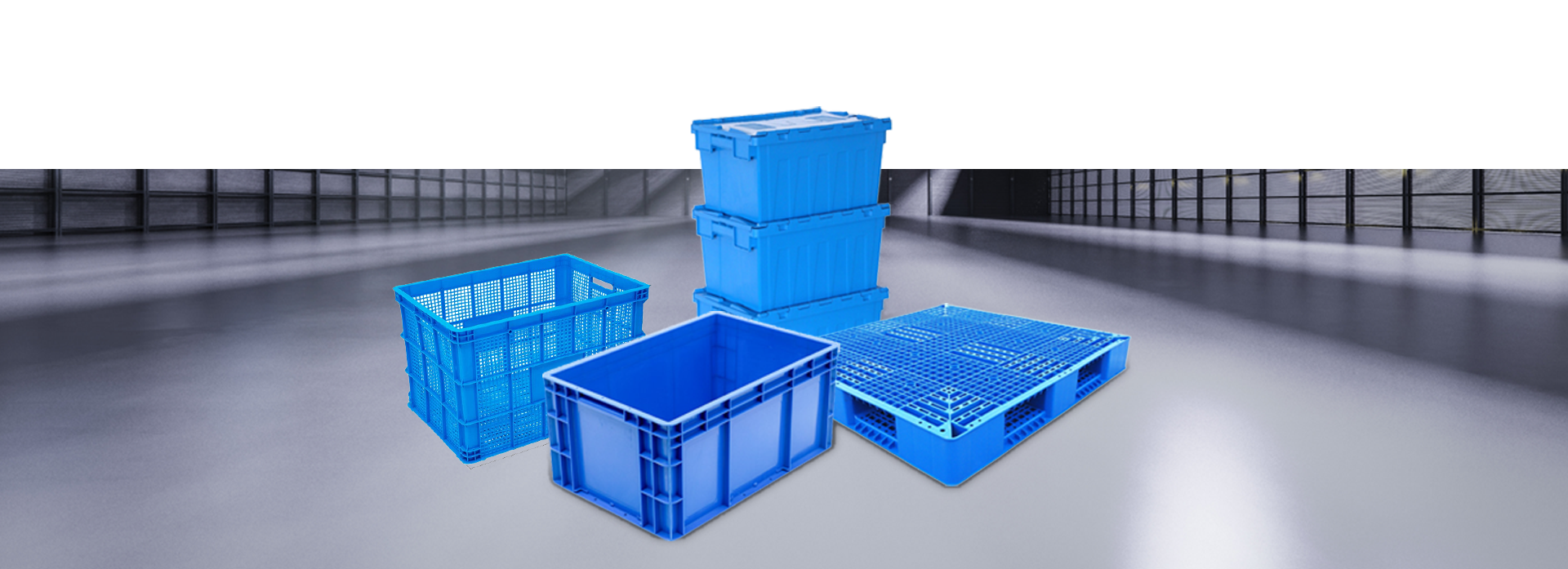
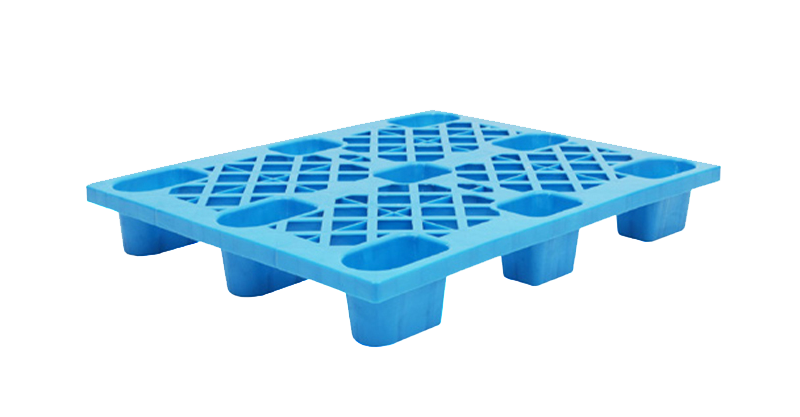
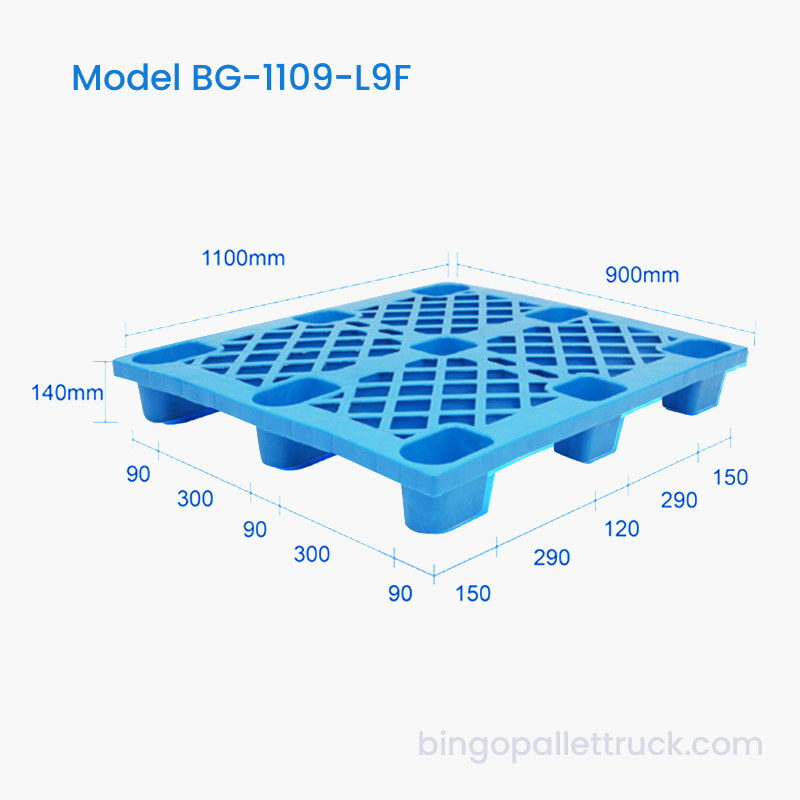
Equipment gets the attention, but the pallet or container underneath decides how stable and how heavy the move really is. A plastic pallet in a standard 1200 by 1000 mm footprint weighs a fraction of a comparable timber pallet, which reduces the total mass the operator has to start, steer and stop on every trip. Nestable and stackable designs change the storage picture as well: an empty nestable pallet consumes a few centimetres of stack height instead of a full pallet position. Deck type matters too, because a solid top keeps small cartons and loose parts from falling through the boards, while a grid deck drains water and weighs less. Check that the pallet is rated for the racking it will sit on, since an entry that suits floor stacking may not suit a beam-supported load. Matching the pallet to the truck, the rack and the product is usually the cheapest reliability improvement available.
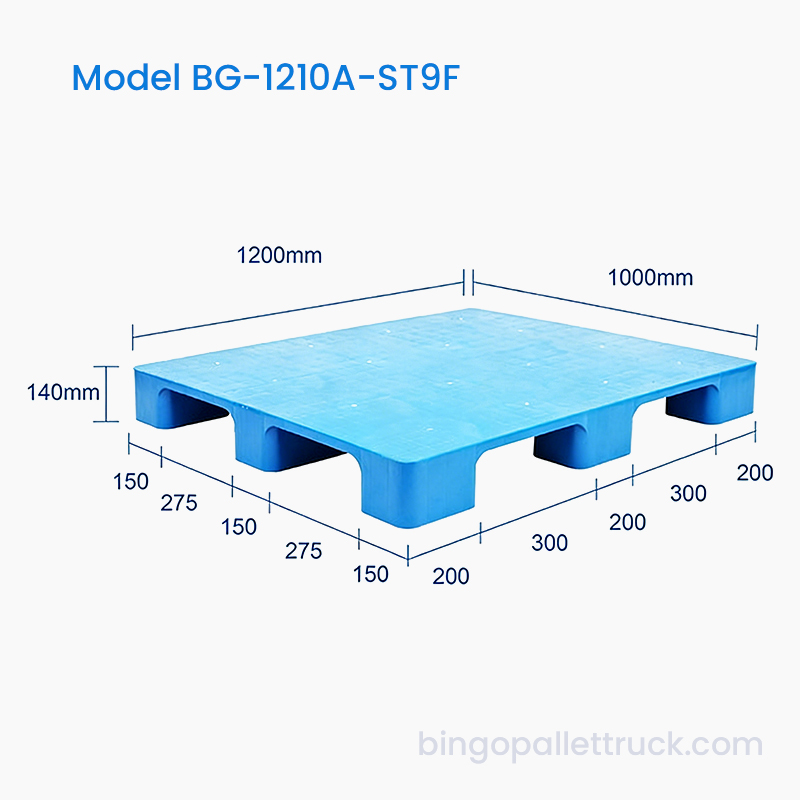 Durable 1200x1000mm Solid Top 9 Legs Plastic Pallet for Frequent Shipping UseThis 1200x1000x140mm flat top plastic pallet is a robust, cost-effective solution for medium to heavy load warehouse operations. Constructed from durable HDPE, it deli...View Product →
A Short Selection Checklist
- Weigh the heaviest single load, not the average, and add 20 to 30 percent headroom.
- Measure the longest one-way trip and count the number of moves per shift.
- Confirm the highest lift point, including any rack beam or mezzanine level.
- Inspect the route for expansion joints, thresholds, ramps, dock plates and debris.
- Check the load unit: pallet size, deck type, condition and rack compatibility.
- Verify the rated capacity, wheel type and brake arrangement on the actual model plate.
- Train operators on starting, stopping, slope control and daily pre-use inspection.
When Manual Handling Stops Making Sense
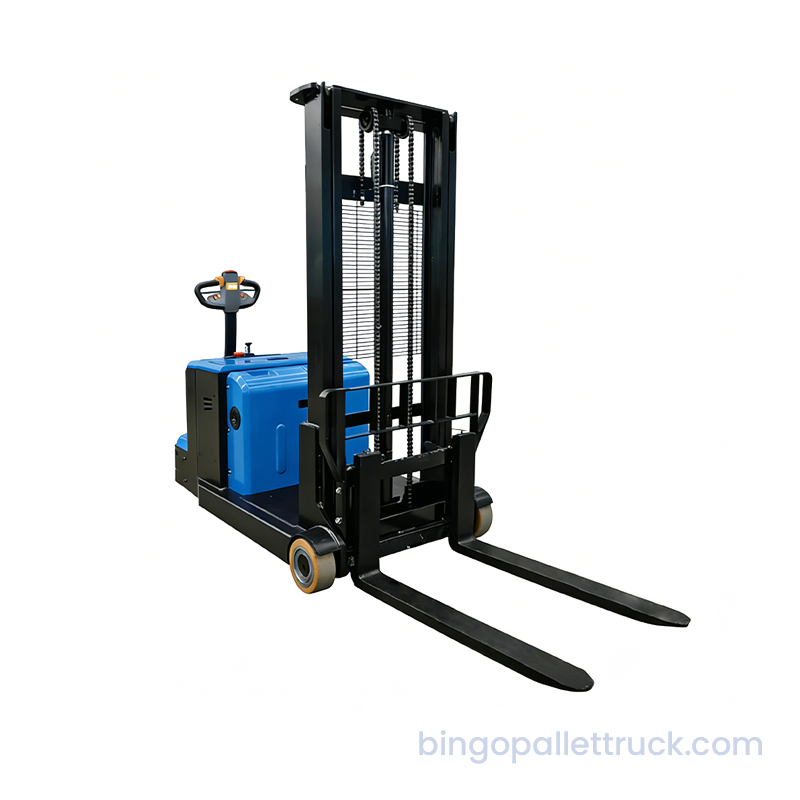
Once a route passes roughly 30 metres, runs more than about 60 moves per shift, or includes repeated lifts above 1500 mm, the manual category stops being the economical answer. The usual progression runs from a hand pallet truck to a semi-electric stacker and then to powered equipment such as an electric pallet truck. The same logic applies at system level, where trucks, racking and containers are specified together for a specific industry, as set out in the manufacturing supply chain solutions overview. Moving to powered equipment is not a failure of the manual approach; it is simply the point where the arithmetic changes.
Manual material handling equipment rewards a straightforward specification process. Weigh the heaviest load, measure the longest one-way trip, confirm the highest lift point, then walk the route with the truck fully loaded. If the chosen device still leaves the operator with enough control to stop a moving pallet on a slope, the choice is probably right. If it does not, the next step up in the range costs far less than a single back injury, a dropped pallet or a damaged rack.

Copyright @ Yancheng Bingo Machinery Equipment Co., Ltd. All rights reserved Warehouse Logistics Equipment Manufacturer Pallet Truck Supplier
