 en
 Español


How to Use a Pallet Truck Safely: Lever Positions, Loading and Set-Down Steps
Content
- 1 Lever Positions: The One Control That Decides Everything
- 2 Loading and Moving a Pallet, Step by Step
- 3 Load, Pallet and Floor Checks Worth Thirty Seconds
- 4 Electric Pallet Trucks: What Changes in the Procedure
- 5 Six Habits That Damage Loads and Trucks
- 6 Maintenance That Keeps a Truck Usable
- 7 Choosing a Truck That Fits the Route
A 900 kg pallet of bottled water is sitting square in the aisle. The operator slides the forks in halfway, pumps the handle, and the pallet tips forward the moment the truck moves, because the load was resting on the fork tips instead of the fork shank. It is a common scene in warehouses where new staff learn on the job, in the middle of a delivery window, with no one watching the sequence.
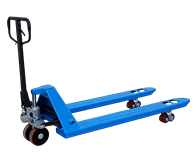
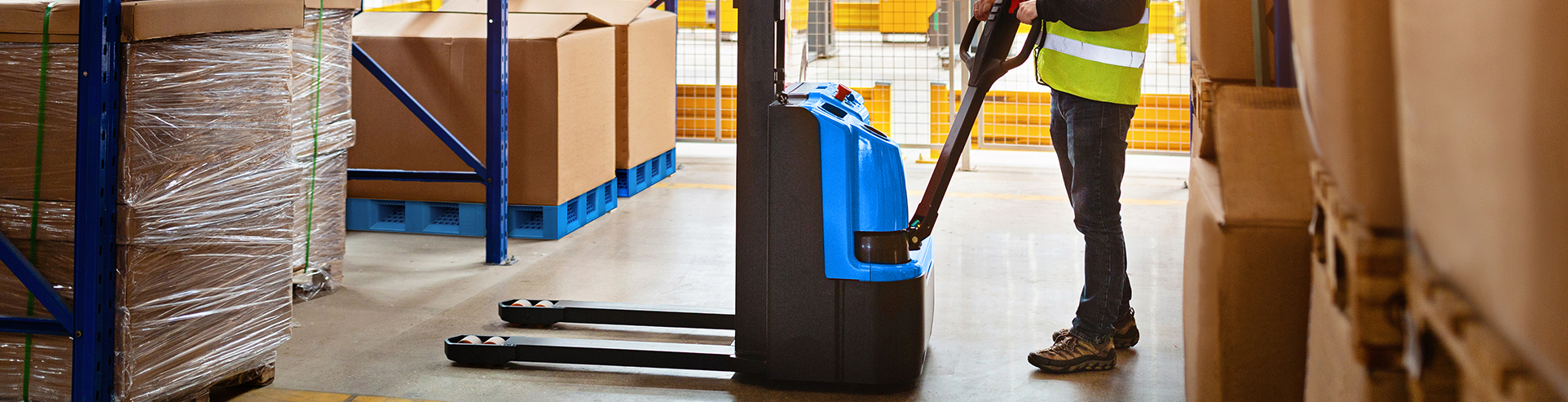
The short version of how to use a pallet truck: set the lever to lower, slide the forks fully under the pallet until the load back touches the upright shank, pump the handle until the pallet base sits 5 to 10 cm off the floor, tilt the handle slightly toward you so the weight settles on the two load wheels, then travel with the forks trailing and the handle low. Everything else in this guide is detail on top of that sequence, but the detail is what keeps loads, floors and ankles intact.
Lever Positions: The One Control That Decides Everything
On a manual pallet truck, the lever or trigger under the handle does three different jobs. Operators who treat it as a simple on and off switch usually end up fighting the hydraulics, and a truck that will not lower is almost always a truck with the lever in the wrong notch.
| Lever position | What the hydraulics do | When to use it |
|---|---|---|
| Down (release) | The valve opens and the forks descend, controlled by how far you raise the handle | Entering a pallet, setting a load down, parking the truck |
| Middle (neutral) | The pump bypasses, so pumping does nothing and the height holds | Transporting a load, moving the empty truck |
| Up (lift) | The pump engages and each stroke raises the forks a little | Lifting the pallet to travel height before moving |
Lower the load by moving the lever to the release position and letting the forks drop under control, not by yanking the handle. On release, the forks descend at a speed set by the valve, so keep hands, feet and pallet corners clear of the fork tips and never stand in front of a load that is coming down.
Loading and Moving a Pallet, Step by Step
The sequence below suits a standard 2000 kg to 3000 kg hand pallet truck with 1150 mm or 1220 mm forks, which covers most 1200 x 1000 mm and 1200 x 800 mm pallets in distribution work.
- Check the truck before the shift: wheels free of wrapped stretch film, no hydraulic oil under the pump, forks straight, handle return spring working.
- Square up to the pallet. Approach straight on so both forks enter the openings evenly. A diagonal approach spreads the pallet boards and jams the fork tips.
- Set the lever to lower, then push the forks in until the tips clear the far side of the pallet and the load back rests against the fork shank. Half-inserted forks put the entire load on the tips.
- Set the lever to lift and pump until the pallet base clears the floor by 5 to 10 cm. Higher looks impressive and behaves badly, because every extra centimetre raises the centre of gravity.
- Tilt the handle toward you so the load settles onto the two load wheels. A load balanced on all four wheels steers poorly and rocks in turns.
- Travel with the forks trailing and the handle low, pushing the truck rather than pulling it. Pushing keeps the load in front of you and takes the strain off your shoulders and lower back.
- Turn slowly. During a turn the truck pivots on the load wheels only, so a tall or top-heavy stack can sway outward. Take wide arcs and keep the handle low through the corner.
- Set down in the target position with the lever in release, lower until the pallet is fully on the floor, then withdraw the forks with the lever still in release so the tips do not drag the pallet boards.
Load, Pallet and Floor Checks Worth Thirty Seconds
Capacity plates are rated at a stated load centre, usually 600 mm from the fork shank. Move that centre outward with an oversized load and the real capacity drops, even though the plate still says 2500 kg.
- Weight: confirm the load against the truck rating, including packaging and pallet weight. A 2500 kg truck carrying a 2400 kg load has no margin left for a damaged wheel or a soft floor joint.
- Stability: keep the heaviest items inboard and low. Stacked cartons above handle height block your view of the aisle and catch on door frames.
- Pallet condition: split deck boards, loose nails and crushed corner blocks all transfer load onto the fork tips. On plastic pallets, look for cracked legs, whitened stress marks and visible deck deflection.
- Floor: expansion joints, dock plates, cable covers and dropped shrink wrap all stop a small wheel instantly. A hand pallet truck belongs on level concrete, not on ramps.
- People: no riders, no feet under the forks, and no walking backwards into a blind corner.
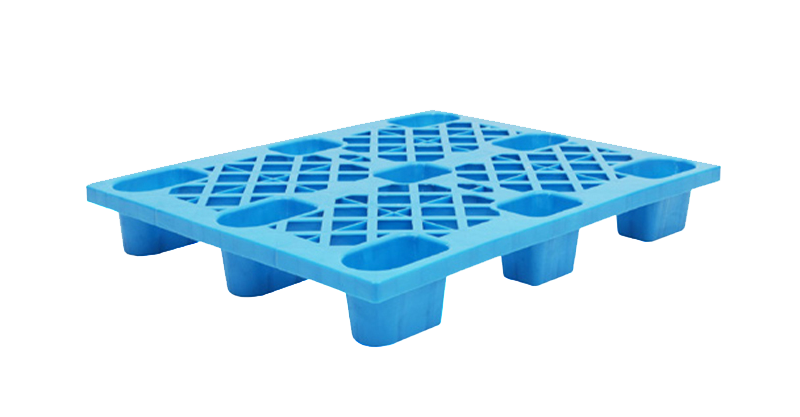
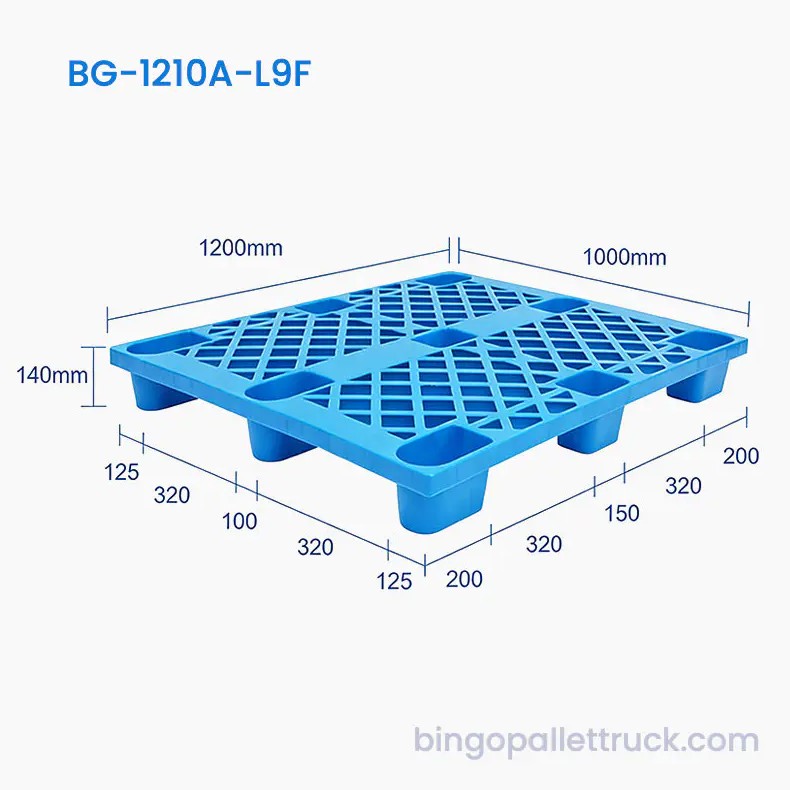
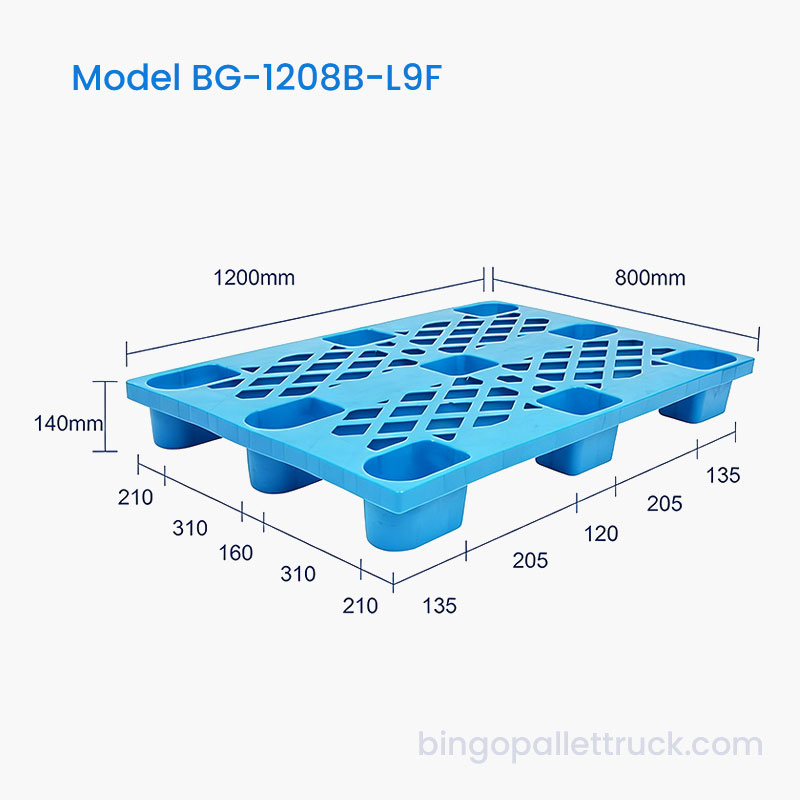
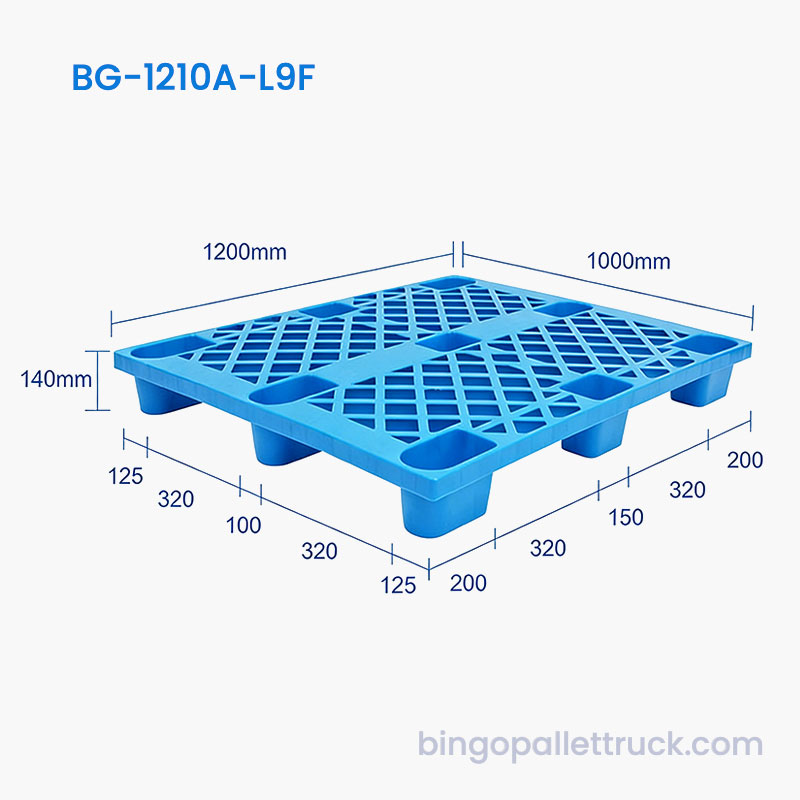 BG-1210A-L9F Nine-Leg 1200 x 1000 mm HDPE PalletLightweight nestable HDPE pallet with grid top and nine-foot support, suited to light-duty warehouse, distribution and export use.View Product →
Pallets that match the load and the truck are half the safety story. A 1200 x 1000 mm nine-leg HDPE pallet, for example, gives a flat, consistent entry height that stays true after repeated handling, which matters when the same truck moves hundreds of pallets a day.
Electric Pallet Trucks: What Changes in the Procedure
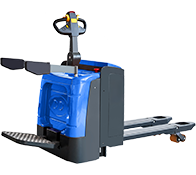
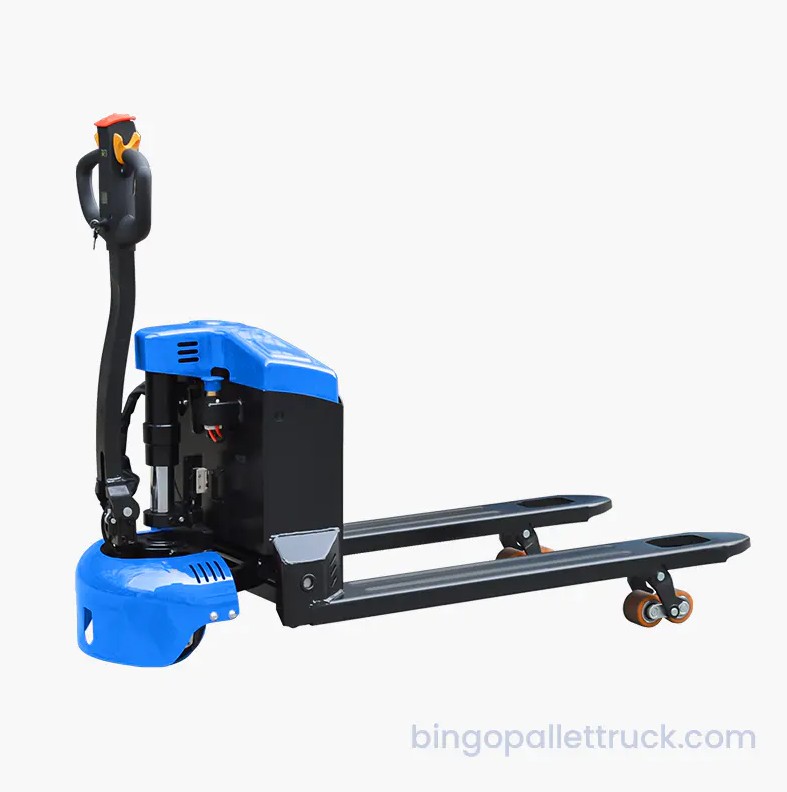
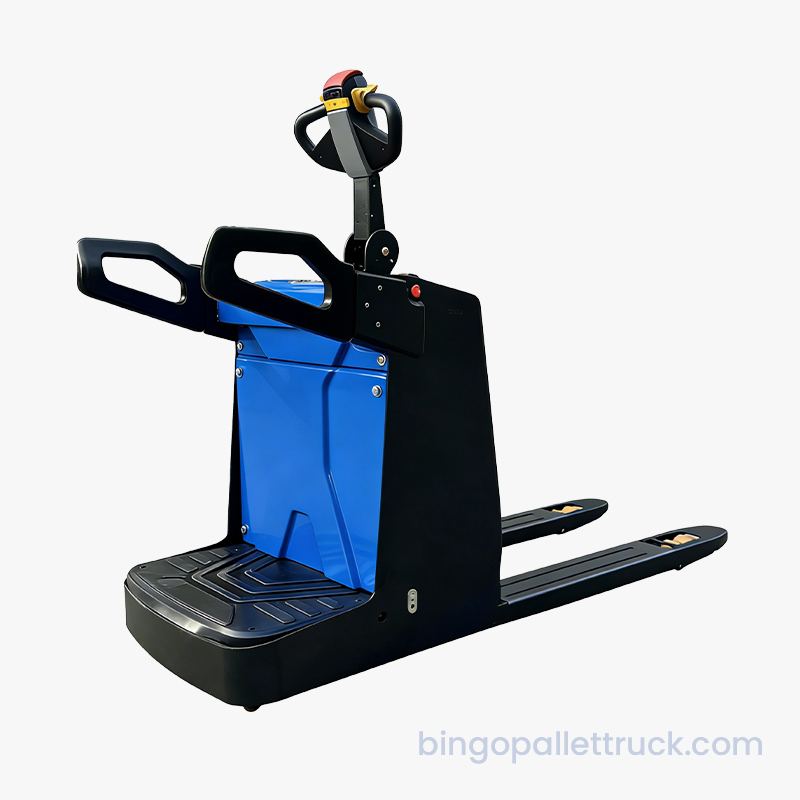
A powered walkie truck removes the pumping but adds controls you have to understand before the first pallet. The tiller is not just a steering arm, it is the brake: released vertically it applies the electromagnetic brake, and pushed to a working angle it releases the drive. The belly button or anti-crush switch at the tiller head reverses the truck if it presses against you, which is why you should never disable it to fit through a narrow gap.
- Key on, check the battery indicator, sound the horn before moving off.
- Use turtle or slow speed indoors and in aisles narrower than about 2.5 m. Full walking speed is for long open runs.
- Lift with the raise button only until the pallet clears the floor, then travel. On most models the forks stop at a preset height for exactly this reason.
- Park with the forks fully down, the key removed and the tiller upright so the brake is engaged.
If your team is moving from manual handling to powered equipment, the operating logic is different enough to justify a short briefing. This overview of electric pallet truck types and controls is a practical starting point for supervisors writing that briefing.
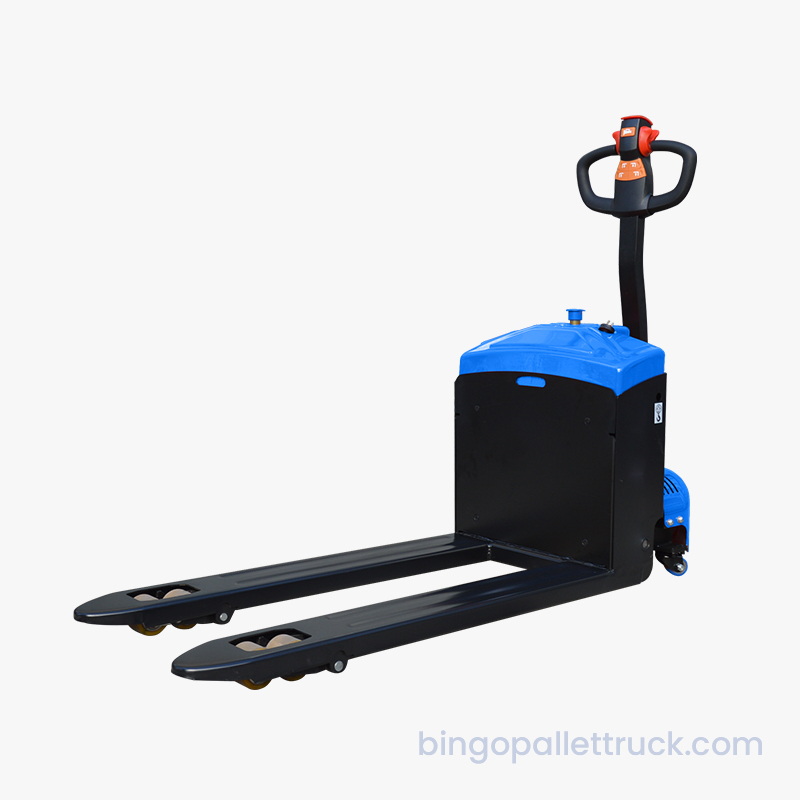 CBD20J 2000 kg Walkie Electric Pallet TruckPedestrian-operated 2000 kg electric pallet truck with 205 mm lift, PU tyres and built-in charger for warehouse pallet handling.View Product →
Six Habits That Damage Loads and Trucks
- Forks half inserted, so the pallet rides on the tips and the deck boards bend.
- Lifting the load high to see over it, which raises the centre of gravity and invites a tip-over at the first turn.
- Pulling a tall load behind you, where you cannot see the aisle and the load swings on corners.
- Turning with the handle vertical, when the truck is least stable.
- Parking with the forks up, creating a trip hazard and a surprise for the next operator.
- Ignoring a slow-lowering valve or a spongy pump, both of which are cheap fixes before a load drops, and expensive after.
Maintenance That Keeps a Truck Usable
- Daily: wheels, oil leaks, fork straightness, handle return.
- Weekly: clean debris from the load wheels and check for flat spots, which make a loaded truck pull to one side.
- Monthly: oil level in the pump, air bleed if the truck lifts slowly, lubrication of the handle pivot and the push rods.
- Yearly or after heavy use: hydraulic seals, wheel bearings and a full load test before the truck returns to the floor.
Choosing a Truck That Fits the Route
Selection usually comes down to four numbers and one material choice. Rated capacity should exceed your heaviest routine load by roughly 20 percent. Fork length of 1150 mm suits 1000 mm deep pallets, while 1220 mm gives a little margin on 1200 mm pallets and on uneven entry into racking. Fork width of 540 mm or 685 mm has to match the pallet entry, and wheel material decides how the truck behaves on your floor: nylon rolls easily on smooth concrete, polyurethane runs quieter and protects resin floors, rubber copes with rougher surfaces but takes more effort.
- Hand trucks in 2000 kg, 2500 kg and 3000 kg ratings cover most palletised goods movement.
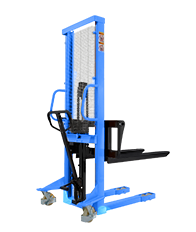
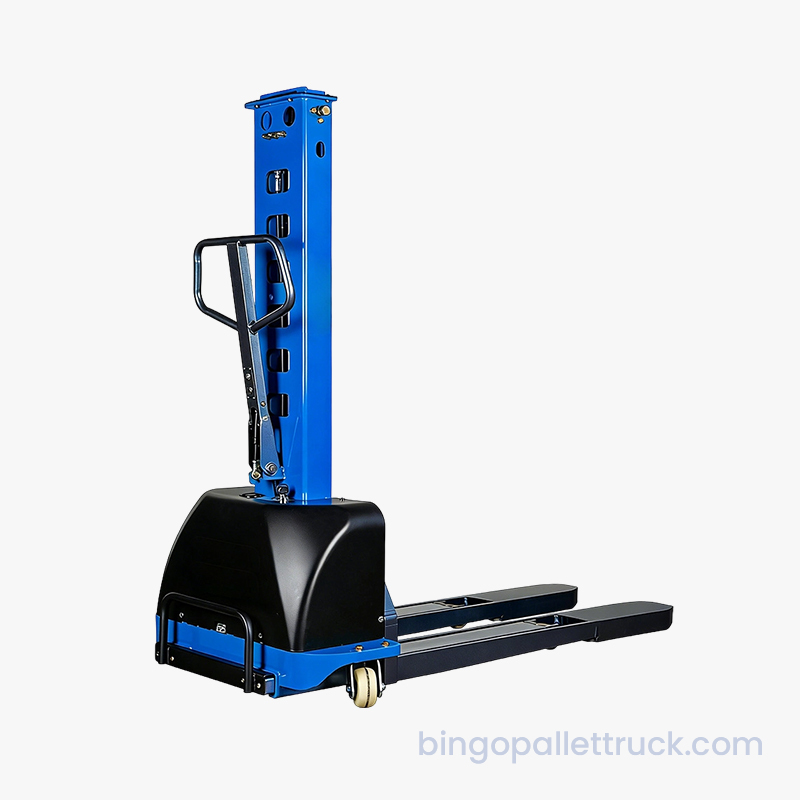
- Long or heavy routes suit a powered walkie or a stacker rather than manual pumping.
- Cold stores and washdown areas need sealed bearings and corrosion-resistant finishes.
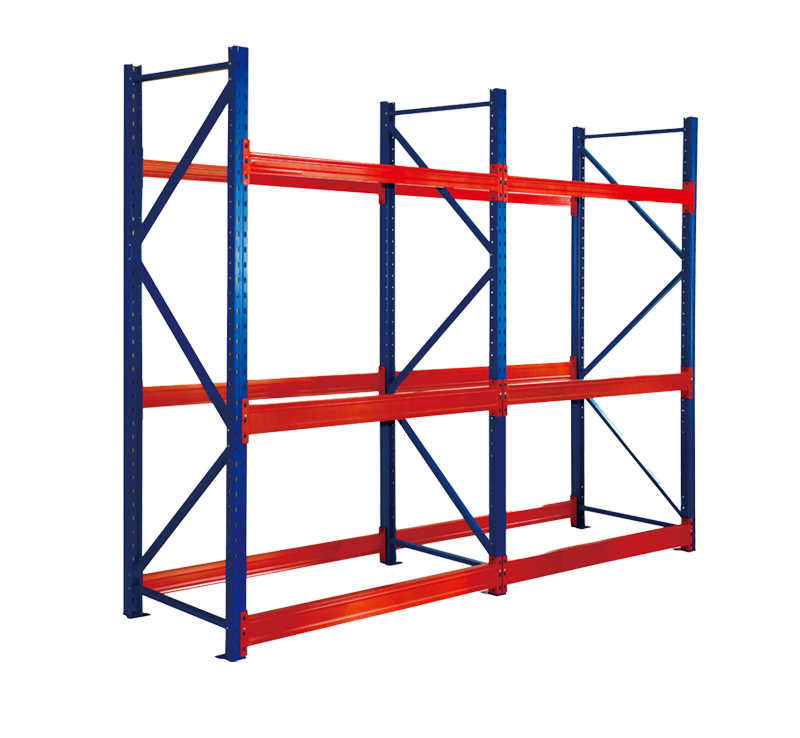
- Racking aisles narrower than the truck's turning radius need a different truck, not a different operator technique.
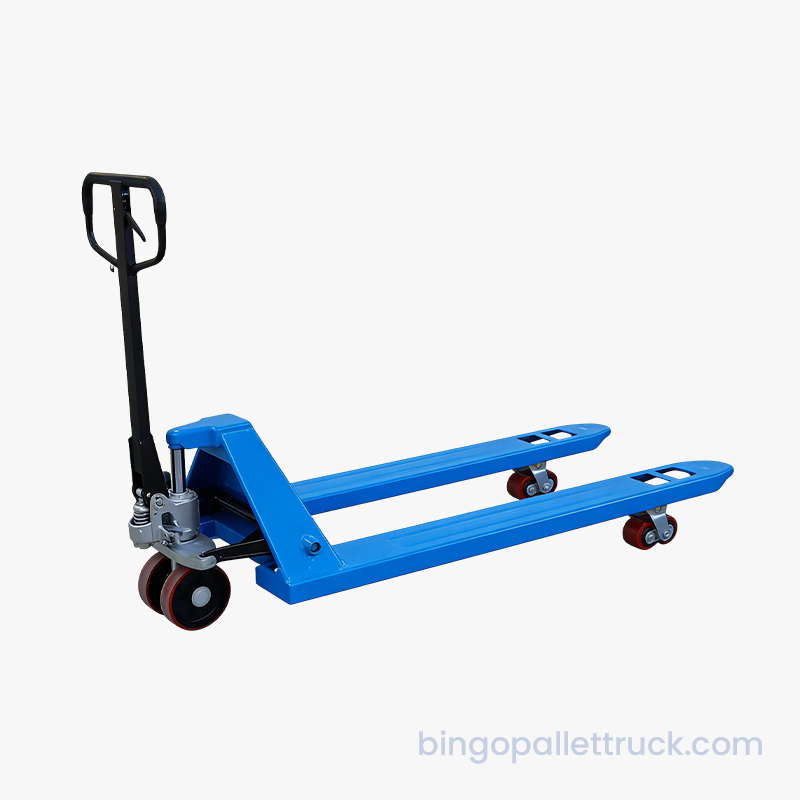
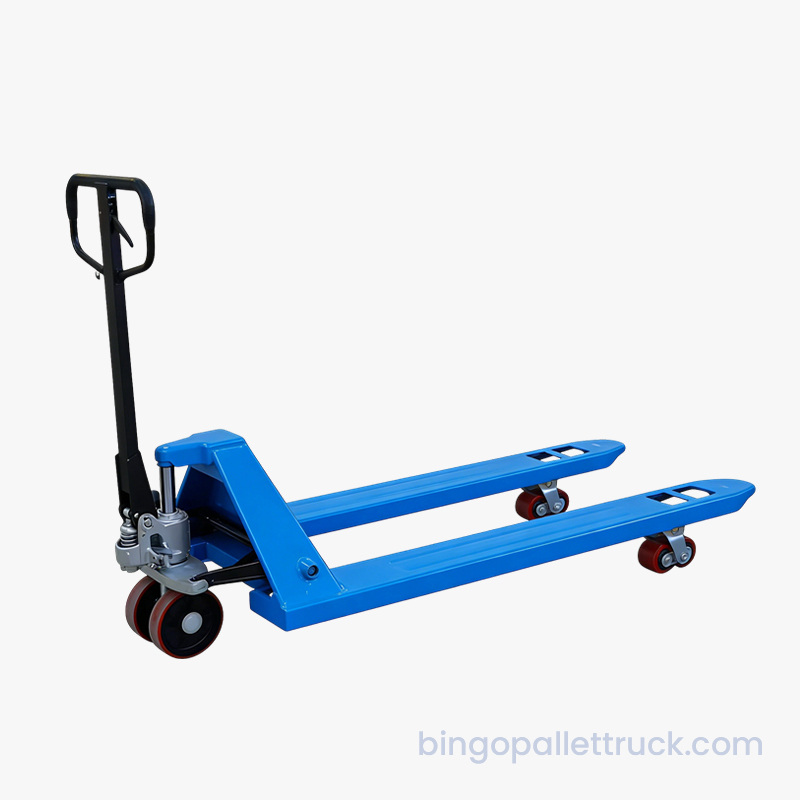 CBY25S/CBY25L 2500 kg Hand Pallet TruckHeavy-duty manual pallet jack in 550 mm or 685 mm fork widths, with 1220 mm forks and nylon/PU wheels for general warehouse and retail moves.View Product →
A 2500 kg hand pallet truck is the sensible default for general warehouse and retail replenishment work, because it leaves margin for heavy pallets without the weight and cost of a larger unit. Where forklift traffic mixes with pedestrian pickers, adding a powered walkie for long hauls and a manual truck for short moves is often cheaper than buying one machine to do both jobs.
Using a pallet truck well is not complicated, it is just unforgiving of shortcuts. Full fork insertion, a travel height of a few centimetres, a tilted handle, a low travelling speed and a park with the forks down cover the majority of risk in a warehouse aisle. Train the sequence once, check it for a week, and the habits hold.

Copyright @ Yancheng Bingo Machinery Equipment Co., Ltd. All rights reserved Warehouse Logistics Equipment Manufacturer Pallet Truck Supplier
