What Are Plastic Water Tanks and Why Are They the Preferred Choice for Industrial Storage
Plastic water tanks are sealed or open-top containers manufactured from high-density polyethylene (HDPE), linear low-density polyethylene (LLDPE), or polypropylene (PP), designed to store, transport, and distribute water or liquid materials safely and efficiently. They have become the dominant solution across agriculture, industrial manufacturing, chemical processing, and municipal water management—accounting for over 60% of the global liquid storage tank market as of recent industry surveys. Their advantages over steel, concrete, or fiberglass alternatives are immediate and measurable: corrosion immunity, lower total cost of ownership, and seamless integration with modern logistics systems.
For procurement managers and logistics operators, the key conclusion is simple: plastic water tanks deliver a combination of structural reliability, chemical resistance, and operational flexibility that no other material category currently matches at scale.
Main Types of Plastic Water Tanks and Their Industrial Applications
Understanding the taxonomy of plastic water tanks is essential before making procurement decisions. Each type is engineered for a distinct operational context.
Vertical Storage Tanks
The most widely deployed category, vertical tanks are upright cylindrical or conical-bottom units typically ranging from 500 liters to 50,000 liters. They maximize storage volume per square meter of floor space, making them ideal for fixed installations in water treatment plants, agricultural irrigation systems, and food-grade processing facilities.
Horizontal Transport Tanks
Designed to be mounted on flatbed trucks or trailers, horizontal tanks prioritize a low center of gravity for transport safety. Capacities typically run from 1,000 to 10,000 liters, and they are standard equipment in liquid fertilizer distribution, potable water delivery to remote areas, and fuel transport logistics.
Intermediate Bulk Containers (IBCs)
IBCs combine a 1,000-liter HDPE inner tank with a galvanized steel outer cage, enabling safe stacking up to 3 units high in warehouse racking systems. Their standardized 1,200 × 1,000 mm footprint aligns perfectly with standard pallet dimensions, allowing direct integration with pallet trucks, stackers, and automated racking—a core strength for supply chain operators managing bulk liquid inventory.
Underground and Below-Grade Tanks
Engineered with ribbed exterior walls to withstand soil pressure, underground plastic tanks are used for rainwater harvesting, septic systems, and emergency water reserves. Their corrosion resistance eliminates the costly cathodic protection systems required for buried steel tanks.
Table 1: Comparison of Main Plastic Water Tank Types by Application Scenario
| Tank Type |
Typical Capacity |
Primary Use |
Key Advantage |
| Vertical Storage Tank |
500 – 50,000 L |
Fixed industrial / agricultural |
High volume, small footprint |
| Horizontal Transport Tank |
1,000 – 10,000 L |
Liquid transport on vehicles |
Low center of gravity, stability |
| IBC Tank |
1,000 L (standard) |
Warehouse & supply chain |
Stackable, pallet-compatible |
| Underground Tank |
2,000 – 30,000 L |
Rainwater harvesting / septic |
No surface space required |
Material Science Behind Plastic Water Tanks: HDPE, PP, and Beyond
The performance of a plastic water tank is almost entirely determined by its base resin. Choosing the wrong material for a given chemical or temperature environment can result in tank failure, contamination, or regulatory non-compliance.
High-Density Polyethylene (HDPE)
HDPE is the industry workhorse, used in approximately 75% of all rotomolded plastic water tanks. Its density range of 0.941–0.965 g/cm³ gives it excellent tensile strength (20–37 MPa) while remaining lightweight. HDPE resists a broad spectrum of acids, alkalis, and solvents, and carries FDA and NSF/ANSI 61 certification for potable water contact. UV-stabilized HDPE grades maintain structural integrity after 10+ years of outdoor exposure.
Polypropylene (PP)
PP tanks are preferred when operating temperatures exceed 60°C, as PP retains structural integrity up to 100°C continuously versus HDPE's practical limit of around 60–70°C. Chemical processing industries handling hot acids or caustic solutions rely on PP for this reason. The tradeoff is reduced low-temperature impact resistance—PP can become brittle below −10°C.
Linear Low-Density Polyethylene (LLDPE)
LLDPE offers superior flexibility and impact resistance compared to standard HDPE, making it the preferred choice for tanks that experience frequent filling/emptying cycles, thermal expansion stress, or mechanical impact during transport. It is commonly specified for IBC inner bladders and collapsible water storage bladders.
Manufacturing Processes: Rotational Molding vs. Blow Molding vs. Thermoforming
The manufacturing process determines wall thickness uniformity, structural integrity, and the maximum achievable tank size. Each method has a defined niche.
- Rotational Molding (Rotomolding): The dominant process for large tanks (above 200 liters). Resin powder is loaded into a mold that rotates biaxially in a heated oven. The result is a seamless, stress-free tank with uniform wall thickness. Rotomolding can produce tanks up to 50,000 liters in a single piece, eliminating weld seams—the most common failure point in fabricated tanks.
- Blow Molding: Suitable for smaller, high-volume tanks (typically under 200 liters). A plastic parison is inflated inside a mold. Cycle times are much faster than rotomolding, driving down unit costs for smaller containers. IBC inner tanks are commonly blow-molded.
- Thermoforming + Welding: Large flat sheets of HDPE or PP are heated and formed, then welded together. This process allows for highly customized geometries and is used when tank dimensions must conform to specific installation constraints. Weld quality is critical—extrusion welds should achieve at least 80% of parent material strength per DVS 2205 standards.
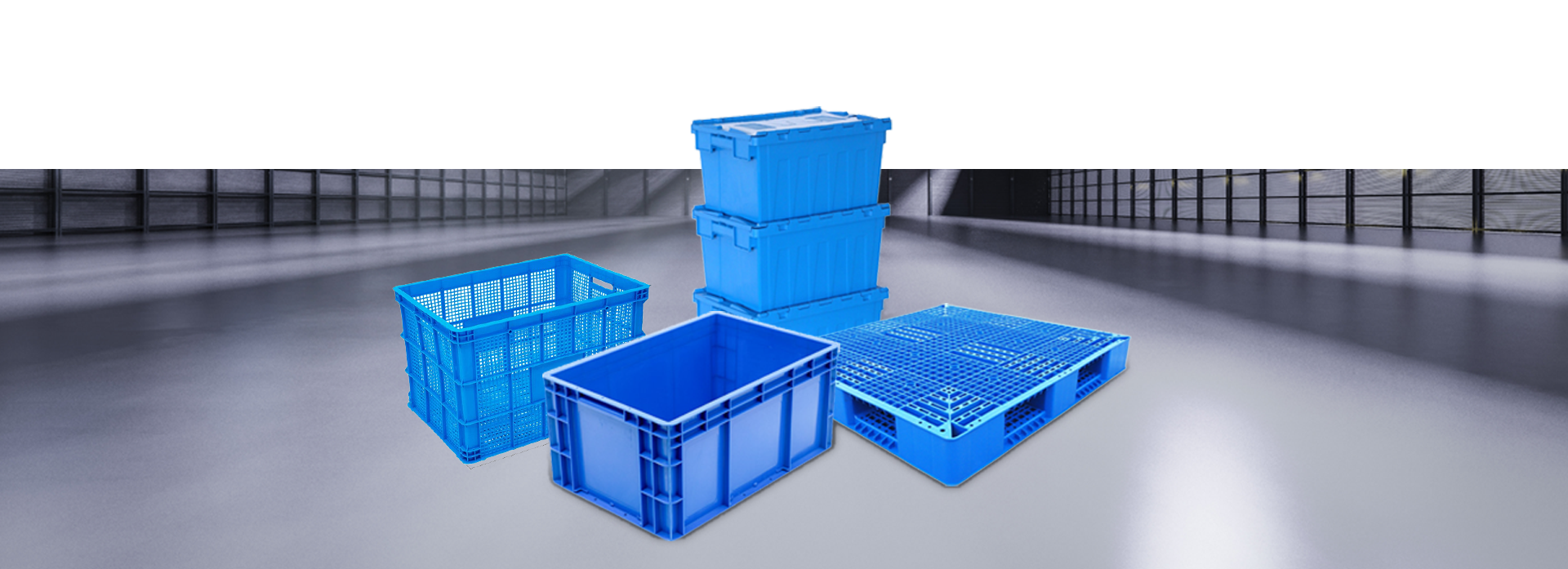
As a manufacturer and supplier, Bingo sources tanks produced via certified rotomolding facilities to ensure seamless construction for its bulk liquid container product range, which integrates directly with pallet handling and warehousing systems.
Key Performance Standards and Certifications to Verify Before Purchase
Never purchase plastic water tanks for regulated applications without verifying applicable certifications. Non-compliant tanks expose operators to product liability, regulatory penalties, and contamination risk.
Potable Water Contact
- NSF/ANSI 61 (North America): The gold standard for drinking water system components. Tanks certified to this standard have been tested for extractable contaminants at concentrations safe for human consumption.
- WRAS (UK) / ACS (France) / KTW (Germany): Regional equivalents enforced in European markets.
- FDA 21 CFR: Required when tanks contact food ingredients or food-grade liquids in the United States.
Dangerous Goods Transport
- UN/DOT Certification: IBC tanks used to transport hazardous chemicals must carry a UN certification mark indicating tested performance against drop, stacking, hydraulic, and vibration tests per UN Model Regulations Chapter 6.5.
- ADR/IMDG Compliance: Required for road transport of dangerous goods in Europe and maritime shipping internationally.
Structural and Material Standards
- ISO 16156: Specifies requirements for the design and manufacture of HDPE tanks for above-ground use.
- ASTM D1998: Standard specification for polyethylene upright storage tanks, widely referenced in North American procurement specifications.
Plastic Water Tanks in Warehousing and Logistics: Integration Considerations
For logistics and warehousing operations, the physical compatibility of liquid storage containers with existing material handling equipment is as important as chemical performance. Poorly integrated tanks create bottlenecks, safety hazards, and increased labor costs.
Pallet Compatibility
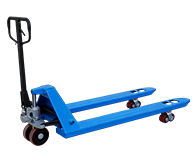
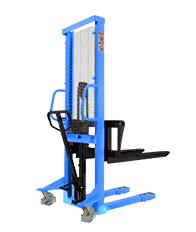
IBC tanks are designed around the standard 1,200 × 1,000 mm Euro pallet footprint, enabling direct handling with manual pallet trucks (rated typically for 2,000–3,000 kg loads) and electric pallet jacks. This interoperability eliminates custom handling equipment and integrates seamlessly into standard warehouse racking configurations. Bingo, as a manufacturer and supplier of both pallet handling equipment and bulk containers, provides pre-validated compatibility specifications between its IBC product line and its manual and electric pallet truck range.
Stacking and Racking
Standard IBC tanks are tested to support stacking loads of at least 4 full IBCs (approximately 4,400 kg) when stored in certified racking systems. Flat-bottom vertical tanks, however, are generally not stackable and require dedicated floor space or bespoke support frames. This distinction significantly affects warehouse space utilization calculations—a critical metric in high-cost urban logistics hubs.
Dispensing and Plumbing Integration
Bottom outlet fittings should conform to standardized thread patterns (BSP or NPT) to ensure compatibility with downstream pumps, valves, and piping. IBC tanks standardly use a 2-inch BSP butterfly valve at the base, compatible with most industrial dispensing systems. Specifying non-standard fittings adds cost and lead time to plumbing integration projects.
Cleaning and Reuse Protocols
Reusable IBCs require validated cleaning-in-place (CIP) protocols between product changeovers. HDPE's smooth, non-porous inner surface supports effective CIP with water temperatures up to 60°C and standard alkaline or acid cleaning agents. Cross-contamination risk assessment should be documented when switching between food-grade and non-food-grade contents, even after cleaning.
Durability and Lifespan: What to Realistically Expect
Lifespan expectations vary considerably depending on material grade, UV exposure, chemical contact, and maintenance practices.
Table 2: Typical Lifespan of Plastic Water Tanks by Material and Environment
| Material |
Indoor / Shaded |
Outdoor / UV Exposed |
Chemical Service |
| UV-Stabilized HDPE |
20 – 30 years |
10 – 20 years |
5 – 15 years* |
| Polypropylene (PP) |
15 – 25 years |
8 – 15 years |
7 – 20 years* |
| Standard LLDPE |
10 – 20 years |
5 – 12 years |
3 – 10 years* |
*Lifespan in chemical service depends heavily on the specific chemical, concentration, and operating temperature. Always consult a chemical resistance chart from the manufacturer before specifying material.
The single most common cause of premature tank failure is UV degradation combined with mechanical stress from improper installation. Tanks installed on uneven surfaces develop stress concentrations at the base that accelerate fatigue cracking—even in UV-stabilized materials. Always install vertical tanks on flat, load-bearing concrete pads or purpose-built tank stands.
Maintenance Best Practices to Maximize Tank Service Life
Consistent maintenance protocols significantly extend service life and preserve product integrity. The following practices are recommended for all plastic water tank installations:
- Annual visual inspection: Check for surface crazing, discoloration, deformation at the base, and fitting connection integrity. Early detection of UV degradation (chalky white surface bloom) indicates the need for UV-protective coating reapplication.
- Bi-annual internal cleaning: Drain completely and flush with clean water. For potable water tanks, follow a chlorine-based sanitization protocol (200 ppm sodium hypochlorite solution, 30-minute contact time, full rinse).
- Fitting and valve inspection: Replace any fittings showing thread wear, cracking, or leakage. HDPE tanks are particularly susceptible to stress cracking around fittings when over-torqued during installation—torque specifications should be documented and followed precisely.
- IBC-specific: Inspect the outer steel cage for corrosion, especially at weld points, and replace cages showing structural compromise even if the inner tank remains intact. A failed cage eliminates stacking capability and creates a safety hazard.
- Record keeping: Maintain a logbook of fill history, cleaning dates, chemical contacts, and inspection findings. This documentation is required for regulatory compliance in food, pharmaceutical, and chemical applications.
Sustainability and End-of-Life Considerations for Plastic Water Tanks
Sustainability is an increasingly significant factor in procurement decisions. HDPE and PP are both categorized as recyclable thermoplastics, carrying resin identification codes #2 (HDPE) and #5 (PP) respectively. End-of-life tanks that have not been contaminated with hazardous materials can be fed into industrial recycling streams to produce secondary resin for non-food-contact applications such as drainage pipes, traffic barriers, and pallets.
Life cycle analysis studies indicate that a rotomolded HDPE tank with a 20-year service life generates approximately 60–70% less CO₂ equivalent per liter of storage capacity per year than an equivalent galvanized steel tank, primarily because it eliminates the energy-intensive galvanizing process and the recurring anti-corrosion maintenance burden.
Manufacturers and suppliers increasingly offer take-back programs for decommissioned IBCs, where the outer cage is refurbished and the inner HDPE bottle is recycled. This circular model reduces the environmental footprint of liquid bulk logistics while lowering total procurement cost for high-volume operators.
How to Select the Right Plastic Water Tank for Your Operation
A structured selection process prevents costly specification errors. Use the following decision criteria:
- Define the stored liquid: Water, chemical, food-grade liquid, or hazardous material? Each category narrows material and certification requirements immediately.
- Determine operating temperature range: If temperatures exceed 60°C, eliminate HDPE and specify PP or fiberglass-reinforced options.
- Assess installation environment: Indoor/outdoor, UV exposure level, seismic zone (relevant for large fixed tanks), and available floor area all drive tank geometry selection.
- Evaluate logistics integration: If the tank must be moved by pallet truck or integrated into racking, an IBC is almost always the correct specification. If stationary bulk storage is the requirement, a vertical rotomolded tank provides the best cost-per-liter ratio.
- Confirm certification requirements: Specify the applicable certifications in your purchase order. Do not accept substitutions without documented equivalency from the supplier.
- Calculate total cost of ownership (TCO): Factor in expected service life, maintenance frequency, cleaning costs, and end-of-life disposal rather than comparing headline unit costs alone.
As a manufacturer and supplier specializing in integrated warehousing and logistics equipment solutions, Bingo is positioned to provide coordinated sourcing of bulk liquid containers alongside the pallet trucks, stackers, and storage container systems needed to handle them efficiently—simplifying procurement and ensuring equipment compatibility across the full material handling chain.

 en
en  Español