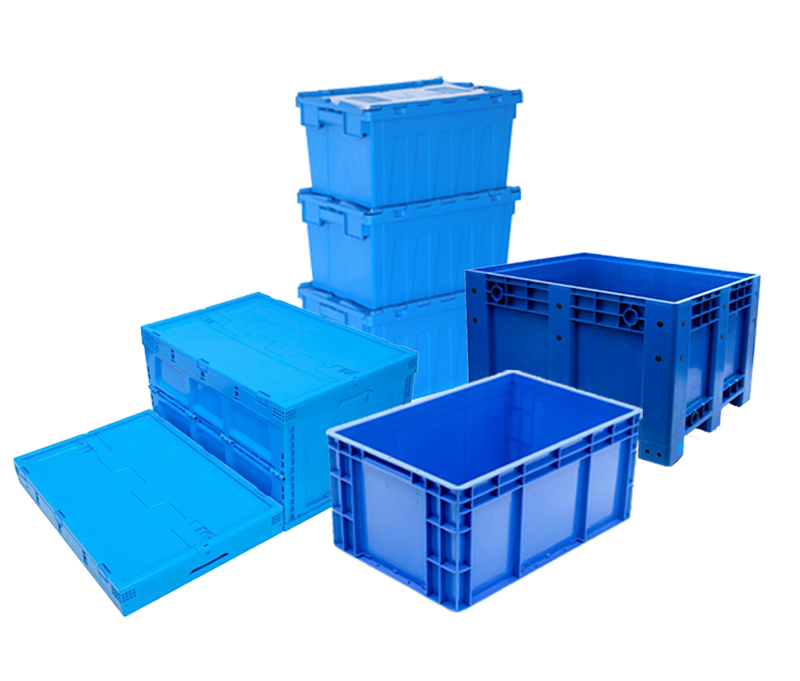
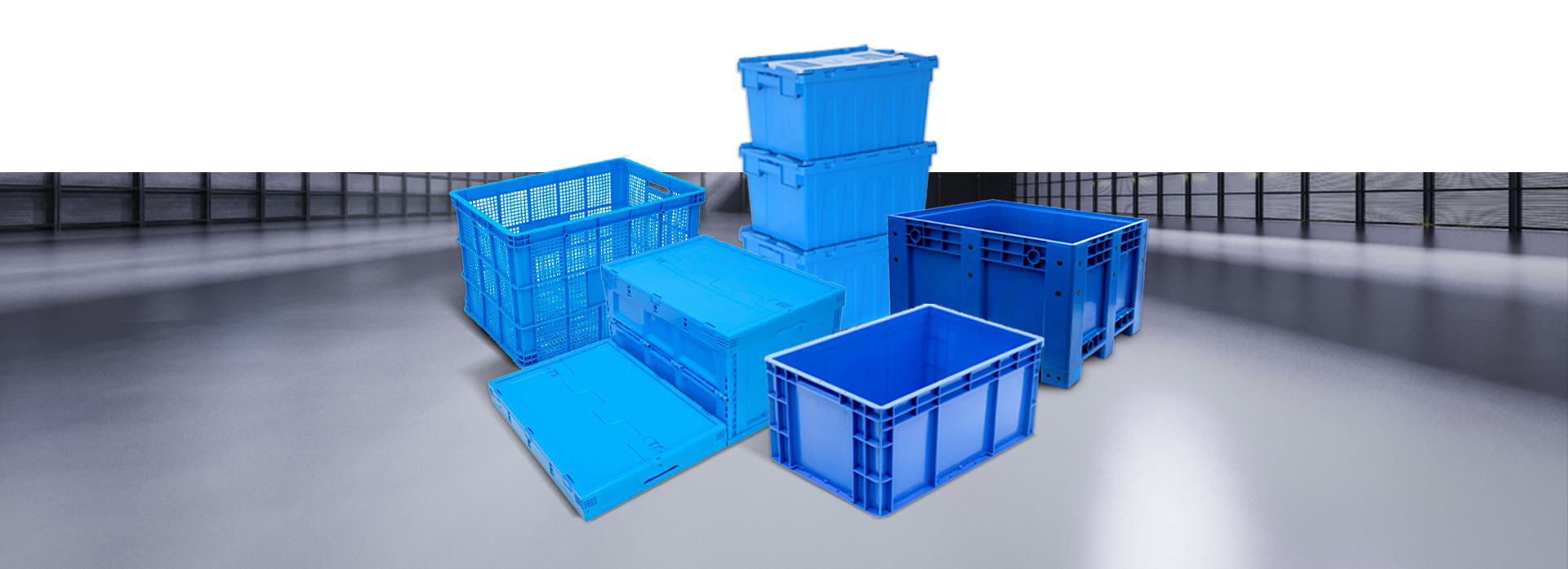
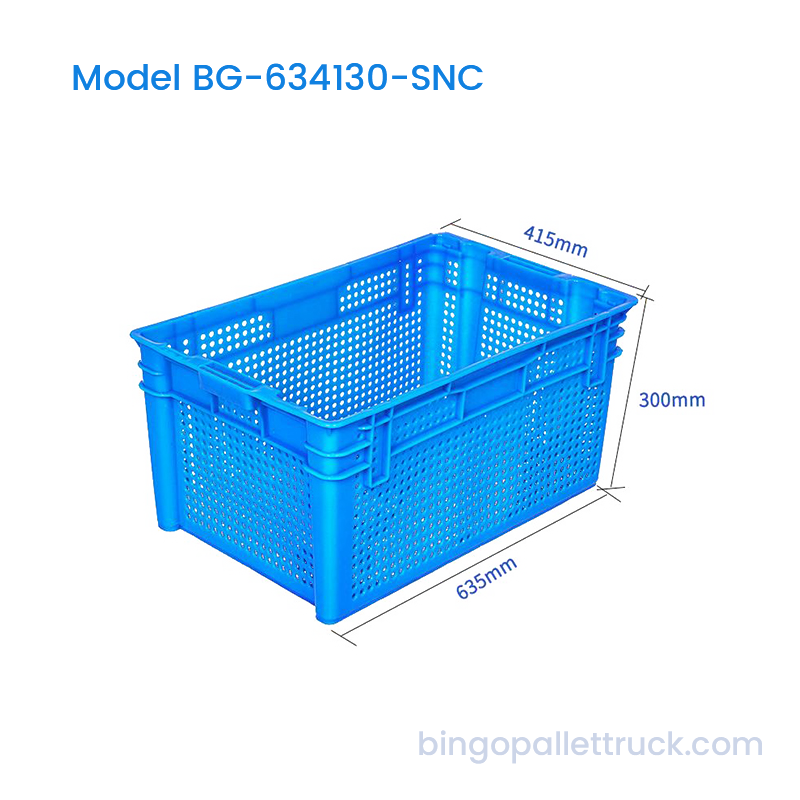
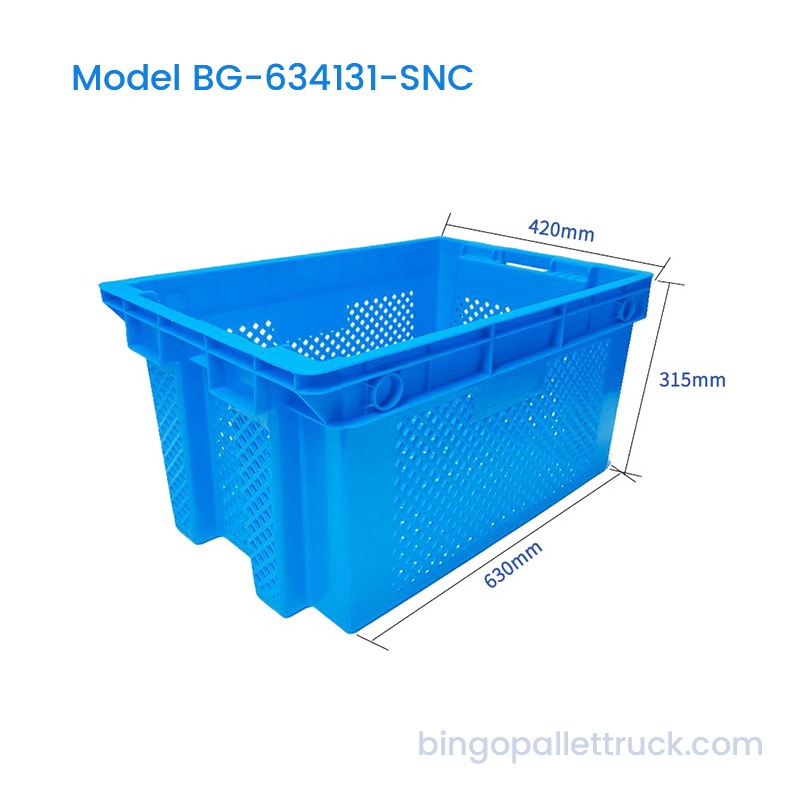
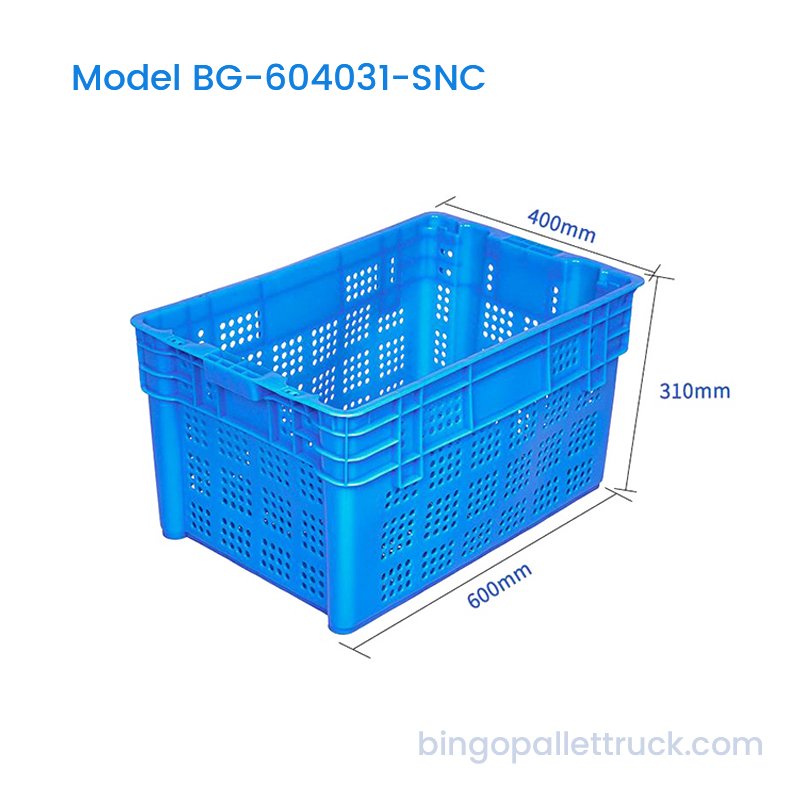
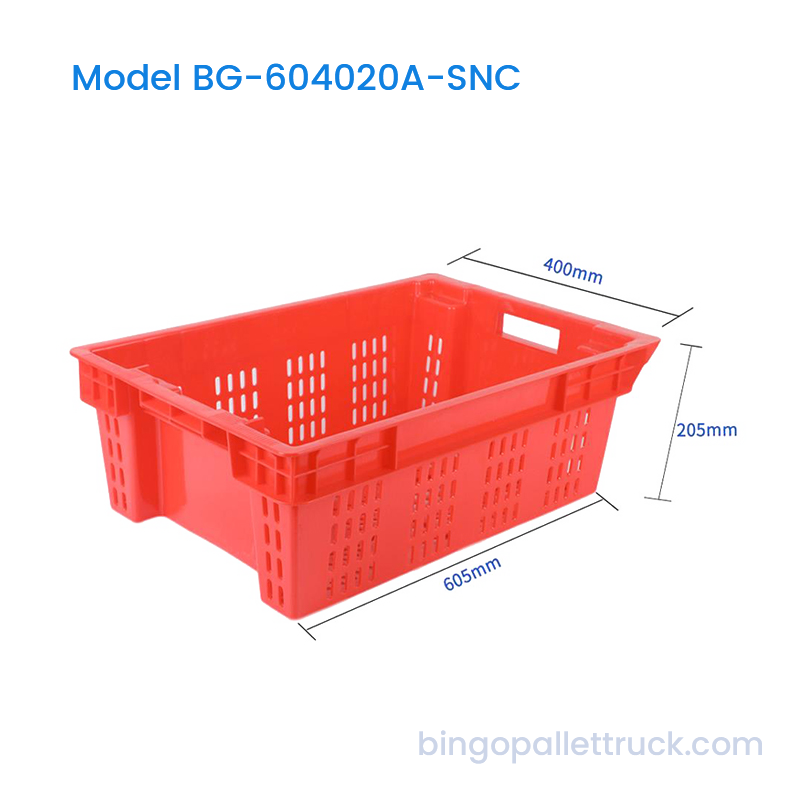
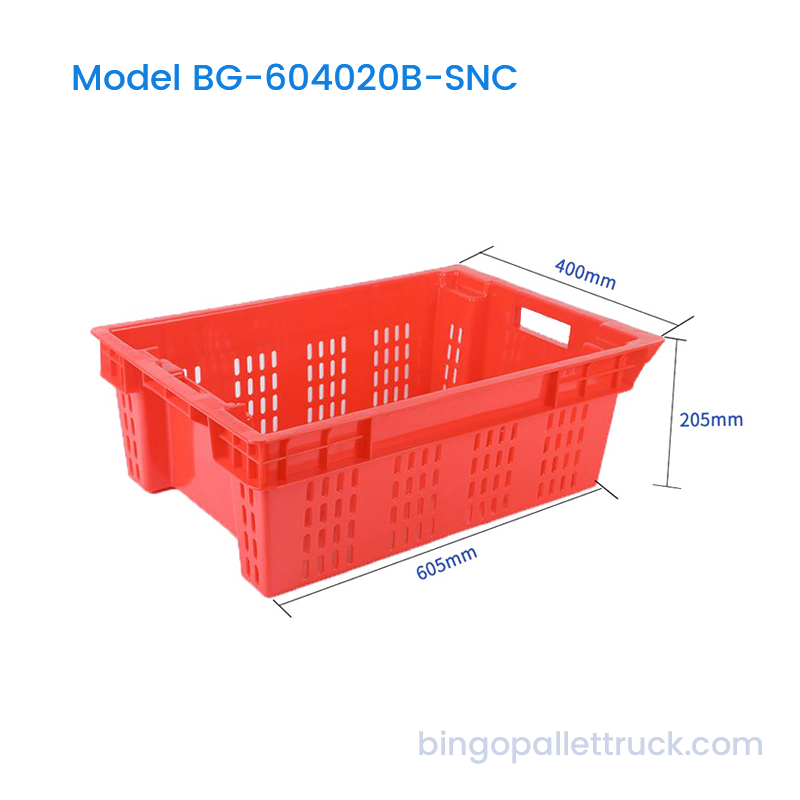
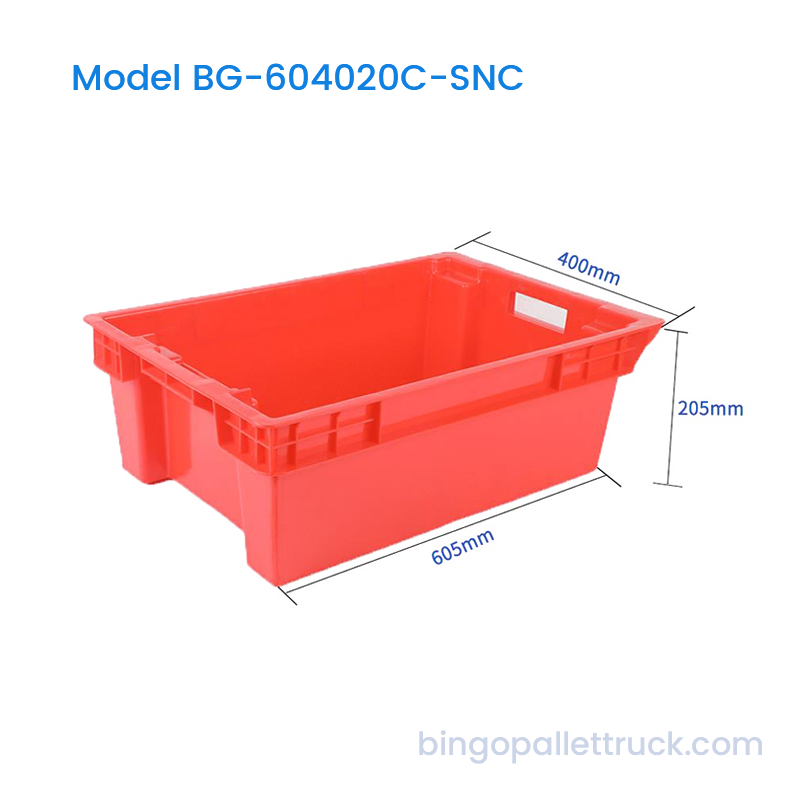
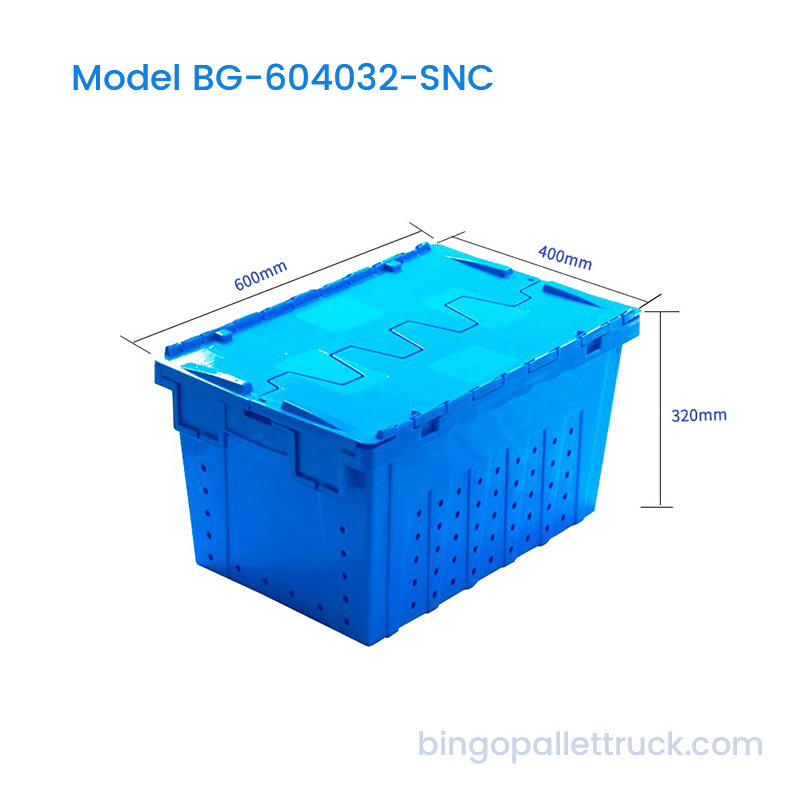
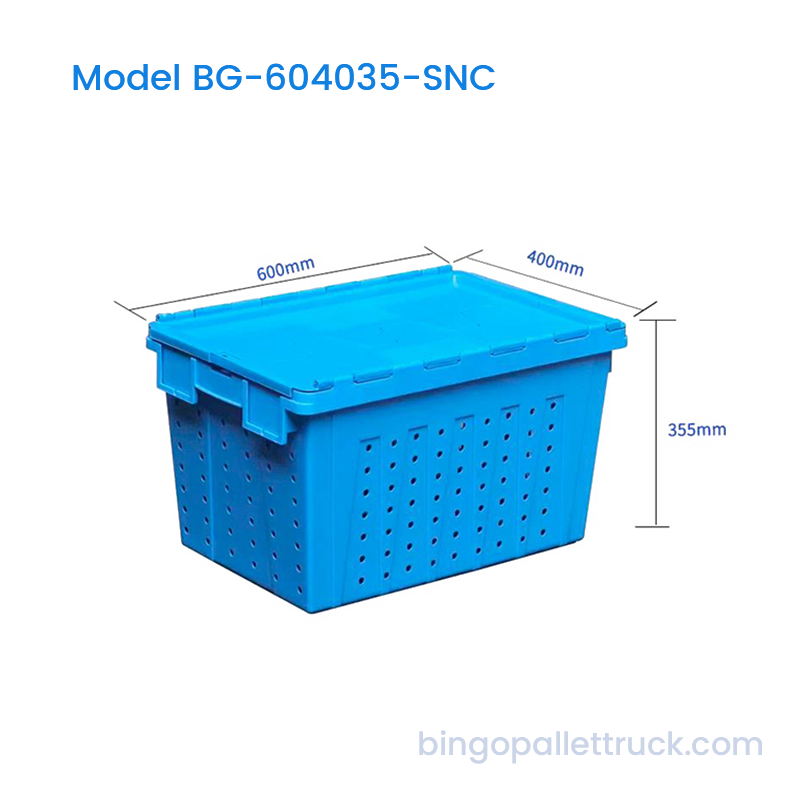
Stack & Nest Plastic Crates represent a hybrid container architecture that switches between vertical stacking and nested storage through a 180-degree rotation of the crate body. Engineered by Yancheng Bingo Machinery Equipment Co., Ltd., these crates feature a bi-directional rim profile: one orientation presents stacking ledges that interlock for stable column loads, while the inverted orientation exposes tapered nesting shoulders that allow empty units to nest inside one another with a space reduction of up to 75%. This dual-mode capability eliminates the need for separate container fleets dedicated to either storage or return logistics.
The mode-switching mechanism relies on geometric asymmetry rather than moving parts, ensuring zero mechanical wear over the product lifecycle. When oriented for stacking, the crate's straight-wall section engages with identical crates above and below to form a rigid column rated for 200 kg of static load. When flipped 180 degrees for nesting, the same crate slides into a matching unit with a smooth, self-centering action guided by molded draft angles. Yancheng Bingo Machinery Equipment Co., Ltd. validates each mold cavity with laser scanning to guarantee that the stacking-nesting transition angle remains within ±0.3 degrees across production batches.
Technical Specifications
Table 1: Stack & Nest crate dual-mode performance and dimensional data
| Model |
External Dimensions (L×W×H) |
Internal Volume |
Stack Mode Load |
Nest Mode Height Reduction |
Max Stack Height |
Wall Thickness |
| SNC-4830 |
480 × 320 × 300 mm |
32 L |
40 kg |
75% |
6 crates |
3.0 mm |
| SNC-6035 |
600 × 400 × 350 mm |
58 L |
50 kg |
78% |
5 crates |
3.2 mm |
| SNC-7540 |
750 × 500 × 400 mm |
105 L |
65 kg |
80% |
4 crates |
3.5 mm |
| SNC-8050 |
800 × 600 × 500 mm |
168 L |
80 kg |
82% |
4 crates |
4.0 mm |
Bi-Directional Rim Architecture
Stacking Orientation
In the stacking orientation, the crate rests on its base with the rim's upper flange facing outward. Four corner posts with interlocking recesses engage with the feet of the crate above, creating a positive mechanical connection that resists lateral displacement up to 200 N of shear force. The straight-wall section between posts maintains a draft angle of less than 0.5 degrees, ensuring that internal volume is preserved even when loaded with bulk powders or granular materials that would settle into tapered gaps.
Nesting Orientation
When rotated 180 degrees, the rim's lower shoulder becomes the leading edge, presenting a 7-degree draft angle that guides the crate into the unit below. Molded nesting stops prevent over-insertion beyond the designed engagement depth, preserving handgrip clearance and preventing vacuum lock during separation. Yancheng Bingo Machinery Equipment Co., Ltd. applies a proprietary surface treatment to the nesting contact zones, reducing the coefficient of friction by 35% compared to untreated polypropylene.
Application Scenarios
- Seasonal Retail Operations: Stack mode supports high-density storage of holiday inventory during peak seasons; nest mode collapses the empty fleet for off-season warehousing, recovering up to 80% of floor space.
- Multi-Stop Delivery Routes: Drivers can stack loaded crates for outbound delivery and nest empties at each drop point, maximizing vehicle cube utilization throughout the route without requiring separate container types.
- Event and Exhibition Logistics: The dual-mode design simplifies booth setup (stacked display crates) and teardown (nested return transport), reducing labor time and material handling equipment needs.
- Pharmaceutical Batch Processing: Color-coded crate batches can be stacked during active production and nested during cleanroom changeover periods, supporting lean manufacturing workflows with minimal container inventory.
Customization and Accessories
Yancheng Bingo Machinery Equipment Co., Ltd. offers accessories engineered to function in both stacking and nesting orientations without compromising either mode:
- Reversible lids with asymmetric sealing profiles that lock in stack mode and self-clear in nest mode, maintaining the full nesting depth.
- Dual-sided label pockets readable in either orientation, eliminating the need to rotate crates for inventory scanning.
- Shock-absorbing corner bumpers molded from TPE that protect both the stacking ledges and nesting shoulders from impact damage during mode transitions.
- Interlocking base runners that align with pallet deck boards in stack mode and recess flush in nest mode to prevent hang-up on conveyor rollers.
Frequently Asked Questions
1.How does the stack-and-nest mechanism work without moving parts?
The mechanism relies entirely on geometric asymmetry molded into the rim profile. One side of the rim is optimized for vertical interlocking (stacking), while the opposite side is tapered for nesting. Rotating the crate 180 degrees switches which profile engages with adjacent units. Because there are no hinges, latches, or slides, Yancheng Bingo Machinery Equipment Co., Ltd. guarantees the mode-switching function for the entire service life of the container without maintenance or wear-related degradation.
2.Can operators accidentally nest a crate when stacking is intended?
The rim geometry prevents cross-mode engagement. If a crate is placed in the wrong orientation on top of a stacked column, the incompatible profiles create a visible 5 mm gap and physical instability that alerts the operator immediately. Yancheng Bingo Machinery Equipment Co., Ltd. also offers optional orientation indicators—molded arrows on the short sidewalls—that confirm the correct mode at a glance.
3.What is the nesting height per unit when fully nested?
Nesting height varies by model. For the SNC-6035, each nested unit adds approximately 78 mm to the stack height, compared to 350 mm in stack mode. This means a column of 10 nested crates occupies the same vertical space as 2.2 stacked crates. Yancheng Bingo Machinery Equipment Co., Ltd. provides nesting calculators that factor in pallet height and warehouse clearances to optimize empty-crate storage configurations.
4.Are stack-and-nest crates compatible with standard pallet dimensions?
Yes. The external footprint of the SNC series aligns with ISO 6780 pallet modules: the SNC-6035 fits two-across on a 1200 × 1000 mm pallet, while the SNC-8050 fits one-per-pallet with perimeter clearance for stretch wrapping. In nest mode, the reduced height allows approximately 3.5× more units per pallet layer during empty-crate return shipments, directly reducing freight costs.
5.How does the dual-mode design affect container weight and material efficiency?
The bi-directional rim requires approximately 15% more material than a single-mode nestable crate of equivalent capacity, but this is offset by eliminating the need for a second container fleet. Yancheng Bingo Machinery Equipment Co., Ltd. optimizes material distribution through topology analysis, concentrating mass in the rim and corner posts while minimizing wall thickness in non-critical areas. The result is a container that weighs only 8–12% more than a dedicated stackable crate while delivering both functions.

 en
en  Español