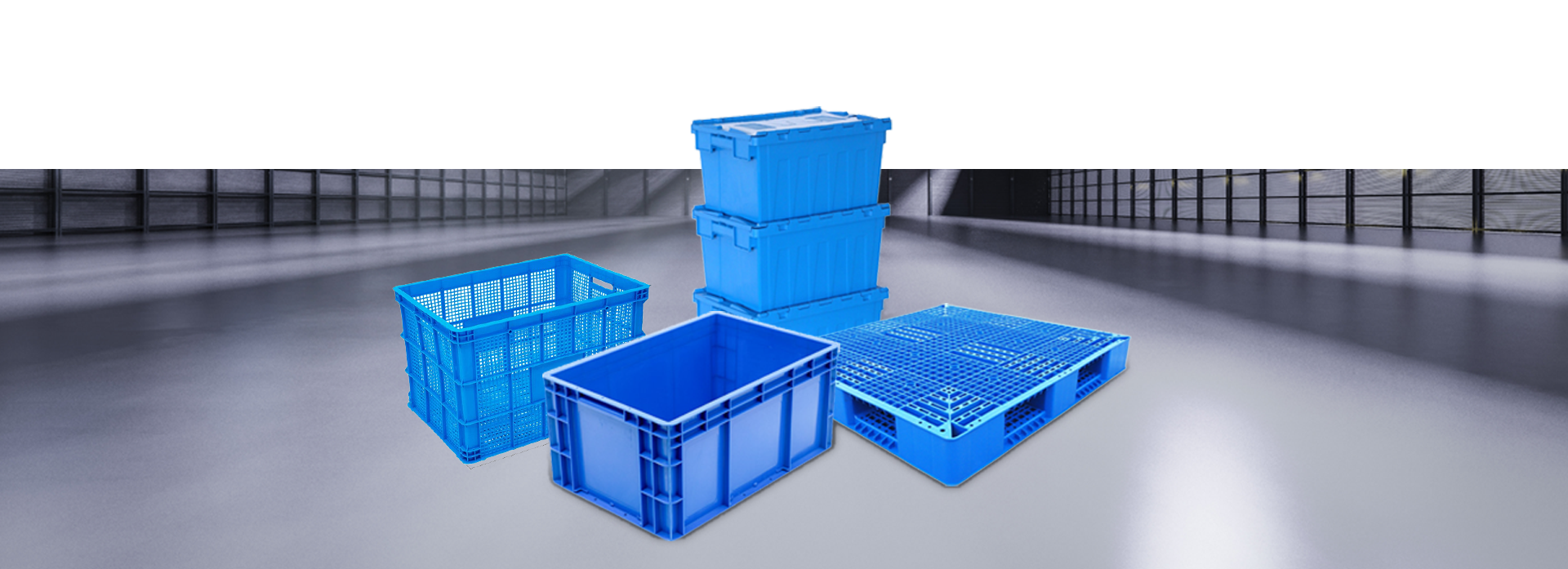
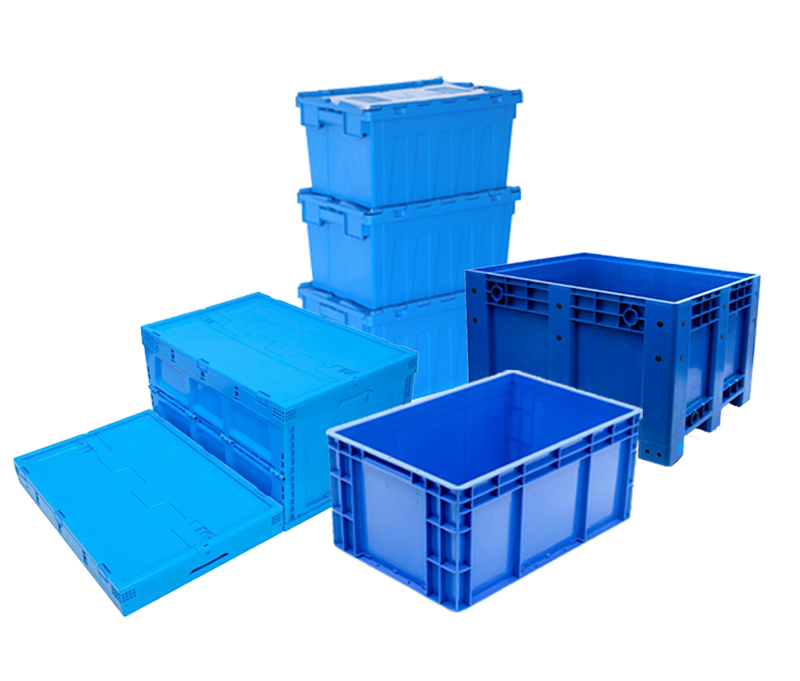
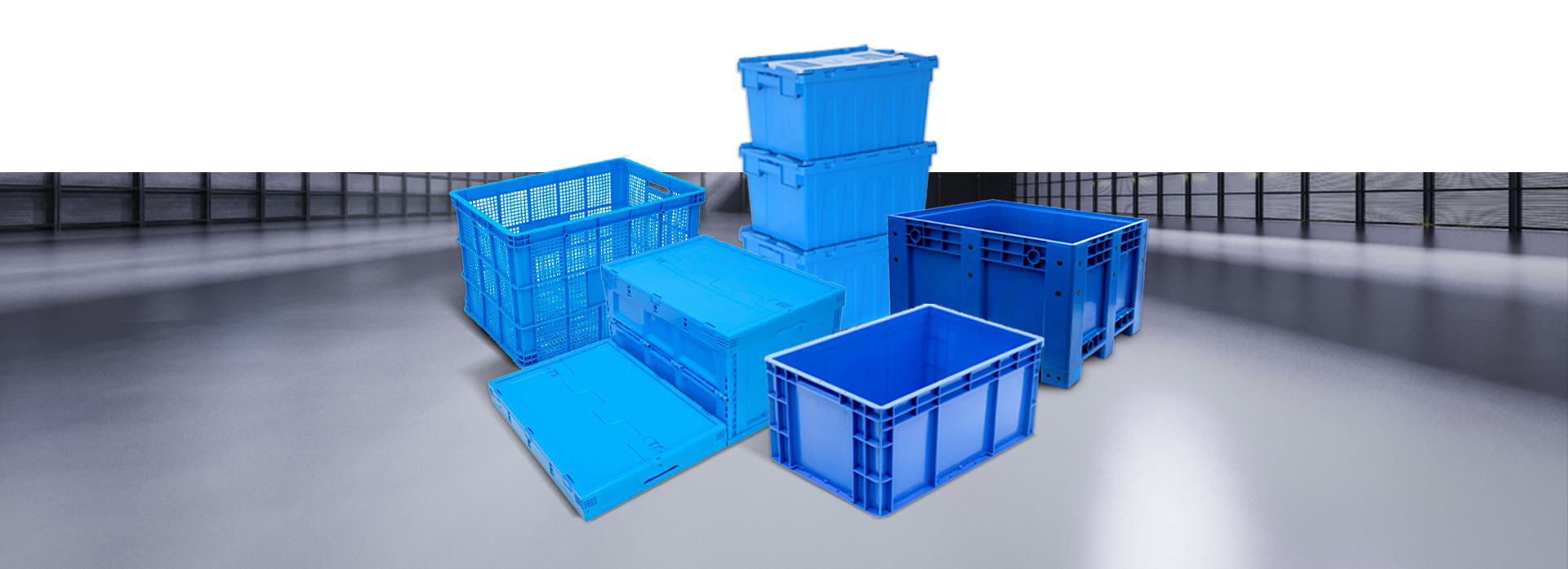
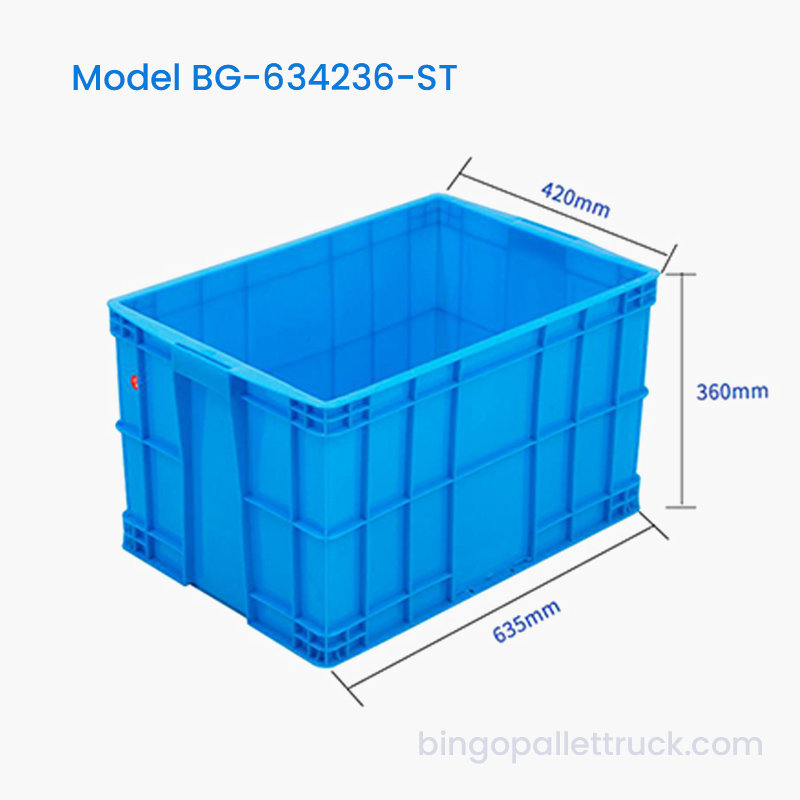
Stackable plastic totes are rigid, straight-sided containers engineered to support the full weight of loaded totes placed on top of them, forming stable multi-tier columns without racking infrastructure. Unlike collapsible or nestable designs that prioritise empty-state space efficiency, stackable totes are optimised for maximum structural performance under load — making them the preferred container for heavy industrial parts, food logistics, bulk goods transport, and any warehouse environment where loaded stacking in columns or on shelving is the primary storage method. Bingo's stackable tote range spans an exceptionally wide capacity spectrum from 30 litres to 258 litres, all manufactured in HDPE to meet the demands of both food-contact and heavy industrial applications.
The stacking mechanism in a stackable tote relies on the geometry of the tote's rim and base. The base of the upper tote is dimensioned to sit precisely on the inner ledge or locating rail of the lower tote's rim — rather than resting on the tote's contents — transferring the entire vertical load through the tote wall structure. This load path through rigid HDPE walls is fundamentally different from stacking cardboard cartons, where the contents bear the compressive load and box failure is a constant risk.
Anti-slip or interlocking features moulded into the rim and base — such as corner recesses, raised ribs, or tongue-and-groove profiles — prevent lateral movement of the upper tote during handling and transport. A properly dimensioned HDPE stackable tote can sustain stacking loads of 50–150 kg or more per tote depending on wall thickness, material grade, and body geometry, supporting 4–6 loaded tiers in floor block stacking without the need for shelving or racking systems.
Bingo Stackable Plastic Tote Range: Key Models and Applications
Bingo's stackable tote range covers the full spectrum from compact workshop bins to large-volume industrial containers, all in HDPE construction. Selected key models are shown below.
| Model |
Capacity |
Typical Application |
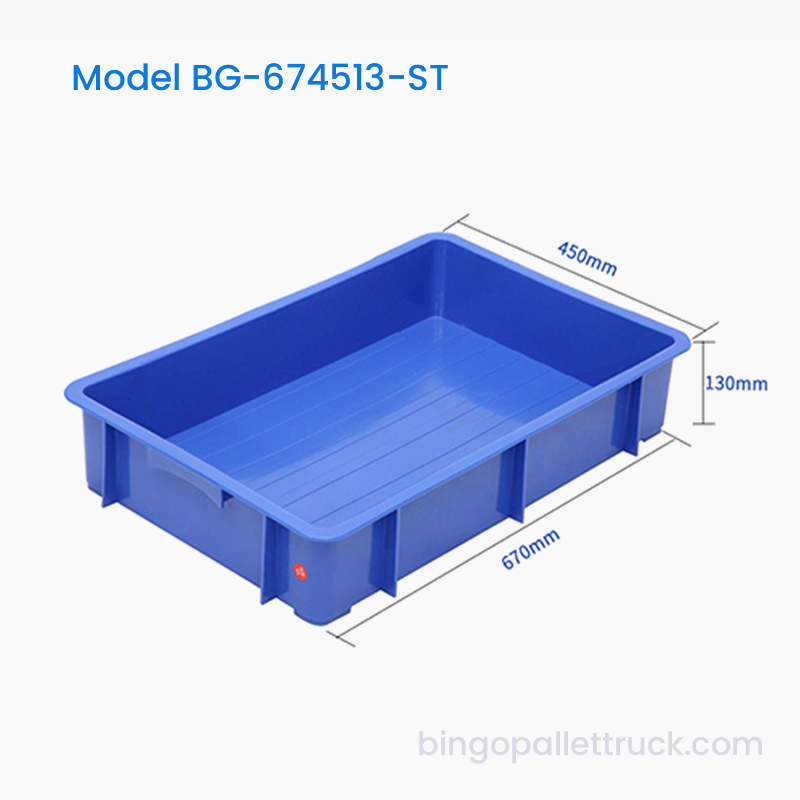
| BG-674513-ST |
30 L |
Shop small goods, retail shelving, compact parts storage |
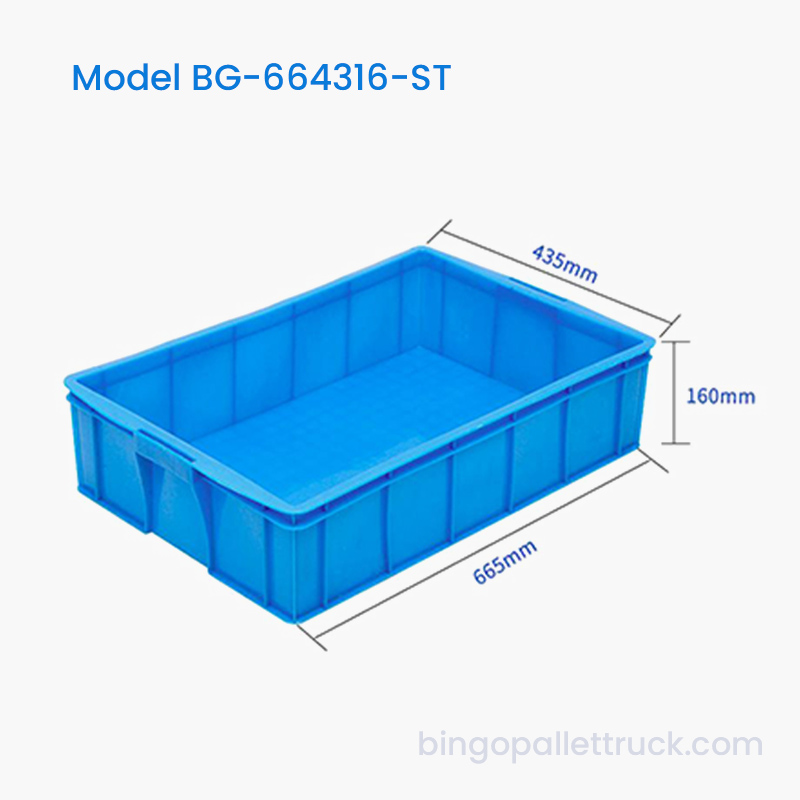
| BG-664316-ST |
36 L |
Small machine parts, workshop storage |
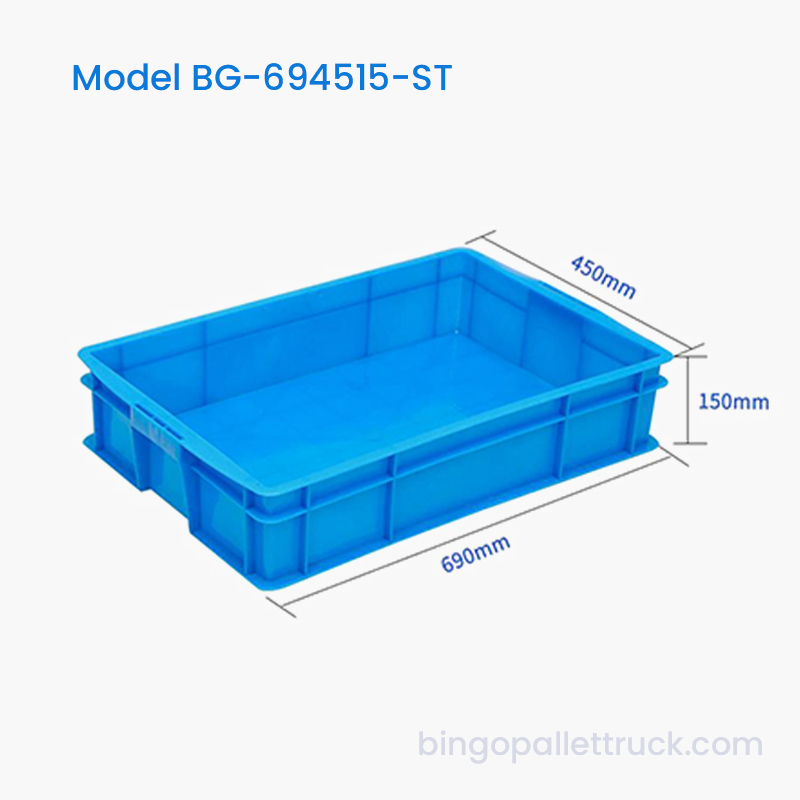
| BG-694515-ST |
37 L |
Fasteners, screws, and small hardware |
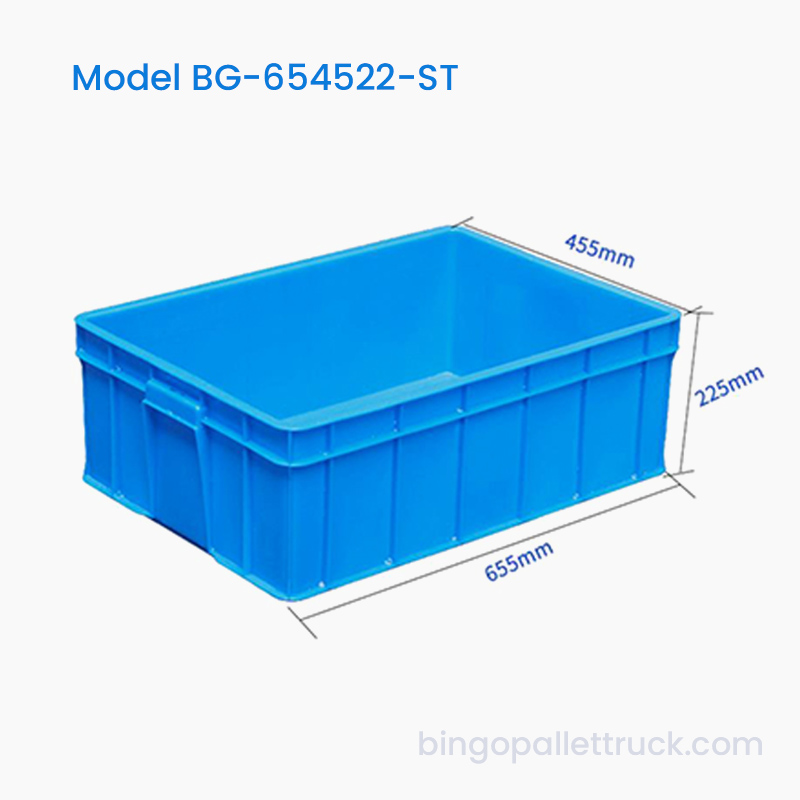
| BG-654522-ST |
56 L |
Food logistics, HDPE food-grade storage and transport |
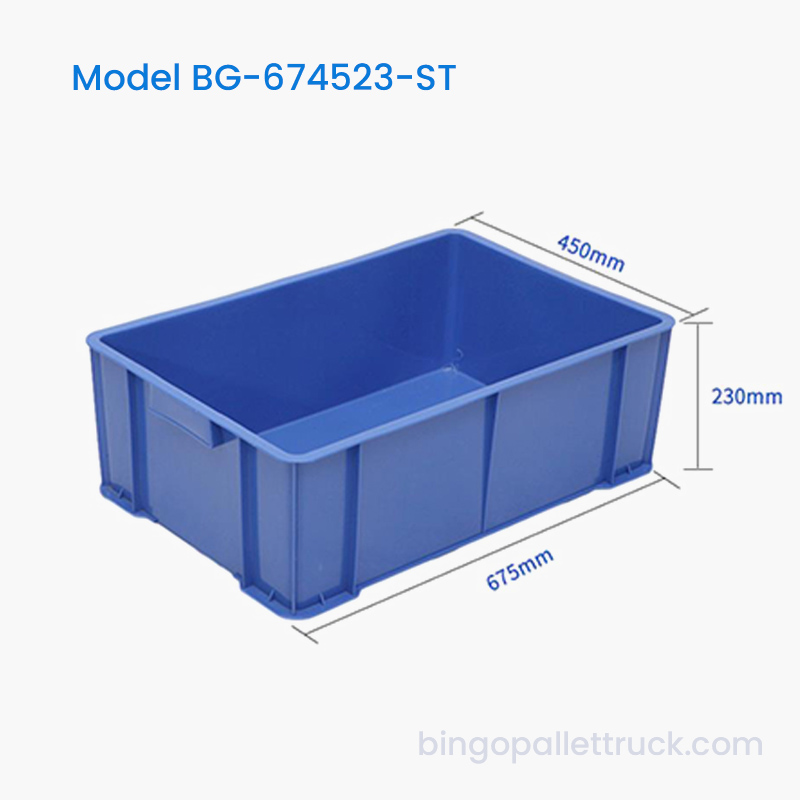
| BG-674523-ST |
58 L |
Food storage and transport, distribution centres |
| BG-634236-ST |
78 L |
Industrial warehouse storage, general logistics |
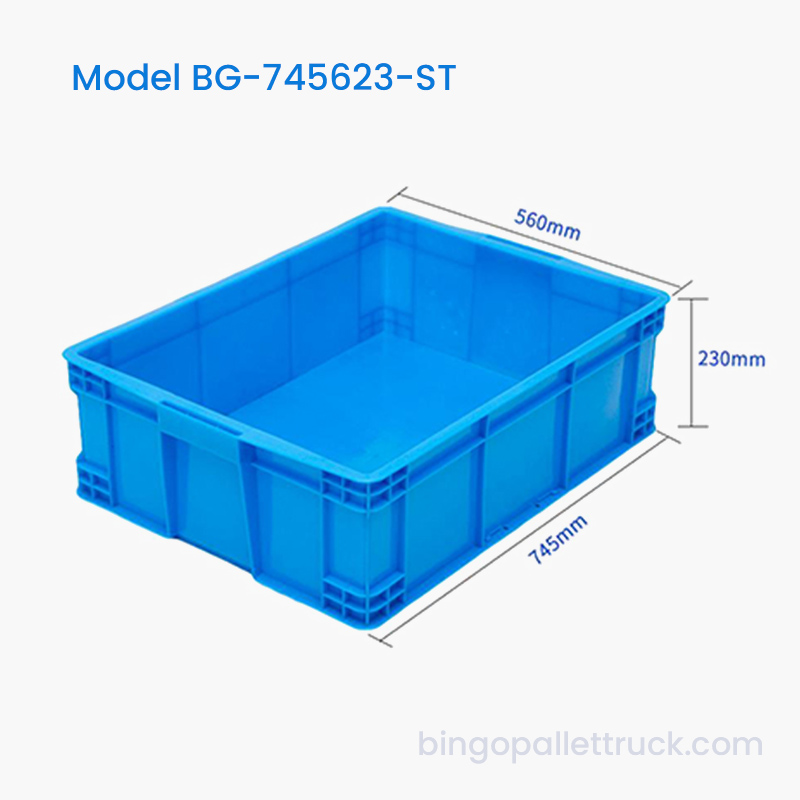
| BG-745623-ST |
77 L |
Workshop parts, HDPE industrial storage |
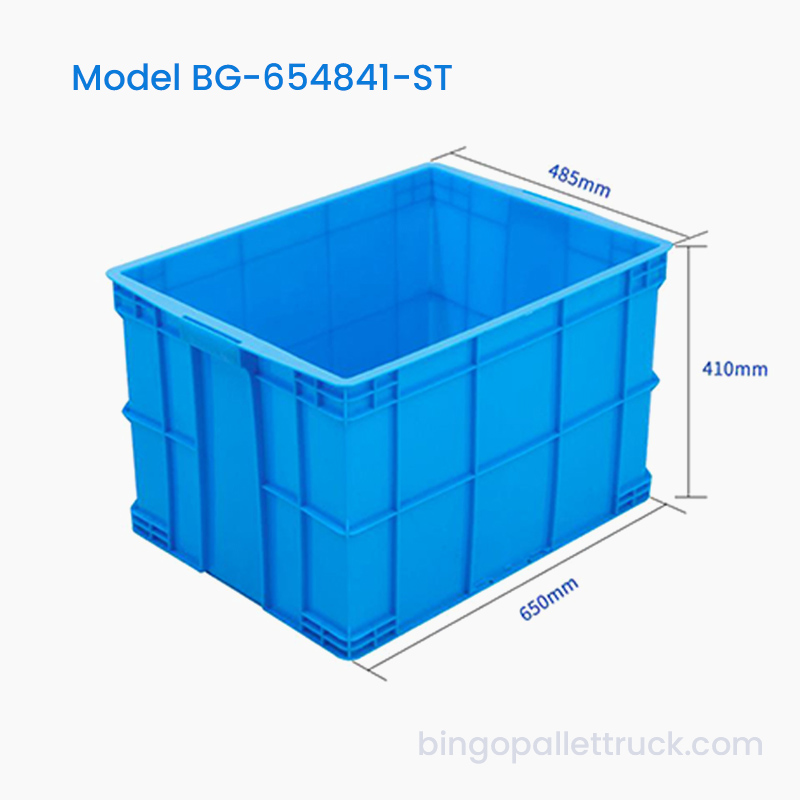
| BG-654841-ST |
106 L |
High-capacity heavy-duty industrial storage |
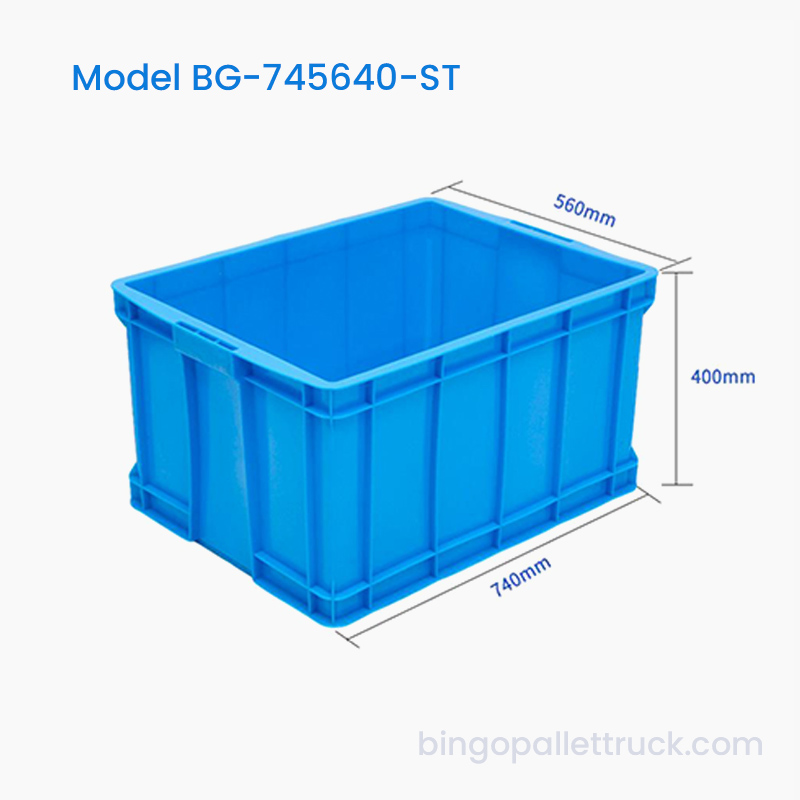
| BG-745640-ST |
137 L |
Bulk goods transport, heavy-duty logistics |
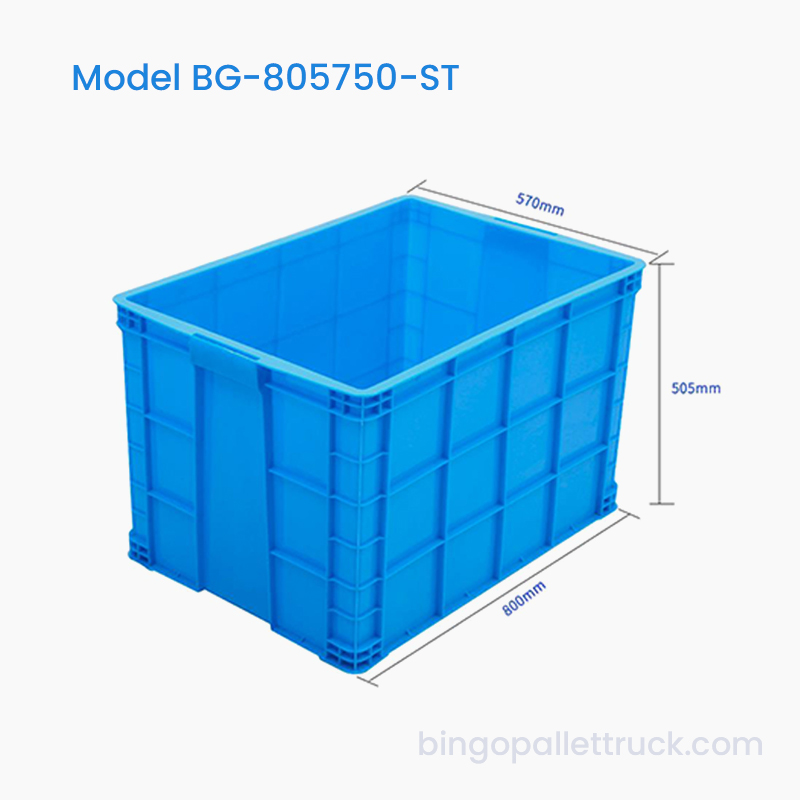
| BG-805750-ST |
194 L |
Large component storage, industrial supply chains |
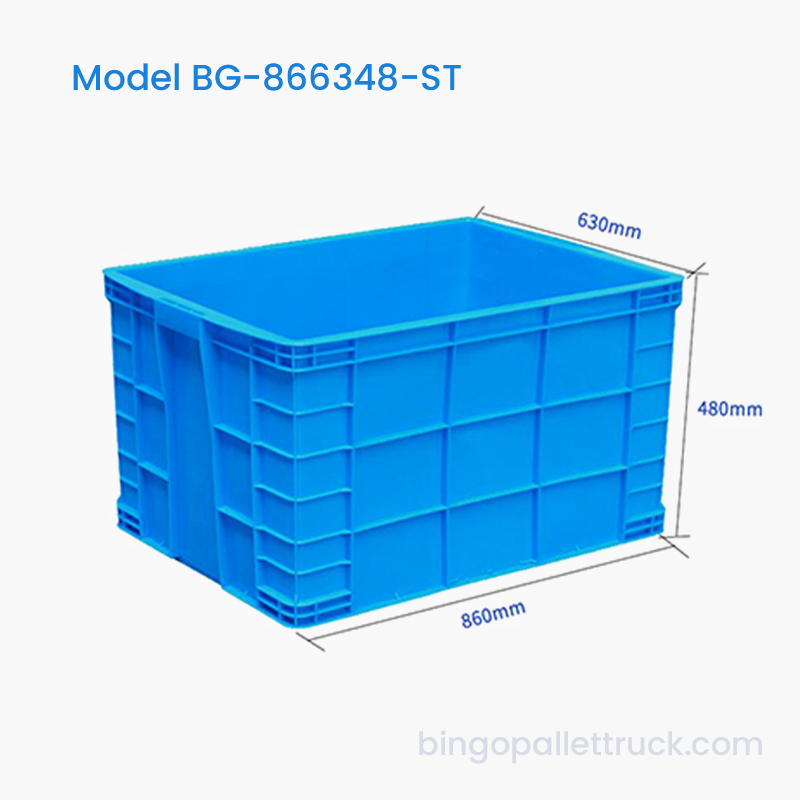
| BG-866348-ST |
212 L |
Large industrial storage, manufacturing logistics |
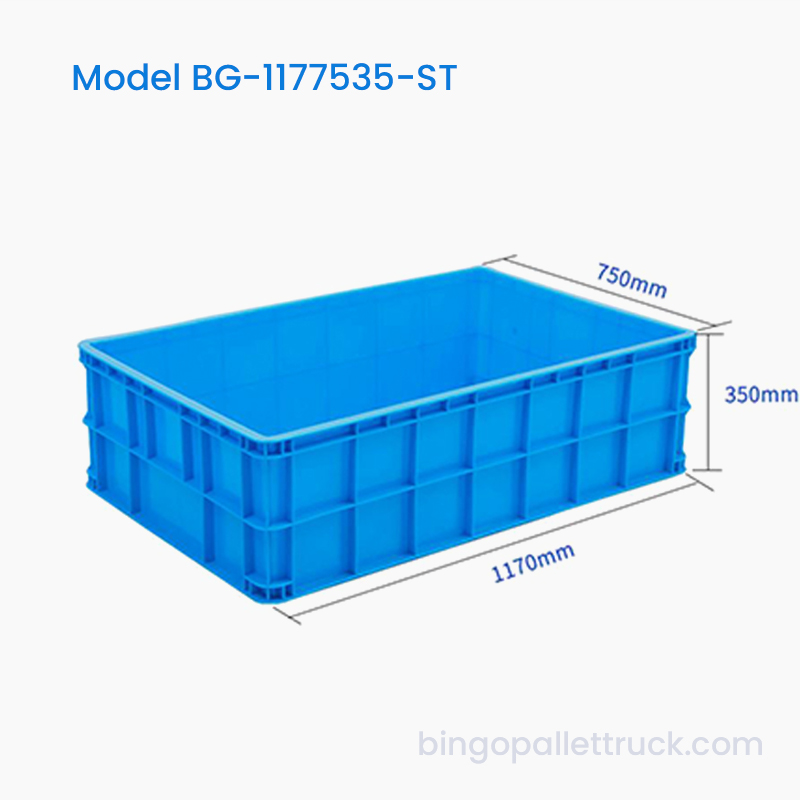
| BG-1177535-ST |
258 L |
Bulk goods storage, heavy-duty warehousing |
Selected Bingo stackable plastic tote models, capacities, and primary applications
Key Advantages of Stackable Plastic Totes
- No racking infrastructure required: Stackable totes create their own vertical storage columns on any flat floor surface. A warehouse using stackable totes for short-term staging or overflow storage can achieve 3–5 tiers of loaded storage height without the capital investment of shelving or pallet racking, making them ideal for flexible or temporary storage zones.
- Consistent dimensional performance: HDPE injection-moulded totes maintain precise external dimensions throughout their service life. This consistency ensures that stacked columns remain stable, shelf bays fill to their designed capacity, and conveyor systems handle totes without adjustment — unlike cardboard boxes that vary in size and compress under load.
- Wide capacity range for diverse applications: With models from 30L to 258L, a single stackable tote product family can serve small-parts workshop storage, mid-range food distribution, and large-volume industrial parts logistics simultaneously — allowing operations to standardise on one container type across multiple applications.
- HDPE chemical and moisture resistance: HDPE stackable totes resist oils, cleaning chemicals, mild acids, and alkalis — making them suitable for industrial environments where totes are exposed to lubricants or workshop residues — and are impervious to moisture, eliminating the structural failure and hygiene risks associated with wet cardboard.
- Food-grade compliance for applicable models: HDPE models specified to food-grade standards (FDA, EU 10/2011, and equivalent regulations) are suitable for direct food contact applications, supporting clean-label supply chains from processing facility to retail distribution without secondary food-safe packaging.
- Long service life and total cost advantage: A quality HDPE stackable tote typically delivers 7–10 years of service in industrial warehouse environments. Compared to the continuous procurement and disposal cost of single-use cardboard, the total cost per use cycle of a reusable HDPE tote drops sharply after the first year of operation.
Matching Stackable Tote Size to Your Operation
Selecting the correct tote capacity requires balancing load weight, shelf dimensions, ergonomic handling limits, and throughput requirements. The following practical guidelines help narrow the choice:
- Ergonomic weight limit per tote: For manually lifted applications, a fully loaded tote should not exceed 15–20 kg to stay within safe manual handling limits. This means a 56L tote used for food products with a density of approximately 0.3 kg/litre has comfortable headroom; a 77L tote filled with dense metal parts may require mechanical lifting assistance.
- Shelf and bay depth compatibility: The external length and width of the tote must fit the shelf bay or drawer depth with enough clearance to remove the tote cleanly. Standardising on one or two external footprints across different capacity totes simplifies shelving specification and ensures all tote sizes can be accommodated on the same shelving system.
- Stacking height and floor load: In floor block stacking, multiply the loaded tote weight by the number of tiers to estimate the floor load at the base of each stack. Verify that the floor loading capacity of your facility can support the concentrated load of a fully loaded tote stack before deploying large numbers of stacked heavy totes.
- Container volume versus item count: For picking operations, the tote volume should allow a single pick face to hold a reasonable replenishment quantity — typically enough for 4–8 hours of picking demand — without requiring frequent refill trips that disrupt picker flow. Larger-capacity totes reduce replenishment frequency but may become too heavy to lift manually when full.
As an OEM Stackable Plastic Totes Supplier and Stackable Plastic Totes Factory, Bingo provides global customers with one-stop integrated solutions for material storage and handling. Bingo's stackable tote range — from compact 30L bins through to 258L heavy-duty containers — is manufactured in HDPE with strict quality inspection processes ensuring every product meets international standards. Committed to delivering cost-effective solutions for manufacturing, e-commerce logistics, warehousing and distribution, and supermarket retail, Bingo upholds the philosophy of "Quality First, Win-Win Cooperation".
How many loaded stackable totes can be safely stacked on top of each other?
The safe number of loaded tiers depends on the tote's rated stacking load, the actual weight per tote, and the stability of the contents. For Bingo's HDPE stackable tote range, most models support 4–6 loaded tiers within their stacking load rating when loads are uniformly distributed and totes are correctly aligned. Always refer to the manufacturer's stacking load specification — never estimate from visual inspection alone. Overloading the lower totes in a stack is the leading cause of tote wall cracking and stack collapse incidents.
Are stackable plastic totes suitable for food contact applications?
Yes, provided the tote is manufactured from food-grade HDPE meeting applicable food contact regulations (such as FDA 21 CFR or EU Regulation 10/2011). Bingo's food logistics models — including the 56L BG-654522-ST and 58L BG-674523-ST — are designed specifically for food storage and transport. For sensitive food applications, request the material compliance certificate from your supplier confirming the food-grade specification of the HDPE used, and verify that the tote surface can be cleaned to the hygiene standard required by your food safety management system.
What is the difference between a stackable tote and a stackable crate?
The primary distinction is wall design and typical use case. Stackable plastic totes have solid or near-solid walls that fully enclose the contents, making them suitable for loose items, small parts, and food products that must be contained or protected from contamination. Stackable plastic crates typically feature vented or open-work wall panels that allow airflow and drainage — making them preferred for fresh produce, fish, and other goods where ventilation is more important than containment. For industrial parts, closed-wall stackable totes are generally preferable; for fresh food, open-wall crates are more commonly specified.

 en
en  Español