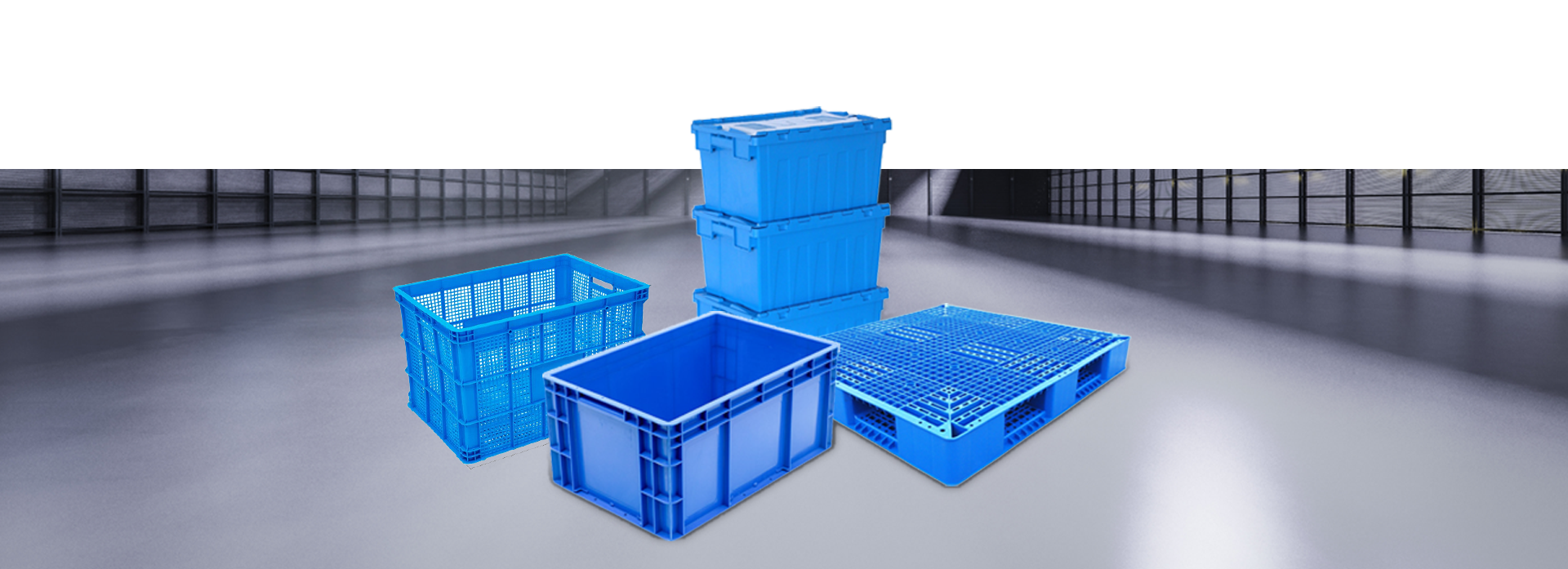
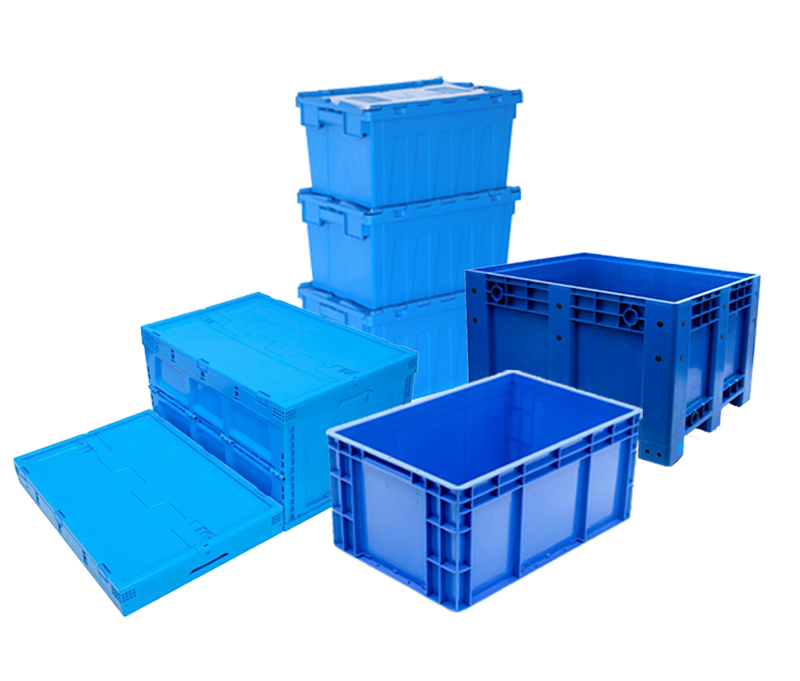
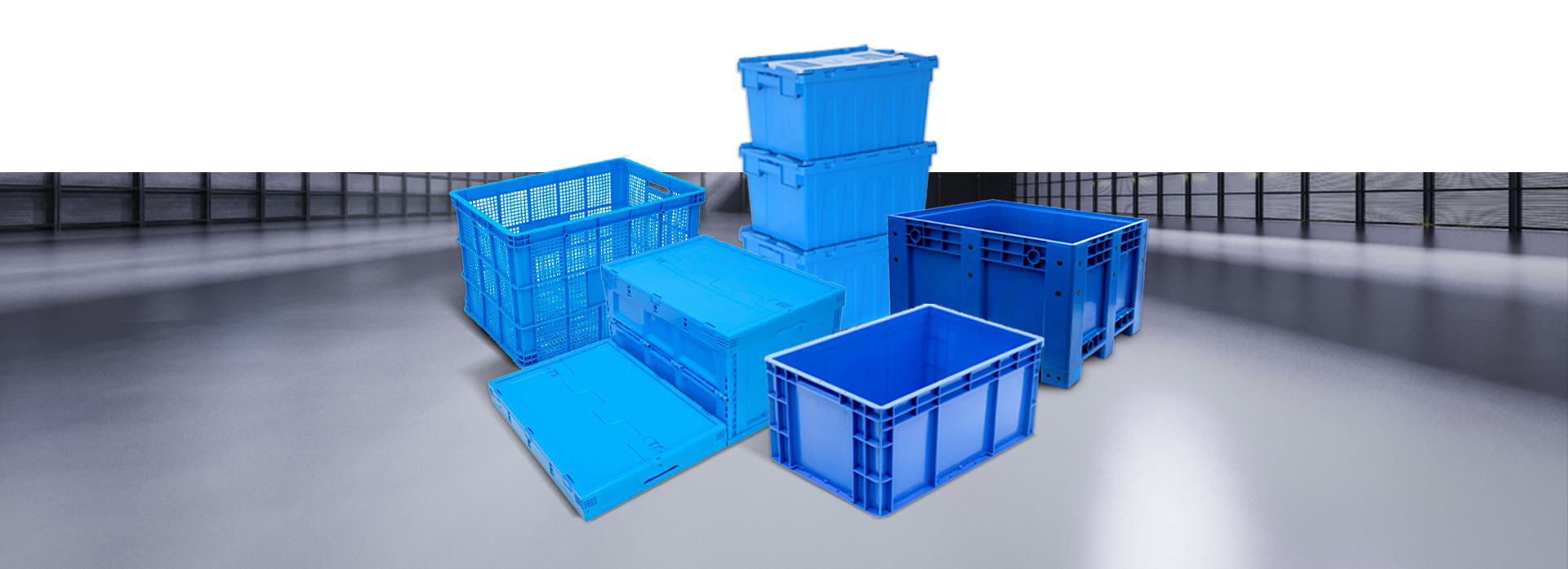
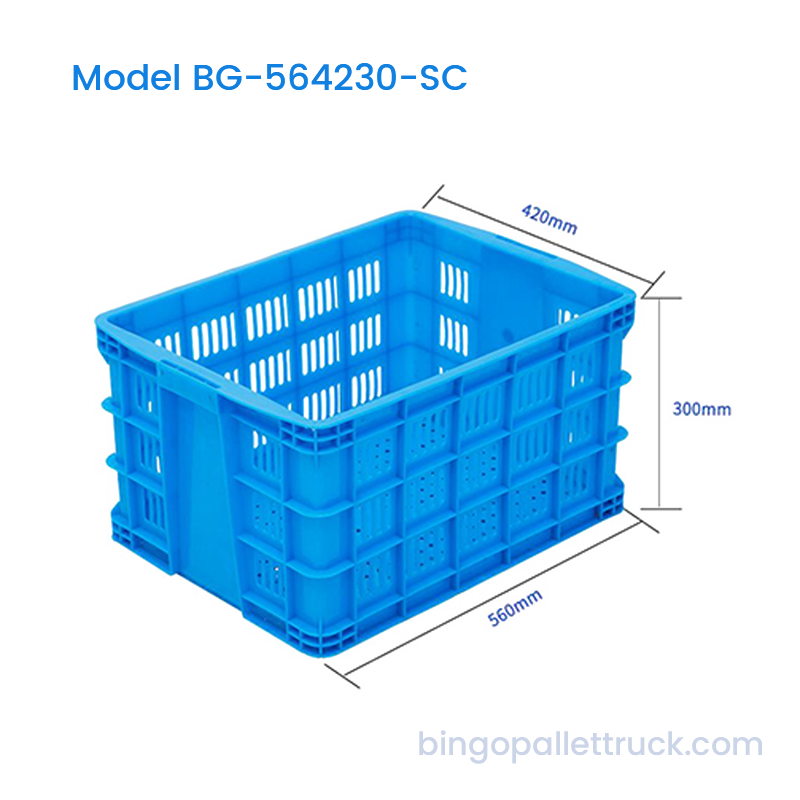
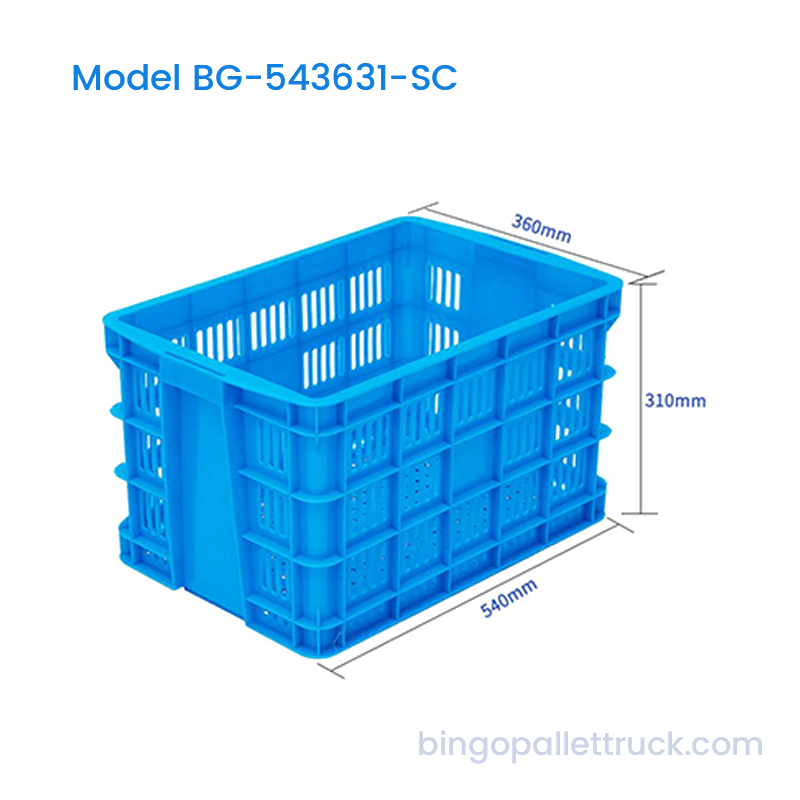
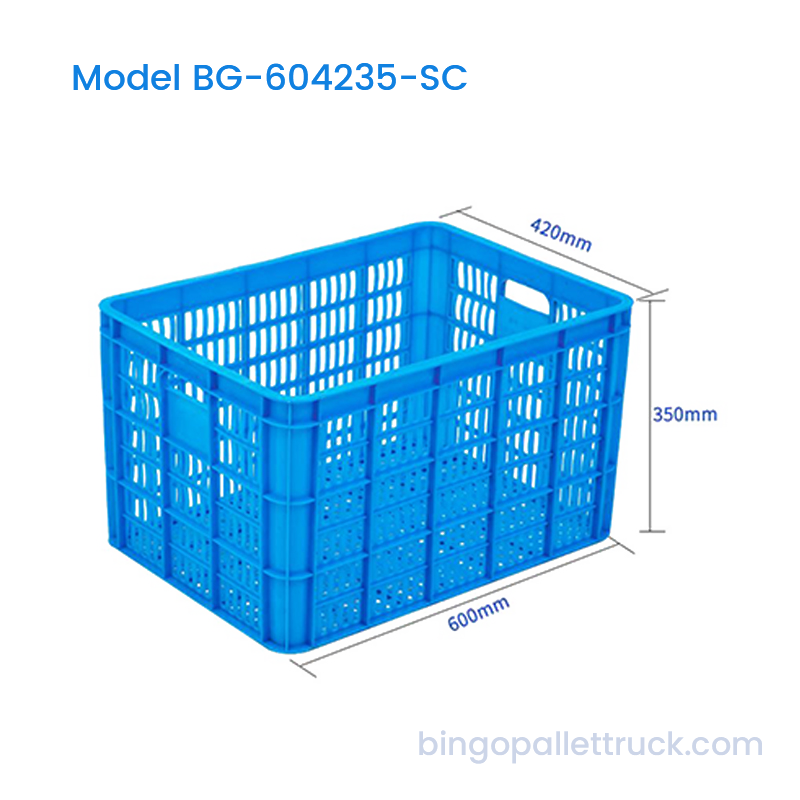
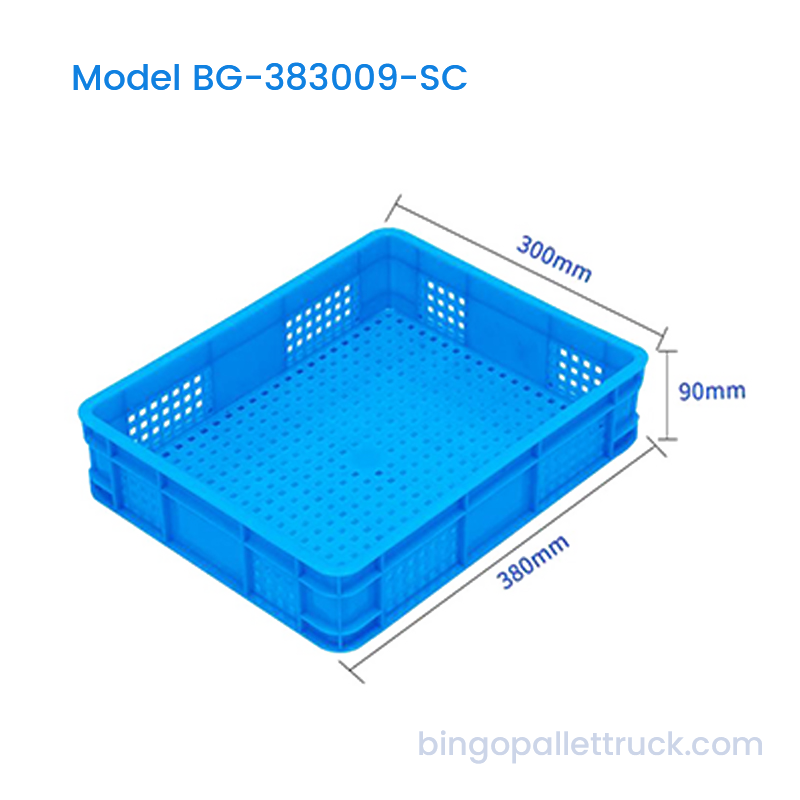
Stackable Plastic Crates are purpose-built for high-density vertical storage where container rigidity and load transfer are paramount. Engineered by Yancheng Bingo Machinery Equipment Co., Ltd., these crates utilize a straight-wall construction with integrated stacking ledges that engage the crate below, creating a stable column that resists lateral shear forces. Unlike nestable or collapsible alternatives, stackable crates maintain 100% of their internal volume when empty, making them the preferred choice for operations with dedicated return fleets or fixed container pools.
The load-bearing architecture centers on a four-point stacking foot system molded into each corner. These feet interlock with recesses in the crate lid or rim, preventing stack drift up to 8° of incline—a critical safety margin for forklift transport on ramps and uneven warehouse floors. Yancheng Bingo Machinery Equipment Co., Ltd. employs finite element analysis (FEA) during mold design to optimize rib placement, ensuring that wall deflection under rated load remains below 2 mm at the midpoint of the long sidewall.
Technical Specifications
Table 1: Stackable crate dimensions, volume, and stacking performance ratings
| Model |
External Dimensions (L×W×H) |
Internal Volume |
Single Crate Load |
Stack Height (Max) |
Column Load |
Wall Thickness |
| SPC-4028 |
400 × 300 × 280 mm |
28 L |
30 kg |
8 crates |
240 kg |
2.8 mm |
| SPC-5432 |
530 × 370 × 320 mm |
52 L |
45 kg |
7 crates |
315 kg |
3.2 mm |
| SPC-6440 |
600 × 400 × 400 mm |
78 L |
55 kg |
6 crates |
330 kg |
3.5 mm |
| SPC-7550 |
750 × 500 × 500 mm |
155 L |
70 kg |
5 crates |
350 kg |
4.0 mm |
Structural Engineering and Load Distribution
Four-Point Stacking Feet
The corner foot design transfers vertical loads directly through the crate walls rather than relying on the base panel. This load path eliminates base sag common in single-skin containers and allows the SPC-7550 to support 350 kg in a five-high column. Each foot includes a 3 mm deep interlock recess that mates with the rim of the crate below, creating a positive mechanical lock against horizontal displacement.
Sidewall Rib Matrix
A grid of vertical and horizontal ribs forms a torsional box structure that resists racking during forklift clamp handling. The rib height-to-thickness ratio is calibrated to 4:1, balancing stiffness against material usage. Yancheng Bingo Machinery Equipment Co., Ltd. validates rib performance through compression testing on a 500 kN universal testing machine, recording stress-strain curves until permanent deformation exceeds 5%.
Application Scenarios
- Heavy Parts Manufacturing: Straight walls and high column loads accommodate metal castings, machined housings, and sub-assemblies up to 70 kg per crate without deformation.
- Pharmaceutical Cold Chain: Uniform wall thickness ensures consistent thermal mass during gel-pack cooling, while smooth surfaces meet GMP cleanroom wipe-down protocols.
- Document and Media Archiving: The SPC-4028 fits standard filing-cabinet footprints, protecting paper records and magnetic media from dust and compression damage during long-term storage.
- Export Packaging: ISPM-15 exempt and moisture-resistant, these crates replace wooden boxes for international air freight of precision instruments and electronic modules.
Customization and Accessories
Yancheng Bingo Machinery Equipment Co., Ltd. offers a range of accessories that integrate with the stacking foot geometry without compromising column stability:
- Hinged lids with dual-action latches that lock onto the crate rim and support additional stacking weight from above.
- Cross-stacking dividers that create 4 to 12 compartments within a single crate, preventing part-to-part contact during transport.
- ESD-conductive resin grades with surface resistivity between 10^4 and 10^6 ohms for sensitive electronics handling.
- Castor base frames that convert stationary crate stacks into mobile picking carts for warehouse zone replenishment.
Frequently Asked Questions
1.Why choose stackable crates over nestable or collapsible alternatives?
Stackable crates excel in applications requiring maximum internal volume utilization and high vertical column loads. Because they do not taper or fold, they provide straight walls that accommodate dense, irregularly shaped items and support stacking heights up to 2.5 meters without rack infrastructure. Operations with dedicated return loops—where empty crates travel back to the source on the same fleet—benefit from the structural consistency that stackable designs offer.
2.How is the maximum stack height determined?
Maximum stack height is calculated from the bottom crate's compression strength under the cumulative weight of all crates above, plus a safety factor of 1.5 per ISO 8611 testing protocols. Yancheng Bingo Machinery Equipment Co., Ltd. publishes conservative ratings based on ambient temperature; for cold-storage applications below 0°C, the maximum stack height should be derated by 10% due to increased resin brittleness.
3.Can stackable crates be used on roller conveyors?
Yes, provided the base panel is fully supported across its width. The SPC series features a flat base with minimal draft angles, allowing smooth transfer across roller and belt conveyors. For gravity-fed systems with slopes exceeding 3°, Yancheng Bingo Machinery Equipment Co., Ltd. recommends installing side guides or brake rollers to prevent uncontrolled acceleration of loaded columns.
4.What labeling options are compatible with the sidewall surface?
The ribbed texture accepts adhesive labels, magnetic card holders, and tie-on tags. For permanent identification, hot-stamp foil marking or laser-etched QR codes can be applied to flat zones between ribs. Yancheng Bingo Machinery Equipment Co., Ltd. offers in-mold labeling (IML) for high-volume customers requiring barcode durability through industrial wash cycles exceeding 1,000 exposures.
5.How do stackable crates perform in automated warehouse systems?
The dimensional repeatability of injection-molded stackable crates makes them highly compatible with robotic depalletizing and shuttle-based storage systems. Yancheng Bingo Machinery Equipment Co., Ltd. maintains external dimension tolerances within ±1.0 mm and perpendicularity within 0.5°, ensuring reliable gripping by vacuum or clamp-style end effectors. The uniform base flatness also supports accurate weight verification on in-line checkweighers.

 en
en  Español