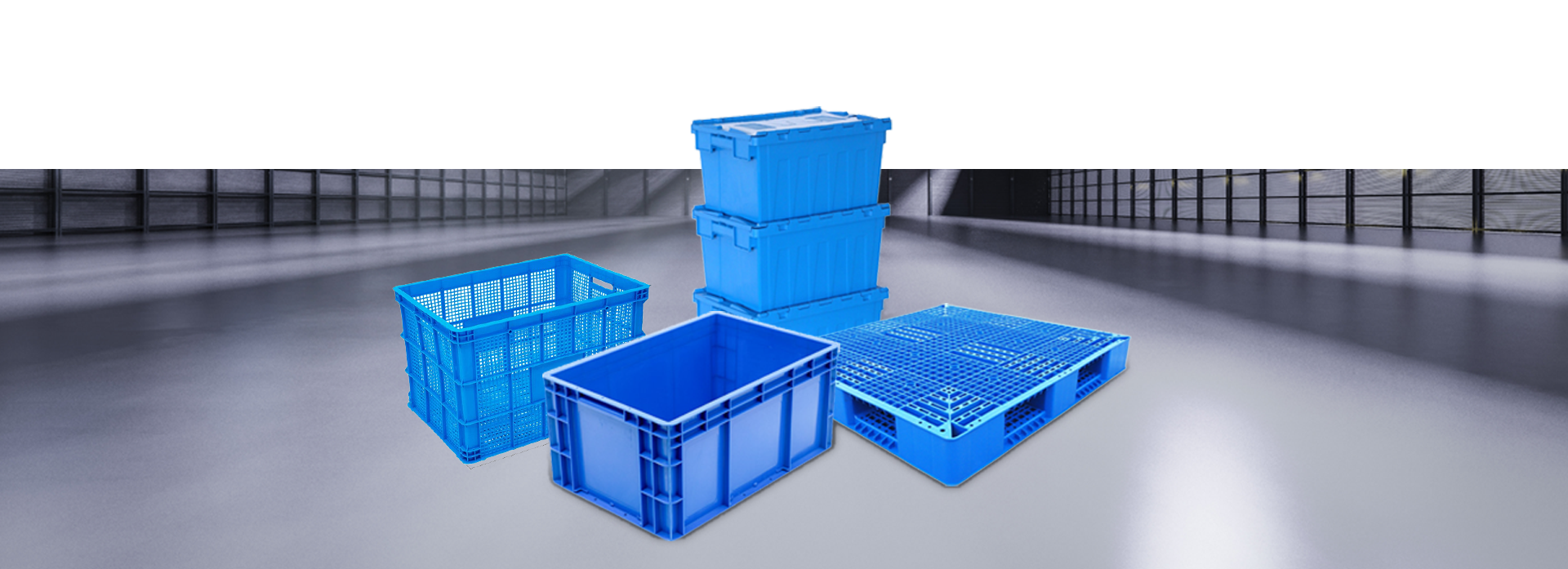
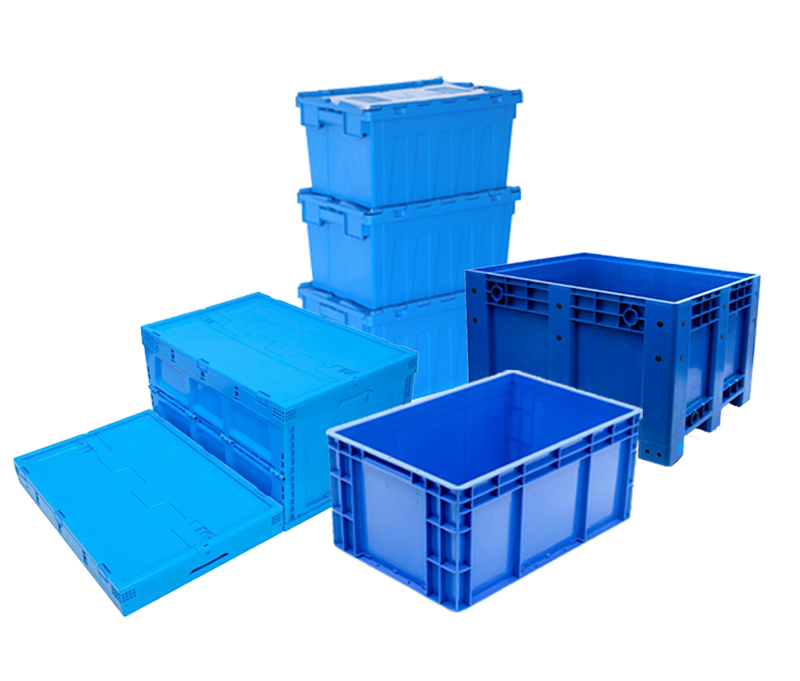
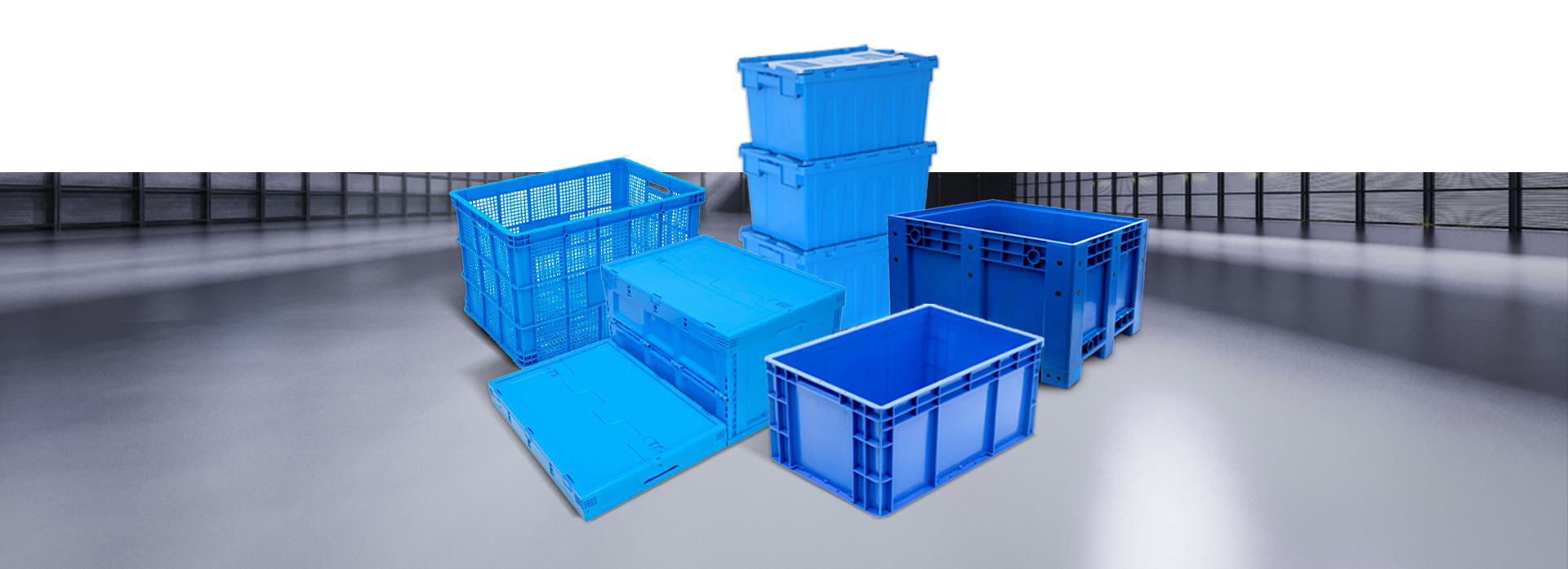
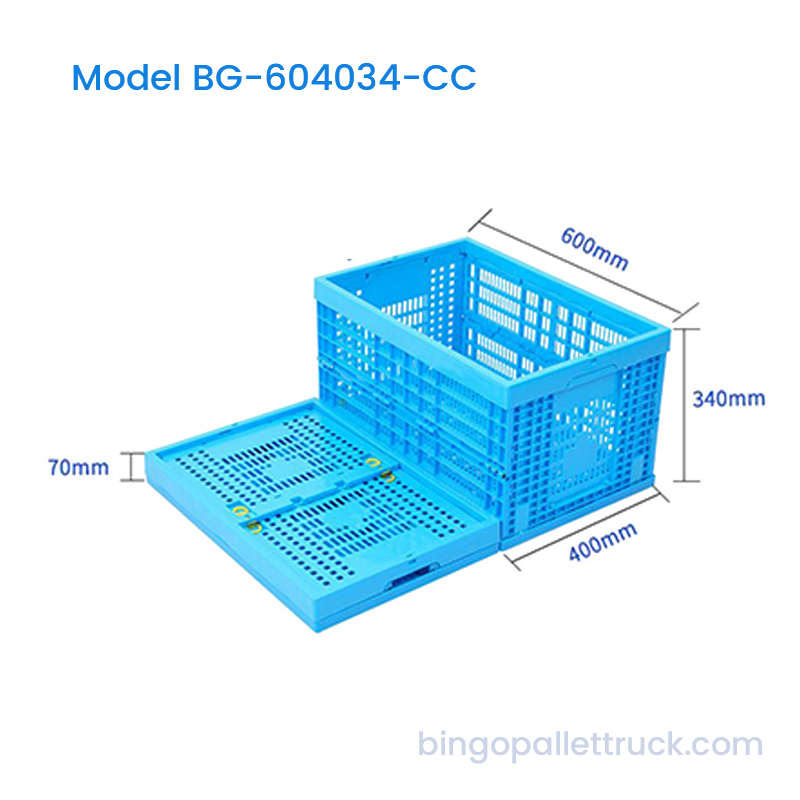
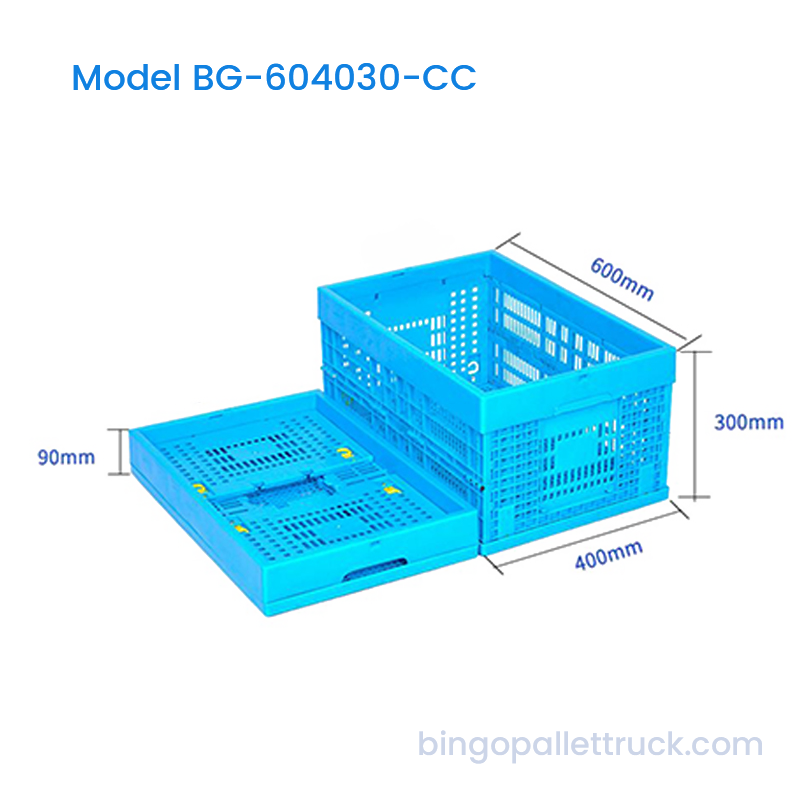
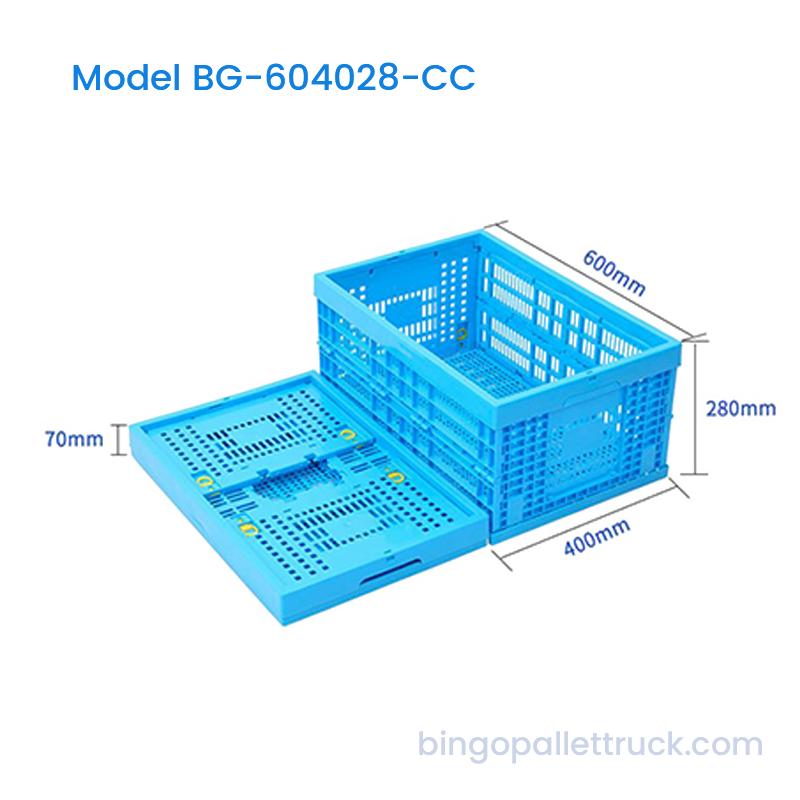
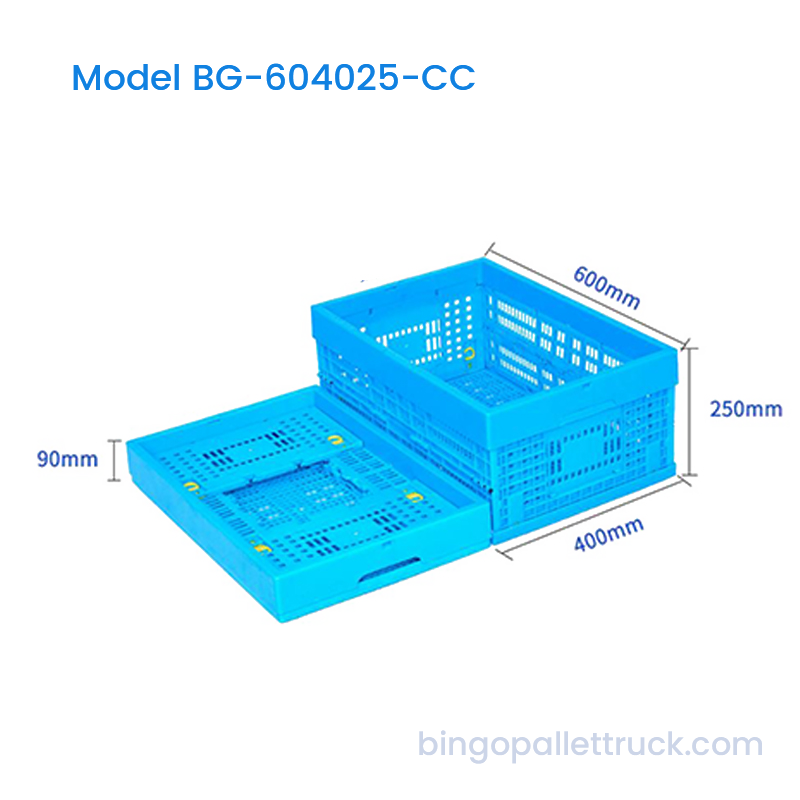
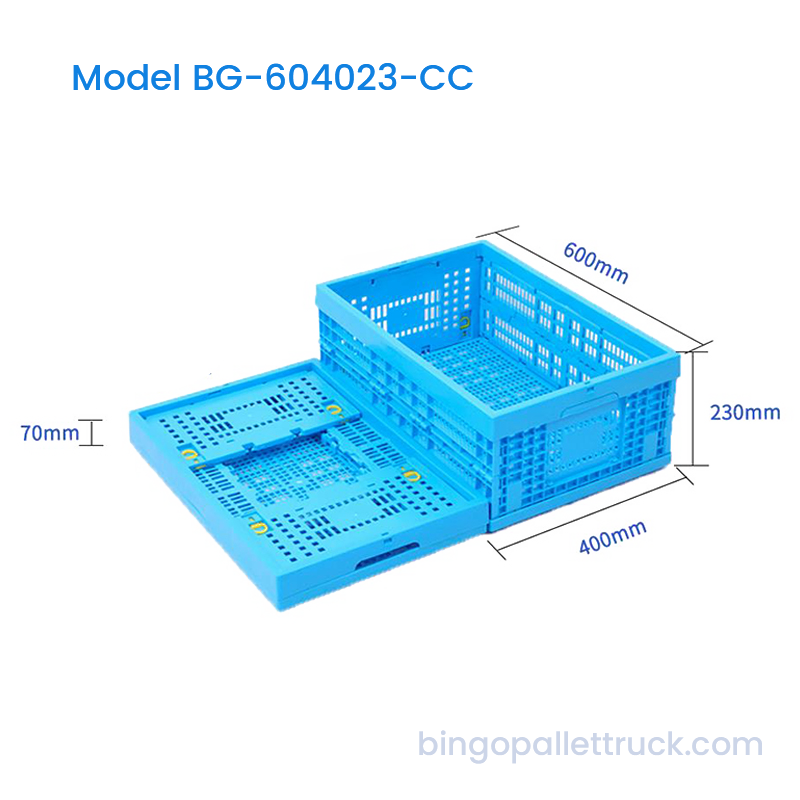
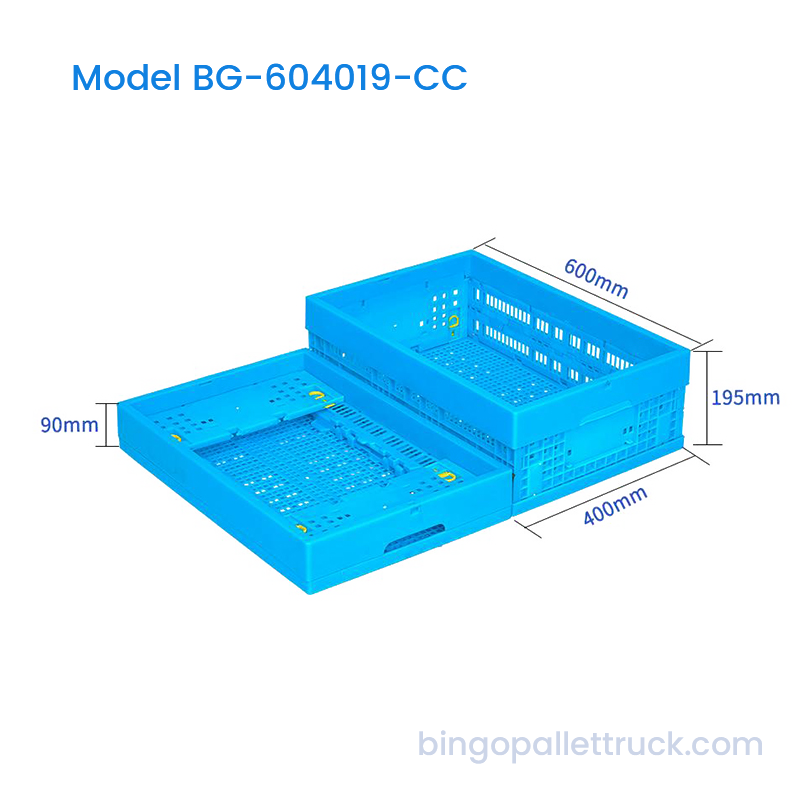
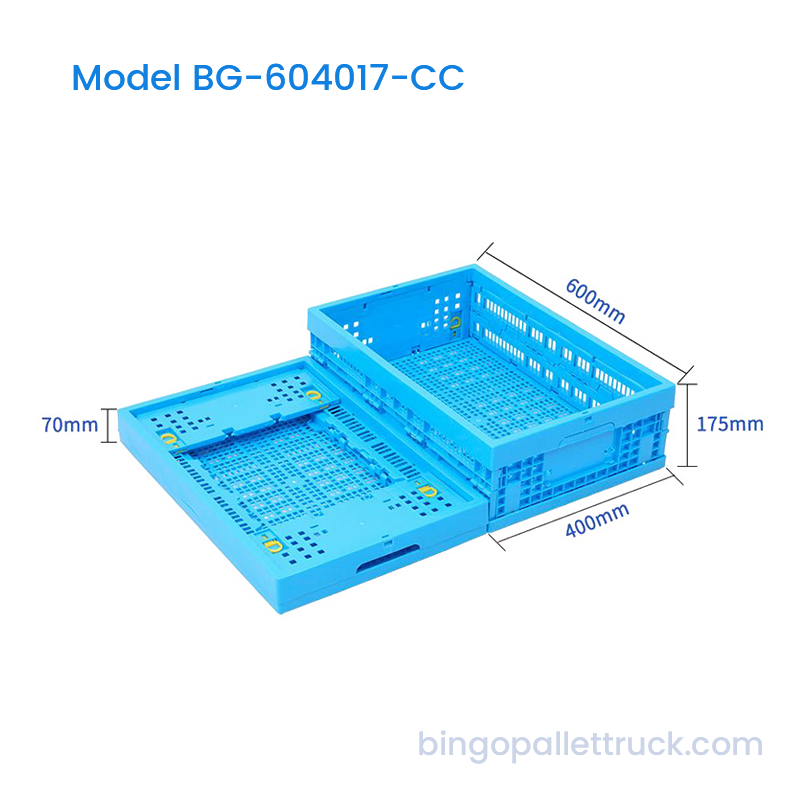
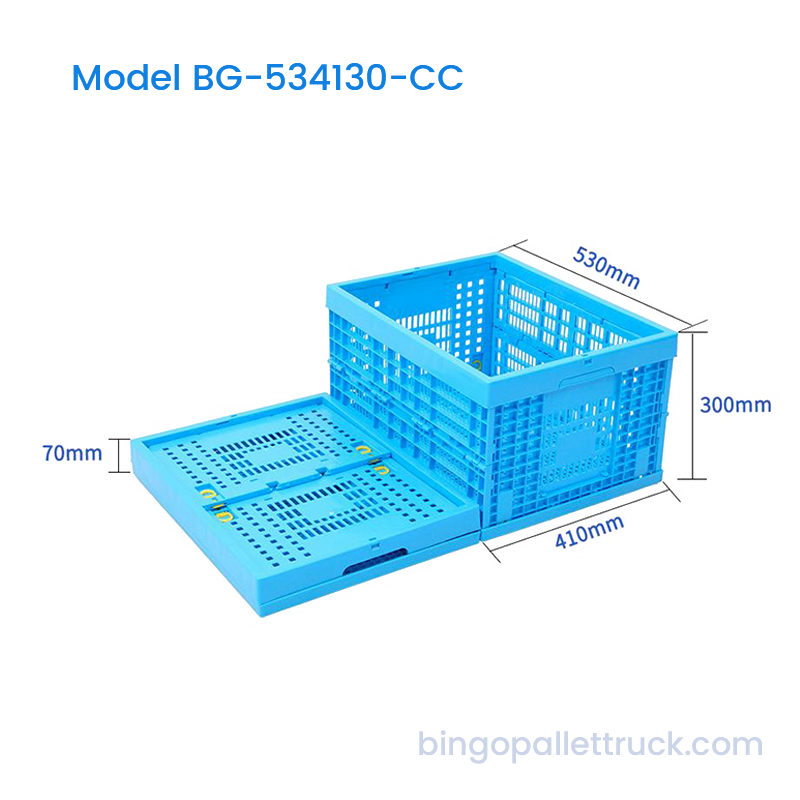
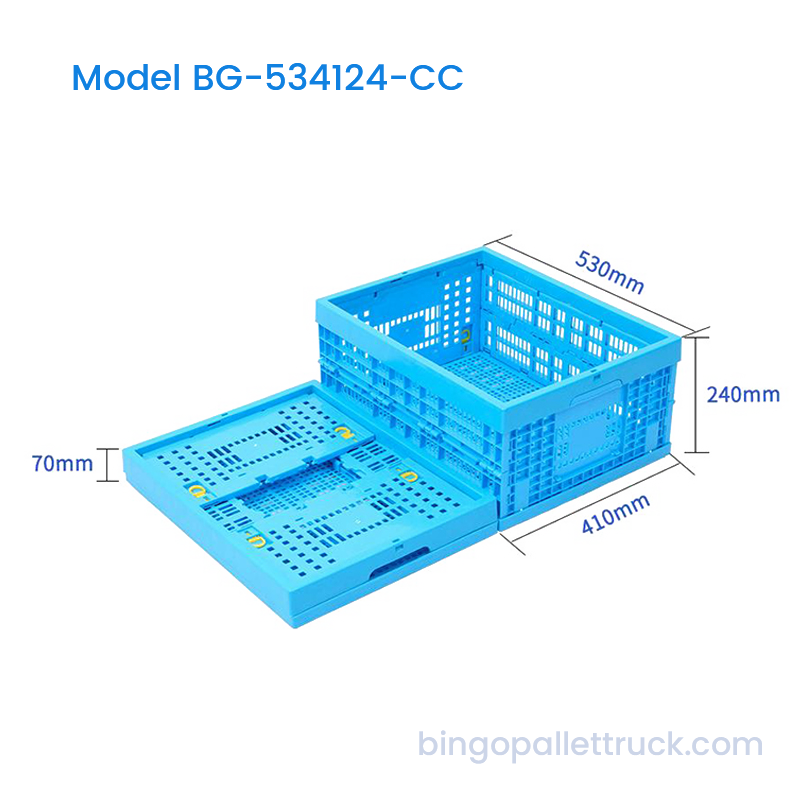
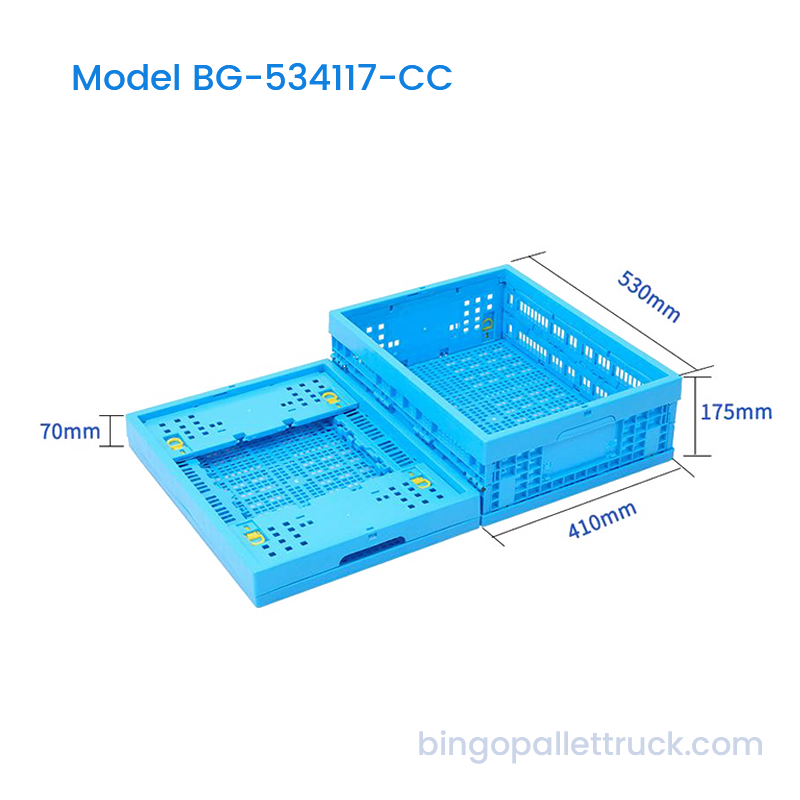
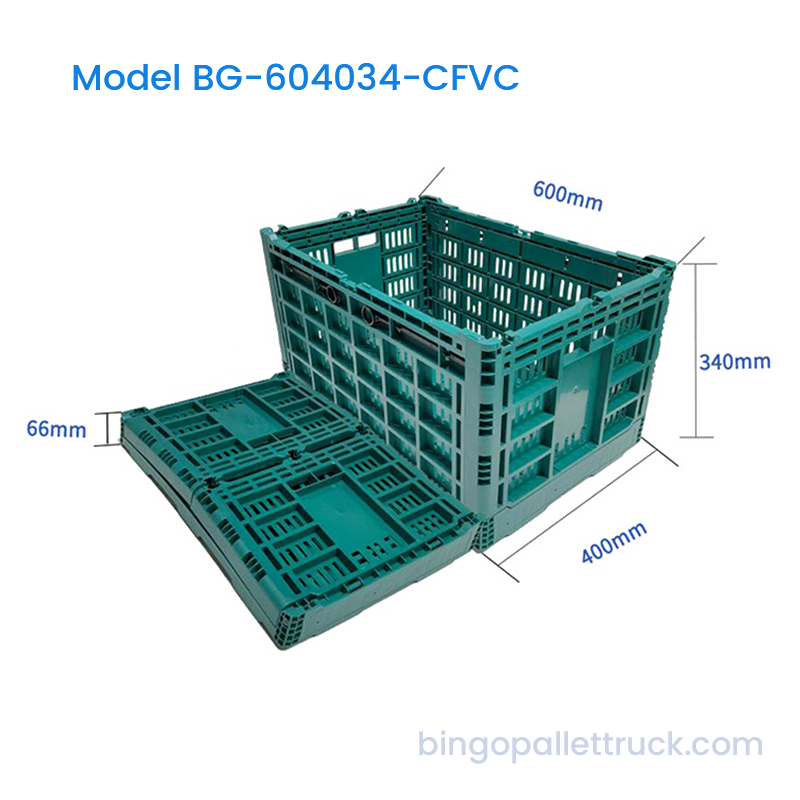
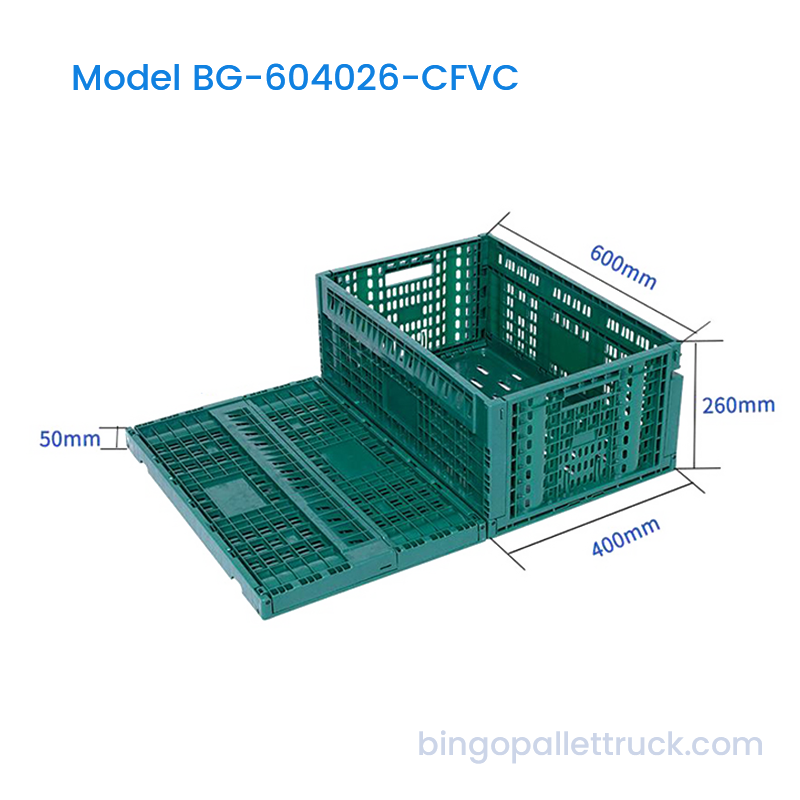
Plastic crates are open-sided or vented reusable containers designed for the robust, repeated transport and storage of goods across retail supply chains, food distribution, agriculture, beverage logistics, and industrial operations. Constructed from polypropylene (PP) or high-density polyethylene (HDPE), plastic crates withstand the mechanical stress of frequent handling, the moisture of cold chain environments, and the rigors of industrial washing — delivering service lives routinely exceeding five to ten years across high-cycle logistics flows. With four key design configurations — Collapsible, Stackable, Nestable, and Stack & Nest — modern plastic crates are engineered to match the specific demands of every logistics scenario from farm gate to retail shelf.
Four Types of Plastic Crates: How Each Design Serves a Different Need
Collapsible Plastic Crates
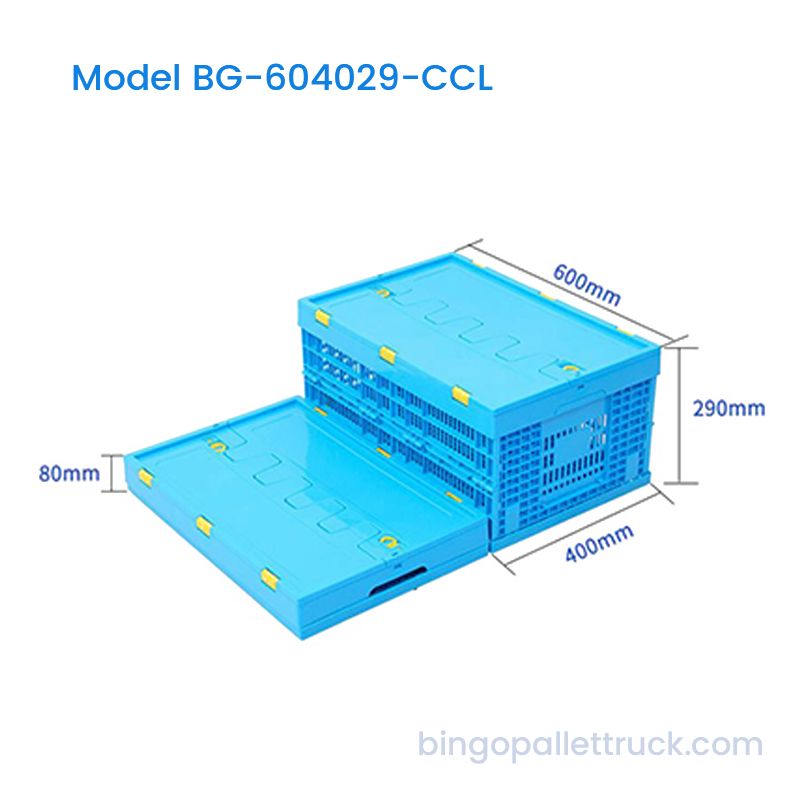
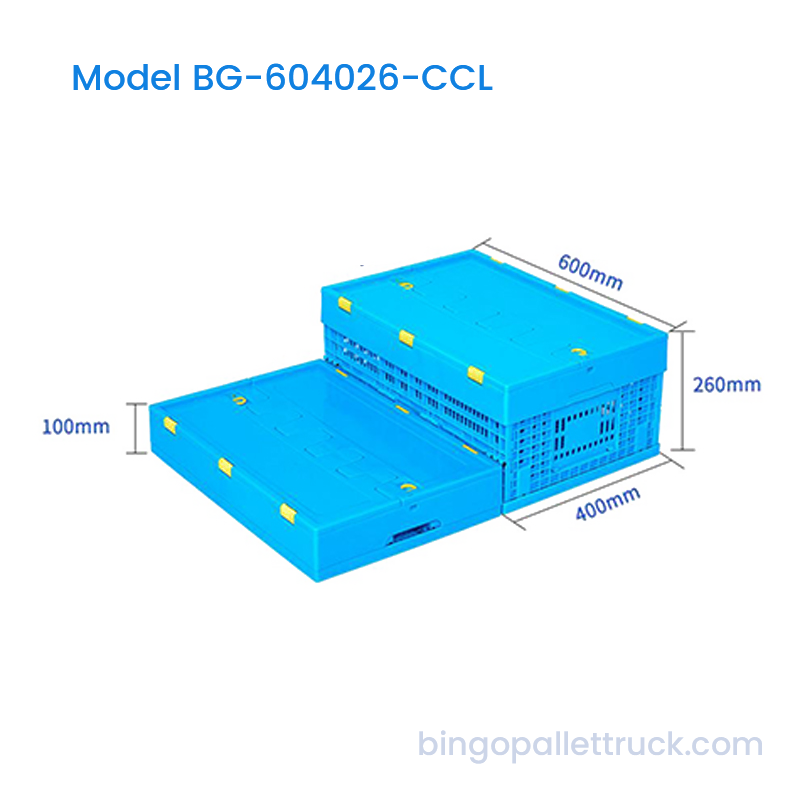
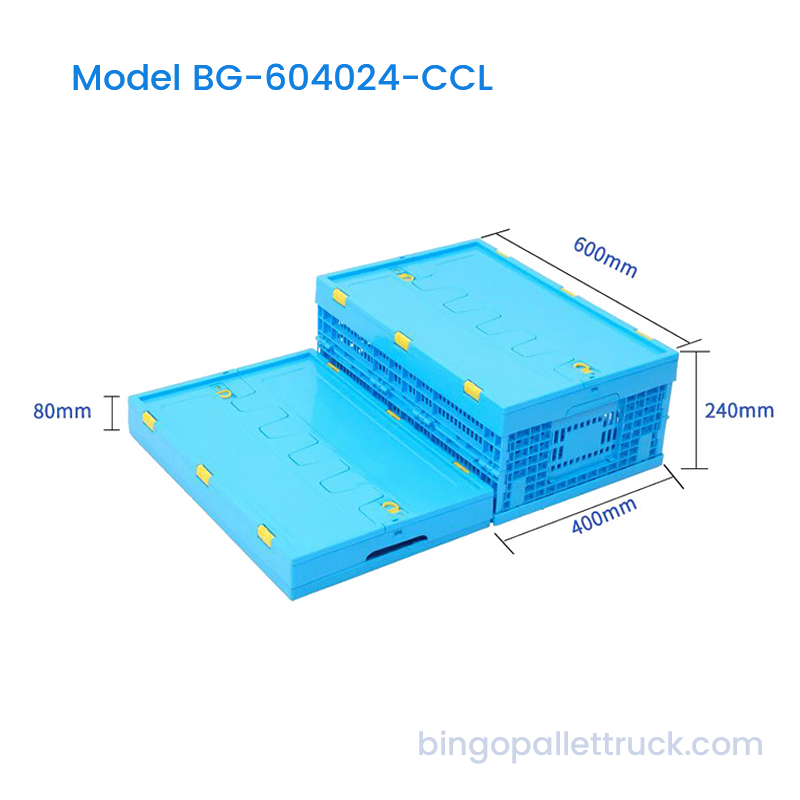
Collapsible crates feature hinged side walls that fold inward when the crate is empty, reducing its occupied height to approximately 25–30% of the full erect dimension. A 69-litre collapsible crate that stands 370 mm tall in use collapses to roughly 100–120 mm — allowing a truck that returns 20 erected empty crates to instead carry 60–80 collapsed units in the same space. Many collapsible crates include an attached lid that folds with the body, eliminating the logistics of managing separate lid inventories. This design is the dominant choice in closed-loop retail replenishment and food distribution networks where the economics of empty return transport are a significant operational cost.
Stackable Plastic Crates
Stackable crates have a rigid, straight-sided or slightly tapered body designed so that a loaded crate rests securely on the rim or locating features of the one below, forming a stable column. The base of each crate interlocks with the upper edge of the crate beneath it, preventing lateral shifting during transport. Stackable crates are the standard choice for high-density pallet loading, store-delivery operations, and warehouse shelving where goods must be accessible in stacked columns without racking infrastructure. They cannot nest when empty, so empty storage requires the same footprint as loaded storage.
Nestable Plastic Crates
Nestable crates have a tapered body that allows empty crates to slide inside one another, reducing combined height by 60–70% compared to separate storage. They are not designed for stacking when loaded — the taper that enables nesting means loaded crates cannot bear the weight of another loaded crate on top safely. Nestable crates are best suited to one-way distribution flows, market stall operations, or any logistics scenario where the primary challenge is managing large numbers of empty containers with minimal floor space.
Stack & Nest Plastic Crates
Stack & nest crates combine both capabilities in a single design. When loaded, they stack stably in columns like a stackable crate. When empty, rotating the upper crate 180° allows it to nest inside the lower one, reducing combined height by roughly 60–65%. This dual functionality makes stack & nest crates exceptionally versatile in operations that need loaded stacking during active distribution and compact empty storage between cycles — without maintaining two separate crate populations. They are widely used in fresh produce, bakery, and dairy supply chains where crates are continuously cycling between distribution centers and retail outlets.
Plastic Crate Type Comparison
| Type |
Loaded Stacking |
Empty Space Saving |
Lid Option |
Best Application |
| Collapsible |
Yes |
Up to 75% when folded |
Attached or separate |
Retail replenishment, closed-loop food distribution |
| Stackable |
Yes |
None |
Optional |
Pallet stacking, store delivery, shelving |
| Nestable |
No |
60–70% when nested |
Optional |
One-way flows, market distribution, outbound only |
| Stack & Nest |
Yes |
60–65% when nested |
Optional |
Fresh produce, dairy, bakery, high-cycle closed loops |
Comparison of plastic crate types across stacking, empty space saving, lid options, and application
Why Plastic Crates Outperform Wood, Cardboard, and Mesh Alternatives
- Durability and cycle life: A quality PP or HDPE crate withstands hundreds to thousands of load cycles. In high-frequency retail replenishment networks, plastic crates typically achieve a return on investment within 12–24 months compared to equivalent single-use packaging, after which each cycle generates direct cost savings.
- Hygienic and washable: Smooth plastic surfaces resist bacteria, mould, and contamination absorption — essential in food cold chain applications. Crates can be machine-washed at up to 60–70°C and sanitised between uses without structural degradation, meeting food safety and retail compliance requirements.
- Moisture resistance: Unlike wood or cardboard, PP and HDPE crates do not absorb water, swell, warp, or lose structural integrity when wet — making them reliable in chilled, frozen, and outdoor market environments where moisture exposure is unavoidable.
- Consistent dimensions: Injection-moulded plastic crates maintain precise external dimensions throughout their service life. This consistency is critical for automated conveyor lines, robotic palletising, and pallet configuration planning where even minor dimensional variation causes handling errors.
- Reduced packaging waste: Switching from single-use cardboard boxes to reusable plastic crates in a closed-loop retail replenishment system can eliminate several hundred tonnes of cardboard waste per year for a mid-size distribution centre, significantly reducing waste disposal costs and environmental footprint.
Food and Fresh Produce Distribution
Plastic crates are the standard unit container in fresh produce supply chains globally. Vented side walls allow cold air to circulate around fruit, vegetables, and other perishables during refrigerated transport, helping maintain temperature uniformity and extending shelf life. Stack & nest designs are particularly prevalent in this sector, where crates travel from grower or packing house to distribution centre to retail store, then return empty for cleaning and reuse — completing cycles that may occur 100–200 times per year per crate in high-frequency networks.
Supermarket and Retail Replenishment
Many supermarket chains operate closed-loop crate pool systems where collapsible or stack & nest plastic crates replace cardboard cartons for the delivery of bakery, dairy, deli, and produce products to store. These systems eliminate cardboard waste at the store level, reduce back-of-house compaction requirements, and allow stores to return empty crates on the same delivery vehicle — cutting net logistics costs significantly compared to single-use packaging models.
Manufacturing and Industrial Parts Logistics
In automotive, electronics, and industrial manufacturing, plastic crates serve as standardised containers for components, sub-assemblies, and finished parts moving between production stages or supplier facilities. Stackable crates with solid or semi-open sides provide protection against contamination and impact damage that open-top wire mesh containers cannot match, while their dimensional consistency integrates cleanly with conveyor and automated storage systems on the factory floor.
As a Wholesale Plastic Crates Manufacturer and OEM Plastic Crates Company, Bingo provides global customers with one-stop integrated solutions for material storage and handling. Bingo's plastic crate range covers all four configurations — Collapsible, Stackable, Nestable, and Stack & Nest — from 30-litre to 69-litre capacities, manufactured to strict quality standards. Committed to delivering cost-effective solutions for manufacturing, e-commerce logistics, warehousing and distribution, and supermarket retail, Bingo upholds the philosophy of "Quality First, Win-Win Cooperation".
Frequently Asked Questions About Plastic Crates
What is the difference between a plastic crate and a plastic tote?
The terms are sometimes used interchangeably, but in industrial and logistics contexts they typically refer to distinct product categories. Plastic totes are generally enclosed or lidded containers with solid walls, designed for piece-level picking, shelving, and the secure containment of smaller items. Plastic crates typically have vented or open-work side walls, are larger in footprint, and are designed for the bulk transport of produce, food products, or larger items where airflow and easy visual inspection of contents are important. Totes prioritise containment and organisation; crates prioritise ventilation, strength, and high-throughput handling.
How many loaded plastic crates can be safely stacked?
Safe stacking height depends on the crate's rated stacking load, the actual weight per crate, and the stability of the contents. Most standard stackable and stack & nest PP crates with loads of 15–25 kg per crate are safely rated for 4–6 loaded tiers in a stable column on a flat surface. Exceeding the manufacturer's stacking load rating — particularly with dense or point-loaded items — risks structural failure of the lower crates. Always confirm the stacking load specification with your supplier rather than estimating visually.
Are plastic crates suitable for frozen food storage and transport?
Yes, with the appropriate material specification. Standard PP crates become brittle at temperatures below approximately −10°C to −15°C and are not recommended for frozen food applications without modification. Crates specified for frozen food use are typically manufactured from impact-modified PP or HDPE grades that retain flexibility and impact resistance at temperatures down to −30°C or lower. Always confirm the rated minimum operating temperature with your supplier when specifying crates for frozen storage or transport.

 en
en  Español