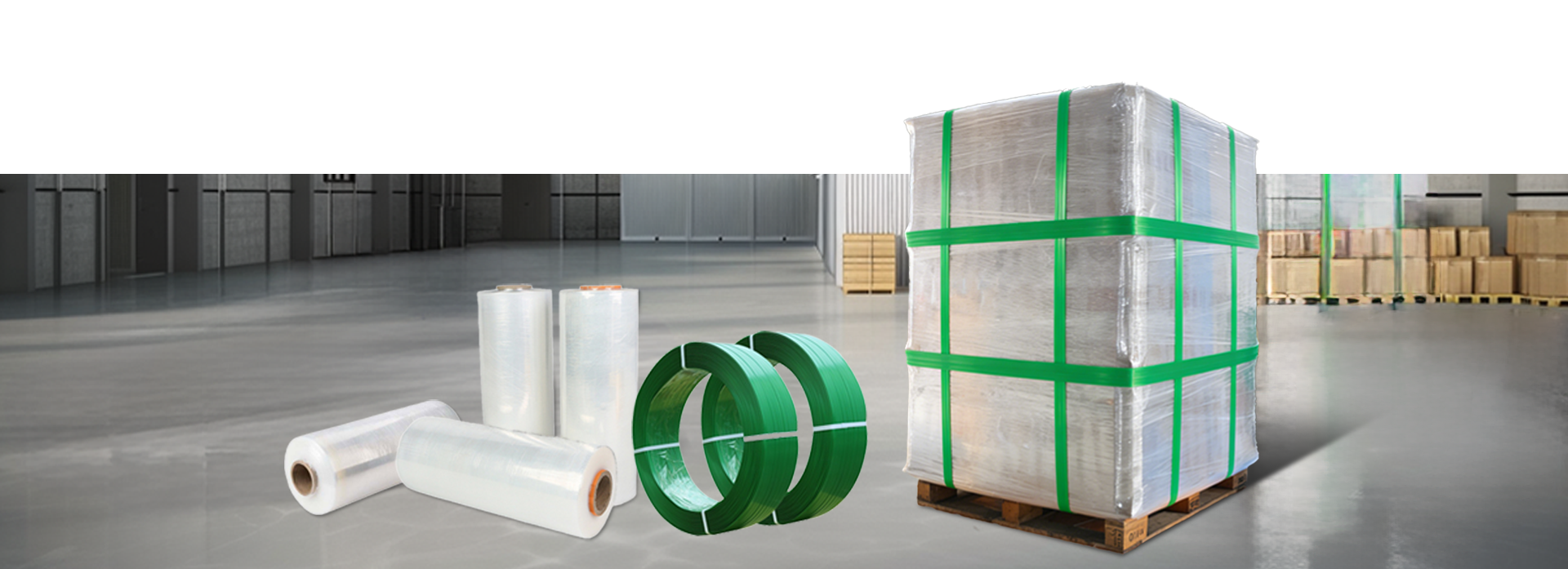
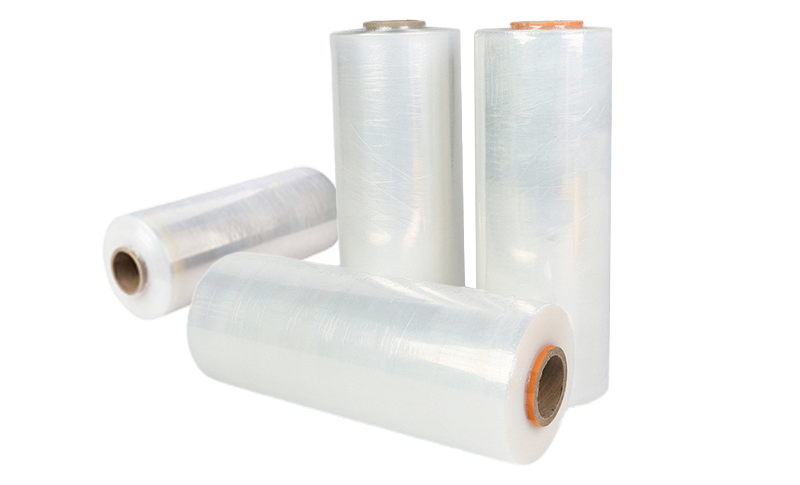
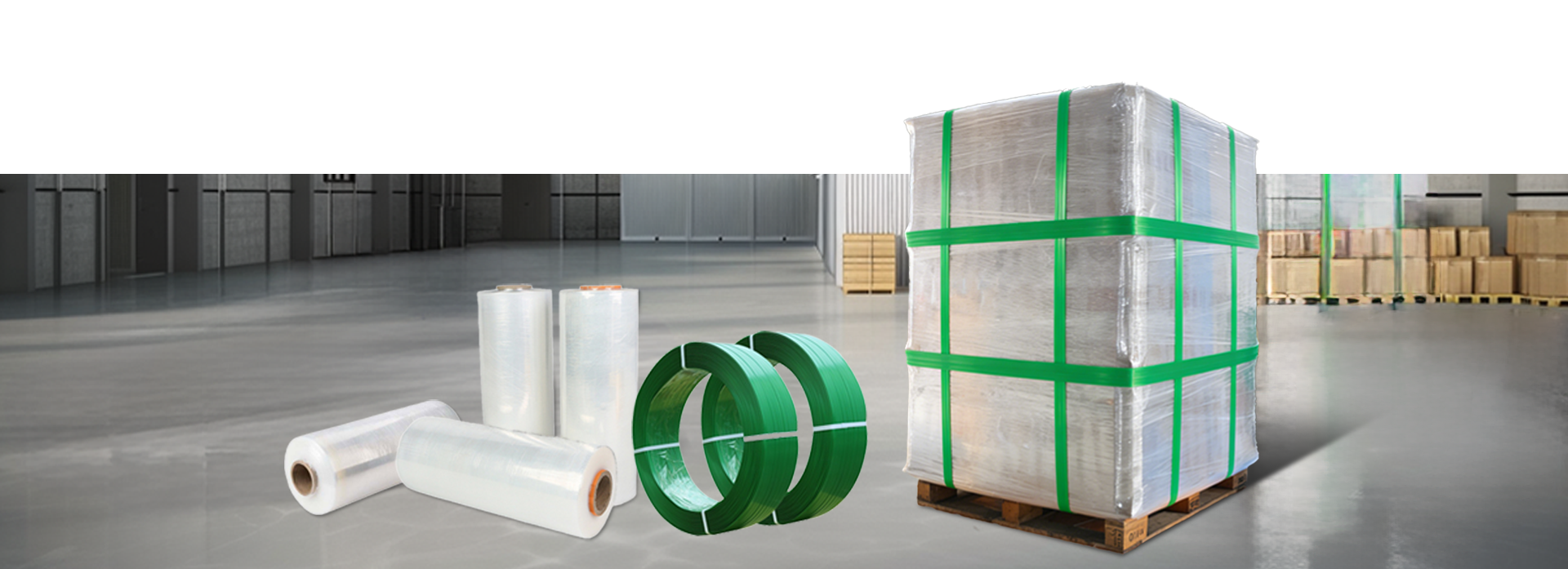
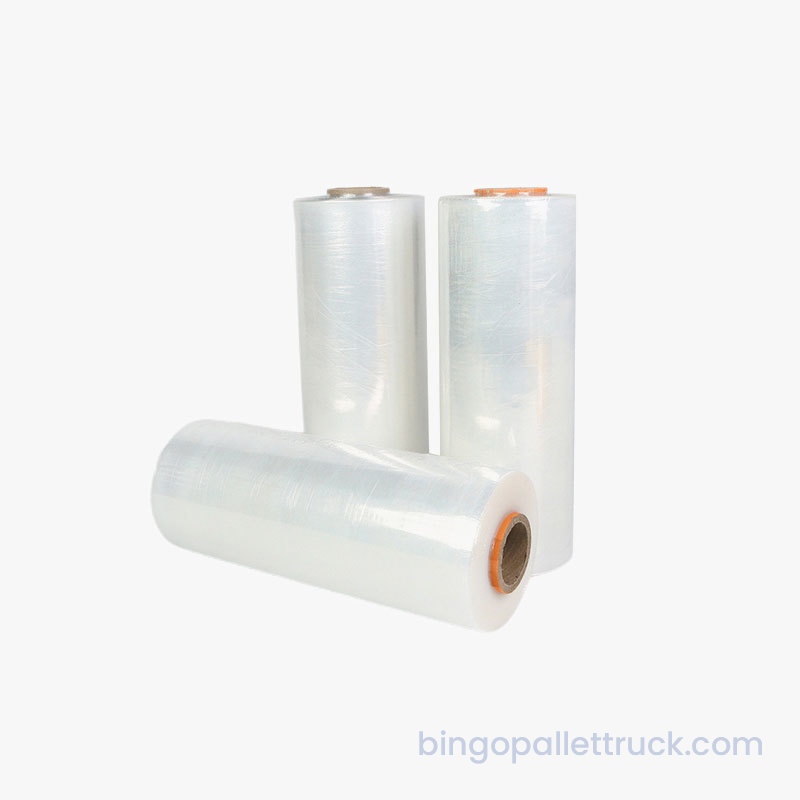
Machine stretch wrap is a high-performance plastic film specifically engineered for use with automated or semi-automated pallet wrapping machines. Like hand stretch wrap, it is made primarily from linear low-density polyethylene (LLDPE), but it is manufactured to tighter tolerances to withstand the high-speed, high-tension demands of mechanical application. The result is faster throughput, more consistent load containment, and significantly lower film consumption per pallet compared to manual wrapping.
Machine stretch wrap is the packaging backbone of high-volume warehousing and distribution operations. For facilities wrapping 50 or more pallets per day, transitioning to machine stretch wrap systems delivers measurable gains in speed, cost efficiency, and load security. As a manufacturer and supplier of comprehensive warehousing and logistics equipment, Bingo integrates machine stretch wrap solutions into its broader portfolio of material storage and handling systems to support customers at every scale of operation.
How Machine Stretch Wrap Works
Machine stretch wrap systems operate on the same fundamental principle as hand wrapping — stretching LLDPE film under controlled tension to create a compressive containment force around the pallet load. The key difference is that machines apply this tension with precision and repeatability that no manual process can match.
The Wrapping Cycle
- The pallet load is positioned on the turntable or conveyor entry point of the stretch wrapper.
- The film carriage pre-stretches the film — typically between 200% and 300% — before it contacts the load, using a powered pre-stretch system.
- The turntable rotates (or, in rotary arm machines, the arm revolves around the load) while the carriage moves vertically to apply film in a uniform spiral pattern.
- The machine applies programmed top and bottom reinforcement passes, then cuts and seals or wipes the film tail automatically.
- The completed pallet exits the wrapping zone, and the next load enters — in fully automated systems, without any operator involvement.
The Role of Pre-Stretch Technology
Pre-stretch is the defining feature of machine stretch wrap systems. By stretching the film before it is applied to the load, the machine achieves maximum film yield per roll. A film pre-stretched to 250% effectively turns every 1,000 meters of roll into 3,500 meters of applied film. This dramatically reduces per-pallet film costs and is the primary economic justification for investing in machine wrapping systems.
Key Advantages of Machine Stretch Wrap
Switching from hand wrapping to machine stretch wrap delivers quantifiable operational benefits across packaging speed, material cost, load quality, and worker safety:
- Higher throughput: A semi-automatic turntable wrapper can process 20–40 pallets per hour. Fully automated inline systems can exceed 100 pallets per hour — compared to 6–10 pallets per hour for a skilled manual wrapper.
- Lower film consumption: Powered pre-stretch systems reduce film usage by up to 50%–70% compared to hand wrapping the same load, directly cutting packaging material costs.
- Consistent containment force: Machines apply identical tension and overlap on every pallet, eliminating the variability of manual application and reducing in-transit load damage.
- Improved worker ergonomics: Machine wrapping eliminates the repetitive walking, bending, and manual stretching associated with hand wrapping — a leading cause of musculoskeletal injuries in warehouse environments.
- Reduced labor dependency: Automated and semi-automatic systems free workers for higher-value tasks, reducing the labor cost per wrapped pallet substantially.
- Integration with logistics workflows: Inline conveyor systems enable machine wrapping to be embedded directly into the packing and dispatch line, eliminating manual pallet transfer steps.
Types of Machine Stretch Wrap Film
Machine stretch wrap film is available in a range of formulations designed for specific wrapping machine types, load characteristics, and environmental requirements. Selecting the correct film is as important as selecting the right machine.
Table 1: Machine Stretch Wrap Film Types and Applications
| Film Type |
Gauge Range |
Pre-Stretch Capability |
Ideal Application |
| Standard Cast LLDPE |
17–23 μm |
Up to 200% |
Light to medium loads, general distribution |
| High-Performance Cast |
12–17 μm |
Up to 300% |
High-speed machines, cost optimization focus |
| Blown LLDPE |
20–30 μm |
Up to 200% |
Sharp-edged or heavy loads, puncture resistance |
| Nano-Layer Film |
8–12 μm |
Up to 350% |
Sustainability goals, ultra-high yield per roll |
| UV-Stabilized Film |
17–25 μm |
Up to 250% |
Outdoor storage, extended transit exposure |
| Colored / Opaque Film |
17–23 μm |
Up to 200% |
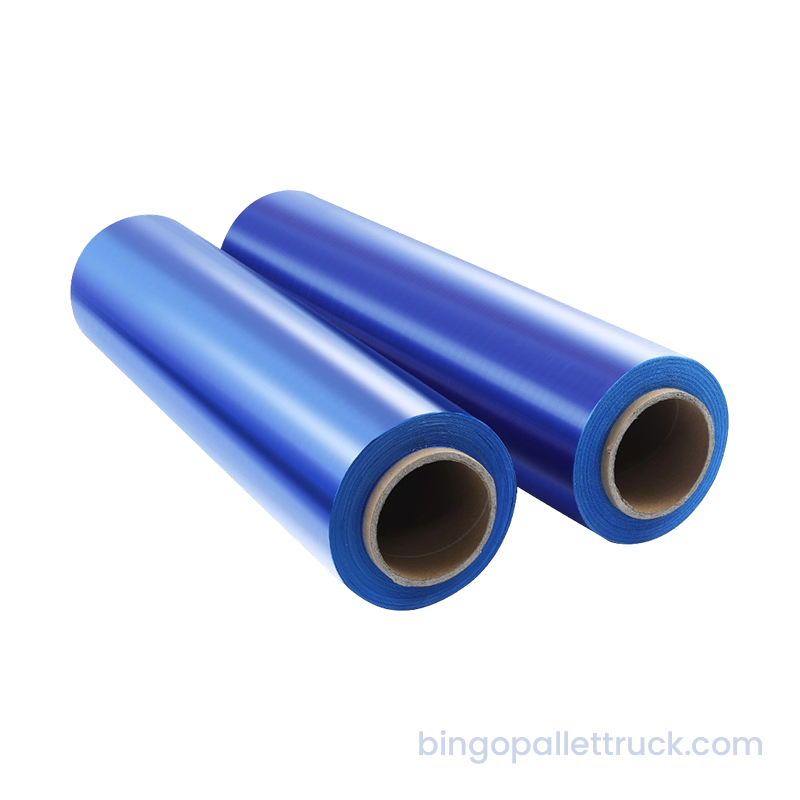
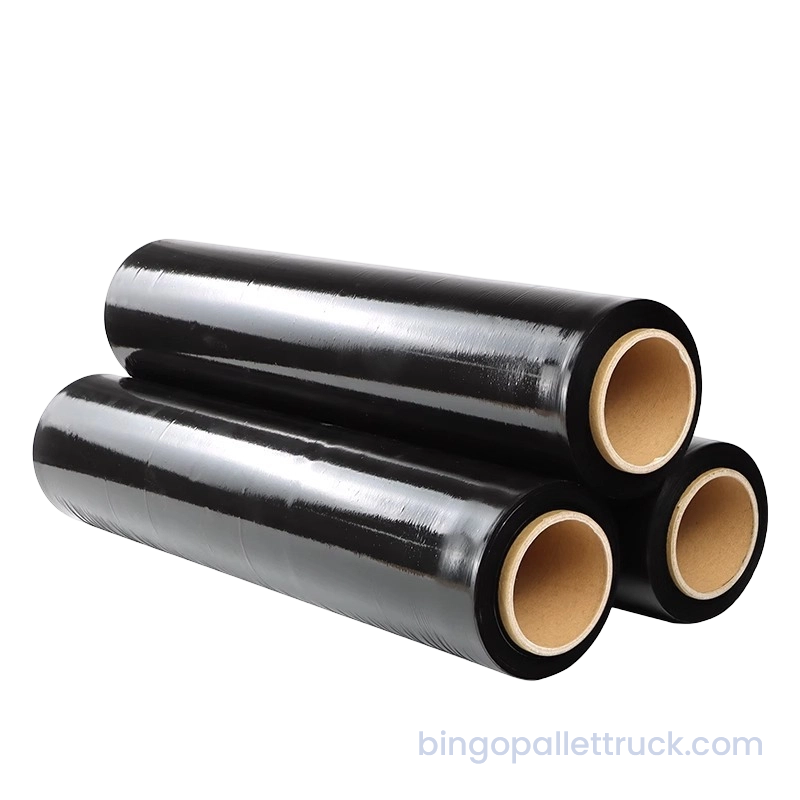
Color-coded routing, security, concealed cargo |
Machine stretch wrap rolls are typically supplied on 76mm (3-inch) cores in widths of 500mm or 450mm, in roll weights ranging from 10kg to 30kg — significantly larger than hand film rolls to minimize changeover frequency on high-speed lines.
Types of Stretch Wrapping Machines
The right wrapping machine depends on pallet volume, load type, available floor space, and level of automation required. The main categories are:
Turntable Stretch Wrappers
The most common and cost-effective machine type. The pallet sits on a rotating turntable while the film carriage travels vertically along a fixed mast. Turntable wrappers are ideal for stable, uniformly shaped loads and can process 20–40 pallets per hour. They require the least investment, typically ranging from $3,000 to $15,000.
Rotary Arm Stretch Wrappers
The film carriage arm rotates around a stationary pallet. This design is preferred for very heavy, unstable, or top-heavy loads that cannot safely be rotated on a turntable. Rotary arm machines are generally faster and more expensive, with throughput of 30–60 pallets per hour and investment costs from $15,000 to $50,000.
Inline / Automated Conveyor Stretch Wrappers
Fully integrated into the production or dispatch conveyor line, these systems wrap and discharge pallets automatically without operator intervention. Throughput can exceed 100 pallets per hour. They represent the highest investment ($30,000–$150,000+) but deliver the lowest labor cost per pallet and are the standard for large-scale distribution centers.
High-Profile vs. Low-Profile Turntable Machines
Standard (high-profile) turntable machines require a forklift or pallet jack to load pallets onto a raised turntable platform. Low-profile machines feature a ramp or flush turntable design for manual pallet jack loading, reducing equipment dependency and floor space requirements.
Machine Stretch Wrap vs. Hand Stretch Wrap: A Practical Comparison
Understanding the operational and financial differences between machine and hand stretch wrapping helps logistics managers make the right investment decision at the right time.
Table 2: Machine Stretch Wrap vs. Hand Stretch Wrap — Operational Comparison
| Factor |
Machine Stretch Wrap |
Hand Stretch Wrap |
| Typical Daily Volume |
50–1,000+ pallets |
1–50 pallets |
| Wrapping Speed |
20–100+ pallets/hour |
6–10 pallets/hour |
| Film Cost per Pallet |
Low (high pre-stretch ratio) |
Higher (operator-dependent) |
| Load Consistency |
High (programmable settings) |
Variable (operator skill) |
| Upfront Investment |
$3,000–$150,000+ |
Minimal (film roll only) |
| Labor Requirement |
Low to none (automated) |
One operator per pallet |
| Ergonomic Risk |
Very low |
Moderate to high |
| Flexibility for Odd Loads |
Moderate (machine-dependent) |
Excellent |
As a general guideline, operations wrapping more than 30–40 pallets per day will typically recoup the investment in a semi-automatic turntable wrapper within 12–18 months through savings in film and labor costs alone.
Key Specifications to Evaluate When Selecting Machine Stretch Wrap Film
Not all machine stretch wrap films are compatible with all wrapping systems. Procurement teams and warehouse managers should evaluate the following specifications carefully when sourcing film:
- Gauge (thickness): Ranges from 8 to 35 microns. Thinner films with high pre-stretch ratings offer the best cost-per-pallet performance but require compatible high-performance pre-stretch systems.
- Pre-stretch compatibility: Confirm the film's rated pre-stretch percentage matches your machine's pre-stretch rollers. Mismatched film-machine combinations result in film breaks or inadequate containment force.
- Core size: Most machine systems use a 76mm (3-inch) core. Verify compatibility before ordering large quantities.
- Roll width: Standard widths are 450mm and 500mm (18 and 20 inches). Wider film provides faster load coverage per revolution but may not fit all carriage systems.
- Cling performance: One-sided cling (film sticks to itself, not to the load) is standard for machine film to prevent debris adhesion and ensure clean film tail sealing.
- Puncture and tear resistance: Critical for loads with protruding corners, metal parts, or irregularly shaped items that may contact the film under tension.
Optimizing Machine Stretch Wrap Performance
Simply owning a stretch wrapping machine is not enough — the system must be properly configured and maintained to deliver maximum efficiency and load quality. The following optimization practices make a measurable difference:
Dial In the Pre-Stretch Setting
The pre-stretch ratio is the single most impactful setting for film cost. Many operations default to conservative settings (100%–150%) when their film and machine are rated for 250%–300%. Increasing pre-stretch to the rated maximum — while verifying containment force with a load containment force meter — can reduce film usage by 30%–40% immediately without additional capital investment.
Program Load-Specific Wrap Cycles
Modern stretch wrappers allow programmable wrap recipes: specific numbers of top and bottom reinforcement passes, carriage speed, turntable RPM, and film tension for each load type. Storing separate programs for light, standard, and heavy loads prevents over-wrapping light pallets and under-wrapping heavy ones.
Conduct Regular Containment Force Testing
Containment force — the inward pressure the wrap applies to the load — should be measured periodically using a force meter or scale. Industry guidelines suggest a minimum containment force of 3–5 lbs per linear inch for standard pallet loads. Regular testing catches film or machine degradation before load damage occurs in transit.
Schedule Preventive Maintenance
Pre-stretch rollers, film carriage bearings, turntable drive components, and film cut-and-seal systems all require routine inspection and lubrication. A quarterly maintenance schedule prevents unexpected downtime that disrupts dispatch operations.
Sustainability and Machine Stretch Wrap
Machine stretch wrap systems are inherently more resource-efficient than manual wrapping due to higher pre-stretch ratios and consistent application. However, further sustainability gains can be achieved through film selection and operational choices:
- Nano-layer and ultra-thin films: Films in the 8–12 micron range, designed for high pre-stretch systems, can reduce plastic usage per pallet by 40%–60% compared to standard 20-micron hand film while maintaining equivalent load containment.
- Recycled-content film: Machine stretch wrap incorporating post-consumer or post-industrial recycled LLDPE content (up to 30%) is increasingly available and compatible with most pre-stretch systems.
- Film recycling programs: LLDPE stretch film is a Category 4 recyclable plastic. Centralized roll-core collection and film scrap recycling programs are straightforward to implement at distribution centers with high film consumption.
- Containment force optimization: Using the minimum necessary film to achieve required containment — rather than defaulting to excessive wrapping cycles — reduces material consumption without compromising load security.
Bingo works with film manufacturers who invest in sustainable production technologies, enabling customers to align their packaging operations with corporate environmental targets without sacrificing operational performance.
Frequently Asked Questions About Machine Stretch Wrap
What is the difference between machine stretch wrap film and hand stretch wrap film?
Machine stretch wrap film is manufactured to tighter gauge tolerances and formulated to withstand the high mechanical tension applied by powered pre-stretch rollers — often 200%–350%. Hand stretch wrap is designed for manual application at lower stretch ratios (typically 100%–200%) and comes in smaller, lighter rolls. Using hand film on a machine stretch wrapper risks film breakage and inconsistent wrapping; using machine film by hand delivers poor stretch performance. The two product categories are not interchangeable.
How many pallets can one machine stretch wrap roll cover?
A standard 20kg machine stretch wrap roll at 17 microns, applied at 250% pre-stretch, typically covers 60–100 standard pallets depending on load height, number of wrap passes, and reinforcement cycles programmed. This compares to 4–8 pallets per 1.5kg hand film roll — a fundamental driver of the per-pallet cost advantage of machine wrapping.
What causes machine stretch wrap to break during application?
Common causes include: setting pre-stretch beyond the film's rated maximum, using film with a gauge too low for the load's sharp edges, worn or misaligned pre-stretch rollers that apply uneven tension, loading a film roll with core damage, or operating at machine speeds that exceed the film's response rate. Film breaks on fully automated lines can cause significant production downtime, making proper film-machine matching a critical procurement consideration.
Can machine stretch wrap be applied to irregularly shaped loads?
Most turntable and rotary arm machines handle standard rectangular or cylindrical loads well. For highly irregular shapes — such as equipment with protruding parts or loads significantly wider than their base — rotary arm machines generally provide better results than turntable models, as they keep the load stationary. In some cases, a hybrid approach is used: machine wrapping for the main load body, with hand wrapping to secure difficult areas.
How should machine stretch wrap rolls be stored?
Store rolls vertically on end or in horizontal racks in a dry, temperature-controlled environment between 10°C and 35°C, away from direct sunlight, UV sources, and chemical exposure. Film stored improperly can develop blocking (layers sticking together), cling degradation, or micro-cracking — all of which cause breaks and inconsistent performance on high-speed machines.
How do I calculate the ROI of investing in a machine stretch wrap system?
A basic ROI calculation should account for: (1) annual savings in film cost at machine vs. hand film pricing and consumption rates, (2) labor time saved per pallet multiplied by hourly labor cost and annual pallet volume, and (3) reduction in product damage claims from improved load containment. For a facility wrapping 100 pallets per day at $0.50 per pallet savings in film and labor, annual savings reach approximately $18,000 — enough to fully offset a mid-range semi-automatic wrapper within one year.
Choosing the Right Machine Stretch Wrap Partner
Selecting a machine stretch wrap supplier is more than a film procurement decision — it involves aligning the film specification with the wrapping machine, the load profile, and the operational workflow. Key criteria for evaluating suppliers and manufacturers include:
- Film-machine compatibility expertise: A capable supplier can advise on which film grades, gauges, and core formats are compatible with your specific wrapping equipment.
- Consistent production quality: Gauge uniformity, consistent pre-stretch performance, and batch-to-batch repeatability are essential for uninterrupted high-speed wrapping operations.
- Supply chain reliability: High-volume operations consume film rapidly; suppliers must maintain inventory and lead times that match your production cadence.
- Technical support and troubleshooting: When film breaks or containment issues arise, responsive technical support prevents extended machine downtime.
- Integrated solutions capability: Suppliers who understand the full warehousing and logistics context — racking, handling equipment, conveyors, and packaging — can help optimize the entire pallet dispatch workflow, not just the wrapping step.
Bingo is an enterprise specializing in the production, sales, and service of warehousing and logistics equipment. By focusing on the complete equipment needs of warehousing and logistics scenarios, Bingo provides global customers with one-stop, integrated solutions that encompass stretch wrapping systems, film supply, material handling equipment, and storage infrastructure — ensuring that every element of the operation works together for maximum efficiency and reliability.

 en
en  Español