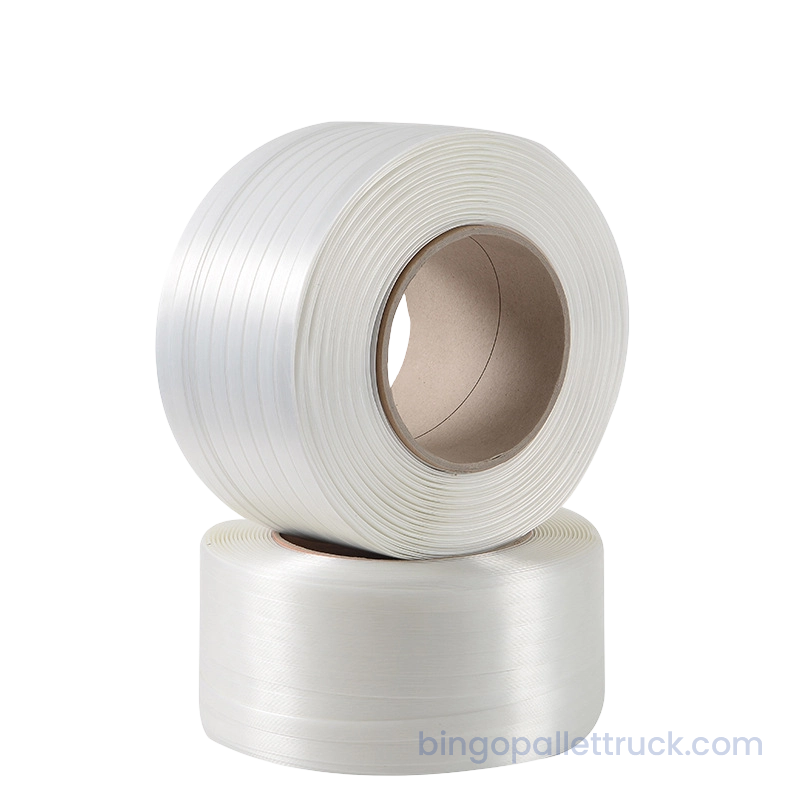
Polyester fiber strapping — also known as composite strapping, cord strap, or woven polyester strapping — is a high-strength packaging and load-securing material constructed from multiple polyester fiber yarns that are woven, bonded, or laminated together into a flat band. Unlike solid plastic strapping materials such as PP or PET, polyester fiber strapping derives its strength from the collective tensile capacity of many individual fibers aligned in the load direction, producing a strap that is both extremely strong and remarkably flexible.
Originally developed as a safer, lighter alternative to steel strapping in heavy industrial and bulk logistics applications, polyester fiber strapping is now widely used across industries including steel manufacturing, paper and pulp, construction materials, marine freight, and rail transport. As a manufacturer and supplier specializing in warehousing and logistics equipment, Bingo provides polyester fiber strapping products and compatible tensioning tools as part of its one-stop load containment solutions for global customers.
How Polyester Fiber Strapping Works
Polyester fiber strapping functions by encircling a load with a tensioned band whose ends are fastened together using a metal buckle or a friction-weld seal to form a closed, high-tension loop. The multi-fiber construction gives the strap a unique combination of properties: each individual fiber contributes tensile strength, while the woven or bonded structure allows the strap to flex without cracking — a critical advantage over solid plastic strapping when wrapping curved, irregular, or very large loads.
Construction Types
- Woven polyester fiber strap: Yarns are interlaced in a textile weave pattern and coated with a protective resin or film. This construction offers excellent flexibility and puncture resistance, and the woven structure distributes load evenly across all fibers.
- Bonded (composite) fiber strap: Polyester yarns are aligned in parallel and bonded together with an adhesive resin matrix, then laminated between two layers of protective film. This produces a flatter, more rigid strap that performs similarly to solid PET strapping on standard machine systems.
- Cord strap: Twisted or braided polyester fiber cords enclosed in a woven outer jacket. Cord strap typically offers the highest flexibility of all fiber strap formats and is used where the strap must conform to complex load shapes or be applied and re-tensioned in the field.
Fastening Methods
- Metal wire buckle: The most common fastening for polyester fiber strapping. A stainless steel or galvanized wire buckle is threaded with both strap ends and a windlass or ratchet tool is used to tension the strap tightly before the buckle locks the tension in place. Joint efficiency typically reaches 70%–85% of the strap's rated break strength.
- Friction-weld (heat seal): Used with bonded composite fiber strapping on compatible machine systems, where the flat laminated construction allows heat fusion of overlapping strap ends, similar to solid PET strapping sealing.
- Snap-on (push-type) buckle: A quick-apply plastic or metal clip that snaps over the strap overlap for rapid manual applications, often used in situations requiring fast field strapping without tools.
Tensioning Tools
- Manual windlass tensioners: A ratchet-style tool that progressively tightens the strap through repeated handle strokes. Reliable and tool-independent, suitable for field or occasional use.
- Pneumatic tensioners: Air-powered tools that deliver consistent, high-tension application at speeds suitable for production environments, applying forces up to 5,000–8,000 N.
- Battery-powered tensioners: Cordless, programmable tools that allow tension to be set precisely in Newtons — ideal for operations requiring consistent, repeatable tension across multiple load types without compressed air infrastructure.
Key Advantages of Polyester Fiber Strapping
Polyester fiber strapping occupies a unique performance position in the strapping market — combining the high strength of steel with the safety and flexibility of plastic materials. Its advantages over both steel and solid plastic strapping are substantial:
- Exceptional strength-to-weight ratio: Polyester fiber strapping achieves break strengths from 1,500 kg up to 14,000 kg depending on width and construction, while weighing approximately 50%–60% less than equivalent-strength steel strapping. This dramatically reduces coil weight and handling fatigue for operators.
- Superior operator safety: When cut or broken under tension, polyester fiber strapping does not spring back violently or create sharp metal edges — eliminating the most serious injury risk associated with steel strapping failure. This is the single most cited reason for switching from steel to fiber strapping in industrial operations.
- High elastic elongation and recovery: Polyester fiber strapping elongates by 3%–5% under load and recovers that elongation when the load settles, maintaining containment force over extended transit or storage periods — a critical property for compressible or vibration-sensitive loads.
- No corrosion or rust contamination: Polyester fiber does not rust, oxidize, or degrade in wet or humid environments, eliminating the risk of rust stains on finished goods — a persistent problem with steel strapping on metal products, timber, and finished surfaces.
- Flexibility on irregular load shapes: Unlike rigid solid plastic or steel strapping, polyester fiber strap conforms to curved, cylindrical, or irregular load profiles without kinking or cracking, providing consistent contact force across the full strap contact area.
- Reusable in appropriate applications: Woven polyester fiber strapping secured with wire buckles can be detensioned, the buckle released, and the strap reused for subsequent loads — a significant material cost saving in closed-loop supply chain operations such as returnable transit packaging.
- Weather and UV resistance: With appropriate coating or laminate protection, polyester fiber strapping maintains its mechanical properties in outdoor storage environments, temperature ranges from -40°C to +80°C, and UV exposure conditions where unprotected plastic strapping would degrade.
Polyester Fiber Strapping Specifications and Load Capacity
Polyester fiber strapping is available across a wide range of widths and break strengths, covering applications from medium-duty industrial pallet securing to the heaviest bulk material and infrastructure shipments:
Table 1: Typical Polyester Fiber Strapping Specifications and Applications
| Width |
Break Strength |
Typical Load Weight per Strap |
Common Applications |
| 16mm |
1,500–2,000 kg |
Up to 800 kg |
Heavy pallets, timber bundles, paper reels |
| 19mm |
2,000–3,000 kg |
Up to 1,200 kg |
Steel profiles, ceramic loads, construction materials |
| 25mm |
3,000–5,000 kg |
Up to 2,000 kg |
Steel coils, pipe bundles, granite slabs |
| 32mm |
5,000–8,000 kg |
Up to 4,000 kg |
Heavy machinery, rail freight, large structural steel |
| 35mm–50mm |
8,000–14,000 kg |
4,000–7,000 kg |
Bulk container lashing, marine cargo, heavy industrial equipment |
Roll lengths vary by width and construction, typically ranging from 100m to 500m per coil for woven fiber strapping, and up to 850m for lighter bonded composite grades — significantly longer than steel strapping coils of equivalent strength, reducing changeover frequency in high-volume applications.
Polyester Fiber Strapping vs. Steel Strapping vs. Solid PET Strapping
Understanding where polyester fiber strapping sits relative to steel and solid PET is essential for making the right material selection for each load type and operational context:
Table 2: Polyester Fiber Strapping vs. Steel Strapping vs. Solid PET Strapping
| Property |
Polyester Fiber Strapping |
Solid PET Strapping |
Steel Strapping |
| Max Break Strength |
Up to 14,000 kg |
Up to 2,200 kg |
Unlimited (gauge-dependent) |
| Elongation at Break |
3%–5% |
10%–15% |
1%–3% |
| Elastic Recovery |
Good |
High (80%–100%) |
None |
| Flexibility on Curved Loads |
Excellent |
Limited |
Poor (kinks) |
| Operator Safety |
Very High |
High |
Low (sharp cut ends) |
| Corrosion Resistance |
Excellent |
Excellent |
Poor (rusts) |
| Weight vs. Steel |
~50%–60% lighter |
~35% lighter |
Baseline |
| Reusability |
Yes (with buckle seal) |
No |
Limited |
| Relative Material Cost |
Medium–High |
Medium |
High |
| Best For |
Very heavy, curved, or surface-sensitive loads |
Medium-heavy compressible loads |
Ultra-heavy rigid industrial loads |
Polyester fiber strapping is the preferred choice when loads exceed the practical strength range of solid PET strapping (above 2,000 kg per strap) and when steel strapping's safety risks, corrosion, or rigidity create operational or product quality problems. It effectively bridges the performance gap between solid plastic strapping and steel for the most demanding industrial applications.
Industries and Applications Where Polyester Fiber Strapping Is Essential
The unique combination of high strength, flexibility, and safety makes polyester fiber strapping the standard choice in several demanding industrial sectors:
- Steel and metals manufacturing: Securing steel coils, bar bundles, wire rod coils, and plate packs for domestic and export shipment. Fiber strapping eliminates rust contamination on finished steel surfaces and dramatically reduces laceration injuries during strapping and destrapping at steel service centers.
- Paper and pulp: Unitizing paper reels, newsprint rolls, and baled waste paper where large diameters and smooth cylindrical surfaces require a flexible strap that conforms without slipping and maintains tension as the paper roll compresses.
- Timber and wood products: Bundling sawn timber, engineered wood panels, and laminated beams for transport in wet or outdoor conditions where steel strapping would rust and stain wood surfaces, reducing product value.
- Marine and container freight: Lashing heavy cargo inside shipping containers and securing deck cargo on vessels. Woven polyester fiber strapping's resistance to salt water, UV exposure, and temperature cycling makes it well-suited to maritime environments.
- Rail freight: Securing loads inside rail wagons and flatcars, where the dynamic forces of braking, starting, and curve negotiation require strapping with sufficient elongation to absorb shock without breaking — a characteristic that rigid steel strap cannot provide.
- Heavy machinery and equipment: Securing machine components, transformers, and industrial equipment on flatbed trailers or inside containers, where the irregular shapes and heavy weights demand a strap that can be guided around complex profiles without kinking.
- Construction materials: Unitizing stone slabs, precast concrete elements, roof panels, and structural steel sections for site delivery, where load weights and surface finish requirements both exceed what solid PET strapping can reliably handle.
Selecting the Right Polyester Fiber Strapping for Your Application
With a wide range of widths, constructions, and accessories available, selecting the optimal polyester fiber strapping specification requires a structured evaluation of several key factors:
Load Weight and Safety Factor
Always select a strap whose break strength is at least 2–3× the load weight per strap applied. For transport applications involving vibration, braking, or multi-handling (forklift lifts, crane picks), dynamic forces can multiply static weight by 2–4×, so apply a minimum safety factor of 3× for rail and road freight and 4× for crane-lifted or sea freight loads.
Load Shape and Contact Requirements
For cylindrical loads such as paper reels, pipe coils, or cable drums, woven fiber strapping's flexibility allows it to conform to the curved surface and distribute tension evenly. For flat-sided pallet loads or box-shaped goods, bonded composite strapping provides a flatter profile that sits flush against the load surface for a cleaner, more stable application.
Environmental Conditions
For outdoor storage, sea freight, or applications involving water exposure, specify strapping with a water-resistant resin coating or full laminate encapsulation. UV-stabilized grades are available for extended outdoor storage beyond 3–6 months. For temperature-sensitive environments, confirm that the strap's rated operating temperature range covers the expected extremes.
Reusability Requirements
In closed-loop operations such as internal plant logistics, returnable packaging systems, or controlled distribution networks, woven polyester fiber strapping with wire buckle fastening can be reused 5–10 times under standard conditions before replacement, reducing per-cycle material cost significantly compared to single-use solid strapping.
Best Practices for Applying Polyester Fiber Strapping
Correct application technique is essential to achieve the rated performance of polyester fiber strapping and ensure load integrity throughout the supply chain:
- Use edge protectors at all contact points: Despite its flexibility, polyester fiber strapping under high tension will concentrate stress at sharp pallet board edges or load corners. Plastic, cardboard, or metal angle edge protectors distribute this stress across a wider surface, preventing premature strap failure and protecting sensitive load surfaces.
- Thread buckles correctly: Incorrect wire buckle threading reduces joint efficiency dramatically. The strap should pass through the buckle in the direction specified by the buckle manufacturer, with the tail end locked under the wire before tensioning begins.
- Apply tension progressively: For manual windlass tools, apply tension in controlled strokes rather than jerking the handle. Sudden high-impact tensioning can damage the fiber structure at the buckle contact point, reducing effective break strength below specification.
- Inspect strap condition before reuse: When reusing woven fiber strapping, inspect for fraying, fiber breaks, UV discoloration, or resin cracking before applying to a new load. A strap showing any of these signs should be removed from service regardless of remaining visual bulk.
- Position straps at the load's center of gravity: For tall or top-heavy loads, position the lowest strap no more than 15–20cm from the load base and the uppermost strap within 15–20cm of the load top. Mid-height single strapping of tall loads provides inadequate containment against tipping.
- Store unused strapping correctly: Keep coils in a dry, shaded indoor environment away from UV sources, chemicals, and temperatures above 50°C. Polyester fiber strapping absorbs moisture slowly over time in high-humidity environments, which can reduce tensile strength if not controlled.
Sustainability Advantages of Polyester Fiber Strapping
Polyester fiber strapping has a compelling sustainability profile compared to steel strapping, driven by both material properties and operational reuse potential:
- Reusability reduces material consumption: Woven polyester fiber strapping reused 5–10 times per strap reduces total strapping material consumption by 70%–85% compared to single-use steel strapping for the same number of load applications — a direct reduction in packaging waste at scale.
- Lower production carbon footprint than steel: Polyester fiber production is significantly less energy-intensive than steel manufacturing. Replacing steel strapping with fiber strapping on equivalent applications reduces the greenhouse gas footprint of packaging operations per tonne of goods shipped.
- Recyclable end-of-life material: Polyester fiber is a recyclable material. End-of-life fiber strapping can be processed through industrial textile recycling streams into fiber fill, geotextile materials, or recycled polyester products, keeping the material out of landfill.
- Reduced product damage waste: The combination of high strength and elastic recovery reduces in-transit load failures compared to steel strapping that goes slack after load settling. Fewer damaged loads mean less material waste and fewer return and replacement shipments across the supply chain.
Bingo actively works with suppliers who prioritize responsible polyester fiber strapping manufacturing, enabling customers to meet sustainability commitments while maintaining the high load containment standards their operations require.
Frequently Asked Questions About Polyester Fiber Strapping
What is the difference between woven and bonded polyester fiber strapping?
Woven polyester fiber strapping has its yarns interlaced in a textile weave, giving it maximum flexibility, conformability, and resistance to abrasion — ideal for curved loads and outdoor or marine applications. Bonded (composite) polyester fiber strapping has yarns aligned in parallel and encapsulated in a resin and film laminate, producing a flatter, stiffer strap that feeds reliably through automatic machine systems and delivers more consistent heat-seal joint performance. Woven strap is generally used with wire buckle fastening; bonded strap can be used with either buckles or heat-seal machines.
Can polyester fiber strapping be used on standard strapping machines?
Bonded composite polyester fiber strapping is compatible with many semi-automatic and automatic strapping machines designed for PET strapping, provided the machine's heat seal system is set to the appropriate temperature for the composite material. Woven fiber strapping, however, is generally not suitable for automatic heat-seal machines and is applied using manual or pneumatic tensioning tools with wire buckle fasteners. Always confirm machine compatibility with the strap supplier before implementing a fiber strap solution on automated equipment.
How many times can woven polyester fiber strapping be reused?
Under normal industrial conditions — clean, dry loads without sharp edges, applied with correct tension and undamaged buckles — woven polyester fiber strapping can typically be reused 5–10 times before fiber degradation, resin cracking, or surface fraying indicates replacement is needed. Reuse life is shortened by UV exposure, chemical contact, abrasive load surfaces, or excessive tensioning beyond the strap's rated capacity. Each reuse cycle should begin with a visual inspection of the strap and buckle.
Is polyester fiber strapping safe in contact with food products?
Polyester fiber strapping is generally considered food-safe for indirect contact applications — securing the outer surface of palletized food cartons, for example — as polyester fiber does not leach chemicals under normal ambient conditions. For direct food contact applications or specific regulatory compliance requirements, confirm the specific product's food-contact certification with the manufacturer, as coating and resin formulations vary between suppliers.
What happens to polyester fiber strapping if it breaks under load?
This is one of the most significant safety advantages of polyester fiber strapping over steel. When polyester fiber strapping breaks under tension, the energy released causes the strap to go slack and fall away from the load — it does not spring back under the stored elastic energy with the violent whipping motion characteristic of breaking steel strapping. This behavior dramatically reduces the risk of facial and hand injuries from strap snapback, and is the primary reason many steel-using industries have transitioned to fiber strapping as a safety improvement initiative.
Does polyester fiber strapping require special disposal or recycling?
Used polyester fiber strapping does not require hazardous waste disposal — it is an industrial textile waste that can be sent to general industrial waste streams or specialist textile recycling processors. Many distribution and manufacturing operations collect used fiber strapping separately from general waste for recycling into fiber fill or geotextile products. Unlike steel strapping, it does not create sharp metal waste hazards in general waste handling or compactor systems.
Polyester Fiber Strapping as Part of a Complete Heavy-Duty Load Containment System
For the heaviest and most demanding logistics applications, polyester fiber strapping performs best when integrated into a complete load containment strategy rather than used as a standalone solution. A comprehensive approach for heavy industrial loads typically combines:
- Polyester fiber strapping for primary vertical and longitudinal load restraint, providing the high-tension containment force that holds the load unit together.
- Edge and corner protectors at all strap-to-load contact points to maximize joint efficiency and protect load surfaces from marking or indentation under strap tension.
- Anti-slip slip sheets or dunnage between load layers to prevent lateral movement under braking and acceleration forces during road or rail transport.
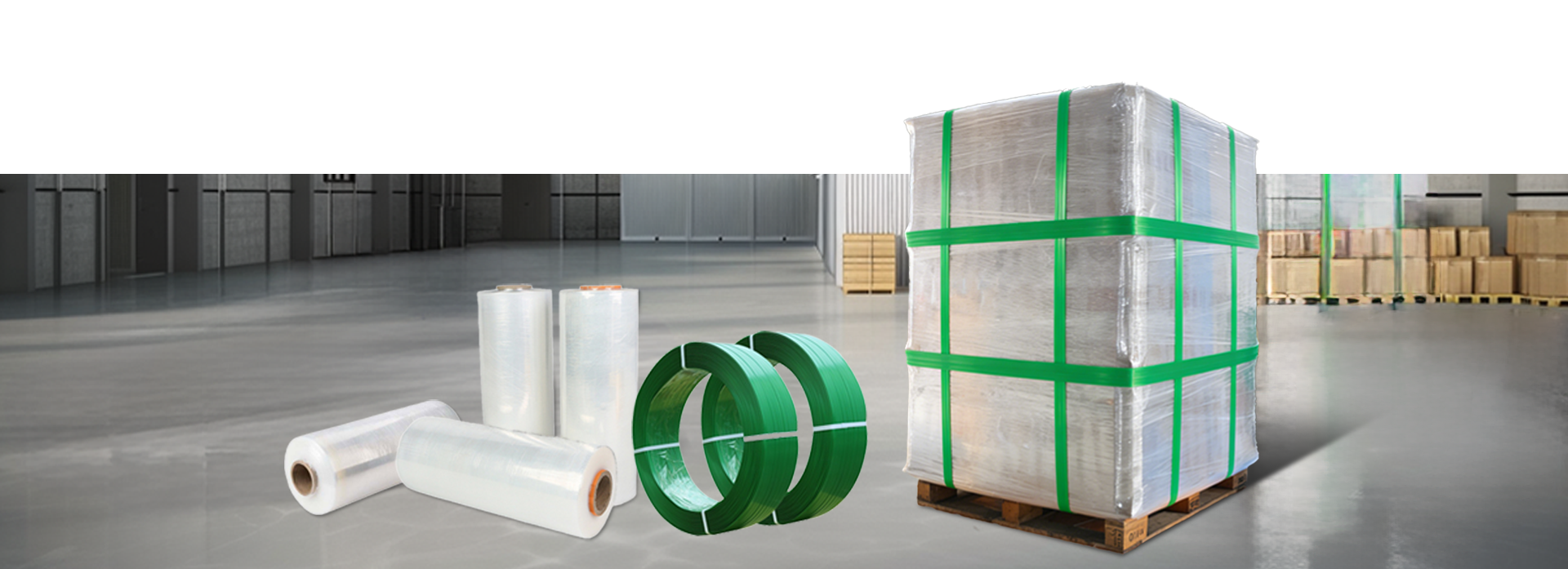
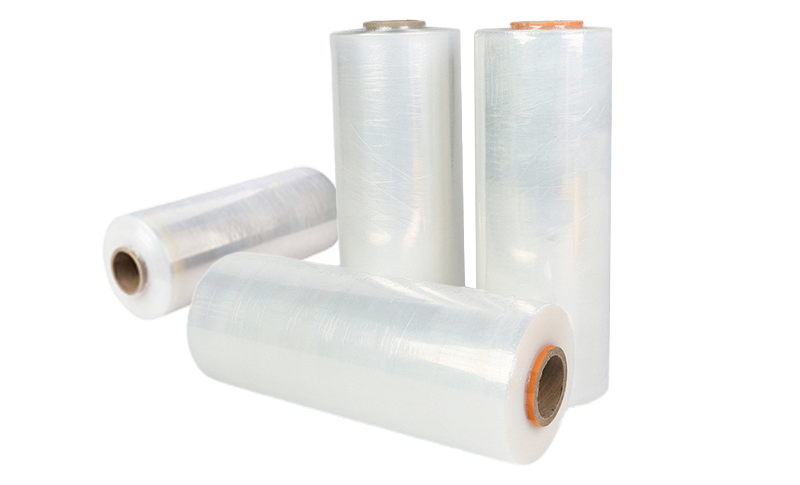
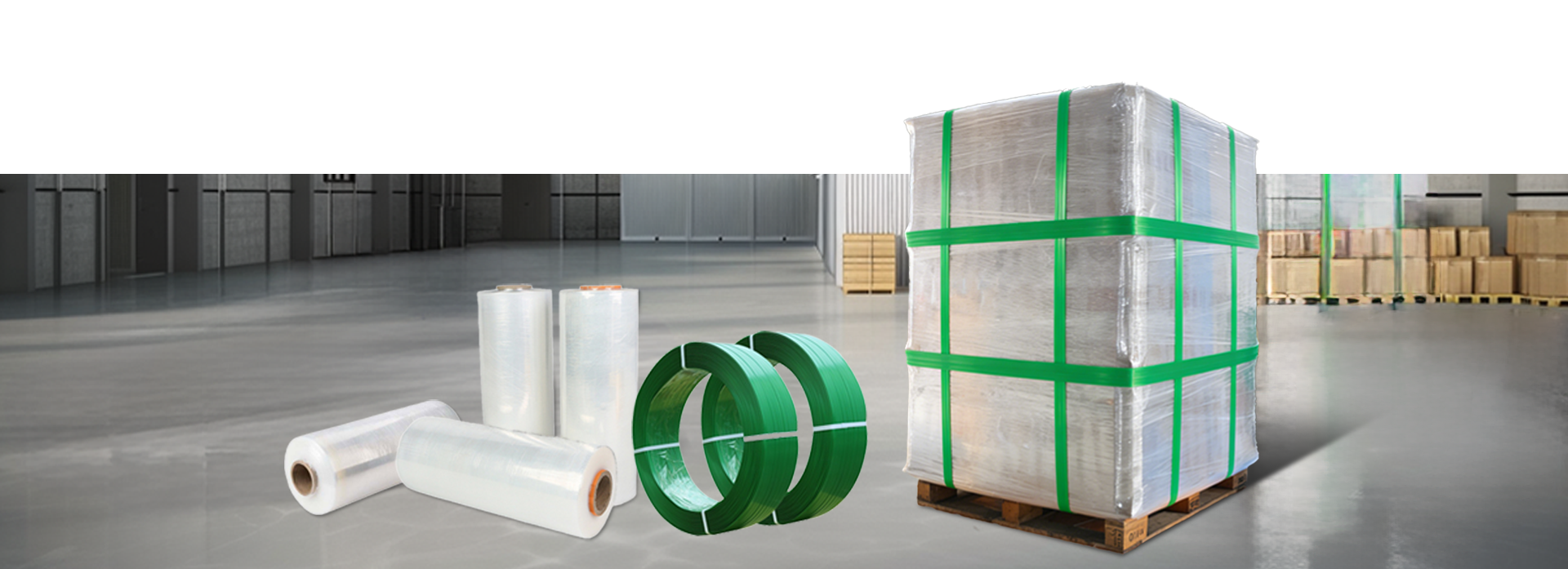
- Stretch wrap or shrink wrap over the strapped load to add weather protection, tamper evidence, and secondary unitization of smaller components within the strapped bundle.
Designing these systems requires a thorough understanding of load dynamics, transport conditions, and the interaction between different containment components. Bingo specializes in the production, sales, and service of warehousing and logistics equipment, providing global customers with one-stop, integrated solutions that span heavy-duty strapping systems, stretch wrapping equipment, material handling tools, and storage infrastructure — ensuring that every link in the load containment chain is engineered to work together for maximum security and operational efficiency.

 en
en  Español