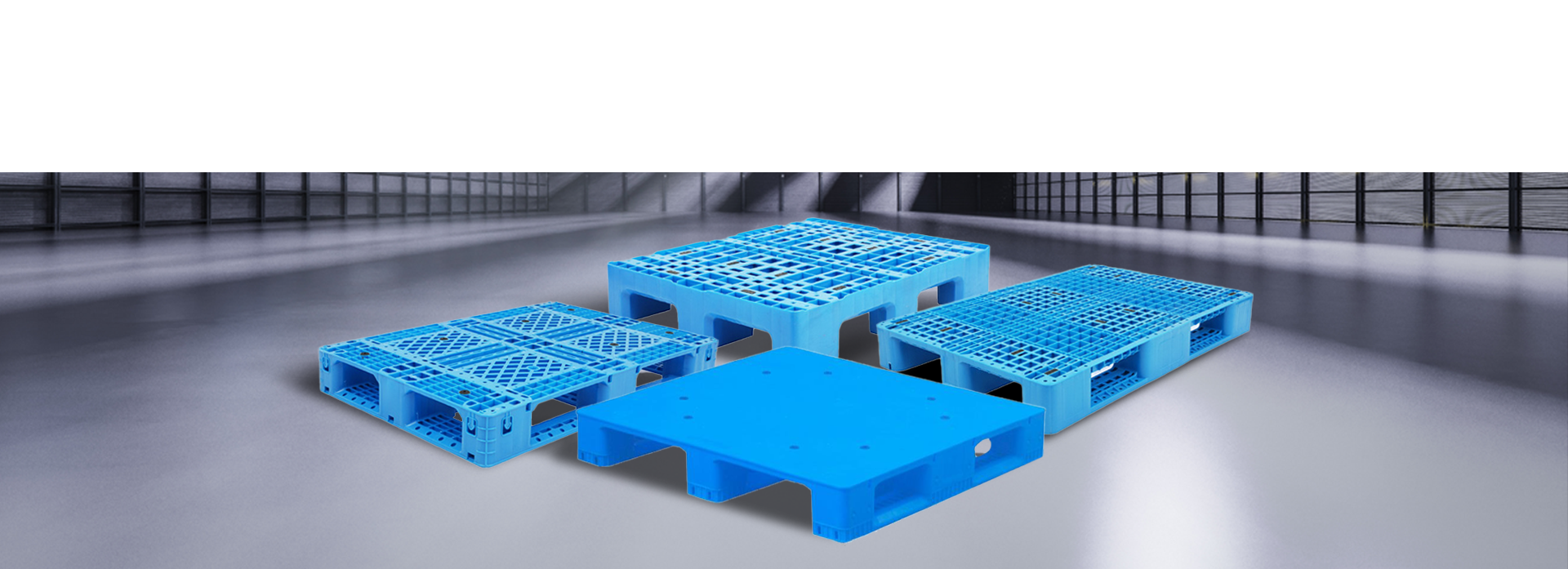
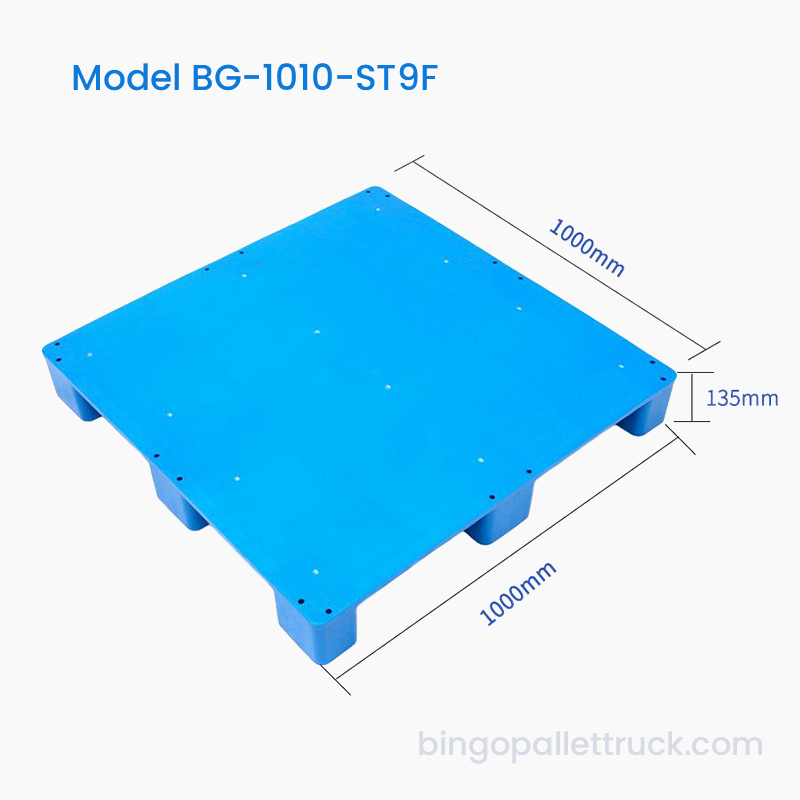
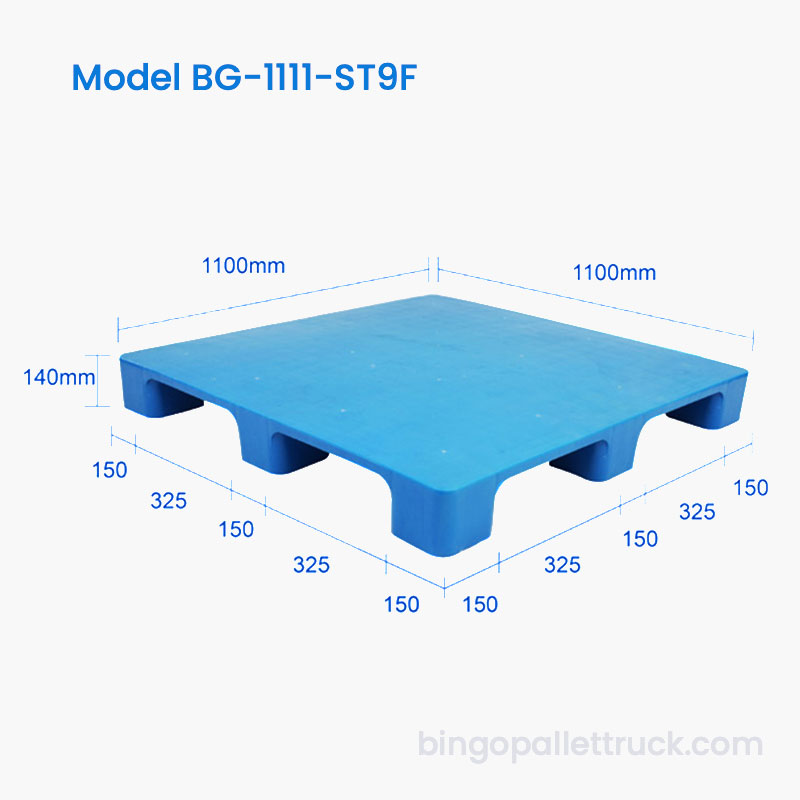
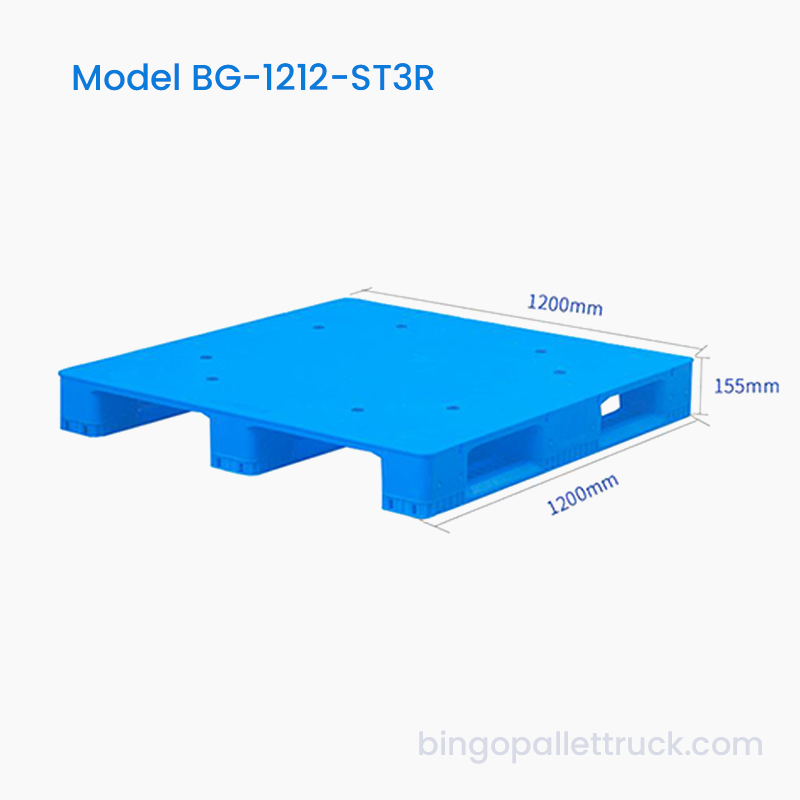
The deck style of a plastic pallet — the design of its top load-bearing surface — is one of the most operationally significant choices a warehouse or logistics manager makes when specifying pallets. It directly affects load support, drainage and ventilation, hygiene compliance, surface friction, and compatibility with conveyor and automated handling systems. Selecting the wrong deck style can compromise product safety, fail regulatory inspections, or cause load slippage during transit. Bingo's plastic pallet range covers three primary deck styles — Solid Top, Grid (Vented), and Mesh — each engineered to address distinct operational requirements.
Solid Top Plastic Pallets: Maximum Surface Coverage and Hygiene
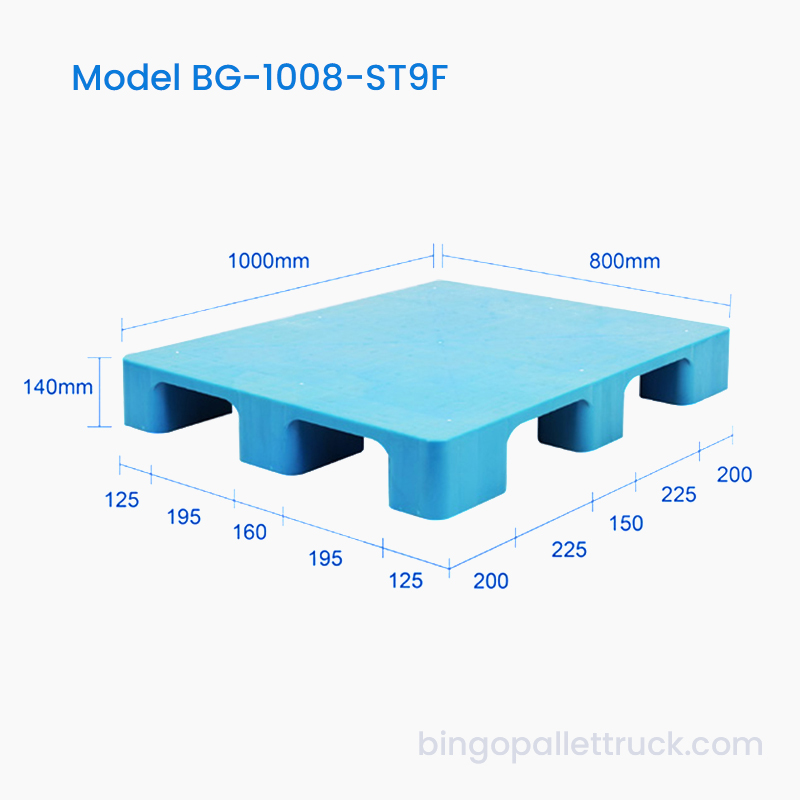
A solid top deck presents a continuous, uninterrupted flat surface across the entire pallet face. There are no openings, slots, or gaps — the load rests on a smooth, sealed plane of HDPE plastic. This construction eliminates recesses where moisture, dust, product residue, or micro-organisms can accumulate, making solid top pallets the preferred choice in environments subject to strict hygiene standards.
Industries that routinely specify solid top decks include food processing, pharmaceuticals, cosmetics, and cold chain logistics — any sector operating under HACCP, GMP, FDA, or equivalent regulatory frameworks. The sealed surface can be pressure-washed and sanitised thoroughly after each cycle without concern about residue trapped in openings. Solid top pallets also provide a stable, consistent bearing surface for small-footprint items — such as drums, kegs, bottles, or medical devices — that would otherwise bridge across open sections of a vented or grid deck and risk tipping.
- Best for: Food and beverage production, pharmaceutical warehousing, cold storage, clean rooms, cosmetics manufacturing, and any regulated environment requiring traceable cleaning records.
- Key advantage: Complete surface coverage eliminates contamination traps; ideal for small or irregularly shaped loads that need full deck support.
- Trade-off: Heavier than open-deck alternatives; liquid spills pool on the surface rather than draining away, which must be managed in wet processing environments.
Grid (Vented) Deck Plastic Pallets: Lightweight Strength with Airflow
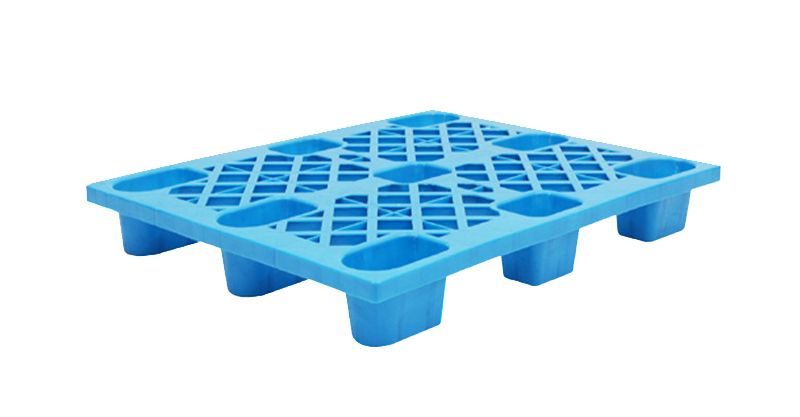
Grid deck pallets — also called vented deck pallets — feature a top surface formed by a pattern of interlocking ribs or structural crossbars with open spaces between them. This design retains the structural integrity of a full deck while reducing pallet weight by 10–20% compared to a solid top of equivalent dimensions, a meaningful saving in operations where pallets are frequently handled manually or where every kilogram of tare weight affects freight costs.
The open grid structure also allows air to circulate freely through the pallet load from below. This is particularly valuable in cold storage and refrigerated transport, where consistent airflow around stored products directly affects temperature uniformity, energy efficiency, and product shelf life. In produce cold chains, for example, inadequate pallet airflow can create warm spots that accelerate spoilage — a significant commercial risk that grid deck pallets help mitigate. Liquids drain through the deck openings rather than pooling, which is advantageous in wet areas such as fresh fish or beverage production zones.
- Best for: Cold chain logistics, refrigerated warehousing, fresh produce distribution, beverage production, general warehousing where weight reduction is valued, and operations using stretch wrap to secure loads.
- Key advantage: Lighter weight than solid top; excellent airflow and drainage; the most widely used deck style for general logistics applications.
- Trade-off: Small or flexible-base items (such as individual bottles or soft bags without secondary packaging) may not be supported safely across the open sections; a slip sheet or base layer may be needed for such loads.
Mesh Deck Plastic Pallets: Fine Ventilation for Sensitive and Specialty Loads
Mesh deck pallets feature a finer open pattern than standard grid decks — the apertures are smaller and more uniformly distributed across the deck surface. This configuration balances the airflow and drainage benefits of a vented design with a greater supporting surface area, making it suitable for loads that require ventilation but cannot be safely placed on a coarser grid without risk of small items falling through or becoming lodged.
Mesh decks are commonly specified for horticultural products, potted plants, loose bulk items in breathable bags, and certain pharmaceutical or electronic components where electrostatic discharge management and airflow are both considerations. The finer surface also provides enhanced friction in some designs, reducing load shift during transit without the need for additional anti-slip matting. Mesh deck pallets occupy a practical middle ground between solid top stability and full grid ventilation, making them a versatile choice for specialty supply chains.
- Best for: Horticulture and nursery products, loose or breathable-bag goods, specialty food items, electronics requiring ventilation, and applications needing more surface contact than a grid deck provides without the full weight of a solid top.
- Key advantage: Finer aperture pattern supports smaller items that would fall through a standard grid while still allowing air and moisture to pass through the deck.
- Trade-off: The finer openings can trap fine particulates more readily than a standard grid, requiring more thorough cleaning in high-contamination environments.
Deck Style Comparison: Choosing the Right Surface for Your Load
| Deck Style |
Surface Coverage |
Drainage / Airflow |
Relative Weight |
Typical Application |
| Solid Top |
100% — no openings |
None |
Heaviest |
Pharma, food processing, cold storage, clean rooms |
| Grid (Vented) |
~60–75% — open rib pattern |
Excellent |
Lightest |
General warehousing, cold chain, produce, beverages |
| Mesh |
~80–90% — fine open pattern |
Good |
Medium |
Horticulture, specialty foods, electronics, loose goods |
Comparison of plastic pallet deck styles across surface coverage, drainage, weight, and application
How Deck Style Interacts with Load Type and Handling Environment
Small and Flexible-Base Loads
Loads such as individual bottles, jars, pouches, or small cartons without a rigid secondary base require careful deck selection. On a coarse grid deck, these items can settle into or bridge across the openings, creating instability. A solid top deck eliminates this risk entirely. Where weight savings are important, a mesh deck provides the necessary support with less material than a full solid surface.
Refrigerated and Frozen Storage
In cold store environments operating between −25°C and +4°C, airflow uniformity around the stored product is critical to both energy efficiency and product quality. Grid deck pallets are strongly preferred in these conditions because they allow refrigerated air to circulate vertically through the load. Studies in cold chain logistics have shown that switching from solid to vented pallets in dense cold store configurations can reduce refrigeration energy consumption by 5–10% by improving airflow distribution and reducing the cooling load required to maintain temperature uniformity.
Automated Conveyor and AS/RS Systems
In automated handling environments, deck style affects sensor detection, friction levels, and load stability during high-speed movement. Solid top decks provide the most consistent surface for optical sensors and RFID readers embedded in conveyor lines. Grid and mesh decks may require sensor calibration adjustments if beam paths pass through deck openings. For robotic palletising and depalletising operations, solid or mesh tops provide more predictable load contact points than coarse grid designs.
Regulatory and Certification Compliance
Several industry certification schemes specify or strongly recommend deck styles. HACCP and FDA guidance for food contact materials effectively requires a non-porous, cleanable surface — which solid top HDPE decks satisfy. Some pharmaceutical GMP standards require documentation that pallet surfaces can be cleaned to a defined standard between uses; solid top pallets simplify this compliance requirement significantly. Exporters shipping to markets with phytosanitary requirements should note that plastic pallets of all deck styles are exempt from ISPM 15 heat treatment requirements — a major advantage over wooden pallets regardless of deck type selected.
Bingo Solid Top Plastic Pallets: Purpose-Built for Demanding Environments
Bingo's Solid Top Plastic Pallets are available across all major footprint sizes — from compact 600×400mm units through to full-size 1200×1000mm global-standard pallets — and in a range of base configurations including nine-foot and three-runner designs. As a Plastic Pallets Deck Styles Manufacturer, Bingo provides global customers with one-stop integrated solutions for material storage and handling, backed by a mature supply chain system and strict quality inspection processes to ensure every product complies with international standards.
Committed to delivering cost-effective solutions for manufacturing, e-commerce logistics, warehousing and distribution, and supermarket retail, Bingo upholds the philosophy of "Quality First, Win-Win Cooperation" — actively partnering with customers worldwide to match the right deck style to each specific operational requirement.
Frequently Asked Questions About Plastic Pallet Deck Styles
Is a solid top deck always better for hygiene than a grid deck?
In most hygiene-critical applications, yes. The absence of openings in a solid top deck eliminates the crevices where contaminants can accumulate and resist cleaning. However, in wet processing environments where liquid pooling on the deck surface creates its own hygiene risk — for example, on fish processing lines — a grid or mesh deck that allows drainage may actually be the more hygienic choice. The best deck style for hygiene depends on the specific contamination risk profile of the environment, not a universal rule.
Can I use a grid deck pallet for loads that include small loose items?
Grid deck pallets can be used with small loose items if a slip sheet, corrugated layer pad, or pallet liner is placed on the deck first to create a continuous support surface. This is a common practice in beverage and bottling operations where grid pallets are preferred for their weight and drainage benefits but the individual containers require full support. Alternatively, a mesh deck pallet provides smaller apertures that support more load types directly without requiring a liner.
Does deck style affect the overall load capacity of a plastic pallet?
Deck style influences load capacity indirectly. A solid top deck distributes point loads across the entire surface, which is beneficial for small, dense items concentrated over a small footprint. A grid deck supports uniformly distributed loads across its rib structure equally well, but point loads concentrated between ribs may cause localised stress. For evenly distributed unit loads — which represent the vast majority of palletised goods — deck style has minimal effect on the rated load capacity; the base structure, material grade, and deck thickness are the primary determinants of load rating.

 en
en  Español