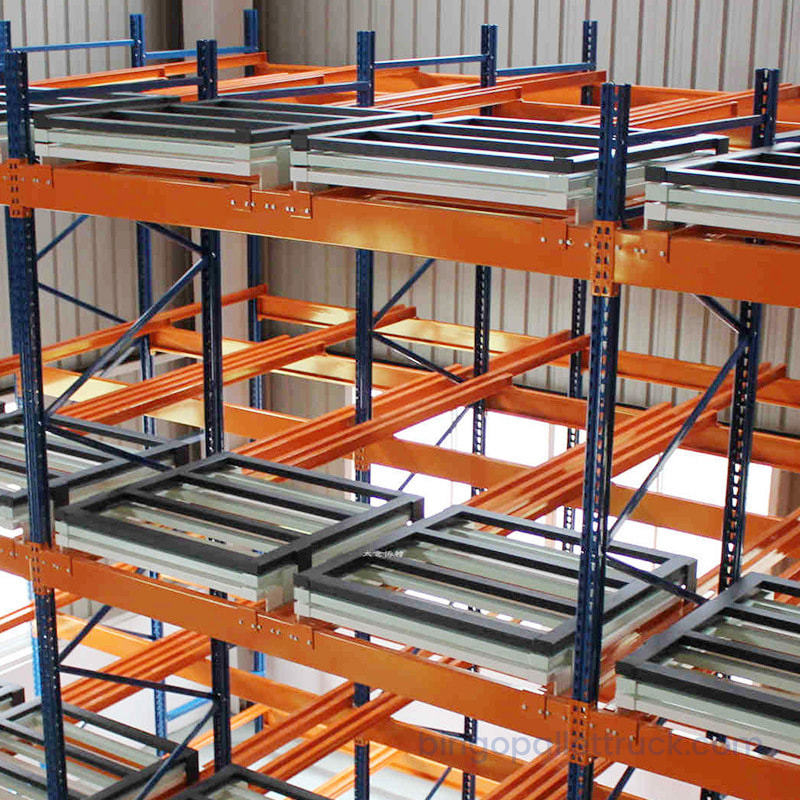
What Is Pushback Racking and Why It Outperforms Conventional Storage
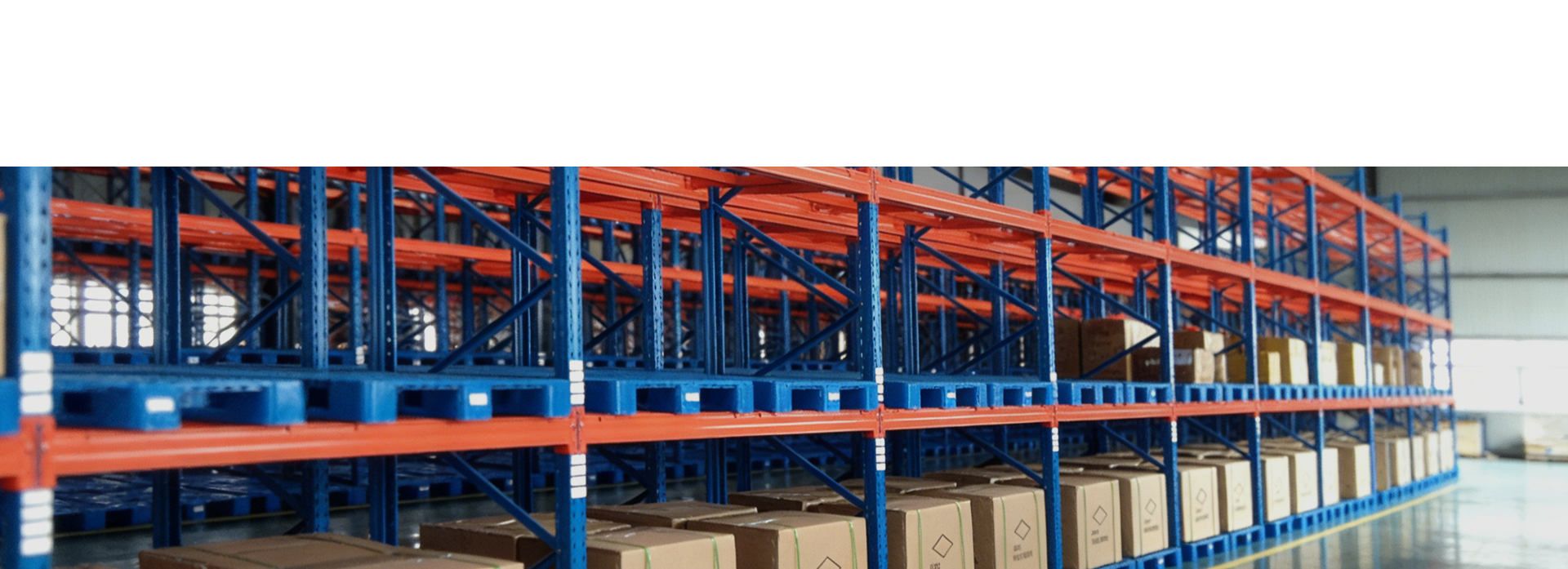
Pushback racking is a high-density storage system that allows pallets to be stored 2 to 6 deep on each level, achieving up to 90% more storage density than single-deep selective racking. Unlike drive-in or drive-through systems, pushback racking operates on a Last-In, First-Out (LIFO) principle: when a new pallet is loaded, it pushes the existing pallets back along inclined rails or a cart-and-rail mechanism. When a pallet is removed, the remaining pallets automatically roll forward to the pick face. This means forklifts never need to enter the rack structure, dramatically improving operational safety and pallet accessibility.
For warehouses dealing with moderate SKU diversity and high-volume throughput, pushback racking delivers a compelling balance between density, selectivity, and throughput speed. It is particularly effective in cold storage, food and beverage distribution, and manufacturing finished-goods warehouses where space cost per cubic meter is significant.
How Pushback Racking Works: The Mechanical Principle
Pushback racking systems use one of two primary mechanisms — nested cart systems or inclined rail (flow lane) systems. Understanding the difference is critical when selecting a system for your facility.
Nested Cart System
Each level contains a series of wheeled carts nested inside one another. The first pallet rests on the outermost cart; when a second pallet is loaded, it pushes the first pallet (and its cart) back while sitting on its own cart. This cascading mechanism supports storage depths of 2 to 6 pallets. When a pallet is retrieved, the remaining pallets gently roll forward under gravity due to the slight downward incline (typically 1.5° to 3°) toward the aisle.
Inclined Rail System
Simpler and lower-cost, this variant uses angled steel rails without carts. Pallets slide directly on the rails. It is best suited for 2-deep configurations and requires pallets with smooth, consistent bottom boards. While it has fewer moving parts and lower maintenance requirements, it offers less depth flexibility than the cart-based approach.
| Feature |
Nested Cart System |
Inclined Rail System |
| Max Storage Depth |
2–6 pallets |
2–3 pallets |
| Pallet Condition Requirement |
Moderate |
High (uniform base) |
| Moving Parts |
Multiple carts per lane |
None |
| Maintenance Complexity |
Medium |
Low |
| Relative Cost |
Higher |
Lower |
| Best Use Case |
High-density, multi-SKU |
Simple 2-deep storage |
Table 1: Comparison of pushback racking mechanism types
Key Advantages of Pushback Racking Over Competing Systems
Pushback racking competes directly with selective racking, drive-in racking, and pallet flow racking. Each system has a distinct performance profile. Below are the specific advantages pushback racking delivers:
- Higher space utilization than selective racking: A standard selective rack requires one aisle per bay. Pushback systems reduce aisle count significantly — a 4-deep pushback configuration can cut aisle space by approximately 60%, converting dead space into productive storage volume.
- Greater SKU accessibility than drive-in racking: Drive-in racks store only one SKU per lane, limiting selectivity. Pushback racking allows a different SKU per level per bay, meaning a 4-level, 4-deep bay can hold up to 4 distinct SKUs — a critical advantage for warehouses with moderate product variety.
- Safer operation than drive-in racking: Because forklifts never enter the rack structure in a pushback system, the risk of rack upright and beam damage is substantially reduced. Industry data suggests that drive-in rack systems incur structural damage incidents at a rate 3–5 times higher than pushback systems in comparable operations.
- Lower infrastructure cost than pallet flow racking: Pallet flow systems require precision-engineered roller lanes and braking mechanisms, making them considerably more expensive per pallet position. Pushback systems — especially inclined rail types — offer density gains at a more accessible investment level.
- Compatibility with standard counterbalance and reach forklifts: No specialized equipment is required, reducing capital expenditure on material handling equipment and simplifying operator training.
Ideal Applications and Industries for Pushback Racking
Pushback racking is not a universal solution. Its LIFO inventory rotation makes it unsuitable for perishable goods requiring strict First-In, First-Out (FIFO) management — such as fresh produce or short-shelf-life pharmaceuticals. However, it excels in a wide range of scenarios:
Cold Storage and Freezer Warehouses
In refrigerated environments, every square meter of space carries an outsized operational cost due to refrigeration energy demands. Pushback racking can reduce the refrigerated footprint by 40–50% compared to selective racking, delivering significant long-term energy and real estate savings. The gravity-fed mechanism also requires no electrical power within the rack structure, eliminating the risk of electrical component failure in cold environments.
Manufacturing Finished Goods Buffer Storage
Production lines often generate high volumes of identical or near-identical finished goods that need to be temporarily buffered before outbound shipment. Pushback racking accommodates these high-volume, low-SKU scenarios efficiently, acting as a high-capacity buffer between production and dispatch.
Retail and E-Commerce Distribution Centers
Distribution centers handling hundreds of SKUs in moderate-to-large pallet quantities benefit from pushback racking's ability to store multiple SKUs within a compact bay footprint. This is especially valuable in urban distribution centers where real estate costs are at a premium.
Beverage and Dry Food Warehousing
Non-perishable beverages and dry foods with longer shelf lives are ideal candidates for LIFO rotation. These products also tend to be stored in standardized pallets with consistent weights and dimensions — conditions that optimize pushback system performance.
Critical Design and Specification Parameters
Selecting and specifying a pushback racking system requires careful attention to several engineering parameters. Errors at the design stage can result in unsafe operation, pallet damage, or underperformance.
- Pallet weight and uniformity: Each cart tier must be rated for the maximum loaded pallet weight with a safety factor. Typical systems support pallet loads from 500 kg to 1,500 kg per pallet position. Inconsistent pallet weights in the same lane can cause uneven rolling and jamming.
- Rail incline angle: The incline must be sufficient to allow pallets to roll forward under gravity but controlled enough to prevent dangerous acceleration. An incline of 1.5° to 2.5° is standard for most pallet weight ranges.
- Pallet overhang and footprint: The pallet's actual dimensions must be matched to the rail span. Typical configurations accommodate 800×1200 mm (Euro pallet) or 1000×1200 mm (industrial pallet) footprints. Overhang beyond the cart edges risks tipping and derailment.
- Beam level height and clearance: Each beam level requires sufficient vertical clearance for both the tallest loaded pallet and the cart mechanism beneath the pallet. Minimum clearance between the top of the loaded pallet and the beam above is typically 100–150 mm.
- Seismic and floor load requirements: In seismically active zones, rack systems must comply with local building codes. Floor slab load capacity must also be verified, as dense pushback bays concentrate load over a smaller floor footprint than selective racking.
Pushback Racking vs. Pallet Flow Racking: Choosing the Right System
The most common decision point in high-density storage planning is whether to select pushback (LIFO) or pallet flow (FIFO) racking. The choice hinges primarily on inventory rotation requirements and operational throughput patterns.
| Criteria |
Pushback Racking (LIFO) |
Pallet Flow Racking (FIFO) |
| Inventory Rotation |
LIFO |
FIFO |
| Aisle Requirement |
Single aisle (load & pick same side) |
Two aisles (load one end, pick other) |
| Suitable Products |
Non-perishable, long shelf life |
Perishable, date-sensitive |
| System Complexity |
Low to Medium |
Medium to High |
| Typical Storage Depth |
2–6 pallets |
2–20+ pallets |
| Forklift Traffic |
Single aisle only |
Two separate aisles |
Table 2: Pushback racking vs. pallet flow racking — key operational differences
If your operation manages date-sensitive goods where the oldest stock must always ship first, pallet flow racking is the correct choice. For operations with non-perishable products, limited floor space, and a need to minimize aisle count, pushback racking delivers superior density without sacrificing operational simplicity.
Installation, Safety, and Maintenance Best Practices
A pushback racking installation is only as effective as the processes that support it. The following practices are essential for long-term safe and efficient operation:
Installation Requirements
- Base plates must be anchored to the concrete slab per the manufacturer's engineering specifications. Do not assume standard anchor patterns are universally applicable — each installation should be reviewed by a structural engineer.
- Rail levelness is critical. Even a 0.5° deviation from design incline can cause pallets to roll too slowly or too quickly. Laser leveling tools should be used during installation.
- Load capacity labels must be affixed to each bay, clearly indicating the maximum weight per level and per bay. These should be visible to forklift operators from the aisle.
Ongoing Safety Protocols
- Conduct rack inspections at a minimum of every 12 months, with informal visual checks performed weekly by trained warehouse staff. Look for bent uprights, cracked welds, damaged carts, and displaced rails.
- Any rack component that has been struck by a forklift should be assessed immediately and taken out of service if structural integrity is in question. Do not allow "minor" damage to be left unaddressed.
- Train all forklift operators specifically on pushback racking loading procedures. Common operator errors — such as pushing pallets with the forklift mast rather than using proper pallet positioning — can damage cart mechanisms and create safety hazards.
Maintenance Schedule
- Monthly: Lubricate cart axles and wheel bearings with appropriate grease. Clean debris from rail channels that may obstruct cart movement.
- Quarterly: Verify rail incline angles with a digital level. Check and re-torque anchor bolts if required.
- Annually: Full professional rack inspection per SEMA, RMI, or applicable local standards. Replace worn wheel assemblies proactively rather than waiting for failure.
The quality of a pushback racking system depends heavily on material standards, engineering precision, and post-sale support. When evaluating manufacturers and suppliers, consider the following criteria:
- Steel quality and profile specifications: Uprights and beams should be manufactured from high-tensile cold-rolled steel with defined yield strength ratings. Request material test certificates and section load capacity documentation.
- Cart wheel material and load rating: Wheel assemblies should be rated for the maximum expected pallet weight with a safety factor of at least 1.5×. Nylon, polyurethane, and steel wheel options each have different load and noise characteristics.
- Surface treatment: Powder-coat finish thickness should be specified (typically ≥60 microns) and tested for adhesion and salt spray resistance, particularly for cold storage or high-humidity environments.
- Engineering and layout design support: A reputable supplier should provide CAD-based layout proposals, load calculations, and anchor specifications as part of the procurement process — not as optional extras.
- Compliance certifications: Systems should conform to recognized standards such as EN 15512 (Europe), ANSI MH16.1 (North America), or equivalent local standards. Request documentation of compliance testing.
As a manufacturer and supplier of integrated warehousing and logistics solutions, Bingo provides pushback racking systems designed to meet diverse storage requirements across global markets. With full in-house production capability and technical support, Bingo's racking solutions can be specified and integrated alongside complementary material handling equipment — including electric stackers, reach trucks, and pallet trucks — to deliver cohesive, end-to-end warehouse solutions.
Frequently Asked Questions About Pushback Racking
Can pushback racking be used with automated forklifts or AS/RS systems?
Yes, pushback racking is compatible with certain automated guided vehicles (AGVs) and automated storage and retrieval systems (AS/RS), provided the system is engineered with consistent pallet positioning and weight parameters. However, custom interface design is required and should be validated with both the racking supplier and the automation provider.
What happens if a cart derails or jams?
A derailed or jammed cart typically requires manual intervention to clear, which means the affected lane must be emptied. This is why using consistent, well-maintained pallets and adhering to weight limits is essential — it significantly reduces the frequency of mechanical issues. Quality systems include anti-derailment rail lips and stop blocks to minimize this risk.
Is pushback racking suitable for irregularly shaped or non-standard pallets?
Pushback racking performs best with standardized, structurally sound pallets. Damaged pallets, those with missing boards, or non-standard footprints can obstruct cart movement or cause uneven load distribution. If your operation uses mixed or non-standard pallets, this should be discussed with your supplier during the design phase.
How does pushback racking affect warehouse management system (WMS) integration?
Because pushback racking is a LIFO system, WMS slot management must account for the fact that only the front pallet in each lane is directly accessible at any time. Each lane should be assigned a single SKU to avoid inventory control complications. Most modern WMS platforms have native support for LIFO lane-based storage, making integration straightforward when the system is properly configured.

 en
en  Español